On 17 July 2025, Donkey Kong Bananza arrived everywhere at once. The Switch 2 game launched worldwide on a single day, reviews landed globally within hours, and a player in Tennessee could be smashing through Ingot Isle at roughly the same moment as a player in Osaka. The merchandise told a different story. Alongside the game, Nintendo stocked its Japanese stores with a fresh wave of Donkey Kong goods — a waist-high plush, a Diddy Kong backpack, banana socks, hand towels, pouches and stickers — and, at launch, almost none of it could be bought through official channels by anyone living outside Japan. The game had gone global. The merch had stayed home.
That split is not an accident, and Bananza is not a one-off case. It is the latest, most visible example of a structural gap in how Nintendo sells its characters: software travels, while character goods often remain domestic. Understanding the Bananza launch means looking at what the Japanese range actually contained, why Nintendo organises its shops the way it does, and how overseas fans have learned to bridge the distance through importers and buying proxies — usually by paying a quiet tax in fees, freight and patience for the privilege.
What the Japan-only range actually contained
The centrepiece was impossible to miss. Coverage published on launch day by TheGamer, drawing on official images circulated by Japanese retailer Meccha Japan, described a Donkey Kong plush a little over 30 inches tall — roughly waist height on an adult — modelled on the character’s redesigned Bananza look. Notably, the plush kept the formula simple: where the game dresses its hero in britches, the toy version stuck with the signature red necktie and little else. At the time those reports appeared, no price or release date had been announced for it. GoNintendo’s account of the same store wave listed the big plush as “coming soon,” with the rest of the range on sale immediately.
Around that headline item sat a range of smaller, very Nintendo goods. TheGamer’s launch-day report picked out a Diddy Kong plush backpack, a pair of textured banana socks, and a towel carrying a two-dimensional design in the spirit of Donkey Kong Country. GoNintendo, describing the assortment photographed in store, added a Diddy Kong pouch, a mesh case, an embroidered keychain, a pair of hand towels and a set of felt stickers, alongside the banana socks both outlets agreed on. Taken together, the verified picture is a classic Japanese character-goods spread: one big display piece, a wearable novelty or two, and a long tail of inexpensive everyday items — pouches, cases, towels, stickers — designed to be picked up on a shopping trip rather than ordered as collectibles.
Two things that were not trapped in Japan are worth separating out, because launch-week coverage often blurred them together. The Donkey Kong and Pauline amiibo, released alongside the game, was a worldwide product sold through ordinary retailers in North America and Europe. And a barrel-shaped cushion — a soft DK barrel with an opening in the top, sold in some territories as part of game bundles through regional My Nintendo Stores — also travelled. The Japan exclusive problem, precisely defined, was the Nintendo store character range: the plush line, the apparel-adjacent novelties and the small stationery-style goods sold under the official store banner in Japan.
Three department stores and a website with a border
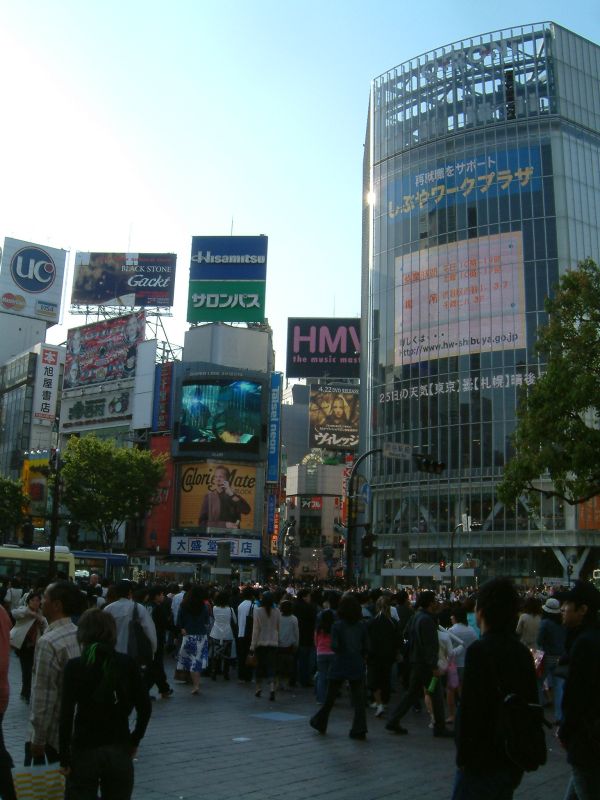
The geography matters. Nintendo’s Japanese flagship chain, at the time of the Bananza launch, consisted of three permanent stores: Nintendo TOKYO, which opened in Shibuya PARCO in 2019; Nintendo OSAKA, which followed in the Daimaru Umeda department store in 2022; and Nintendo KYOTO, which opened in October 2023 on the seventh floor of Kyoto Takashimaya, in the city where Nintendo itself is headquartered. A fourth store, in Fukuoka, was announced for later in 2025. These are destination shops in major department stores, built as much for footfall, photo opportunities and tourism as for shifting stock.

Online, the equivalent shopfront is the Japanese My Nintendo Store. It is region-locked in the ordinary, unglamorous ways that decide who can buy what: it serves Japanese Nintendo Accounts, takes payment and delivery details for domestic addresses, and does not offer standard international shipping on its character goods. Nintendo operates separate storefronts for other territories — North America has its own online store and physical shops in New York and San Francisco, Europe and Australia have their own arrangements — but each regional store curates its own catalogue. An item existing in the ecosystem does not mean it exists in every branch of it. The Bananza range was a Japanese catalogue decision, and the other branches simply did not list it at launch.
Why the best goods stay home
No single memo explains the pattern, but the incentives line up consistently. First, scale: a felt sticker set or a pair of novelty socks is a low-price, low-margin product. Tooling, packaging, safety testing and freight for a worldwide rollout can easily cost more than the item can earn outside a proven market, whereas a short domestic run through three flagship stores and one web shop is cheap to produce and easy to forecast. Japan’s dense retail culture — where character goods are bought as souvenirs, gifts and everyday stationery by a broad mainstream audience, not only by collectors — supports exactly that kind of range in a way few other markets reliably do.
Second, licensing and control. Character merchandise is frequently produced with domestic partners for domestic distribution, and Nintendo has historically guarded how its characters appear on third-party shelves abroad. Keeping a range store-exclusive also protects the flagship shops themselves: exclusive stock is the reason to visit, queue and post photographs. A range that can be ordered from anywhere is, from the store’s point of view, a range that no longer anchors a trip to Shibuya, Umeda or Shijo Kawaramachi.

Third, there is an element of testing. Japan functions as Nintendo’s home showroom, and goods that prove themselves there sometimes graduate. The pattern is visible in neighbouring franchises: Pikmin merchandise long associated with the Japanese flagships reached South Korea’s My Nintendo Store in March 2025, and waves of Nintendo TOKYO goods have previously surfaced through Australia’s My Nintendo Store. The giant Bananza plush eventually made the same journey in diluted form, appearing in Nintendo’s New York and San Francisco stores in 2026 reporting — at a reported price on par with the console itself. Graduation, when it happens, is slow, selective and rarely announced in advance. At launch, none of that helps a fan who wants the socks.
The legitimate ways across the gap
Overseas fans have built three well-worn, legitimate routes around the wall, and launch-week hunters for Bananza goods used all of them. The simplest is the specialist import retailer. Shops based in Japan, such as Meccha Japan — the retailer whose product images powered much of the English-language launch coverage — buy domestic stock and resell it internationally with shipping built into their model. The buyer pays a markup over the Japanese shelf price, but gets an English checkout, a tracked parcel and a seller whose reputation depends on supplying genuine licensed goods.
The second route is the proxy buying service, an institution of Japanese internet shopping. Services in this category — names such as Buyee, ZenMarket and their competitors recur in importer communities — act as a domestic customer on the buyer’s behalf. The customer submits the product page from a Japanese shop, the proxy purchases it with a Japanese payment method, receives it at a Japanese warehouse, optionally consolidates several orders into one box, and forwards it overseas for a per-item service fee plus domestic and international postage. A close cousin, the forwarding service, gives the customer a Japanese delivery address to use at checkout personally, then ships the parcel onward; that route is cheaper but fails at shops that decline overseas-issued cards, which is precisely the situation proxies exist to solve. Neither route involves anything exotic — it is mail order with a middleman — but both add days or weeks, and both make returns impractical enough to treat every order as final.
The third route is the oldest one: going there, or knowing someone who is. The three flagship stores sit in the most visited shopping districts in the country, and a steady flow of tourists, friends and informal buying trips carries store-exclusive goods out in suitcases every week. Secondary marketplaces then redistribute a share of that flow, at prices set by scarcity rather than by Nintendo. That resale layer is where caution belongs: it is also where markups are steepest and where unlicensed imitations of popular plush lines circulate, so provenance matters more than the listing photograph.
A gap measured in more than money
What makes the Bananza range a useful case study is how ordinary it is. Nothing about it was a limited-edition stunt by the standards of the industry: no numbered run, no lottery, no deliberate scarcity campaign. It was a normal, well-stocked domestic merchandise wave for a major first-party launch, and its absence overseas was simply the default setting of the system working as designed. Fans abroad were not being teased; they were being routed around, by a retail structure in which the home market is served first, fully and immediately, and everyone else is served eventually, partially, or through intermediaries who charge for the translation.
There are signs the defaults are softening. Regional stores have absorbed Japanese flagship lines before, the number of physical Nintendo stores outside Japan has grown, and a character as central as Donkey Kong — freshly redesigned, fronting a console launch, with Pauline beside him — is a poor candidate to keep fenced in forever. But on the day it mattered most, 17 July 2025, the arrangement was stark. The whole world got to play Donkey Kong Bananza at once. Only one country’s fans got to take the big ape home in plush form, tie and all — and for everyone else, the next best thing was a proxy form, a forwarding address and a wait.