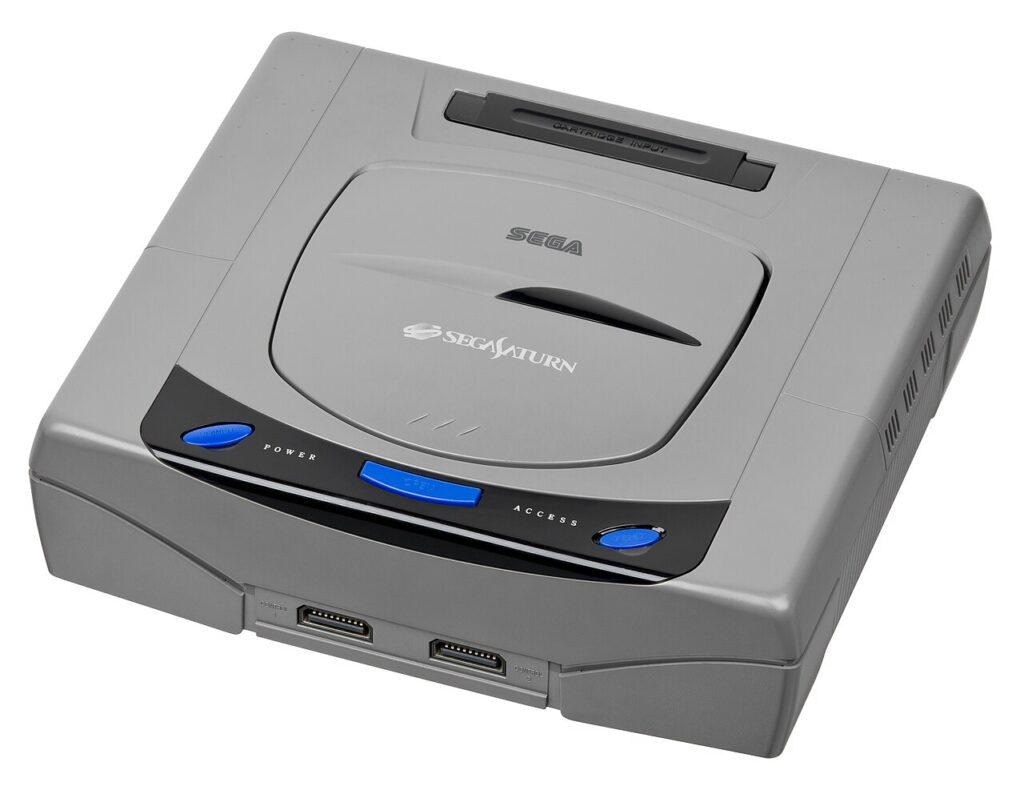
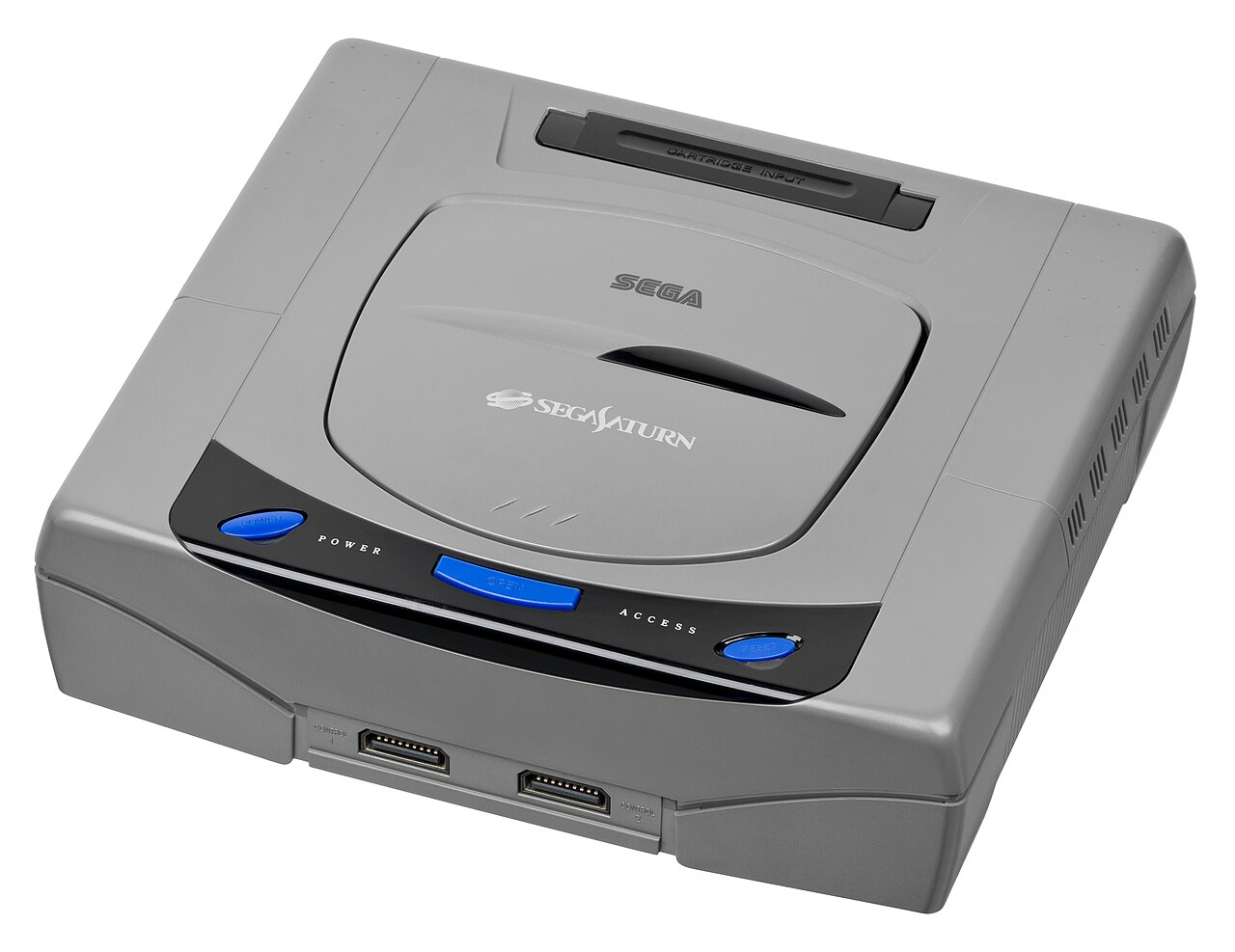
The Saturn’s story in the West is a story of what didn’t arrive. While British and American shelves thinned out, Japan’s Saturn was a thriving ecosystem — the machine actually outsold the Nintendo 64 there — stacked with shooters, fighters and oddities that publishers decided we wouldn’t buy. They were wrong, and the import scene that grew up to prove it became a hobby of its own: swap carts, Action Replays, and expensive lessons in which games need the 4MB RAM cartridge. These are the ten imports that justify the whole endeavour, the essential Japanese Saturn library. How many did you play — and how many are still on your list?
10. Digital Pinball: Necronomicon (1996)
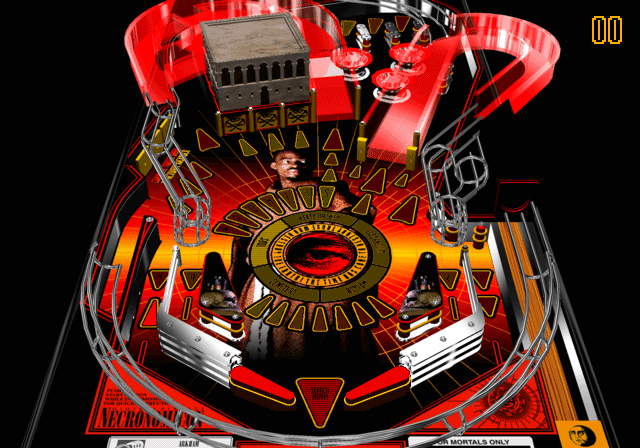
Kaze’s Digital Pinball series peaked with a table set built around H.P. Lovecraft, which tells you everything about the Saturn’s Japanese library in miniature: who else green-lights this? Necronomicon’s three tables — Arkham Asylum, Dreamlands and Cult of the Bloody Tongue — are each full simulations with their own ramps, modes and lore, rendered in crisp high resolution with ball physics that still convince.
The coup de grâce is the music: the main theme comes from John Carpenter, yes, that John Carpenter, lending the whole production an authentic dread. A “Realms Mode” chains all three tables into a single campaign for score-chasers. Pinball on the Saturn doesn’t get better, and in the West it doesn’t exist at all — the purest import on this list.
9. Bubble Symphony (1997)

Confusingly subtitled Bubble Bobble II despite arriving after Rainbow Islands, Bubble Symphony is Taito’s definitive bubble-blowing platformer. Bub and Bob return with two new partners — Kululun and Cororon — each with different shot speeds and bubble behaviour, across a hundred stages of single-screen trapping, fruit-gathering and secret-door hunting.
The Saturn version is a loving conversion: big, bright sprites, charged bubble shots, branching routes through themed worlds, and bosses at a scale the 8-bit games couldn’t dream of. It’s the culmination of a formula that never needed reinventing, only refining, and because Taito never brought it home, it remains one of the most charming reasons to own a Japanese Saturn. More of the same, as the saying goes — and the same was already wonderful.
8. Konami Antiques: MSX Collection Ultra Pack (1998)

The Saturn is stacked with great compilations — Capcom Generations, the Sega Ages line — but Konami’s Ultra Pack is the connoisseur’s choice. It gathers the three PlayStation MSX Antiques volumes onto a single disc: thirty games from Konami’s years on Japan’s beloved home computer, spanning Yie Ar Kung-Fu, Antarctic Adventure, the original Nemesis/Gradius lineage, Knightmare and more.
Emulation is faithful, presentation is handsome, and the package amounts to a playable history of the studio that would define the 8-bit era — games most western players had never had any legal way to touch. As a value proposition nothing else on this list comes close: thirty curios, one disc, and a reminder that the Saturn’s Japanese library valued preservation as much as spectacle.
7. Daytona USA: Circuit Edition (1997)
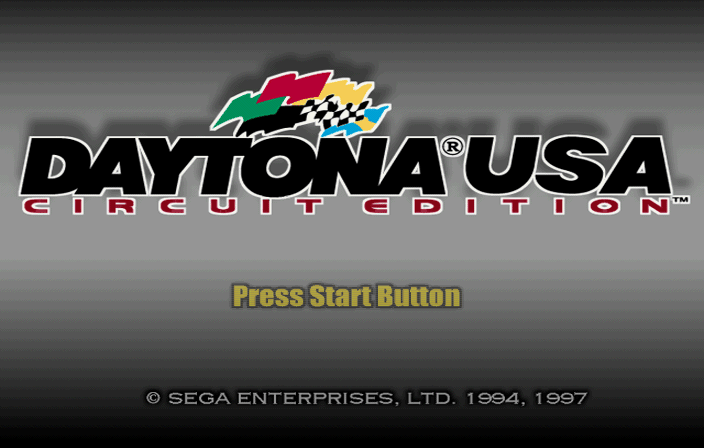
Daytona USA did come west — twice — so its presence here needs defending, and the defence is simple: Japan got the finished version. The launch conversion was rushed and scruffy; Championship Circuit Edition improved it for the West; but Circuit Edition, Japan-only, is the one Sega’s own team rebuilt properly, on the Sega Rally side of the office if the handling is anything to judge by.
It adds the beloved Daytona medley soundtrack, drift handling you can tune to taste, and the option to race the courses at different times of day — sunset and night races transform familiar tracks. This is the definitive home Daytona of its era, and it sat in Japan while western Saturn owners made do. Importing it feels less like collecting and more like repatriation.
6. Elevator Action Returns (1997)
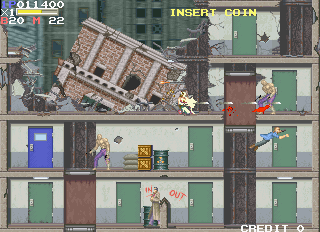
Taito’s 1994 arcade sequel took the 1983 original’s spy-in-a-building premise and rebuilt it as a gritty run-and-gun: three playable agents, a small armoury of weapons, bombs to throw, oil drums to detonate, and red doors to reach against a ticking clock. Ving’s Saturn conversion is the version to own — faithful to the arcade, generous with extras, and built for two players.
What elevates it is feel: the weight of the animation, the crunch of the combat, stages that alternate infiltration with outright firefights in burning buildings and subway stations. Throw in the original 1983 game as an unlockable bonus and you have the complete Elevator Action story on one disc. It never left Japan on the Saturn, which is precisely the sort of decision this list exists to complain about.
5. Magic Knight Rayearth (1995)
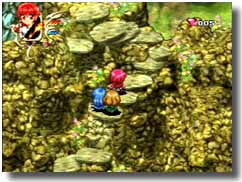
An action-RPG adapted from CLAMP’s manga, Magic Knight Rayearth follows three Tokyo schoolgirls summoned to the world of Cefiro, and it’s the most approachable import RPG on the system: real-time combat where you lead one heroine and swap between the three tag-team style, lush 2D art, and a story told with genuine warmth.
Its western history is the stuff of Saturn legend: Working Designs localised it, and after years of delays it became the final Saturn game released in North America in 1998 — hence its price today. Importing the Japanese original is the affordable route into the same adventure, and the game is gentle enough that the language barrier barely slows you down. Either way, it’s the system’s most likeable RPG, and the clearest proof the West’s Saturn story ended years before Japan’s did.
4. Dungeons & Dragons Collection (1999)

Capcom’s twin D&D arcade brawlers — Tower of Doom and its sequel Shadow over Mystara — are the pinnacle of the scrolling fighter, and the Saturn is where they came home. This collection pairs both games on one release, using the 4MB RAM cartridge to hold animation so rich it still embarrasses most of the genre: branching paths, rideable mounts, spell-slinging clerics and elves, and boss fights against dragons and beholders that feel like events.
Mystara in particular is a masterpiece of systems — inventories, equipment, multiple endings — wrapped in hand-to-hand combat with real depth. Yes, the loading times test your patience between stages. It’s a small tithe to pay for the finest beat-’em-ups Capcom ever made, in the finest home versions of their era.
3. Street Fighter Zero 3 (1999)

The first two Alpha games came west on everything. Zero 3’s definitive version stayed in Japan, and Saturn owners there got a conversion that borders on the miraculous: the complete arcade roster plus home-exclusive additions — fan favourites Karin and R. Mika, the tragedy of Juli and Juni — all animated with a fluidity that required the 4MB RAM cartridge and still seems to exceed what the hardware should hold.
The three “isms” let you rebuild your fighter’s ruleset around your own style, the World Tour mode gives solo players a campaign of customisation, and the whole production gleams. The PlayStation version western players received was a compromise by comparison. If the Saturn has a fighting-game masterpiece, this is it — and it never officially crossed the Pacific. Import it and see what you were denied.
2. Shinrei Jusatsushi Taromaru (1997)

Every import list needs its holy grail, and the Saturn’s is Taromaru. Time Warner Interactive’s psychic-assassin action game — Shinobi’s discipline crossed with Alisa Dragoon’s fever dreams — sends its heroes across a demon-haunted feudal Japan of giant frogs, scaling sprites, rotating set pieces and, in its most famous sequence, a sprint across the backs of a stampeding bull herd.
The tragedy is availability: released in tiny numbers in early 1997, just as its publisher’s Japanese games business collapsed, it became one of the most expensive Saturn games in the world almost immediately. The difficulty can be cruel and the spectacle deliberately absurd, and most players will only ever meet it through emulation or video. But as a symbol of what the Japanese Saturn held that ours never saw, nothing else comes close. This is the one that got away.
1. Radiant Silvergun (1998)

What else could lead this list? Treasure built Radiant Silvergun as a love letter to the ST-V arcade board’s twin, the Saturn, and it remains the console’s defining shooter: seven weapons available from the first second, no power-ups to collect, a colour-chain scoring system that rewards restraint as much as aggression, and boss encounters that are practically a genre of their own.
The Saturn version even outdoes the arcade original, adding a story mode with animated sequences and save-based weapon levelling that turns the game into a campaign. Ikaruga refined its ideas into legend, but Silvergun is the wilder, stranger, more generous game. Modern ports have finally made it accessible — yet the Saturn original still commands strong money, because some objects are simply definitive. If you import one Japanese Saturn game, make it this one. If you import ten, you now know the list.
The near-miss pile is a list in itself: Bulk Slash’s mech action, Princess Crown’s storybook brawling, Deep Fear answering Resident Evil from a submarine, the Shining Force III trilogy’s three-scenario epic, and Saturn Bomberman — the finest multiplayer game on the console — all miss the cut by a hair. That’s our ten. What’s your essential import?
Keep reading: Cartridges of Gold: The Top Ten NES Games · the Saturn system archive