
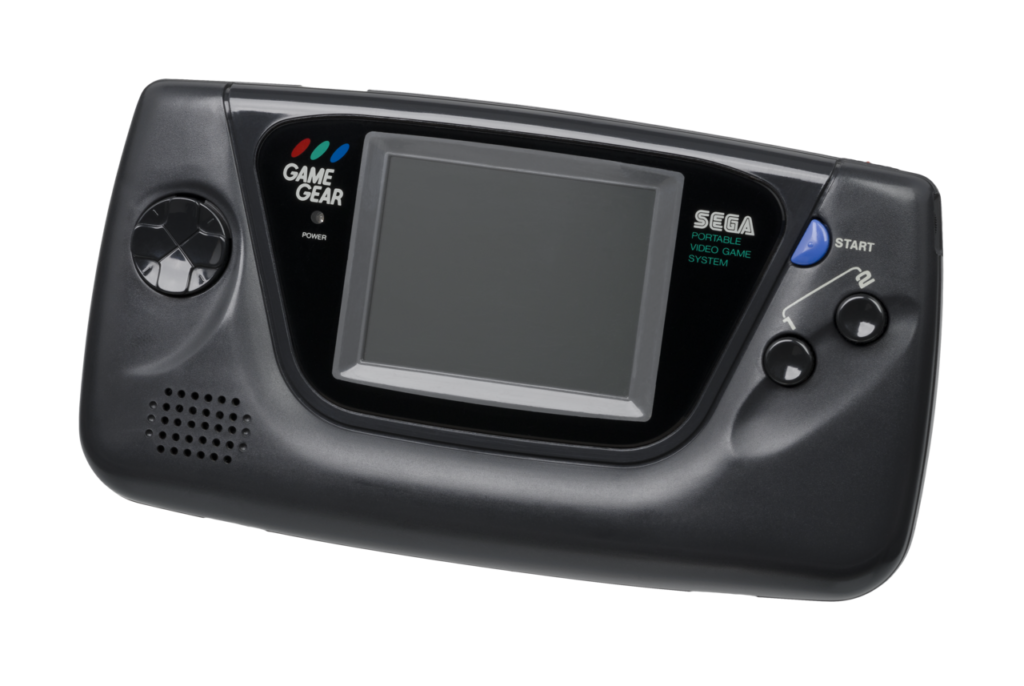
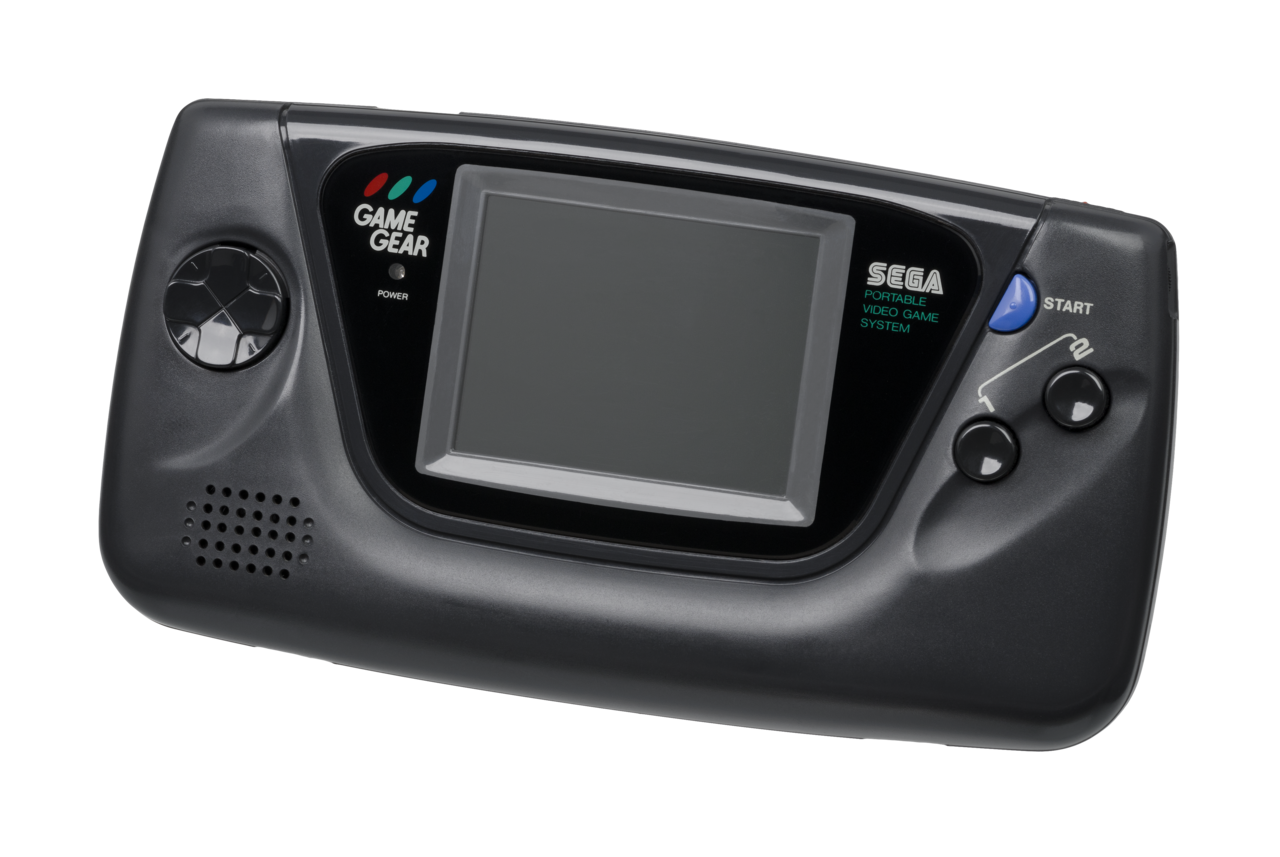
The Game Gear was Sega’s colour answer to the Game Boy, and it answered at full volume: a backlit screen, near-Master System power, a TV tuner if you were fancy — and six AA batteries gone in the length of a long car journey. Judged as hardware, it lost. Judged as a library, it deserves a rematch. Because the Game Gear inherited the Master System’s catalogue, hosted ports of Mega Drive hits that had no business working, and still found room for exclusives of its own. These are the ten cartridges that make the case — every one of them also an argument for keeping a battery charger in the house.
Two pieces of housekeeping before the countdown. First, the Game Gear’s secret weapon was the Master Gear Converter, a pass-through cartridge that opened the entire Master System library on top of the native one — several entries below descend from Master System classics, and the machine’s depth came from having two libraries at once. Second, a confession about method: we’ve ranked for the Game Gear itself, favouring the bright, the readable and the session-sized, because on a screen that drinks batteries, a game that can’t survive a bus ride doesn’t survive at all. Onward.
10. Shining Force: The Sword of Hajya (1994)
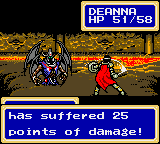
The Game Gear’s great strategic comfort blanket. Sword of Hajya adapts the second scenario of the Mega CD’s Shining Force CD into a complete portable campaign — the full turn-based battle system, twelve-character parties, promotion classes and all, squeezed onto a cartridge with a battery save. The story is pure Shining Force: the kingdom of Cypress, a stolen sword, an army of the wronged marching across a grid toward a very punchable dark priest.
What makes it essential rather than merely impressive is restraint. The battles are brisk, the maps are sized for sessions rather than sieges, and the close-up combat scenes — your knight, the enemy, one dramatic swing — retain the series’ Saturday-morning charm. The West got very few handheld strategy RPGs in 1994. It got this one, and it was a flagship’s worth.
9. Prince of Persia (1992)
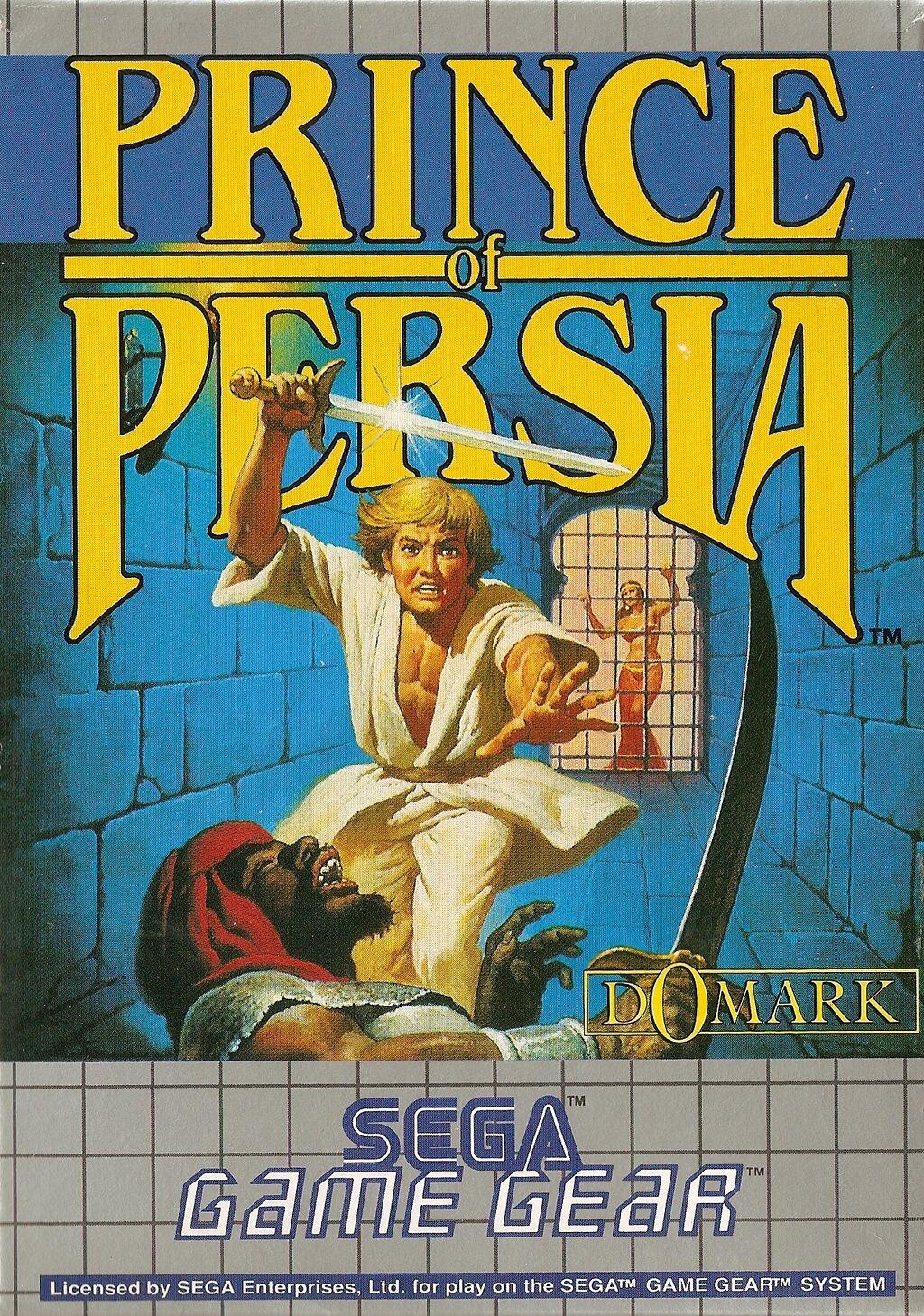
Jordan Mechner’s rotoscoped masterpiece was ported to everything with a screen, but the Game Gear version — descended from the Master System conversion — is one of the ports that understood the assignment. The Prince’s animation is the game: the long leaps, the desperate ledge-grabs, the sword fights that are really fencing puzzles, all of it intact and fluid at pocket scale.
Sixty minutes to cross twelve dungeons and save the princess sounds like an arcade cruelty, but it suits the handheld perfectly — the whole game is a speedrun waiting for a commute. It is also, quietly, one of the best-looking Game Gear titles: those simple, effective palaces and torch-lit pits are exactly what the colour screen was built for.
8. Power Strike II (1993)
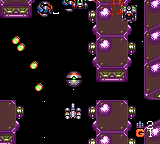
Compile’s Aleste series was the connoisseur’s shooter line, and its Game Gear chapter — GG Aleste II at home in Japan, Power Strike II in Europe — is arguably the finest shooter on the system. Your fighter, the Lance Bird, tears through mechanised stages at a pace that embarrasses the hardware, juggling a arsenal of upgradable weapons and a sub-weapon system that lets skilled hands turn near-death into fireworks.
The European release is the collector’s headache and the historian’s delight: the game never officially crossed the Atlantic in its day, which makes every surviving PAL cartridge a small monument. The shooting itself needs no excuses. This is Compile at their peak, on a handheld, in 1993 — a full arcade-grade vert-shooter that happens to run on batteries.
7. Streets of Rage 2 (1993)
Yes, it’s cut down. No, it doesn’t matter. The Game Gear Streets of Rage 2 rebuilds the Mega Drive’s masterpiece as a native 8-bit brawler — Axel, Blaze and Skate (Max, too heavy for the hardware, sits this one out), six stages of street-clearing, and a presentation that keeps the original’s swagger with simplified, chunky sprites the little screen can actually read.
Judged against its own system rather than its big brother, this is a triumph of translation: the combos flow, the special moves land, and the two-player mode survives via link cable for anyone with a friend, a second Game Gear and twelve batteries between them. Handheld beat-’em-ups were a graveyard of good intentions. This is the one that walked out.
6. Bubble Bobble (1994)
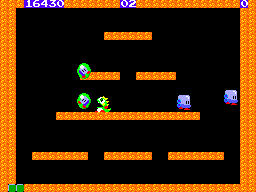
Bub and Bob’s hundred-floor bubble trap was ported to every machine Taito could find, and the Game Gear got the deluxe treatment: a conversion of the already-excellent Master System edition, which means the full arcade game plus its expanded extras — more rooms, more secrets, more of those baffling food bonuses — on a cartridge.
Some games are greater than their ports; this one is the same greatness, perfectly preserved. Trap a Zen-chan, pop it, ride the bubble currents upward, chase the umbrella warp — the loop is eternal, and the Game Gear’s bright little screen flatters the candy colours better than most televisions did. The two-player mode needs the link cable and a second copy, as all the best friendships did.
5. GG Shinobi II: The Silent Fury (1992)
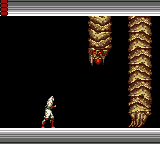
The GG Shinobi games were Sega’s quiet masterclass in handheld design, and the sequel is the better of two excellent cartridges. Joe Musashi rescues his four captured comrades stage by stage — and each ninja, once freed, joins the team permanently, bringing a unique weapon and ninjutsu: walk on water, smash boulders, cling to ceilings. The order you attempt the stages becomes the strategy, Mega Man logic in a ninja mask.
The Silent Fury tightens everything its predecessor fumbled: fairer difficulty, cleaner level design, passwords instead of punishment. It’s a Game Gear exclusive that never got ported anywhere, which makes it simultaneously one of the system’s best games and one of its best-kept secrets. Consider the secret shared.
4. Sonic the Hedgehog 2 (1992)
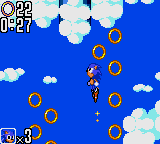
Forget the Mega Drive version — this Sonic 2 is a different game entirely, built by Aspect for the 8-bit machines, and in places a better-designed one. Seven zones of original layouts, a hang-glider section that filtered a generation of children, boss fights fought without a single ring in your pocket, and an ending that depends on hunting down the Chaos Emeralds hidden in the acts themselves.
It is famously, almost proudly, difficult — the Game Gear screen crops your view of what’s coming, and the game makes no apology for it. But it also feels like Sonic in a way the first 8-bit game only promised: fast, vertical, inventive. The first great portable Sonic, and the moment the Game Gear stopped being the Master System’s little brother and got a killer app of its own.
3. Wonder Boy III: The Dragon’s Trap (1992)
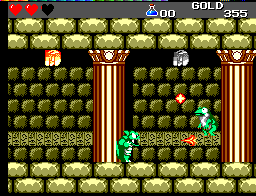
The Dragon’s Trap was the Master System’s masterpiece; the Game Gear version is that masterpiece made portable with nothing important lost. Cursed by the Mecha Dragon, Wonder Boy cycles through animal forms — mouse, piranha, lion, hawk — each unlocking new routes through a world that is secretly one enormous, interconnected puzzle box, years before “Metroidvania” was a word anyone used at parties.
It is a huge adventure for a handheld: shops, secrets, heart containers, a password system for the road. The 2017 remake introduced a new generation to its charms, but the original’s dense, generous design was never better than here — a console epic that happens to fit in a coat pocket, demanding only your afternoon and, inevitably, fresh batteries.
2. Baku Baku Animal (1996)
Everyone remembers Columns; the connoisseurs remember Baku Baku. Sega’s animal puzzler drops pairs of food and animal heads into your well — match a rabbit to a carrot and it munches the whole connected bunch, clearing space and dumping garbage on your opponent. It’s Tetris Attack logic wearing a petting zoo, and it produces the most frantic chain-reaction comebacks in the genre.
The Game Gear version arrived late, in 1996, when the system was supposed to be dead — which makes it both a swansong and a sleeper. Against the machine’s zookeepers or a friend on the link cable, this is the essential Game Gear puzzler: instantly readable, impossible to put down, and cruel in the way only a game about feeding animals can be. Columns is a fine game. Baku Baku is the one you keep.
1. Gunstar Heroes (1995)
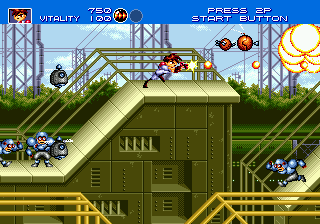
Start with the obvious: this shouldn’t exist. Treasure’s Mega Drive debut was a technical showreel — scaling, rotation, multi-jointed bosses, explosions layered on explosions. The Game Gear version, converted by M2 in 1995 for Japan, keeps the game’s structure, its weapon-combining system and a startling amount of its spectacle, on hardware with a fraction of the power. Stages are trimmed, the dice palace is gone, but the run-and-gun heart beats at full tempo.
It’s the rarest, priciest cartridge on this list, and for once the market is right: this is the Game Gear’s defining flex, the conversion that proves the little machine’s whole thesis — that a handheld could be a real console, not a compromise. Treasure on the Mega Drive was a miracle. Treasure on the Game Gear is a magic trick. Number one, and it isn’t close.
The ones that got away: Land of Illusion, the Mickey sequel nearly as pretty as its brother; Crystal Warriors, the strategy RPG that beat Hajya to the system by two years; Tails Adventure, a slow, strange, Metroid-flavoured gem; and Ax Battler, Golden Axe’s answer to Zelda II — flawed, fascinating, and better than its reputation.
Keep reading: the Game Gear system archive