
From eBay Curiosity to Cartridge Shelf: Targa, the Reproduction Run and the Price of the Unreleased
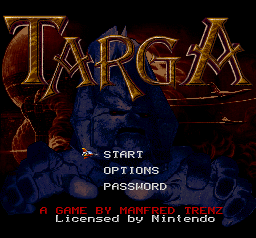
There is a peculiar moment in the life of a lost game when it stops being a story and becomes an object — something with a weight, a label, a print run and a price. For Targa, Manfred Trenz’s unreleased western edition of the game Japan knew as Rendering Ranger: R2, that moment arrived in late 2014. A prototype cartridge that had changed hands on eBay became the basis for a limited reproduction run of 150 cartridges, made for ordinary Super Nintendo consoles, sold directly to collectors, with a promise attached: when the cartridges were gone, the game’s ROM would be released to everyone. This feature is about that transformation — the physical afterlife of an unreleased game, the small economy that sustains it, and what it tells us about why collectors pay real money for games the industry once declined to sell at any price. Our companion piece covers Targa the game and its 2015 ROM release in depth; this one is about Targa the thing.
First, the Object Nobody Could Buy
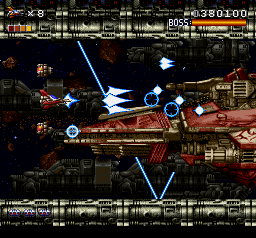
Set the scene with the commercial original, because its absurd scarcity is the engine of everything that followed. Rendering Ranger: R2 reached Japanese shops on 17 November 1995, published by Virgin Interactive Japan after Trenz’s own publisher Softgold failed to find other takers for a game three years in the making. Roughly 10,000 copies were produced — a rounding error next to a Mario print run — for one territory, in the dying months of the 16-bit era, in a market already turning towards 3D. The game was excellent, punishing and almost perfectly designed to vanish. Instead it compounded. A 2016 Japanese reference book would call it the rarest Super Famicom release outright, and complete copies have traded at prices that make it a byword in SNES collecting — the Japanese cartridge became the kind of item that sits behind glass at shows, photographed more often than it is played.
The western version never even achieved that much existence. Targa was to be the title in Europe and North America, and a build survived on prototype hardware, but no box, no manual, no shop release and no second-hand market could ever form around a product that was never manufactured. Which produced a strange collecting vacuum: one of the most desirable games on the system had a twin that could not be collected at all. Vacuums, in collecting, do not stay empty for long.
A Prototype Goes to Auction
The chain that filled the vacuum began, as so many preservation stories do, with a listing most people scrolled past. A Targa prototype had been offered through the Assembler Games community in 2013 by a seller known as Goemon, and contemporary reporting on the reproduction project records the prototype changing hands on eBay for €556 — serious money for an unlabelled development cartridge, and, with hindsight, a bargain for the only key to a locked room. The buyers were the Nolan brothers, Matt and Mark, collectors with an established pattern: acquire unreleased prototypes, produce a limited run of playable reproduction cartridges for fellow enthusiasts, and use the project to fund and justify setting the game free. They had done the same for Bill’s Tomato Game on the Mega Drive, and their Targa announcement in November 2014 followed the template exactly.
It is worth pausing on who did not do this, because later retellings sometimes tidy the story into the wrong hands. The Targa reproduction was not a Super Fighter Team production — that company pursued fully licensed, newly manufactured releases of unreleased games such as Nightmare Busters through official channels, a different model entirely — and it was not an Ocean Software project either; Ocean had no part in Targa at any stage. The 2014 run was a two-brother operation from the prototype scene, closer in spirit to a fanzine pressing than to a publisher’s product launch, and that grassroots character is precisely what makes it interesting.
One Hundred and Fifty Cartridges
The run was capped at 150 copies: new reproduction cartridges carrying the Targa build, playable on a standard Super Nintendo, offered to order while stock lasted. Contemporary coverage noted that about half the run remained available at the time of the November 2014 announcement, and that the brothers intended to release the ROM publicly once the cartridges sold out. Every element of that sentence deserves unpacking, because together those elements form the classic prototype-repro bargain of the era.
Start with the number. One hundred and fifty is small enough to guarantee collectibility and large enough to matter as preservation — after the run, Targa existed in 150 homes rather than one attic-adjacent collection, on hardware its creators targeted, in the format its era understood. Scarcity here is a feature the producers and buyers agreed on together: buyers were not purchasing manufacturing value, they were purchasing proximity to a unique artefact, membership of a tiny first-edition club, and the knowledge that their money had underwritten the prototype’s purchase and production costs. The seller, meanwhile, recovered an investment that pure altruism would have left sitting on one person’s credit card. Nobody in this transaction believed they were buying a mass-market product, and the honesty of that shared understanding is what separates the scene’s respected operators from its pirates.

The Promise That Made It Preservation
The decisive clause was the promised ROM release, and it is what elevates the Targa run from a curiosity sale into a case study. Without it, a limited run from a unique prototype reads uncomfortably like gatekeeping: buy the one copy, sell 150 expensive echoes, keep the source scarce forever. With it, the economics invert. Early buyers effectively underwrote the liberation of the game for everyone else — before crowdfunding a retro reproduction was a normal sentence —, accepting that their cartridges’ exclusivity had an expiry date and that wider availability was the goal rather than the threat. When the ROM did surface in March 2015, released by MrMark0673, the Nolan brothers’ half of the bargain was complete, and the model had a proof of concept that later prototype releases would repeatedly cite: the physical run finances the digital freedom.
That model sits in a grey zone, and an honest feature should say so. Reproduction cartridges of a game whose rights belonged to other people occupied uncertain legal ground in 2014, however benign the intent, however unavailable the product, and however much the scene’s social norms — credit the source, limit the run, free the ROM — policed behaviour that contracts did not. The market has since moved towards legitimacy: rights have been reacquired, licences negotiated, and in 2025 Targa itself arrived as an officially sold inclusion in the Rendering Ranger: R2 [Rewind] reissue, which is the 2014 grey market’s ultimate vindication and rebuke in a single product. The demand the Nolan brothers measured in a 150-unit run turned out to be real, durable demand that official channels eventually served.
What a Reproduction Is Actually Worth
Collecting logic gives the Targa cartridge a fascinating value profile, quite unlike either its Japanese sibling or an ordinary retro game. The original Rendering Ranger derives value from genuine historical scarcity: 10,000 factory copies, fewer surviving complete, each one an artefact of 1995. A 2014 reproduction derives value from documented narrative scarcity instead — a numbered moment in a known story, traceable to a specific prototype, inseparable from the promise it fulfilled. It will never be the 1995 original and does not pretend to be; what it offers a shelf is the western Targa that 1995 denied everyone, made tangible by the only route available at the time. Experienced collectors understand the distinction instantly, which is why reproductions from reputable, transparent runs hold a modest but real secondary value while anonymous bootlegs of available games are worth roughly their plastic.
The hardware afterlife underlined the run’s authenticity in an unexpected way. When Analogue’s FPGA-based Super Nt was reviewed by GameSpot in 2018, the testers found exactly two cartridges in their library that initially misbehaved on the precision hardware — Mortal Kombat II, and the reproduction cartridge of Targa, a quirk Analogue reproduced and addressed by firmware within days. Whatever else a repro is, that episode proves the Targa run was out in the world being treated as a real SNES cartridge by real hardware makers: inserted, tested, debugged against, and supported. Unreleased games do not usually achieve that level of mundane, functional existence.
The Shelf as an Archive
Zoom out, and Targa’s 150 cartridges are one tile in a much larger mosaic of how unreleased games survived the 2010s. With publishers’ own archives leaky, development hardware scattered and rights tangled across defunct companies, the work of rescue fell to an informal coalition: prototype hunters bidding at auction, dumpers backing up ageing EPROMs before bit rot could claim them, reproduction makers converting one fragile board into a small, distributed print run, and archives such as SNES Central documenting the differences between builds for anyone who cared to look. Each reproduction on a collector’s shelf is, whether its owner thinks of it this way or not, a backup copy in a distributed archive — 150 locations would have to flood or burn before Targa’s western build returned to depending on a single prototype again.

That, finally, is why the November 2014 story deserved reporting as more than a shopping opportunity. A €556 eBay prototype, two brothers, 150 cartridges and one kept promise demonstrated a complete alternative lifecycle for a cancelled game: discovery, documentation, a physical edition for the faithful, and then freedom for everyone. The industry had valued Targa at nothing — no publisher, no release, no revenue, in the assessment of 1995. The collectors who rescued it priced it rather differently, and the official reissue that eventually followed suggests the collectors were right about the game all along. The cartridge on the shelf is not the point. The point is that there is a cartridge on the shelf at all.
Companion piece: start at the beginning, with the 2015 release of the lost Targa ROM.