
The Vectrex is the easiest retro console to want and the most particular to buy. Easiest, because it is self-contained — console, monitor and (courtesy of the built-in Mine Storm) a first game in one box, needing no television, no video cable archaeology, no display-mod rabbit hole. Particular, because that built-in monitor is a forty-year-old cathode ray tube with forty-year-old capacitors, and the difference between a glorious Vectrex and a glowing paperweight is entirely a matter of what you check before money changes hands. This guide covers the machine’s health, its famous buzz, the controller’s analogue heart, the overlay-and-cartridge collecting game, the modern loading options that make ownership practical, and what the whole adventure honestly costs in 2026.
First, what you are buying
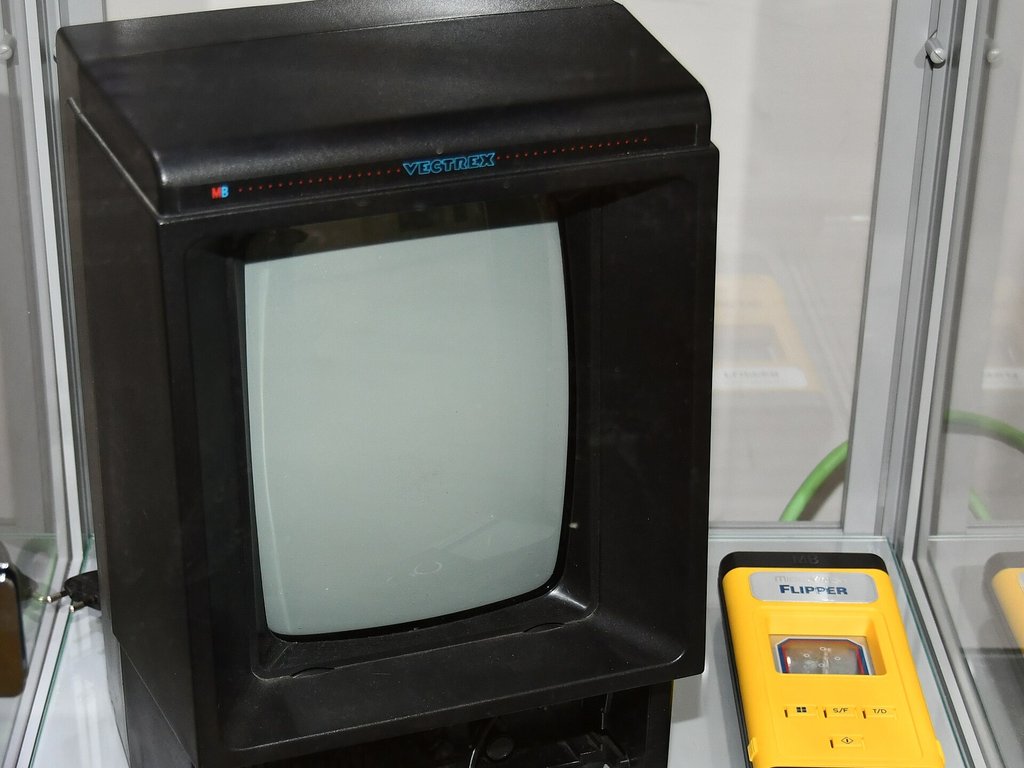
Every Vectrex is the same proposition: a nine-inch black-and-white vector monitor, a Motorola 6809 console, one detachable analogue controller, and Mine Storm in ROM, in a case the size of a small television with a carrying handle that has launched a thousand jokes about luggable arcade machines. Regional variants exist — GCE originals in North America, Milton Bradley editions in Europe and elsewhere, a Bandai edition in Japan — differing in badges, power supplies and overlay printings rather than in soul. Buy for condition and your local mains voltage first; badge-collecting is a second Vectrex problem, and a delightful one, but it is not the first.
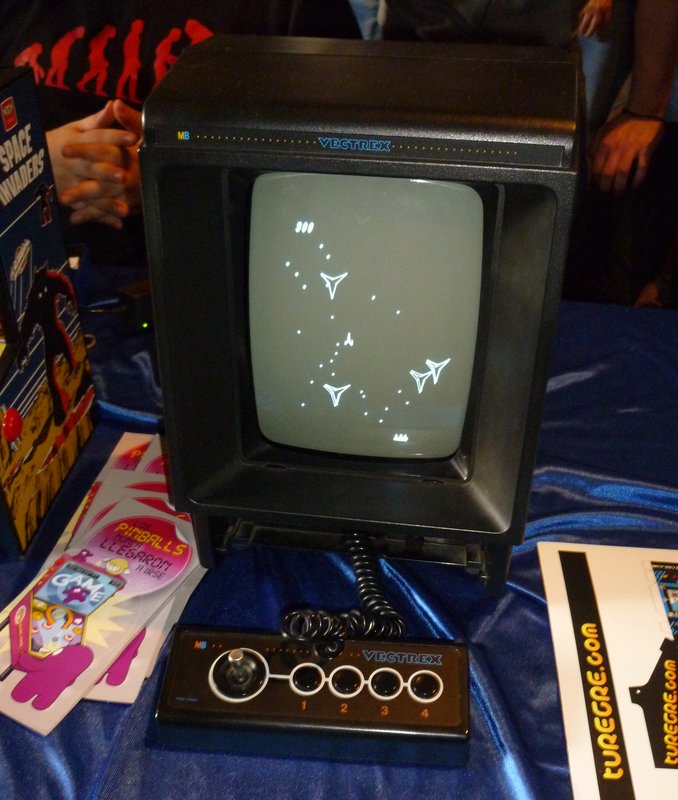
The monitor is the machine
Everything in a Vectrex purchase is downstream of the tube, so learn its report card. A healthy vector monitor is bright — genuinely bright, lines glowing against true black in a dim room — with geometry that holds: circles round, edges straight, the picture centred and steady. Warning signs, in descending order of expense: a dim picture that needs the brightness at maximum (a tiring tube; walk away unless the price confesses it), geometry that bows or breathes (ageing deflection components; a competent technician’s recap usually cures it), jitter or shimmering lines (capacitors and connections again — common, and commonly fixable), and any burnt or blotchy patch on the glass (permanent; price it as damage). Ask for a photograph or, better, a short video of Mine Storm running: the built-in game is the perfect test card, all circles, small shapes and fine lines. A seller who will not switch it on is selling you a lottery ticket.
Then, the buzz. Every Vectrex hums — an audible mains-and-deflection buzz from the speaker that rises and falls with what the screen is drawing. Some of it is factory character, present since 1982 and honestly part of the machine’s voice; but a buzz that drowns the game’s own sound, crackles, or changes when you touch the case points to tired capacitors and grounding, and is the single most common reason a ‘working’ Vectrex disappoints on arrival. The good news: the community knows this machine the way luthiers know violins. Recapping is routine, buzz-reduction modifications exist and are well documented, and a serviced Vectrex is a known quantity. Budget for a service if you buy unserviced; be pleasantly surprised if you don’t need one.
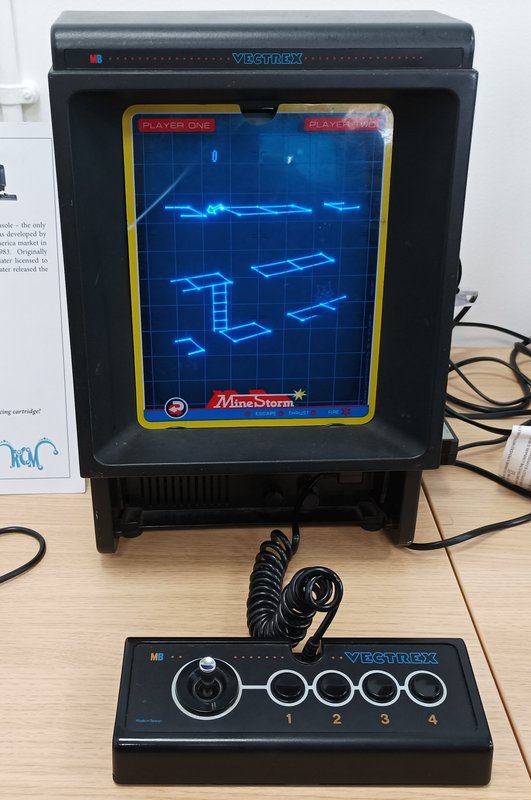
The controller’s little heart
The controller is an analogue instrument — a self-centring stick reading potentiometers, four buttons in a row — and the whole library is tuned to its handwriting. Test it on Mine Storm, which is always available: the ship should sit still with the stick untouched, rotate smoothly without dead spots or sticky patches, and drift in no direction of its own. A stick that pulls to one side has tired or dirty potentiometers; the fault is well understood, often cleanable, and fixable by the same technicians who recap the monitors, but it is a negotiation point on the day, not a surprise to discover at home. Check every button for a clean, repeatable press — the library’s shooters will find a lazy button in the first minute — and check the cable and connector pins, which have now been flexing for four decades. A second controller, if the bundle offers one, doubles the library’s best modes (Space Wars, Rip Off, Armor Attack) and is worth real money in the negotiation.
Carts, overlays and the paper trail
Collecting Vectrex software is a three-part harmony: cartridge, overlay, box, in ascending order of scarcity. Loose cartridges are plentiful for the common titles and the labels survive well; test any cartridge before paying a premium, because forty-year-old edge connectors want cleaning and the occasional cart is simply dead. Overlays are the fragile partner — printed plastic that warps, scratches and separates from its game — and a correct, flat, bright overlay transforms both the picture and the value; reproduction overlays from community specialists are excellent for play, while originals are what complete-in-box prices are made of. Buy games the way the library was sold: common titles loose and cheap for play, favourites complete for keeps. And remember the built-in head start: a bare console with no cartridges at all still plays Mine Storm the second it warms up, which makes the Vectrex the only retro purchase that cannot arrive gameless.
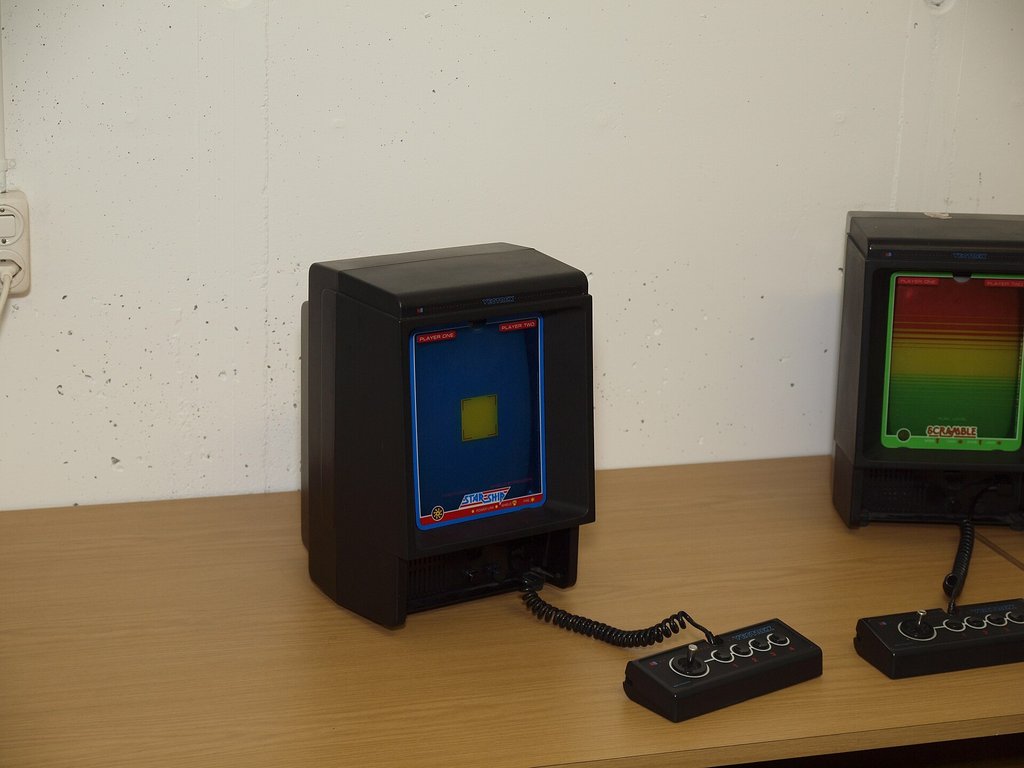
Loading games in 2026: multicarts and modern options
Ownership in 2026 does not oblige you to hunt twenty-eight cartridges before playing them. The loading shelf, in ascending order of ambition: the Sean Kelly Multicart, the scene’s long-serving staple, puts the original commercial library on a single cartridge with a menu — the connoisseur’s way to play everything while collecting selectively. The VecFlash tradition and its descendants brought rewritable flash loading: load ROM images — the homebrew scene distributes many of its releases as files — onto a cartridge from a computer. And the PiTrex takes the idea furthest, interfacing a Raspberry Pi with the Vectrex to load software from modern storage and open the door to Pi-assisted experiments. None of these replaces collecting; all of them replace waiting. A sensible 2026 setup is a multicart for the library, originals for the favourites, and an overlay set — original or reproduction — kept with the machine, because the games’ pictures are only half drawn without them.
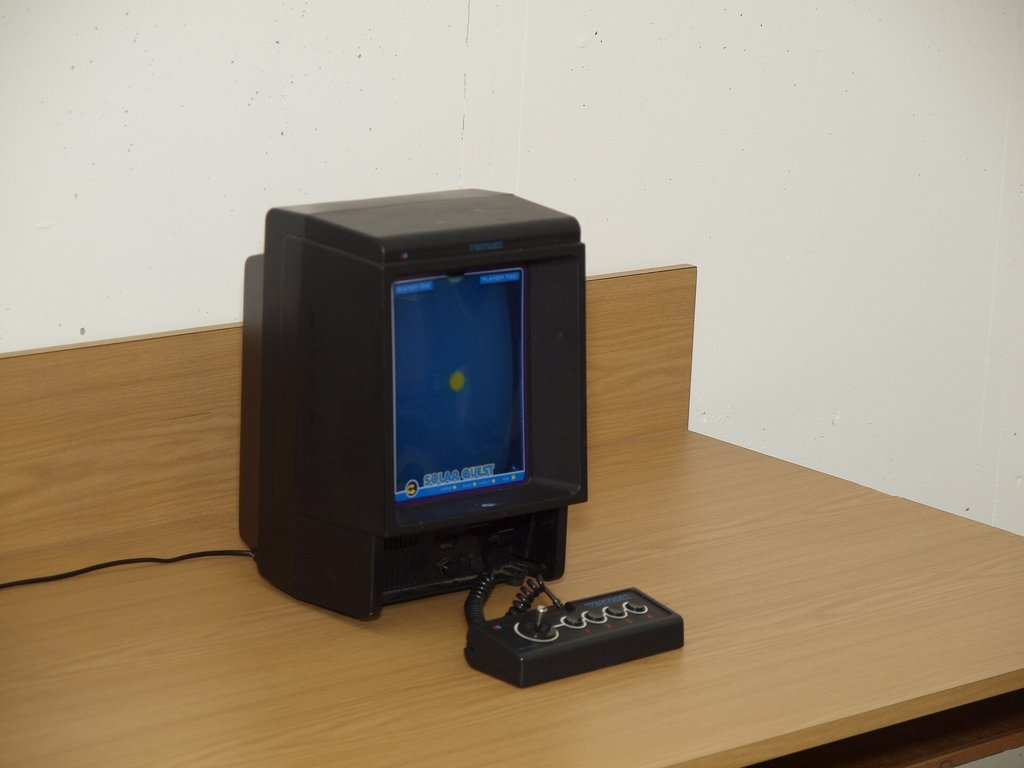
The five-check buying checklist
1. Picture: video of Mine Storm running — bright, centred, steady, circles round. 2. Sound: game audio clear over the machine’s natural buzz; no crackle, no touching-the-case changes. 3. Stick: centres true, rotates cleanly through its full travel, no pull, no dead spots. 4. Buttons and cable: all four buttons crisp and repeatable; cable sound at both ends; connector pins intact. 5. Completeness: controller present, cartridge slot clean and gripping, case screws and handle sound — and if a cartridge is bundled, see it boot. Five checks, ten minutes, and the difference between the two kinds of Vectrex story owners tell.
Where to buy, and which badge
The market’s geography matters more for the Vectrex than for television consoles, because the monitor makes shipping a risk and voltage a fact. Auction sites carry the volume, and the rules there are the rules of any forty-year-old electronics: buy the seller’s evidence, not their adjectives; ‘powers on’ is a photograph of a plug, not a test; and a console shipped in a thin box is a console being retired by violence — the tube and its neck board do not forgive drops, so favour sellers who pack like they have done it before, or better, buy within driving distance and test on the doorstep with the five checks. Retro shops and shows cost more and give you the machine running on a bench, which for this console is worth a premium all by itself. As for badges: a North American GCE machine wants North American mains, the European Milton Bradley editions are the natural buy on European voltage, and the Japanese Bandai edition is a collector’s flourish rather than a first purchase. Match the machine to your wall socket before you match it to your shelf.
Living with one: care and feeding
Ownership after the purchase is mercifully simple, because the Vectrex has no moving parts to wear and no media more fragile than a cartridge edge. Keep it dry, keep it out of attics — heat cycles are the capacitors’ enemy and the overlay plastic’s assassin — and run it regularly: tubes and capacitors both prefer exercise to storage, and a monthly Mine Storm is the cheapest maintenance schedule in retro gaming. Clean cartridge contacts before blaming cartridges. Store overlays flat, in sleeves, away from the light they were made to colour. And join the community’s knowledge base before you need it: the technicians, overlay makers and multicart builders who keep this machine alive are findable, friendly, and the reason a 2026 buyer is not adopting an orphan but joining a going concern. The Vectrex asks for a wall socket, a dark corner and an occasional evening. In exchange it does something no other retro console can do: it turns on its own screen, draws its own light, and plays — exactly as it did in 1982, because nothing about it has ever needed to change.
What it costs in 2026
Ballparks, hedged as they must be — condition rules this market more than any price guide, and sold listings are the only honest oracle. A working loose console in honest, unserviced condition typically changes hands in the region of £200–£350 / $250–$450, with serviced, bright-tubed examples above that and boxed sets comfortably beyond. Common loose cartridges — the Berzerks, Scrambles and Armor Attacks — sit roughly in the £20–£50 / $25–$60 band, complete-in-box favourites multiply that several times, and the late rarities (Polar Rescue, a complete Star Castle) price by auction fever rather than by chart. The 3D Imager is its own economy: expect high three figures for a loose unit and four figures boxed, when one surfaces at all. Multicarts and flash options price like modern electronics, because they are. None of these numbers will survive contact with a specific auction — treat them as the shape of the market, verify against current sold listings, and let condition, as ever, have the final word.
And if the machine you bring home turns out to need the technician before it needs the trophy shelf, take heart from the arithmetic of the whole hobby: a serviced Vectrex, bought honestly and checked properly, is not a project. It is an heirloom with a power switch, in a market that has done nothing but appreciate both the machine and the people who keep it lit.
The verdict of the guide
Buy the tube, service the buzz, test the stick, keep the overlays with the games, and let a multicart carry the library while the favourites gather in boxes. Do that, and the Vectrex is what its owners keep insisting it is: the most self-sufficient, characterful and flat-out luminous retro console a desk can hold — a machine that arrives with its own screen, its own game and its own light, needing nothing from the modern world except a wall socket and somebody who has read the checklist. The beam is waiting. Check it properly, then switch it on.