On Christmas Day 2018, the Video Game History Foundation gave retro gaming something it almost never gets: a lost game, back from the dead, with the receipts to prove it. The gift was SimCity for the Nintendo Entertainment System — a version Nintendo built, showed off once in public, and then quietly cancelled nearly three decades earlier. Two prototype cartridges had surfaced in the Seattle area the year before, and after months of study the Foundation published its research alongside the game’s ROM image, preserved through the Internet Archive. It remains one of preservation’s great stories: part detective work, part unlikely design collaboration, and part proof that some of the medium’s most important artefacts survive only because a cartridge happened to walk into the right shop.
To see why this particular prototype mattered so much, you have to understand what it actually is. This is not a rough knock-off of the beloved Super Nintendo game. By the best available evidence, the NES build came first — it is effectively the rough draft of Nintendo’s celebrated take on Will Wright’s city builder, written before the 16-bit version existed. Everything that made the SNES edition a classic is here in embryonic form, along with a few ideas that never made the jump.
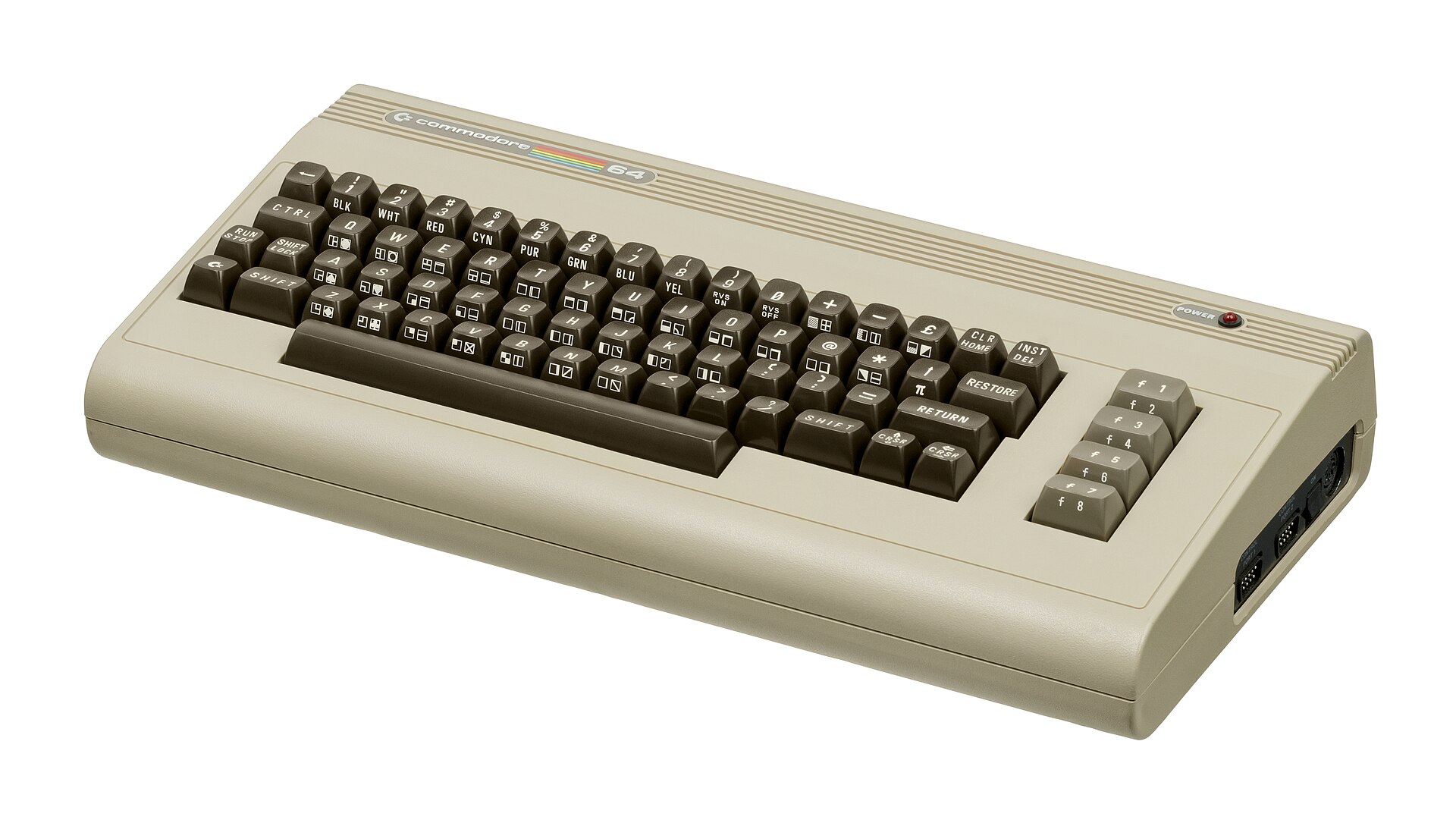
SimCity began life on the Commodore 64, where Will Wright built it out of a map editor he enjoyed more than the game it belonged to. Photo: Evan-Amos / Wikimedia Commons.
A Toy That Refused to Be a Game
Will Wright’s route to SimCity was accidental. His first published title, the 1984 helicopter game Raid on Bungeling Bay, shipped with a map editor for laying out its islands — and Wright discovered he had more fun arranging the terrain than flying missions over it. The Japanese Famicom conversion of that game sold in the hundreds of thousands, and the royalties bought him years of freedom to tinker with a strange little simulation of roads, zones, taxes and population growth. His publisher, Brøderbund, kept asking when the experiment would acquire goals and a way to lose, and eventually passed. Wright and Jeff Braun founded Maxis in 1987 to publish it themselves, and SimCity finally reached shops in February 1989. Word of mouth did the rest; by 1992 it had sold a million copies.
Over in Kyoto, Nintendo was sketching out software for the Super Famicom, and Shigeru Miyamoto had been toying with a game about creating your own world. As he later told Nintendo Power, he was pleasantly surprised to learn that a game much like the one he had imagined already existed. Nintendo executives flew to Maxis in Emeryville, California, a licensing deal was struck — rumoured at the time to run north of a million dollars — and Wright was flown to Kyoto, where he and Miyamoto spent a week redesigning the simulation for consoles.
What a Week in Kyoto Added
That week reshaped SimCity permanently. The pair gave the game a face: Dr. Wright, a cartoon adviser named in honour of the game’s creator, who explains the systems, celebrates your milestones and sulks if you pester him. They added a bank that could lend you a lump sum just as your treasury ran dry, turning the original’s grim wait-for-tax-season spiral into a recoverable setback. They gave the simulation a sense of progression, with settlements graduating from town to city to capital and beyond as their populations grew, the music deepening with each step. And in the most Miyamoto-like touch of all, they added presents — reward buildings such as zoos, theme parks and train stations that raised the land value around them and gave mayors something to strive for. Maxis liked several of these ideas so much that they travelled back into the series’ own sequels.
Nintendo’s plan, announced in Japan’s Nikkei newspaper on June 7, 1990, covered both of its machines: a Super Famicom edition for Japan and an NES edition destined for the United States, both expected in the summer of 1991. Nintendo Power previewed the 8-bit version and assured readers the two would differ mainly in graphical detail. In January 1991 the NES game made its one and only public appearance, playable at the Winter Consumer Electronics Show, where a roughly one-minute clip on the television show Video Power — complete with a promised May release — became, for the next twenty-six years, the only footage of it anyone outside Nintendo ever saw.
Then it vanished. The Super Famicom version launched in Japan on April 26, 1991, and headlined the Super NES launch in America that August to enormous acclaim. The NES edition was cancelled without announcement or explanation, still unfinished. No official reason has ever been given. The obvious suspect is strategy: a flagship simulation made a far better argument for buying new 16-bit hardware than for extending the old machine’s life, and Nintendo may simply have decided that one SimCity was enough.
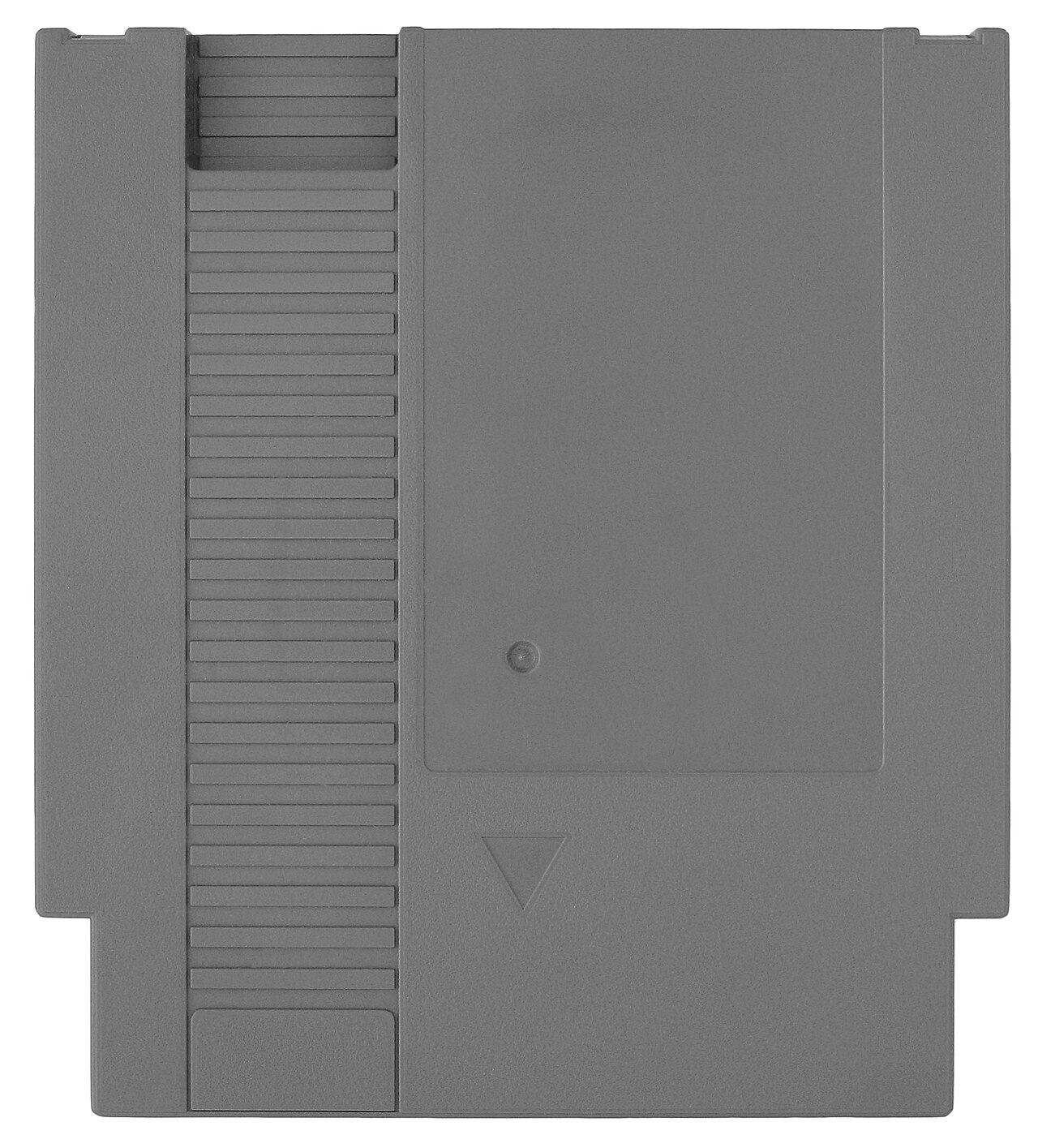
A standard NES cartridge shell. The two SimCity prototypes that resurfaced in 2017 were development cartridges, and this ordinary retail shell is shown for illustration only — it is not one of them. Photo: Wikimedia Commons.
Two Cartridges Walk Into a Game Store
The resurrection began in 2017, when the owner of two playable prototype cartridges brought them into a used game store in the Seattle area — the Back in Time chain, whose owner posted footage of the game running and set the collecting world alight. Nintendo-built unreleased games sit at the very top of the prototype market, so the cartridges travelled to that autumn’s Portland Retro Gaming Expo to entertain offers. There the story split in two. One cartridge was sold to a private collector, Christian Deitering, who went on to document the game in an extensive guide. The other stayed with its original owner — but thanks to a financial contribution from Foundation board member Steve Lin, the Video Game History Foundation came home with a digital copy, dumped at the show, to study and preserve.
The details the Foundation verified at the expo are the kind historians dream about. The data on both cartridges proved byte-for-byte identical. One carried a build date on its label: December 20, 1990. A source familiar with the game’s development later explained that this cartridge had been used to demonstrate the game to focus-test groups — which makes it, in all likelihood, the very build shown at the Winter CES a couple of weeks later. The minute of Video Power footage and the cartridge in historians’ hands were, finally, the same game.

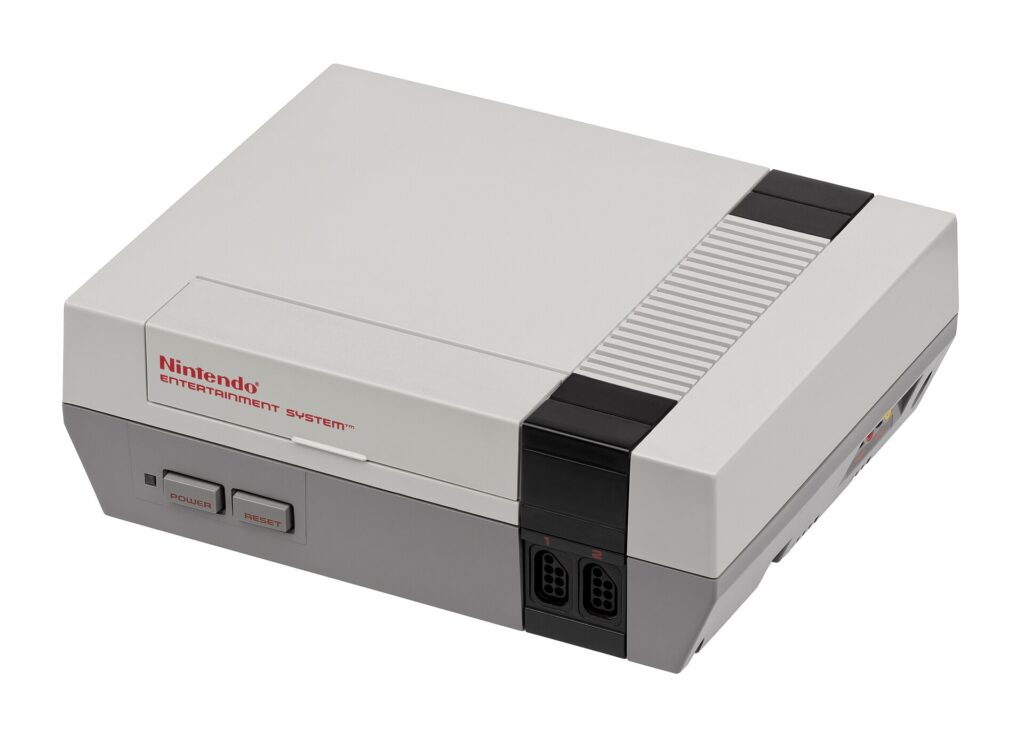
The Nintendo Entertainment System. Nintendo’s SimCity was developed for this hardware first, before the project moved to its 16-bit successor. Photo: Evan-Amos / Wikimedia Commons.
The Rough Draft of a Classic
Playing the prototype is an uncanny experience for anyone raised on the Super Nintendo version. The title screen, the interface layout, the seasonal colour palettes, the presents, the loans, the congratulatory visits from Dr. Wright — all of it originates here. Composer Soyo Oka, who would later write the music for Super Mario Kart and Pilotwings, scored this version separately from its 16-bit sibling, and only a single beloved track, the Metropolis Theme, is shared between them. The NES Dr. Wright even wears the necktie of his American marketing artwork rather than the bow tie of the released SNES game, preserving a design that never appeared in any commercial release. And the cartridge holds ideas Nintendo’s team later abandoned: the game asks each new mayor for a favourite word, then, hours in, reveals it as the name of your sister city; digitised voice samples bark from the traffic helicopter, a leftover habit from the Macintosh original; a unique sprite of the bank’s manager waits behind the loan screen.
The hardware forced real compromises. Where the computer and SNES versions build on tiles three squares wide, the NES zones are two by two, while presents stubbornly remain three by three — which quietly kills the famous “donut” strategy of ringing a present with high-value zones. The monster that menaces your city is still a generic beast here; Bowser’s starring role came later. And the unfinished state shows. Presents never deliver their promised land-value boost, so cities grow sluggishly. Overspend past zero at year’s end and your treasury overflows into a fortune, abolishing the challenge entirely. Boats, a UFO scenario and a botanical-garden present exist as tiles and fragments of code that the game never calls. The Foundation’s sources were blunt about it: the game was never finished, and this build — the last one Nintendo’s Japanese developers sent to America, it appears — is as complete as it ever got. A full commented disassembly by NES expert CaH4e3, produced as part of the Foundation’s digital archive around the game, has since restored some of those stranded features just to show what was intended.
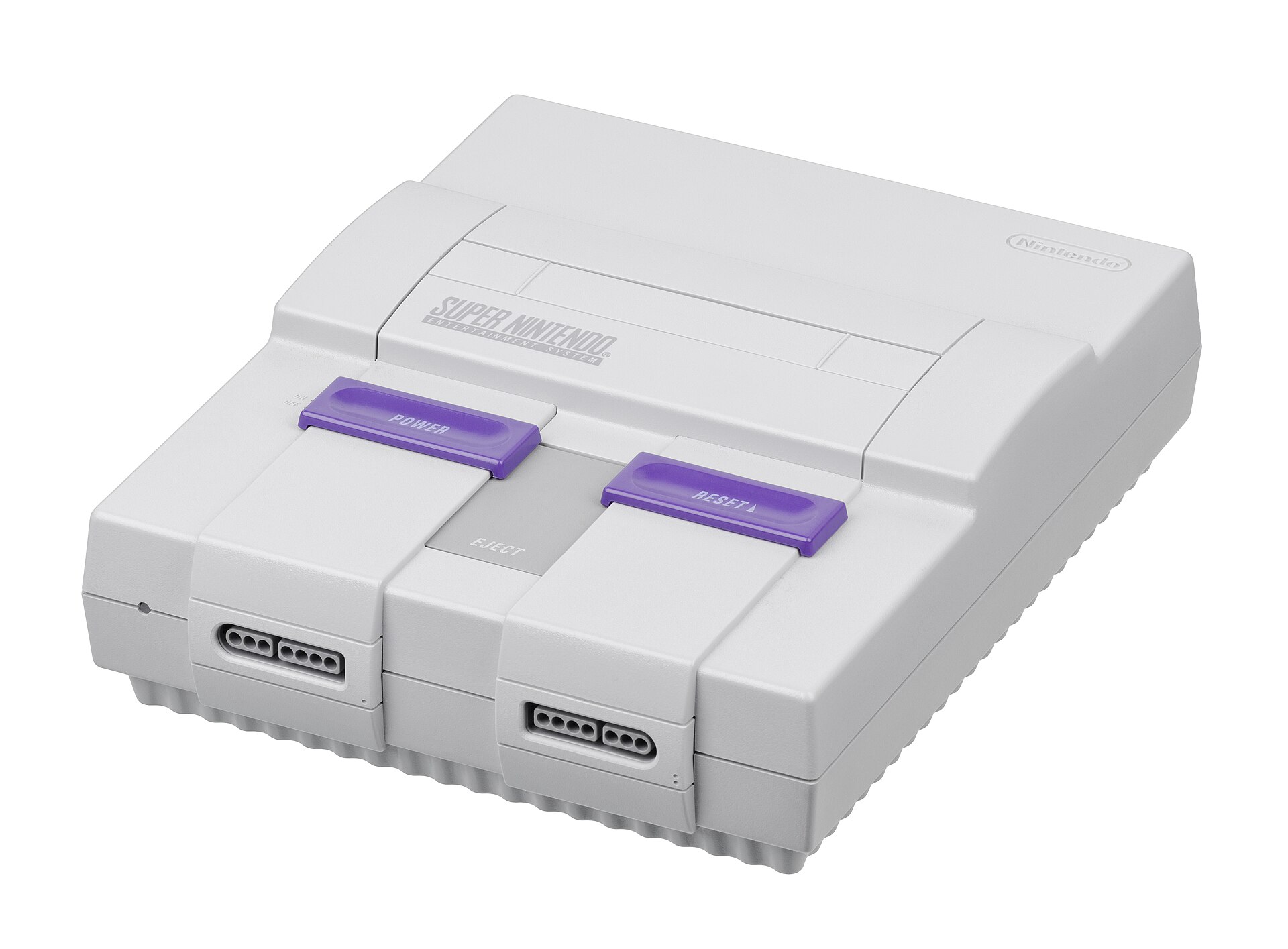
The Super Nintendo Entertainment System. Its SimCity, a launch-window triumph in 1991, was built on foundations poured by the cancelled NES version. Photo: Evan-Amos / Wikimedia Commons.
A Christmas Release — and a Preservation Landmark
On December 25, 2018, the Foundation published the whole story: Frank Cifaldi’s long-form history of the game’s creation, cancellation and recovery, a thorough feature-by-feature comparison with the SNES edition, and the ROM image itself, uploaded to the Internet Archive by Steve Lin as part of a public digital archive around the game. The legal picture is worth stating plainly, because the Foundation stated it plainly: this was Nintendo’s own unreleased work, released openly under the Foundation’s name as an act of preservation and scholarship — presented for educational purposes, with no licence from Nintendo announced, and no attempt to pretend the game was anything other than what it was. That an unreleased first-party Nintendo game could be documented and shared this openly, by a non-profit archive rather than an anonymous leak, is a large part of why the story still matters.
Because the alternative was oblivion, and oblivion was winning. For twenty-six years the entire public record of a collaboration between Will Wright and Shigeru Miyamoto — two of the most influential designers alive — consisted of one minute of television footage and a magazine preview. The game survived because two cartridges stayed playable, because a store owner recognised what he had, because collectors and a board member’s chequebook met at the right expo, and because an archive existed that knew what to do next. Most lost games get none of those chances. SimCity for the NES got all of them, and on Christmas Day 2018 it stopped being a rumour and became history again. This article is editorial coverage only; we describe the release but link to no ROM or download.