
Buying a Virtual Boy in 2026 is unlike buying any other Nintendo console, because the Virtual Boy is the only one whose central component — its displays — fails with age in a specific, predictable, diagnosable way. Everything else about collecting for it is almost pleasant: the library is tiny, the hardware is one model, and a complete education fits in a single guide. This is that guide: what to check before you pay, what the machine needs to be played comfortably, what the games cost and which ones matter, and the modern options — flash cartridges and VR emulation — that have quietly made this the best era in history to get into the red.
The hardware: one model, several fates
Nintendo made exactly one Virtual Boy. There are no hardware revisions to hunt, no region-locked variants of consequence — the Japanese and North American units are the same machine in different boxes, and the console plays every cartridge from every region, because the Virtual Boy has no region lockout at all. That single fact simplifies collecting enormously: the entire world library, all twenty-two commercial releases, plays on any unit you will ever buy.
The differences that do exist are in the box. The Japanese launch packaging, the North American box with its Mario’s Tennis pack-in (the game was sold separately in Japan), rental units from the Blockbuster era with their distinctive hard cases, and the various demo and display units that have leaked from retail history. For a player rather than a museum, none of this matters. What matters is the unit’s two known weaknesses, and the first is famous.
The display fault: the one check that decides everything
Each of the Virtual Boy’s two displays connects to the main board by a ribbon cable that was soldered at the factory with a process that has not aged well. Three decades on, those joints fail, and the failure has a signature: horizontal lines in one or both eyes, a display that flickers, ghosts or drops out entirely, sometimes cured temporarily by warmth or pressure and always returning. A Virtual Boy sold as ‘untested’ in 2026 should be priced as a Virtual Boy with the fault, because a large share of surviving units have it to some degree.
The good news is that the fault is completely, permanently fixable. The community-established repair — carefully re-soldering the ribbon connections, a delicate job given the ribbons’ fragility — restores displays to factory behaviour, and specialist repairers offer it as a routine service. The buying rule follows: either buy a unit whose displays have been solder-fixed and demonstrated working in both eyes, or buy cheap and budget the repair. Never pay a premium for a merely ‘working’ unit with original ribbons; you are buying the fault at a delay. When testing, run the machine for at least fifteen minutes — failing displays often behave cold and degrade as they warm.

The stand, the controller and the power question
The Virtual Boy’s stand is its second weakness: the plastic joint where headset meets stand cracks with age and use, and the medallion-like clip is the most-replaced part in the ecosystem. Check any purchase for cracks around the joint; community-made replacement stands and 3D-printed parts are widely available and are a legitimate, accepted part of ownership. The headset’s foam eyeshield, meanwhile, perishes and is similarly replaceable. Neither should stop a purchase; both should shape the price.
The controller is sturdy, twin-D-padded and takes the battery pack story with it: the Virtual Boy runs on six AA batteries in a pack that clips to the controller, or on an AC adapter — and the adapter situation needs care, because the official tap is uncommon and third-party solutions vary. Many owners in 2026 use modern USB power conversions. Whichever route, confirm what your purchase includes; a unit without any power solution is a unit you cannot test, and an untestable Virtual Boy is a gamble, per the display rules above.
The games: twenty-two doors, a few of them locked with gold
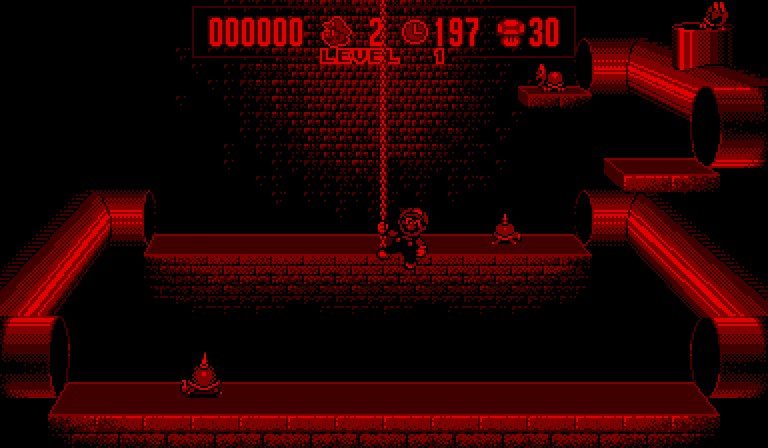
The commercial library is just twenty-two games, and the price spread inside it is the widest in retro collecting relative to library size. The common North American releases — Mario’s Tennis (the pack-in, effectively free with any loose unit), Galactic Pinball, Teleroboxer, Red Alarm, Golf — remain genuinely affordable, and a new collector can assemble the system’s essential shelf quickly. Jack Bros., 3D Tetris and the late North American releases climb steeply. The Japanese-only catalogue is the collection’s second act: most are import-friendly and reasonably priced, with two famous exceptions — Innsmouth no Yakata is climbing as its reputation spreads, and Virtual Bowling, the library’s rarest game, sits in a price class of its own where this guide will not quote figures, because they move too fast to print responsibly.
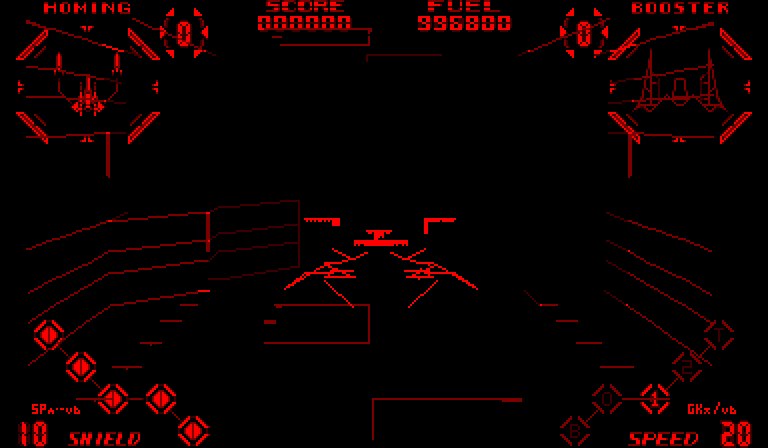
Buy the games to play in this order: the pack-in first, then Teleroboxer, Jack Bros., Red Alarm and Vertical Force — the system’s creative peak — then the Japan-only shelf (Innsmouth, Virtual Bowling if fate smiles, Space Squash and the puzzle trio) for the library’s hidden half. Condition advice is standard Nintendo: cartridges are robust, boxes were cardboard and are priced accordingly, and a loose cart of a great game beats a sealed mediocre one at every level of this hobby.

Flash carts and emulation: the modern doors
Two developments have transformed Virtual Boy ownership. The first is the multi-game flash cartridge — devices in the FlashBoy tradition and modern multi-carts let you carry the entire twenty-two-game library, plus three decades of homebrew, on one cartridge in original hardware. For players, this is now the rational endgame: one working, solder-fixed headset, one flash cart, everything ever made for the system. It also makes the machine’s superb homebrew scene — new games, and finished versions of Nintendo’s own cancelled titles — part of a normal collection rather than a developer’s hobby.
The second is emulation with real depth. Standard emulators play the library flat, which misses the point; the revelation of recent years is stereoscopic emulation on VR headsets, which renders the games in genuine 3D, at comfort levels the original tabletop headset could never offer, and is by wide agreement the most pleasant way to experience most of the library. If you are Virtual Boy-curious, start there — it costs nothing, it is faithful where it matters, and it will tell you honestly whether you want the red hardware itself. Many do. The object has a pull that emulation explains but does not reproduce.
Prices, patience and the shape of the hunt
Virtual Boy prices rose through the retro boom and have settled into a pattern: hardware is priced by its repair status more than its cosmetics, commons are cheap, the Japanese shelf is where value hides, and the two or three grails behave like assets rather than games. The general market guidance is to price any unit as its displays deserve, to treat ‘untested’ as ‘faulty’, to buy the solder-fixed machine over the pretty box, and to remember that with a library this small, completeness is a realistic dream — almost everyone who starts can finish, which cannot be said of many consoles.
Above all, buy it to play it. The Virtual Boy in 2026 is not a speculation vehicle that happens to be a console; it is a strange, singular way of seeing games that exists nowhere else in the medium, kept alive by one of the best communities in retro gaming. Get the displays fixed, get the flash cart, take your breaks every fifteen minutes as the manual always said — and see red.
Where to buy, and what to ask
The market for Virtual Boy hardware runs through the usual retro channels — auction sites, specialist retro shops, Japanese marketplaces and proxy sellers for the domestic stock — and each has its etiquette. Japanese units are often in beautiful cosmetic condition and are frequently the better buy, since the hardware is identical and region-free; the boxes differ, the machine does not. Wherever you buy, the questions are the ones this guide has built toward: Are both displays demonstrated working, in photographs or video taken for you? Have the ribbons been solder-fixed, and by whom? What power solution is included? Is the stand’s joint intact? A seller who answers all four clearly is selling you a known machine. A seller who answers none is selling you a lottery ticket at a known machine’s price.
Budget honestly for the whole project rather than the console alone. The realistic 2026 Virtual Boy setup is: the headset (priced by display status), the repair if it has not been done, a modern power solution if the battery-only life does not suit you, a replacement stand or eyeshield if the originals are tired, and a flash cartridge to carry the library and the homebrew scene’s thirty years of additions. Priced as a system rather than as a console, it compares well with other retro platforms of its rarity — and unlike most of them, the library it opens is small enough to finish.
Care, storage and the long term
Ownership, once secured, is mostly kindness. Store the headset out of sunlight, which ages the plastics and the foam; keep the stand unloaded when the machine is not in use, since the joint’s cracks are stress injuries; and run the machine occasionally — displays that sit for years are the ones that surprise their owners. The eyeshield and stand parts are replaceable, the cartridges are effectively immortal, and the one true consumable is the display ribbon joint, which a proper solder fix retires permanently. A Virtual Boy bought well in 2026 is, unusually for retro hardware, a machine whose known failure mode can be closed forever — after which it asks only for batteries, cartridges and the courtesy of a break every fifteen minutes, as it always did.
Loose, boxed and the shape of a finished shelf
Decide early what kind of collection you are building, because the Virtual Boy punishes indecision more than most platforms. A loose-cartridge playing shelf — all twenty-two games, played — is an achievable, finite project with exactly two expensive doors in it. A boxed collection is a different hobby entirely: the boxes were cardboard, survival rates are low, and the Japanese boxes (often the more beautiful objects) multiply the shelf again. A sealed collection is a financial instrument and this guide has nothing to tell it. Most satisfied owners land in the same place: a working, repaired headset; the games loose or flash-carried; perhaps one or two favourite boxes as shelf pieces. The library’s smallness is the mercy — completeness is a plan here, not a fantasy, and the finished shelf fits in a shoebox.
One last piece of buyer’s discipline: because the library is finite and famous, reproductions and relabelled cartridges exist at the expensive end. Buy the costly titles — Jack Bros., Virtual Bowling, the late releases — from sellers with reputations, compare labels and boards against the community’s documented references, and treat a price that flatters you as a question rather than a gift. The community’s archives make verification easy; the only collectors who get burned are the ones who skip the five minutes it takes.
Buy the displays, not the box. Fix the ribbons, carry the library on a flash cart, and the Virtual Boy stops being a cautionary tale and becomes what it always was underneath: the most distinctive games machine Nintendo ever made.