
The Wii’s library is usually told as a story of two games libraries in one box: the Nintendo blockbusters everyone played, and mountains of shovelware everyone mocked. Between those poles sits a third library — the good stuff the motion-control gold rush buried. Third parties took real swings on the Wii, Capcom and Sega and Treasure among them, and many of their best games sold modestly, reviewed quietly and vanished. This is your digging guide: ten brilliant Wii games that slipped past the crowd, every one of them worth the shelf space of the dozen waggle-fests that outsold it.
1. Zack & Wiki: Quest for Barbaros’ Treasure

Capcom’s pirate adventure is the Wii’s great point-and-click revival: a series of compact, devious puzzle stages in which young Zack and his flying monkey Wiki hunt treasure by turning enemies and objects into tools — a frog becomes a bomb, a mole becomes a drill, a snake becomes a grabber — usually by miming the action with the Wii Remote. Every stage is a little clockwork machine that clicks satisfyingly into place, the cel-shaded presentation is gorgeous, and the difficulty curve is steeper and fairer than the cute box suggests. It flopped commercially and became a cult classic entirely on merit. Practical note for hunters: it was published by Capcom in all regions, it supports the Classic Controller era’s best use of the pointer, and its later stages — some of them timed, some of them gloriously unfair-looking until the trick reveals itself — reward exactly the patience modern puzzle games rarely ask for. If you buy one game from this list first, buy this one.
2. Boom Blox

Yes, the Steven Spielberg game — and yes, it is genuinely excellent. Boom Blox is a physics playground built around the Wii Remote’s pointer: throw balls at Jenga-like towers, pull blocks free, blast structures apart and protect your own constructions across hundreds of stages, with a full level editor and multiplayer modes that turn demolition into a sport. It understood the Wii better than almost any third-party game: simple to grasp in seconds, deep in the way all great physics toys are deep, and endlessly sociable. Its party sequel added more, but the original’s purity is the gem. It is also, not incidentally, one of the best multiplayer games on the system for mixed-ability groups: a five-year-old throwing virtual bowling balls at a tower and a veteran engineering a one-block collapse are playing the same game at the same time, and both are winning. Few Wii discs earn their shelf space as completely.
3. Little King’s Story

A royal life-simulation strategy game of enormous charm, from a team stitched together from talent behind Harvest Moon, Dragon Quest and Chulip. As King Corobo, a boy who finds a magic crown, you do not fight at all — you command. Your subjects dig treasure, farm, build bridges and form an umbrella-blocking, cow-wrangling royal guard that follows you around the kingdom, conquering rival lands ruled by gloriously silly kings. It plays like Pikmin wearing a crown and a smile, runs for dozens of hours, and was published to warm reviews and near-total public indifference. A genuine lost classic. Its presentation does heavy lifting — a storybook art style, a classical score, and a script with real wit — but the strategy underneath is no decoration: positioning your subjects, choosing which careers to train, and knowing when a battle is a job for farmers with pitchforks rather than soldiers is a proper tactics loop. Set aside a long weekend. Then a second one.
4. Muramasa: The Demon Blade
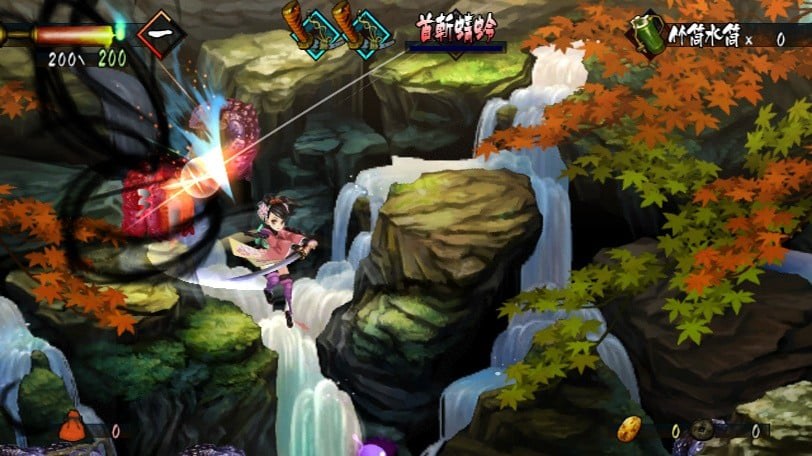
Vanillaware’s side-scrolling action RPG is probably the most beautiful game on the Wii — a living Japanese woodblock print in which swordsman Kisuke and kunoichi Momohime cut through haunted landscapes, forging and collecting dozens of blades, each with its own special art. The combat is fast, fluid and stylish, built on one-button accessibility with real depth underneath, and the twin campaigns re-thread the same gorgeous world from opposite sides. On a console mocked for its graphics, Muramasa is the rebuttal you can frame. It later reached other platforms in expanded form, but the Wii original is where its legend began. Two practical virtues for collectors: it plays beautifully with a Classic Controller for those who prefer a pad to waggle, and its difficulty settings make it welcoming despite the genre — this is an action game about flow and beauty first, punishment second. On a console with a reputation for muddy visuals, Muramasa is the disc you load to win an argument.
5. A Boy and His Blob

WayForward’s reimagining of the NES oddity is a hand-drawn puzzle-platformer with a hug button — literally; you can hug the blob, and you should, often. Feed him jelly beans and he becomes a trampoline, a hole, a rocket, a giant robot; forty stages and a stack of challenge rooms wring every drop from that one idea, wrapped in storybook art and a wordless friendship that lands harder than most game stories with full voice acting. It sold quietly in 2009 and has been breaking hearts in bargain bins ever since. One of the most likeable games on the system. Parents should know it is also one of the Wii’s finest games to play alongside a young child: the puzzles are logical rather than twitchy, the tone is gentle without being saccharine, and that hug button is not a gimmick — it is the game’s whole design philosophy expressed in a single input. WayForward made many good games in this era. This is the one people keep.
6. Klonoa

Namco’s Wii remake of the PlayStation classic Door to Phantomile rebuilt one of the best 2.5D platformers ever made in soft, dreamy 3D — and the world mostly shrugged. Klonoa grabs enemies with his Wind Ring, inflates them, and uses them as double-jumps, projectiles and puzzle keys through stages that twist in and out of the screen with a confidence the genre had forgotten. It is gentle, melancholy and expertly made, and its modest Wii sales became a sad footnote in the character’s history. The later multi-platform remaster means you can play it anywhere now — the Wii disc is where the rescue attempt started. New players should know the remake is no museum piece: the controls are crisp, the extra content folds in naturally, and the famous difficulty of the original’s later stages is intact beneath the soft-focus glow. Klonoa’s problem was never quality — it was timing, arriving in a market that had stopped listening. Do not make the same mistake twice.
7. Deadly Creatures

The strangest idea on this list: a dark action game in which you play, in alternating chapters, a tarantula and a scorpion, crawling through a desert world of cacti, bones and human menace rendered at insect scale — while, far above you, a very human crime story plays out, voiced by Dennis Hopper and Billy Bob Thornton. The arachnids’ movesets are distinct and vicious, the perspective tricks are superb, and the whole production has a grimy confidence utterly unlike anything else on the Wii. THQ marketed it barely at all. It remains the system’s most original third-party curio. The two-animal structure is more than a novelty: the tarantula’s chapters favour stealth and verticality, the scorpion’s brute-force brawling, and the game cross-cuts between them and the human story with a confidence most film tie-ins never approach. Dennis Hopper does not phone it in, either. A strange, confident, faintly nasty little masterpiece of tone.
8. The House of the Dead: Overkill

Sega handed its light-gun series to Headstrong Games, who rebuilt it as a grindhouse exploitation film: grainy, sweary, funky and gloriously tasteless, with Agent G and Detective Washington blasting mutants through a bayou nightmare presented like a battered cinema print. Mechanically it is a superb on-rails shooter — the Wii Remote was born for this — with combo scoring, weapon upgrades and a co-op mode that turns any sofa into an arcade. Its record-breaking swearing got the headlines; its craft deserved them more. A collector’s footnote: the game was built by the Guildford studio Headstrong, veterans of the House of the Dead’s home conversions, and it shows in the details — branching paths, a proper scoring culture, and unlockable extras that take real skill to open. If your Wii sits near a CRT, this is the disc that justifies keeping a light-gun-shaped remote charged. Utterly disgraceful. Utterly essential. The Wii’s best rail shooter, in a crowded and underrated field.
9. Tatsunoko vs. Capcom: Ultimate All-Stars

A full-blooded Capcom versus fighter — Ryu, Chun-Li and Mega Man’s Volnutt against the heroes of Tatsunoko anime, from Science Ninja Team Gatchaman to Tekkaman — built on the Wii because, at the time, that is where the audience was. It is fast, flamboyant and approachable, with tag-team assists, giant characters who fight two opponents at once, and online play, and it reviewed like a flagship. Licensing kept it a Wii exclusive and later trapped it off digital shelves entirely, so the disc has become a collector’s piece. The Wii’s best fighting game, full stop. It is also a small miracle of localisation: the Japanese version’s licensing tangle meant the Western release had to swap characters, rebuild the roster balance and add online play — and the Ultimate All-Stars edition that resulted is the definitive version of the game anywhere. When people argue the Wii had no hardcore games, this disc is exhibit A for the defence.
10. Sin & Punishment: Star Successor
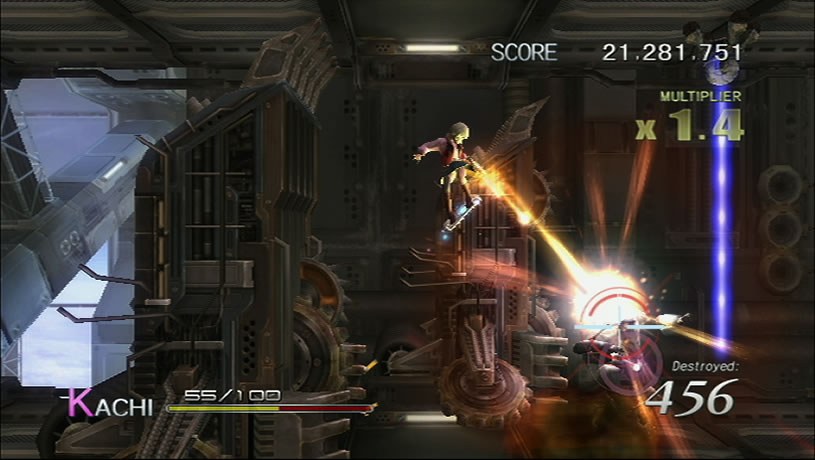
Treasure’s sequel to the N64 cult shooter (itself a game the West only met through the Virtual Console) is a relentless on-rails action game in which Isa and Kachi fly, dodge and sword-swipe through some of the most inventive boss encounters on the system — including a side-scrolling duel and a fight staged across a transforming landscape. Pointer aiming makes it the definitive Treasure control scheme, the scoring system invites mastery, and co-op lets a second player join the barrage. It arrived late, sold softly and deserves its modern cult: This is the Wii at its most hardcore. Treasure’s design fingerprints are everywhere — bosses that transform mid-fight, scoring systems that reward aggression over survival, and set-pieces that escalate past the point of parody into something like awe. It is not a long game, but it is an infinitely replayable one, and its co-op mode turns the barrage into a shared language. The perfect final entry: proof that the little white box could do anything.
A final word on how to work through them: these ten split neatly into an evening’s entertainment (Boom Blox, Overkill), a weekend (Zack & Wiki, Klonoa, A Boy and His Blob, Sin & Punishment, Deadly Creatures) and a season (Little King’s Story, Muramasa, Tatsunoko vs. Capcom’s versus ladder). However you order them, play them on real hardware at least once — pointer, waggle and all. Several of these games are inseparable from the controller they were built for, and the Wii experience is the authentic one.
Ten games, ten arguments that the Wii’s library rewards the digger. Prices for most of these stayed sensible far longer than the Mario and Zelda discs — though collectors have woken up to several entries here, so the bargain window is not what it was. Happy hunting.