
At a glance: Wolfenstein 3D · Atari Jaguar · id Software / Atari, 1994 · First-person shooter · Score: 8.5/10
If Jaguar Doom was the port that proved a console could handle the new king, Jaguar Wolfenstein 3D was the port that treated the old king with respect. id Software’s genre-founding shooter had been butchered, censored and compromised on other machines — most famously on the Super Nintendo, where the blood vanished, the dogs became giant rats and the portraits were diplomatically removed. The Jaguar version, developed under id’s own eye, restored everything, added more, and ran the whole game at a speed that made its parent PC version, on typical 1992 hardware, look faintly embarrassed.
The full game, uncensored, plus change
Start with what is here. The Jaguar build draws on the Macintosh lineage of Wolfenstein rather than the compromised console conversions: thirty levels of castle to clear, the full bestiary of guards, officers, SS and mutants, and an expanded arsenal that goes beyond the PC original’s four weapons — the flamethrower and the rocket launcher join the knife, pistol, machine gun and chaingun, and they change the texture of the game in the best way. A corridor full of SS is a problem for the chaingun; it is a brief, satisfying firework for the flamethrower. The blood is red, the wall art is unbowdlerised, the German voice samples bark as intended, and the whole package has the tang of a game presented as its makers wanted it presented.
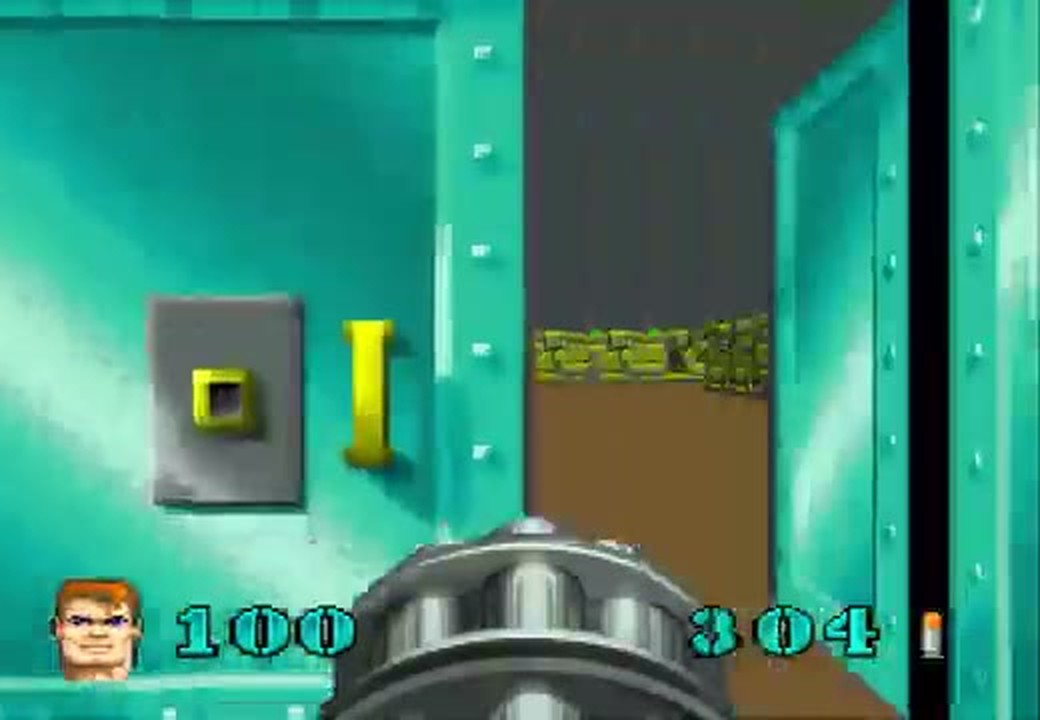
The presentation upgrades matter. The Jaguar version renders at a higher fidelity than the DOS original — cleaner walls, richer colour, a smooth frame rate with none of the chug that afflicted other home versions — and it does it full-screen, HUD arranged around a view that never feels like peering through a letterbox. An automap, a luxury the PC original never offered, quietly transforms the maze-hunting: Wolfenstein’s levels are big, secret-stuffed labyrinths, and being able to check your bearings turns the late floors from an exercise in wall-humping memory into something closer to a fair fight. The secrets are all still there to be humped for, of course. Completionists will push every suspicious portrait in Germany.
Why it still plays
Strip away the history and Wolfenstein 3D is a simple game: flat floors, right-angle corridors, hitscan enemies, keys, doors, treasure. Its Jaguar incarnation survives because the fundamentals are immaculate. The movement is fast — faster than Doom’s, in the Jaguar’s own strange hierarchy — the weapons escalate with perfect clarity, and the level design teaches its language (listen at doors, strafe the corners, hoard the meals and medkits against the boss floors) with a fairness that makes the deaths feel earned. Hans Grosse and the rest of the end-of-episode guardians still land as genuine events, and the score-and-treasure loop gives every floor a second, greedier game running underneath the shooting.
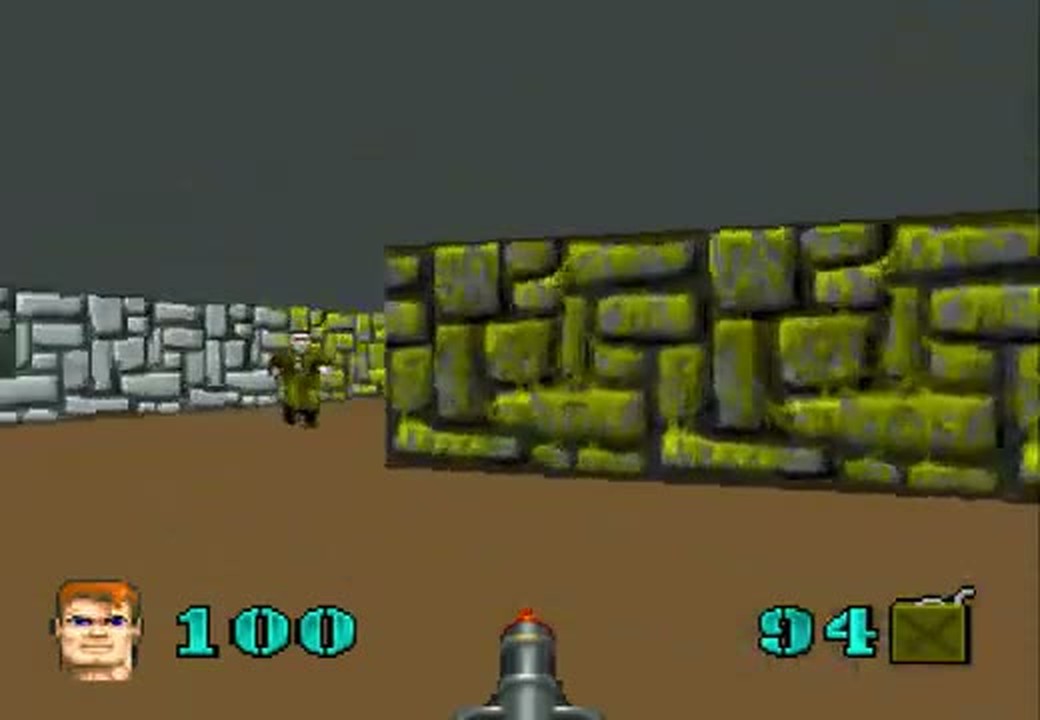
The Jaguar pad handles it well. Strafing is comfortable, the keypad covers weapon selection in the console’s usual overlay style, and the game’s single-plane movement means nothing is lost to the absence of a mouse. If anything, the pad’s digital certainty suits Wolfenstein’s grid-world movement: this is a game of ninety-degree decisions, played at sprint speed, and the Jaguar version leans into that purity rather than apologising for it.
The caveats of age
No port review should pretend the years haven’t marked the game itself. Thirty levels of flat, ceiling-less castle will test modern variety expectations; the enemy AI is a period piece of advance-and-fire; and players arriving from Jaguar Doom — released the same year, on the same console — may find Wolfenstein’s world visually plain by comparison, all corridors and right angles where Doom had stairs, heights and light. The sound design, while faithful, is sparse by the standards of its own sibling port’s atmospheric silence-as-feature. These are criticisms of 1992’s design more than of this conversion, but a buyer in any year is buying the whole experience.

What the Jaguar version represents, historically, is the moment the console FPS grew a conscience about fidelity. Alongside Doom it gave the Jaguar a credible claim to the genre’s crown jewels, treated properly, at a time when the default console conversion was a censored shadow. That both games came from id itself — a studio that guarded its work — tells you the Jaguar, for all its commercial doom, was taken seriously by the people who mattered most in its best genre.
A note on the two id cartridges, together
Jaguar Wolfenstein is best appreciated in its historical pairing. In a single year, 1994, one console received from id Software itself the two games that founded and then revolutionised the FPS — Wolfenstein the elder, Doom the heir — each converted with a care that the rest of the industry reserved for its own flagships. The pairing gave the Jaguar a genre library out of all proportion to its sales, and it set a standard the market noticed: the Jaguar ports were the ones quoted when other conversions were found wanting, and the SNES Wolfenstein’s censors and the 3DO Doom’s troubles were measured against a yardstick built, improbably, by Atari’s machine. For collectors, the two cartridges together are the Jaguar’s essential diptych; for historians, they are the proof that the system’s failure was a failure of everything around the games, not of the games id brought to it.
Played in 2026, Wolfenstein’s pleasures are the pure ones: speed, clarity, and the clockwork satisfaction of a floor cleared to the last secret and the last gold bar. The Jaguar version protects all three and adds the map that keeps the labyrinth honest. There are more elaborate shooters on this console. There is none more elemental, and none whose quality is easier to verify in the first ninety seconds: take the chaingun down the first long corridor and try not to grin.
The arsenal, appreciated
The expanded weapon set deserves its own salute, because it quietly fixes the original’s one pacing flaw. The PC game’s arsenal plateaued early — the chaingun arrived and the conversation ended. The Jaguar’s additions reopen it: the flamethrower turns chokepoints into theatre and ammunition discipline into a genuine choice, and the rocket launcher gives the boss floors and the mutant packs a punctuation mark they always deserved. Neither weapon unbalances the castle; both feel, within a level or two, like they were always in the design documents waiting for hardware that could carry them. Ports are supposed to preserve. The great ones — and in its decade this was one — preserve and complete.
Final housekeeping for collectors: the cartridge is common enough to play and significant enough to keep, the happiest combination in this library. Put it next to Doom, where it has always belonged, and the Jaguar’s 1994 starts to look like the golden year it secretly was.
Mein Leben, indeed — usually yours, usually in the best way, somewhere around the third floor, with the chaingun warm and the treasure room still unfound behind a portrait you have not pushed yet.
Verdict
The definitive console Wolfenstein of its era: complete, uncensored, expanded and fast, with an automap that fixes the original’s one structural cruelty. A classic, converted the way classics deserve. Score: 8.5/10