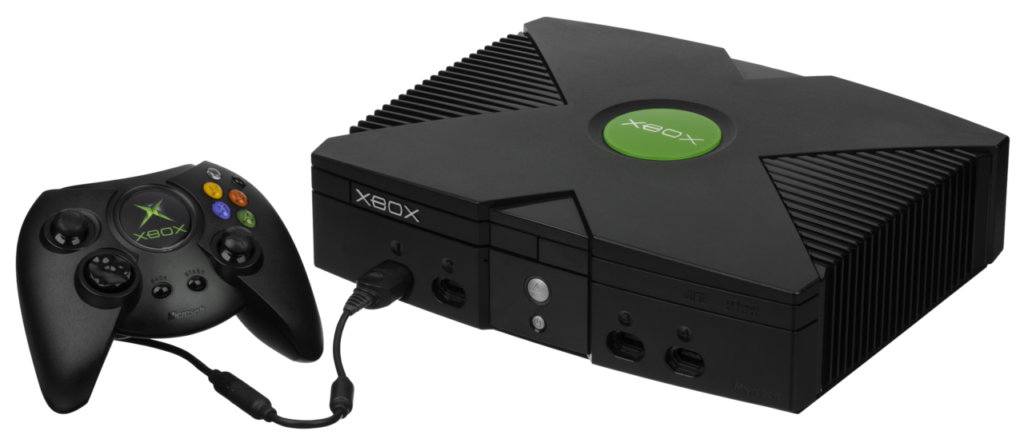
The original Xbox lost its war so completely that the numbers read like a misprint – 24 million consoles against the PlayStation 2’s 160 million – and yet it may be the most consequential losing console ever built. Microsoft’s big black box was the first console with a hard drive and an Ethernet port as standard, the first built around an online service with a single gamertag, the machine that made the first-person shooter a living-room genre and the western RPG a console citizen. It lost Microsoft a reported four billion dollars, it was discontinued after barely four years when its graphics supplier pulled the plug, and it achieved every strategic objective its makers actually had: it stopped Sony from owning the living room unopposed, and it bought the beachhead from which the Xbox 360 nearly won the next war. This is the complete story of the DirectX box – the Duke, the Halo effect, the Live revolution, and the hobbyists who turned a discontinued console into the first hacker’s home media centre.
The DirectX Box: A PC Team Crashes the Console Business
The Xbox began as an insurrection inside Microsoft. In the late 1990s, the company’s DirectX team – Seamus Blackley, Kevin Bachus, Otto Berkes and Ted Hase among them – watched Sony’s PlayStation 2 announcement (complete with talk of the console replacing the PC at the centre of home entertainment) and concluded that Microsoft’s gaming technology needed a box of its own. Their prototype was famously literal: Dell laptops gutted on stage-adjacent workbenches, Windows and DirectX running games on hardware they could point at. The pitch – a console built from PC parts, running PC APIs, courting PC developers – survived layers of corporate review because Bill Gates wanted Sony answered; the machine was unveiled at GDC in March 2000 with Gates himself on stage, and the name fell straight out of the project: the DirectX Box became, simply, Xbox. The final hardware was a brute: an Intel Pentium III-derived CPU at 733 MHz, a custom Nvidia graphics chip (the NV2A, a GeForce 3 relative) that made it comfortably the most powerful console of its generation, 64MB of unified RAM, an 8GB hard drive – the first ever fitted to a console as standard – and an Ethernet port where its rivals offered dial-up adapters as afterthoughts. Robbie Bach and J Allard took the programme over and aimed it, with a marketer’s precision, at the eighteen-to-thirty-four-year-old men the PS2’s launch had mobilised. Microsoft reportedly committed billions to the launch and the losses that would follow. This was not a product entering a market; it was a siege engine entering a war.
The Reveal: The Rock, the Silver X and the Hype Machine
Microsoft sold the Xbox the way it sold Windows launches – as an era change with a marketing budget to match, reportedly half a billion dollars across the first eighteen months. The public unveiling at CES in January 2001 paired Bill Gates with Dwayne “The Rock” Johnson, then at his wrestling peak, in a scripted exchange that instantly became industry folklore (Johnson declared the Xbox “the future” with the commitment of a man reading a ransom note, and the clip has never stopped circulating). The hardware had its own theatre: the early prototype shown to developers was a giant silver X, machined and glowing, a design object so impractical that the production console’s black-and-green slab – huge by console standards, deliberately so, styled to read as serious American hardware next to Sony’s designer monolith – seemed modest by comparison. The green was not an accent but an identity: the jewel, the dashboard, the cases’ spines, the brand’s entire colour psychology built in one generation’s launch window. Underneath the spectacle sat a shrewder machine than the bombast suggested – Seamus Blackley’s team had fought, successfully, to keep the box a fixed target for developers rather than a cut-down PC, and the development kit’s PC familiarity was the platform’s real pitch to the industry: no exotic vector units, no Emotion Engine riddles, just DirectX and power. The hype machine got the headlines; the dev kits got the games.
Launch and the Halo Effect
The Xbox launched in North America on November 15, 2001, at $299 – and it launched on the shoulders of one game to a degree the industry had never seen. Microsoft’s June 2000 acquisition of Bungie, a Mac-and-PC strategy studio, redirected its in-progress real-time strategy project into a first-person shooter called Halo: Combat Evolved, and the conversion – against every internal deadline and a development history that started with aliens on an Apple stage – produced the system’s reason to exist. Halo’s twin-stick controls solved console FPS aiming so definitively that the scheme became the genre’s default; its co-op campaign, vehicles and LAN parties (sixteen players, four consoles, one dorm-room network) made the Xbox the multiplayer machine in an era before online. Around it, the launch window stacked respectable reinforcements – Project Gotham Racing, Dead or Alive 3, Madden – and the console sold a reported 1.5 million units in its first weeks in North America, the strongest debut a new entrant had managed. The rest of the world was colder. Europe’s March 2002 launch at €479/£299 collapsed within weeks into a $100-equivalent price cut and an apology package of free games for early buyers. Japan, launched in February 2002, simply declined: the box was enormous, the controller was enormous, the Japanese-developed exclusives were thin, and the market that decided console generations at home never once warmed to it – beginning a Japanese cold shoulder that has now lasted Microsoft four generations. The Xbox would be an American success, a European maybe, and a rounding error in Japan, and its library grew to match that map.
The console’s physical presence became part of the story in a way no focus group intended: at nearly four kilograms and the footprint of a VCR, the Xbox was instantly and permanently “huge” – the adjective attached itself to the brand so durably that two decades of Xbox marketing have periodically reclaimed it as a compliment. Size was strategy made visible: this was American hardware, unapologetic about the living-room shelf it intended to occupy, and the players who bought it in those first months – the Halo LAN generation, running cables through dorm corridors – wore the bulk as a badge. The machine looked like what it was: a PC that had been told to act like a console and had met the instruction halfway.
The Duke and the S
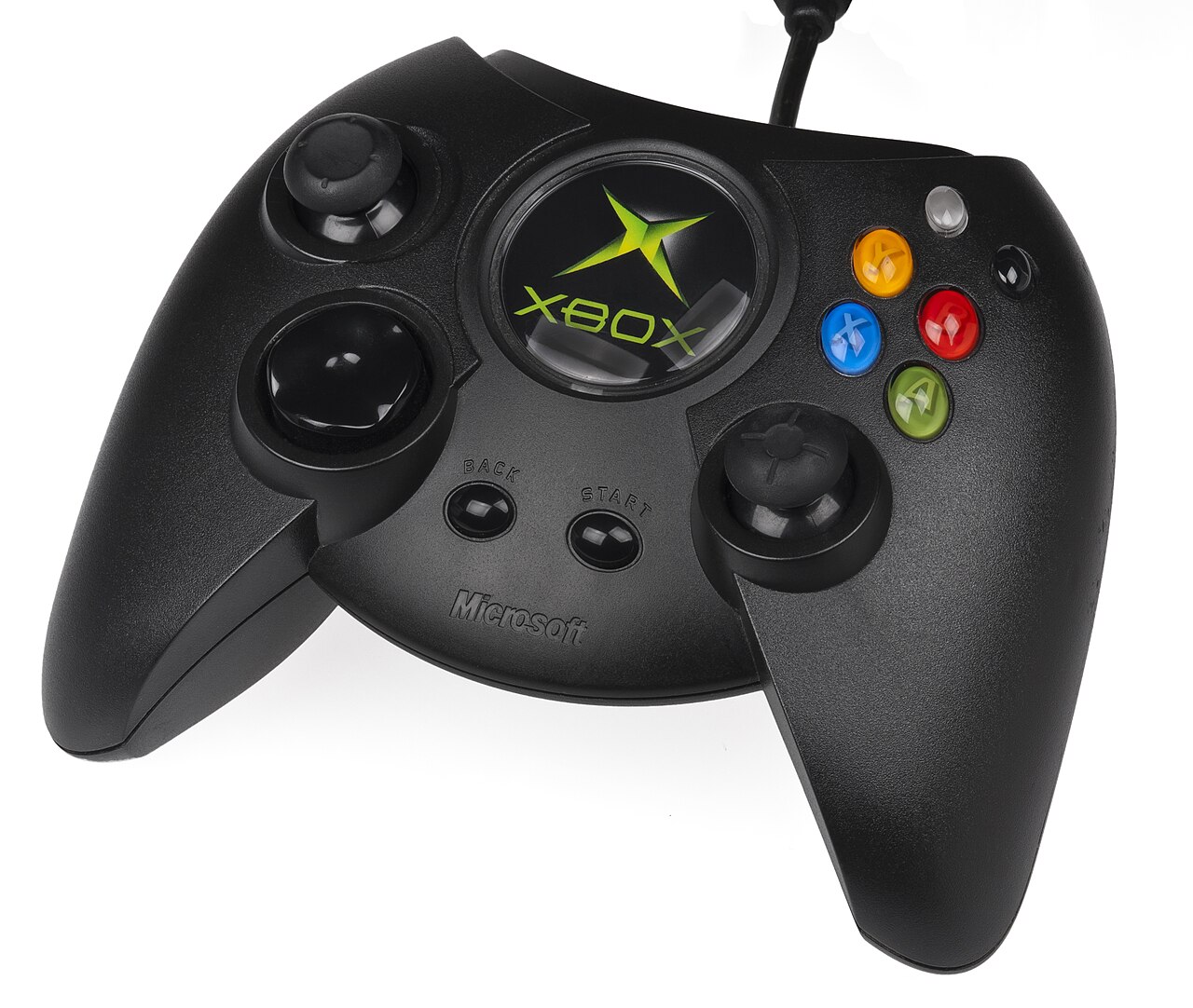
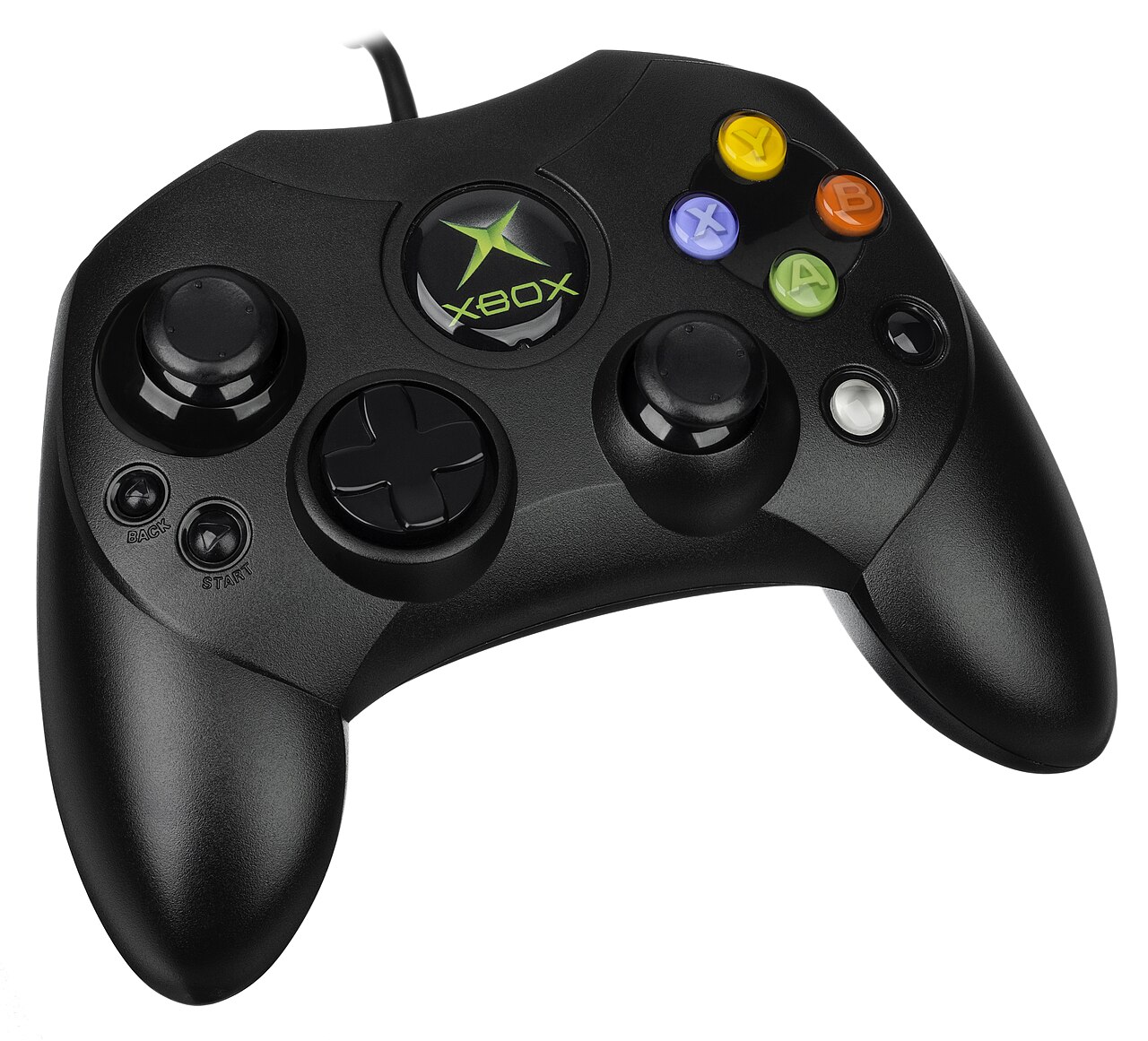
No controller has ever been a bigger story, literally. The Duke – the pack-in pad for the North American launch – was built around a circuit board its designers couldn’t shrink in time, and it arrived as a vast green-jewelled slab with buttons scattered like an archipelago; the Japanese market rejected it outright, and American players with smaller hands weren’t far behind. Microsoft’s answer was already in production for Japan: the Controller S (codenamed Akebono), smaller, saner, its jewel shrunk and its layout tightened – and so superior that it became the worldwide standard within the console’s first two years, quietly retiring the Duke everywhere except in folklore. The folklore won in the end: the Duke’s designer Seamus Blackley championed a faithfully recreated reissue (built by Hyperkin, approved with its original startup animation on a built-in screen) in 2018, and the joke controller is now a collector’s centrepiece. The episode is a small parable of the whole Xbox project: American scale as both the brand and the problem, corrected on the fly by listening to the market that had said no.
Xbox Live: The Broadband Bet
Exactly one year after launch, on November 15, 2002, Microsoft switched on the feature that justified the whole enterprise. Xbox Live was a bet placed against the era’s instincts: broadband only, at a moment when most homes were on dial-up; a paid subscription ($49.99 a year) when online play elsewhere was free; a headset in the starter kit and voice chat as the social default; and – the quiet revolution – one gamertag, one friends list, one identity across every game on the service. Sony’s online offering was a per-game patchwork run by publishers; Nintendo’s was a shrug. Live was a platform. It found its congregation quickly (MechAssault and MotoGP were the early sacraments) and its coronation on November 9, 2004, when Halo 2 sold 2.4 million copies and $125 million in its first day – an entertainment-launch record – and put a quarter of the Xbox’s owners online at once. Live Arcade followed in 2004, selling downloadable small games years before the App Store normalised the idea. Every modern console service – the accounts, the friends lists, the parties, the subscriptions – is Live’s descendant, including PlayStation Network, which Sony built in Live’s image for the PS3. The Xbox finished a distant second in hardware. In services, it finished first by about five years, which turned out to be the race that mattered.
The Library: A Thousand Games and a Western Accent
The Xbox library – roughly a thousand titles – has the most distinct regional accent of its generation: this was the Western console, built by and for the markets where PC gaming’s genres were strongest. Its pillars: Halo and Halo 2 above all; Star Wars: Knights of the Old Republic (BioWare, 2003), the generation’s defining RPG and the proof that the Western RPG belonged on a television; The Elder Scrolls III: Morrowind, a vast PC-style world that should not have fitted on a console and did; Ninja Gaiden (2004), Team Ninja’s ferocious masterpiece, the spearhead of a Japanese beachhead (Dead or Alive, and Sega’s remarkable exile catalogue – Jet Set Radio Future, Panzer Dragoon Orta, Sega GT, Shenmue II in America – made the Xbox the Dreamcast’s heir); Fable, Peter Molyneux’s over-promised, charmingly under-delivered fairy tale; Project Gotham Racing and, in the platform’s final year, Forza Motorsport, Microsoft’s Gran Turismo answer; Splinter Cell’s shadow-play; Crimson Skies; and Steel Battalion, Capcom’s mech simulator bundled with a forty-button, twin-stick cockpit controller the size of a desk – the most gloriously impractical peripheral ever sold for a console, and the purest expression of the Xbox’s more-is-more ethos. Microsoft’s $375 million acquisition of Rare (2002) yielded slimmer returns than Nintendo-era nostalgia expected – Grabbed by the Ghoulies, a Conker remake, the seeds of the 360’s Kameo and Perfect Dark Zero – and the GTA trilogy arrived late, after timed exclusivity, to sell handsomely anyway. The library’s PC DNA (shooters, Western RPGs, simulation racers) is precisely the DNA the whole industry would run on within a decade; the Xbox was playing the future’s genres on the present’s losing hardware.
The Hacker’s Console: XBMC and the Second Life
The Xbox’s PC heart gave it the most interesting afterlife of its generation – as a machine its owners refused to leave alone. Because the hardware was familiar and the hard drive was built in, the modding scene moved fast: modchips and softmods opened the box, Linux distributions colonised it (a $100,000 prize was offered for a clean Linux port), emulators for every older system turned it into the retro station of the mid-2000s, and one piece of homebrew outgrew the scene entirely – Xbox Media Center, a dashboard that turned the console into a networked media player of a sophistication no commercial device then matched. XBMC’s descendants (it renamed itself Kodi in 2014) still run on millions of screens; the most-used software ever written for the Xbox was never sold in a shop. Microsoft tolerated the ecosystem’s existence the way empires tolerate a frontier: officially hostile (Live banned modified consoles with industrial efficiency), practically unbothered, and quietly educated – the 360’s design, with its sanctioned media features and indie channels, is a list of lessons the hackers taught for free. When manufacturing ended – production ceased around 2005-06, after Nvidia’s chip supply ended in a contract dispute that shortened the console’s life to barely four years – the installed base kept its machines anyway, as media centres and mod projects, long after the games stopped.
Counting the Cost: The Four-Billion-Dollar Beachhead
The war’s accounting deserves its own section, because the Xbox cannot be understood as a product – only as an expenditure. The console was sold at a loss from day one (teardowns put the component cost well above the $299 price; some estimates ran past $425 a unit in the launch window), price cuts forced by the PS2’s cadence widened the wound, and Microsoft’s Home and Entertainment division bled for years: the total cost of the original Xbox programme is routinely put near four billion dollars. The Nvidia relationship, central to the hardware, curdled into arbitration over chip pricing and supply – one reason the 360’s graphics contract went to ATI, and one reason the original machine’s production ended early, its GPU simply no longer available on survivable terms. By any consumer-electronics standard this was a catastrophe. By Microsoft’s stated standard – Gates’ fear, circa 1999, that the PlayStation 2 was a Trojan horse aimed at the PC’s place in the home, and the strategic decision that Sony would not be allowed to own the television unopposed – it was the purchase price of a position: brand, service, developer relations, and a seat at the table for every negotiation the industry would hold for the next twenty years. The 360’s head start, Live’s subscription river, and ultimately the Game Pass era all draw on capital – financial and reputational – that the big black box spent. Companies rarely get to choose whether their defeats are cheap or useful. Microsoft paid for useful.
Afterlife: The Consequential Loser
The strategic verdict arrived quickly. Microsoft discontinued the Xbox and launched the 360 in November 2005 – first into the next generation, a full year ahead of the PS3 – precisely because the original machine had done its job: the brand existed, Live had two million subscribers and a working subscription economy, developers had Xbox kits and Xbox habits, and Halo was a franchise worth a console launch of its own (the 360’s first year is unthinkable without the beachhead). The original hardware’s afterlife in Microsoft’s own house has been unusually respectful: the backward-compatibility programme on Xbox One and Series X|S treats original Xbox games as prestige catalogue, rendering Halo-era titles at multiples of their native resolution, and the fan-run Insignia project (2022) resurrected the original Xbox Live servers two decades on – modified or stock consoles signing into a service Microsoft shut down in 2010, playing Halo 2 online again. Xemu’s emulation matures year on year, the special editions (the translucent green Halo box, the Mountain Dew promotional machine) anchor collections, and the Duke sits in reproduction on modern desks. Twenty-four million sold, four billion lost, four years in production: by the ledger of its own generation, a failure. By the ledger of everything that followed – hard drives and Ethernet as standard, the unified online service, the shooter as console-native, the Western RPG at the centre of the medium, and a Microsoft gaming division now vast enough to buy Activision – the big black box was the most successful defeat in the industry’s history.