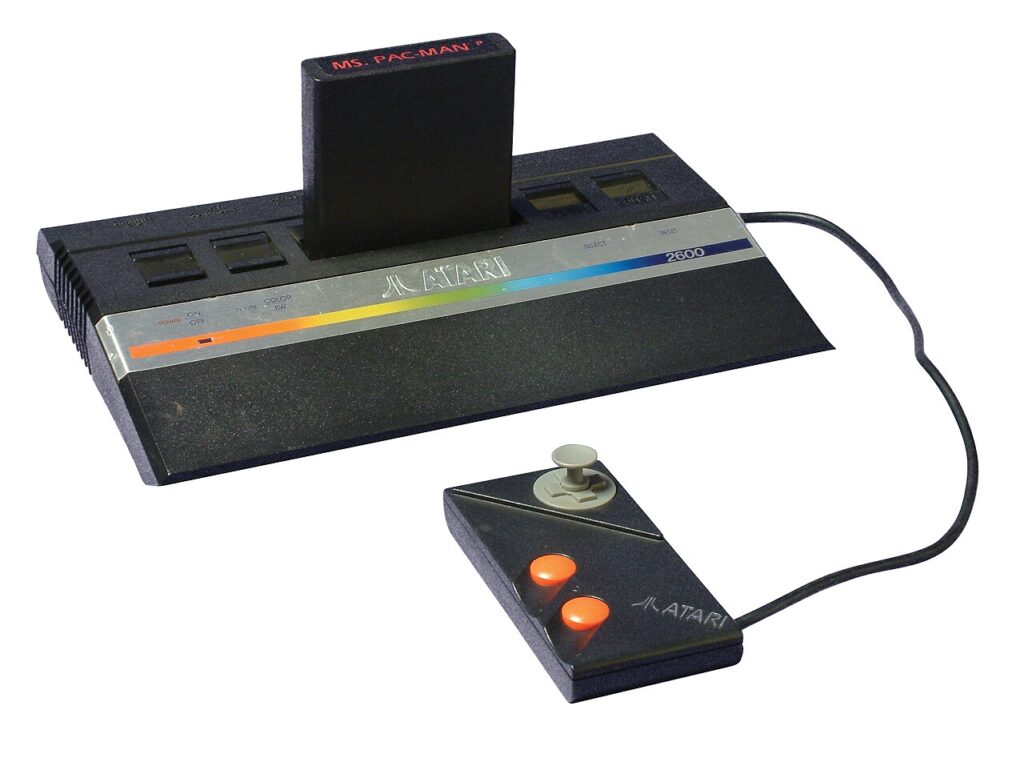
Before games lived in the home, they lived in public – in rows, under fluorescent light, at twenty-five cents a life. The arcade was the original platform: no downloads, no patches, no accounts, just a cabinet, a queue of strangers, and a high-score table that made your three initials worth defending. For roughly a decade, from Space Invaders to Street Fighter II and beyond, the arcade was not a niche of the games industry – it was the games industry, its R&D lab, its social network and its showroom, the place every genre was invented and every home console spent its life trying to imitate. Then, in the West, it died – killed by its own children, the home machines it had taught too well – while in Japan it simply changed shape and carried on. Now it lives a second life in barcades, museum halls, FPGA cabinets and three-quarter-scale replicas in suburban dens. This is the complete story of the coin-op kingdom: the golden age, the crash, the fighting-game resurrection, the long decline, and the revival that refuses to call itself nostalgia.
Quarters In: Computer Space, Pong and the Invention of an Industry
The video arcade begins with a failure and a fix. In 1971 Nolan Bushnell and Ted Dabney built Computer Space – the first commercial video game – into a fibreglass cabinet of pure space-age sculpture, and discovered that a game too complicated to explain on its own cabinet card could not earn. The fix, built by Al Alcorn at their new company Atari, was Pong (1972): one instruction (“avoid missing ball for high score”), two paddles, and a prototype installed at Andy Capp’s Tavern in Sunnyvale that stopped working within days because its improvised coin box had jammed with quarters. The jammed coin box is the industry’s founding anecdote because it contains the whole business model: a game simple enough to understand in five seconds, hard enough to demand one more coin, in a room full of people watching you fail. Atari industrialised the formula through the 1970s – Breakout, Tank, Night Driver, the vector-monitor experiments that produced Lunar Lander and Asteroids (1979), whose high-score table let players enter initials and thereby invented public, persistent, local glory. Around Atari grew an ecology of manufacturers (Midway, Williams, Cinematronics, Exidy) and, crucially, of operators and distributors – the unglamorous supply chain that put cabinets in bars, bowling alleys, laundromats and dedicated arcades, and taught a generation of teenagers that games were something you went out to, together.
The Golden Age: Invaders, Pac-Man and the Score Chasers
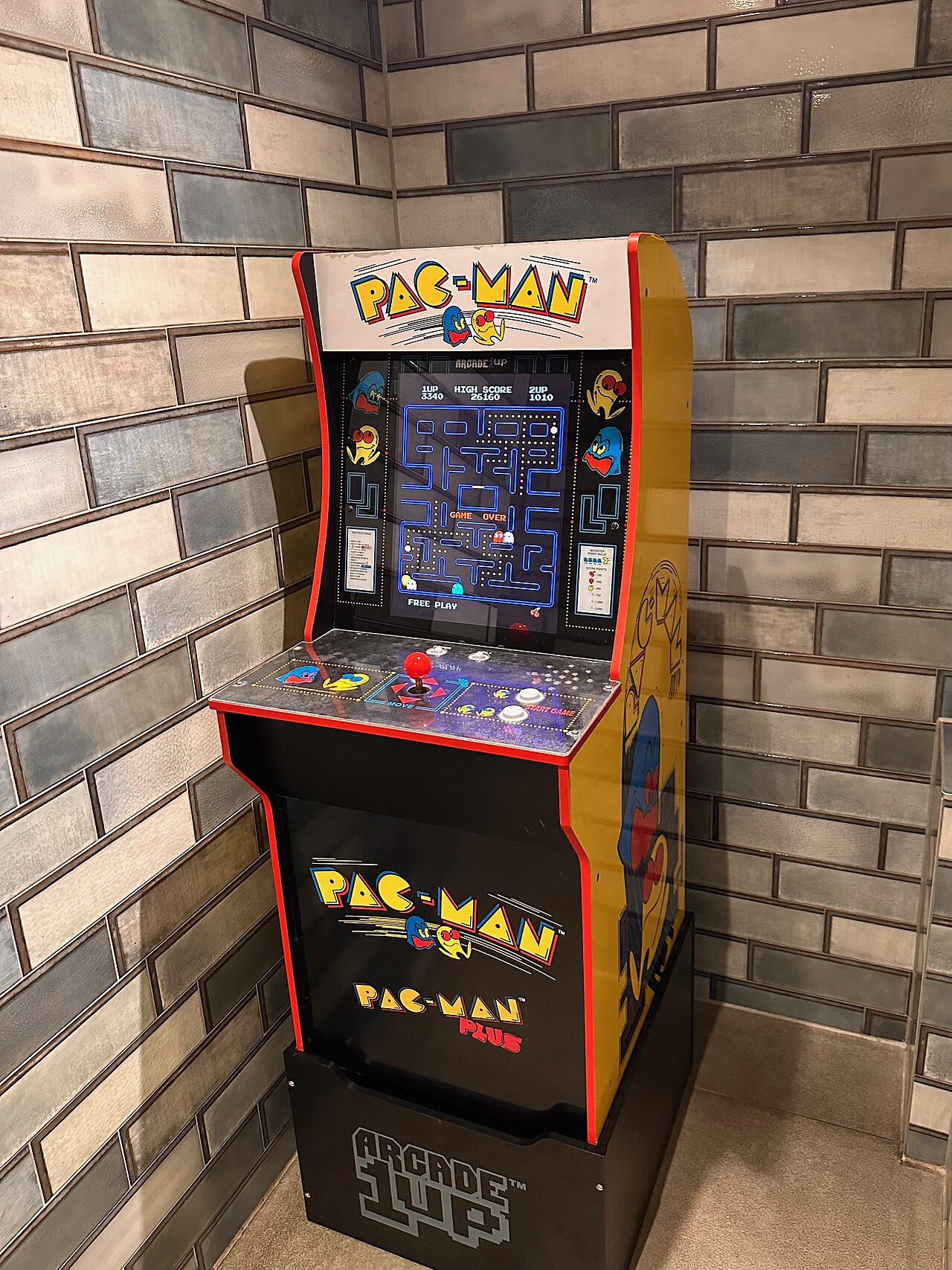
In 1978 Taito’s Space Invaders landed in Japan – where legend (embellished, but not baseless) blamed it for a nationwide shortage of 100-yen coins – and then in America through Midway, and the arcade stopped being an amusement sideline and became a mass medium. The golden age that followed, roughly 1978 to 1983, produced the medium’s foundational texts at a rate no era has matched: Asteroids and the vector sublime of Battlezone and Tempest; Defender’s horizontal fury; Centipede, designed in part by Dona Bailey, one of the industry’s first women designers of a hit; Galaga’s perfected formation shooting; and above all Pac-Man (1980), Toru Iwatani’s eating machine for Namco, licensed to Midway in America, which sold on the order of a hundred thousand cabinets in the US alone, became the best-selling arcade game of the era, put a character – the first gaming mascot – on lunchboxes and a Saturday-morning cartoon, and scored a novelty-song hit (“Pac-Man Fever,” 1981) about itself. Ms. Pac-Man (1982), Donkey Kong (1981) – Shigeru Miyamoto’s debut and Nintendo’s American lifeline, which survived Universal’s King Kong lawsuit to become a dynasty’s foundation – and Q*bert, Frogger, Dig Dug, Joust: the canon arrived in a four-year flood. US arcade revenues peaked in the early eighties at figures routinely estimated in the billions – by some reckonings the cabinets of 1982 out-earned the American film industry and pop music combined. A culture grew around the scores: Walter Day’s Twin Galaxies (founded 1981) refereeing records, the first video-game world championships, and the arcade as the teenager’s third place – after home and school, the room where reputation was minted in initials.
The First Death: Saturation, Consoles and the Crash
The golden age ate itself. By 1982 every bar, pizza parlour and convenience store in America had cabinets, too many of them mediocre, and the home consoles – cresting their own boom – began keeping the quarters indoors. The North American industry crash of 1983-85, which flattened Atari’s home empire, drained the arcades with it: operators folded, distributors dumped inventory, the dedicated video arcade (as opposed to the arcade corner) thinned from thousands of venues to a hard core. What survived the cull was leaner and smarter. The JAMMA wiring standard (1985) made cabinets convertible – swap the board, keep the box – collapsing the cost of new games; Nintendo’s VS. System and PlayChoice-10 put console games on coin-op timers, an admission that the traffic now flowed both ways; and the beat-’em-up era (Double Dragon, 1987; Final Fight, 1989; Teenage Mutant Ninja Turtles, 1989) rebuilt the arcade around cooperative spectacle that home machines, for a few more years, still couldn’t match. The arcade that emerged from the crash was smaller than the golden-age empire and would never be as ubiquitous again. But it had a second act in it, and the second act began with six buttons.
The Spectacle School: Sega’s Scalers and the Ride-On Arcade
Between the crash and the renaissance, Sega quietly rebuilt the arcade’s value proposition around things a home console physically could not do. Yu Suzuki’s “Super Scaler” games – Hang-On (1985), Space Harrier (1985), Out Run (1986), After Burner (1987) – faked 3D at sixty frames a second by scaling thousands of sprites toward the player, an illusion of speed and depth that 8- and 16-bit home machines could only pantomime in their ports. And Sega bolted the games to furniture: the taikan (“body sensation”) cabinets you sat in and on – a motorbike for Hang-On, a tilting cockpit for After Burner, a hydraulic seat for Out Run’s deluxe version, and eventually the R360 (1990), a flight-sim sphere that rotated the player through a full 360 degrees while an attendant supervised. The lesson the spectacle school taught – that an arcade machine could be a ride, not just a screen – kept the coin-op premium alive through the home industry’s recovery and seeded everything from Daytona’s linked cockpits to today’s motion-platform VR arcades. It also concentrated the era’s genius in one building: Suzuki’s AM2 studio is responsible for a run of arcade landmarks (Virtua Racing and Virtua Fighter would follow on polygons rather than sprites) with no real parallel in the medium, a one-studio golden age inside the industry’s silver one.
Round Two: Street Fighter II and the Fighting-Game Resurrection
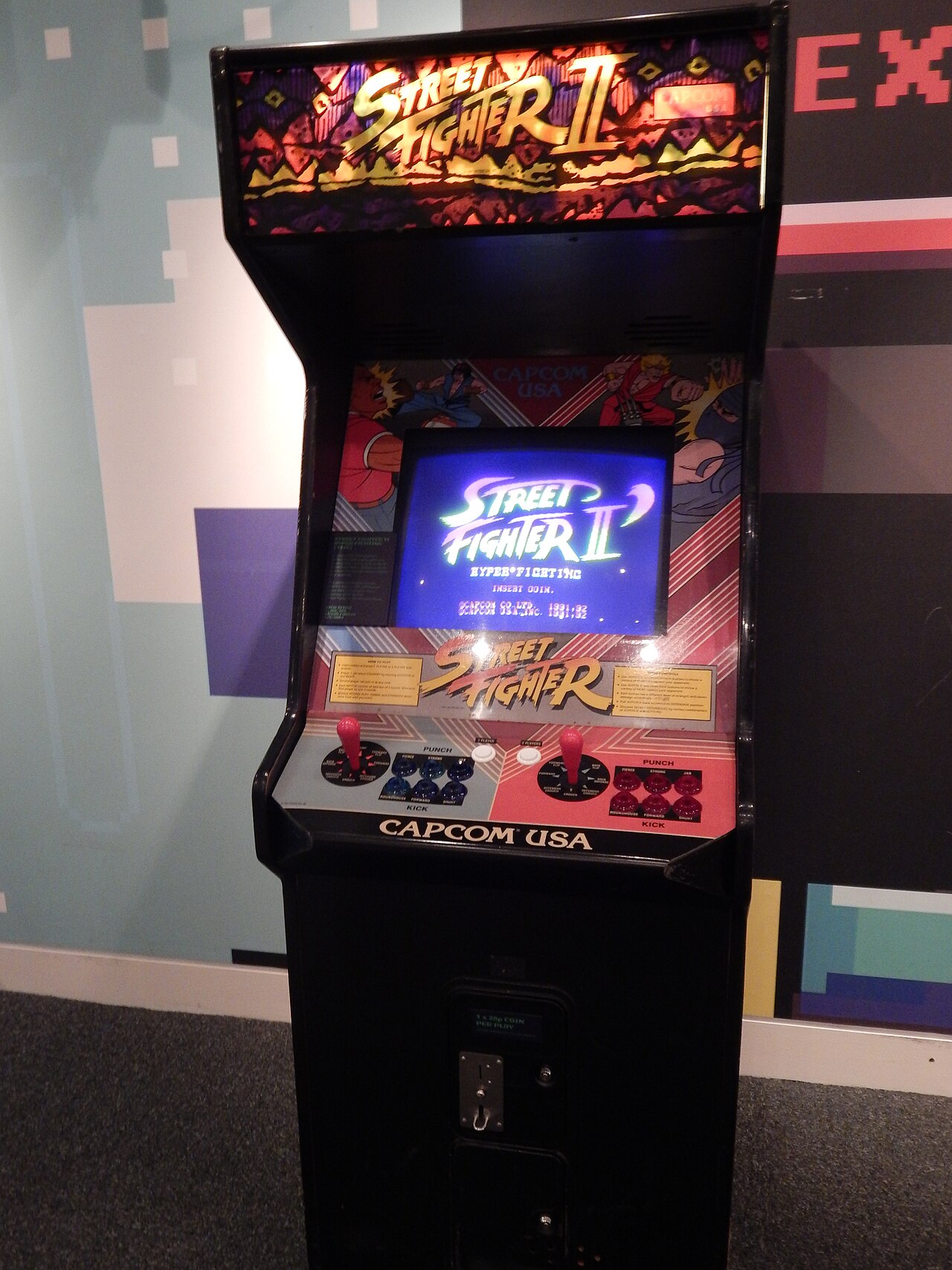
In March 1991 Capcom released Street Fighter II, and the arcades filled up again. The formula detonated on contact: eight distinctive world warriors, one-on-one duels, a six-button grammar of jabs and roundhouses, special moves discovered by accident (the combo system began as a timing quirk the developers noticed and chose to keep), and above all the social technology of the cabinet itself – winner stays on, loser feeds the coin slot, a queue of challengers placing quarters on the glass to claim next. Street Fighter II was not merely a hit; it was an economy reset, the best-selling fighting game of its era across its many revisions (Champion Edition, Hyper Fighting, Super Turbo – the update cadence itself an invention), and it dragged an industry behind it: Mortal Kombat (1992) with its digitised actors and gleeful gore – the game whose congressional-hearing notoriety helped create the ESRB – SNK’s Neo Geo MVS system putting swappable multi-game cabinets and the King of Fighters circuit into every arcade that couldn’t afford Capcom’s prices, and Sega’s 3D vanguard: Yu Suzuki’s Virtua Racing and Virtua Fighter on the Model 1 board, then Daytona USA (1994) on Model 2, an eight-cabinet linked spectacle that became one of the highest-grossing arcade games ever built. Namco answered with Tekken and Time Crisis; Konami’s Bemani line (Beatmania 1997, Dance Dance Revolution 1998) opened an entirely different front – rhythm, physicality, spectatorship – that made Japan’s game centers unkillable for another decade. For most of the nineties the arcade once again held the high end of the medium: the best graphics, the newest genres, the toughest competition. It was a renaissance, and like the first one, it was mortgaged against the home catching up.
The Home Catches Up: The Long Western Decline
The arcade’s second death was not a crash but an erosion, and its agent was the arcade’s own greatest success: the home console, graduating. The PlayStation and Saturn (1994-95) delivered near-arcade-perfect conversions within months instead of years; the Dreamcast (1999) was literally an arcade board (Sega’s Naomi) in a home box, collapsing the conversion gap to zero; and each home generation after that removed another reason to leave the house – online play took the crowd, leaderboards took the high-score table, and the economics inverted for good. An operator’s cabinet cost thousands and earned quarters from a shrinking clientele; a console cost hundreds and its games were kept forever. Mall arcades – Aladdin’s Castle and its peers – closed by the hundreds through the late nineties and 2000s; Sega’s own lavish GameWorks and Joypolis ventures struggled; the surviving American arcade economy consolidated into family entertainment centres (Dave & Buster’s, Chuck E. Cheese) where games share the floor with food, tickets and redemption counters – the cabinet demoted from destination to garnish. Japan is the great exception that proves the diagnosis: its game centers survived by evolving into something the home couldn’t replicate – medal games, prize cranes stacked like architecture, photo booths, rhythm games played on dedicated stages, and dense urban foot traffic that kept the walk-up model alive. Sega, which had operated Japanese arcades since the 1960s, finally sold its arcade business in 2020-22 (the centres rebranded as GiGO), closing an era – but the centres themselves, under new names, still trade. The Western arcade died of substitution. The Japanese arcade survived by refusing to be substitutable.
Japan’s Parallel Kingdom: The Game Center That Never Died
The Japanese game center deserves its own paragraph in any honest history, because it evolved into a different species. Where the Western arcade sold quarter-length bursts of skill, the Japanese center layered entire economies: UFO Catcher crane games (Sega’s 1985 invention, a cultural fixture by the nineties) selling prizes as theatre; medal games converting tokens into hour-long low-stakes sessions; Print Club photo-sticker booths (1995, from Atlus and Sega) that became a generation-defining social ritual and a revenue line bigger than many video cabinets; children’s card games like Mushiking (2003) and Love and Berry, which fused arcade play with collectible cards years before the home industry found the trick; Taiko no Tatsujin’s drum cabinets making rhythm a full-body public performance; and at the summit, Bandai Namco’s Gundam battle pods (2007) – networked, card-saved, cockpit-enclosed team warfare that is recognisably the ancestor of the modern esports arena. The common thread is irreducibility: every one of these experiences fails when you try to shrink it into a living room. The Western arcade spent the nineties competing with the home on the home’s terms – graphics and conversions – and lost. The Japanese arcade competed on presence, prizes and physicality, and its centres, through consolidation and rebranding, endure into the present tense.
Preservation and the Revival: Barcades, Replicas and MAME
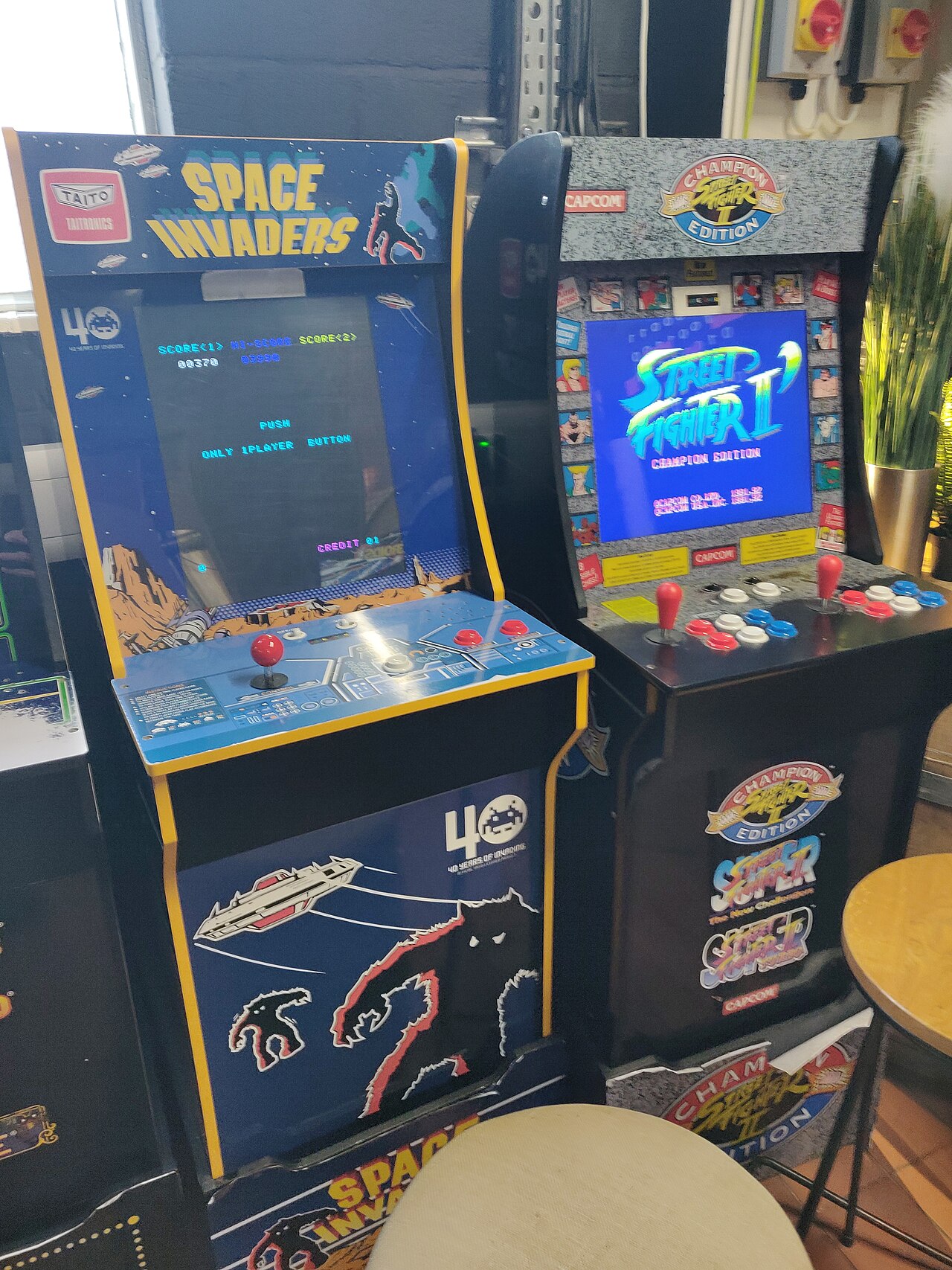
What the market closed, the hobby preserved – twice over, in software and in rooms. The software preservation came first: MAME, begun by Nicola Salmoria in 1997 as a multiple-arcade-machine emulator, grew into the medium’s great archival project, documenting thousands of boards before their batteries died and their chips rotted; the Internet Archive eventually put hundreds of classics playable in a browser, an outcome this site’s older coverage greeted as science fiction. The physical preservation followed as the generation that grew up on golden-age quarters acquired basements, disposable income and opinions: Galloping Ghost in Brookfield, Illinois built itself into America’s largest arcade with 900-plus machines on free play; Funspot in New Hampshire – operating since 1952 – became a pilgrimage site and tournament venue; the barcade format (Brooklyn’s Barcade, 2004, craft beer plus classics) franchised the nostalgia night out; and Arcade1Up (2018) industrialised the home version, selling millions of three-quarter-scale replica cabinets until the arcade-in-the-den was a furniture category. Pinball, the arcade’s elder sibling, ran the same arc in parallel – near-death in 1999, revival through Stern’s persistence and a tournament scene. None of this is the old economy reborn: nobody’s mortgage depends on a Defender board’s weekly take anymore. It is something arguably healthier – the arcade as heritage culture, curated rather than merely operated.
The revival even has a growth stock: Round1, the Japanese entertainment-centre chain, expanded across American malls through the 2010s and 2020s by importing the Japanese formula wholesale – prize halls, rhythm stages, medal games, bowling and karaoke under one roof – and found the audiences the old mall arcades lost, which suggests the Western arcade’s death was a format failure more than a demand failure. Meanwhile the fighting-game community that Street Fighter II founded carried the cabinet’s social contract into esports: the tournament scene grew from arcade ranbats to EVO’s arena finals, but its liturgy – double elimination, winner’s side, the stick in your lap, the crowd close enough to touch – is the arcade floor’s, preserved. The kingdom fell; the court culture emigrated and kept the customs.
Legacy: The Grammar of Games Was Written in Quarters
Measure the arcade’s legacy not in cabinets but in grammar. The high-score table is the ancestor of every leaderboard and achievement system; the attract mode – the game advertising itself to passersby – is the ancestor of the trailer, the demo, the streaming thumbnail. Winner-stays-on is the fighting-game community’s constitution and, through it, esports’ oldest format. The quarter itself is the industry’s original microtransaction: the continue screen’s ten-second countdown (“insert coin to continue”) is free-to-play psychology in its purest, most honest form, and every mobile game’s energy timer descends from it. Genres were born in the arcade because the economics demanded instant legibility and escalating mastery – the fighting game, the rhythm game, the light-gun game, the racing spectacle – and the home industry spent thirty years domesticating them. But the deepest legacy is social, and the revival keeps rediscovering it: the arcade was gaming as a public act, performed in front of strangers, taught by watching the person ahead of you in the queue. The couch and the headset are more comfortable. They have never quite replaced the room.