
At a glance: Zelda’s Adventure · Philips CD-i · Viridis Corporation / Philips Interactive Media, 1994 · Action-adventure · Score: 3.0/10
The third CD-i Zelda is the one the memes forgot, and there is a reason: it is not funny. Zelda’s Adventure, developed by Viridis Corporation rather than Animation Magic and released in North America in June 1994 (Europe had to wait until 1996), abandons the side-scrolling engine of Faces of Evil and Wand of Gamelon for the top-down perspective of the original Legend of Zelda and A Link to the Past. Zelda once again leads — Ganon has plunged the land of Tolemac (Camelot backwards, a joke the game makes itself) into an Age of Darkness, stolen the celestial signs and captured Link — and must fight through the Seven Shrines of the Underworld to set it right. On paper this is the most respectable concept of the three. In practice it is the hardest of the three to play, the slowest to load, and the easiest to put down forever.
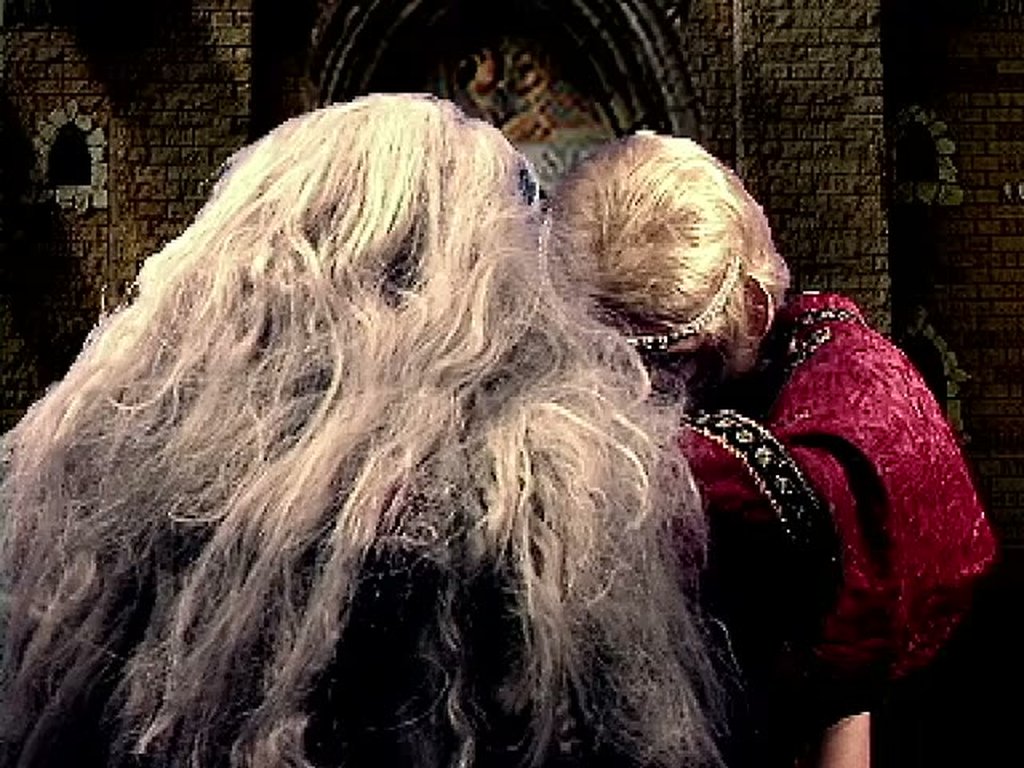
Viridis made radically different production choices, and every one of them costs the player something. Where Animation Magic drew cartoons, Viridis filmed: the cutscenes are live-action, shot against blue screen in Los Angeles, with the astronomer Gaspra narrating the quest in the tones of a man reading a bedtime story to nobody. The game world itself was built from top-down photographs of real landscapes and textures — including, by the developers’ own cheerful admission, photographs of Hawaii and holiday snaps — with characters captured by filming actors from above via a ceiling mirror, walking on a treadmill, and monsters built as latex-and-wire models animated in stop motion. As a production anecdote this is wonderful. As a visual language for a Zelda game it is a swamp: murky, low-contrast, and desperately hard to read.
A world you cannot see your way through
Readability is the core failure, and it poisons everything. The photographic backgrounds are busy in exactly the frequencies where enemies, exits and items also live, so the screen becomes a camouflage puzzle in which the interactive elements are the last things you notice. Zelda’s sprite — a digitised actress in costume — moves across this collage with a sluggish, sliding gait, one screen at a time, and each screen transition arrives with the CD-i’s disc access trailing behind it. Exploration in a top-down Zelda lives or dies on flow: the pleasure of crossing a world that feels continuous. Zelda’s Adventure has no flow. It has a slideshow of photographed clearings, connected by loading pauses, patrolled by enemies you frequently cannot see until they are already damaging you.
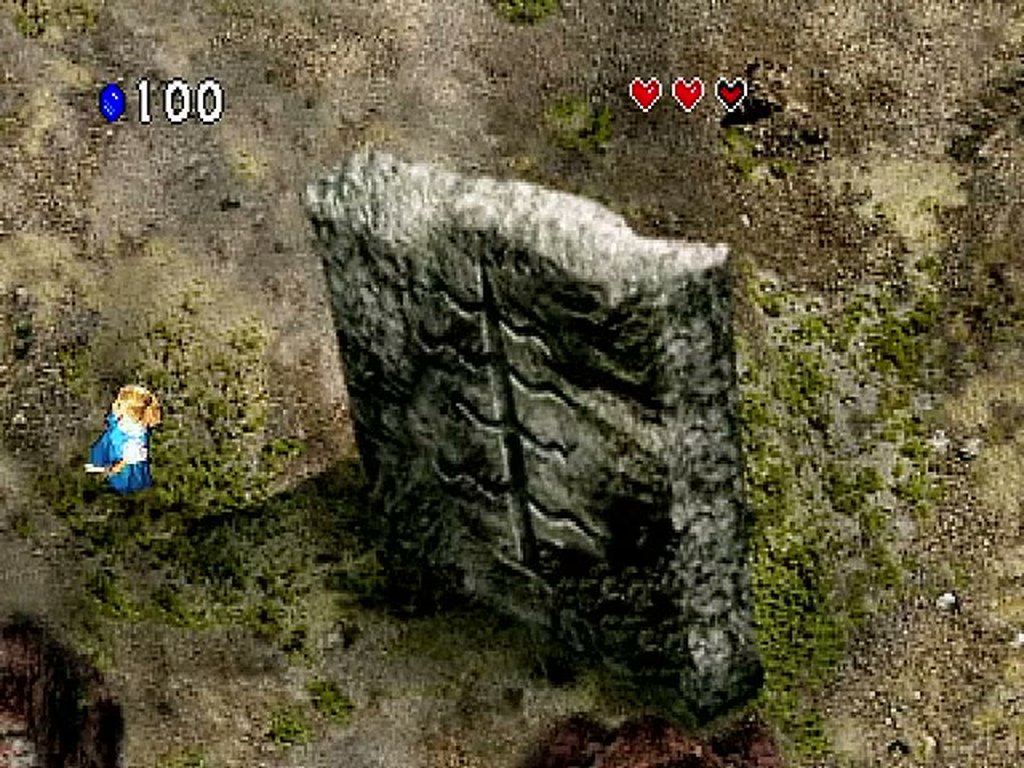
Combat is worse. Zelda attacks with a wand whose projectiles crawl, enemies absorb them without flinching in any informative way, and collision between sprites drawn from photographs and sprites drawn from other photographs is approximate at best. The shrines — the game’s dungeons — are long, dark and similarly illegible, stocked with keys, compass-equivalents and bosses that test endurance rather than insight. Add the familiar CD-i controller problem — a remote-derived pointer device steering a character who needs eight-direction precision — and the game’s considerable length stops looking like value and starts looking like a threat. This is the longest of the three CD-i Zeldas by a wide margin. It earns none of that length.
The sound of silence, mostly
Presentation fails in the other direction too. Where the Animation Magic games are loud, scored and voiced to a fault, Zelda’s Adventure is eerily quiet for long stretches — sparse effects, thin music, and long photographic tramps between events. The live-action performances are not the camp catastrophe of legend; Gaspra is merely dull, which in this company is its own kind of failure. The one contemporary defence of the game — that it at least tries to be a “real” Zelda — collapses on contact, because the things that make a Zelda real are clarity of world, precision of combat and momentum of discovery, and Zelda’s Adventure has none of the three. It has the camera angle. That is all it has.
Faces of Evil and Wand of Gamelon are bad games that became beloved jokes. Zelda’s Adventure is a bad game that became neither. It is the control group that proves the other two were loved for their cutscenes, not their design.
Its afterlife is a collector’s story rather than a player’s. Because the European release came late (1996) and the North American release was quiet, Zelda’s Adventure became the rarest and most expensive of the CD-i Nintendo games — the one that completes sets and empties wallets. There is an irony the market has fully priced in: the least enjoyable Zelda on the system commands the highest premium, because scarcity does not care about frame rates or loading times. If you are buying it to own the set, the disc is a trophy. If you are buying it to play, this review is the warning label.
Ambition is not the alibi it thinks it is
Defenders of Zelda’s Adventure — they exist, mostly among completists — point to its scale: a large overworld, seven substantial shrines, a full item progression, spells to learn, and a running time that dwarfs its side-scrolling siblings. All of that is true, and none of it helps, because scale multiplied by friction is just more friction. Every system in the game adds a toll. The wand-and-spell combat wants resources you must farm. The overworld wants screens you must load, one photograph at a time. The shrines want keys hidden in visual noise. Even saving and continuing carries the CD-i’s leisurely disc manners. A short bad game is an anecdote; a long bad game is a commitment, and Zelda’s Adventure asks for the commitment up front, in a currency of loading screens.
The comparison that damns it most is its own release window. A Link to the Past was two years old when Zelda’s Adventure shipped; Link’s Awakening was already a classic. The top-down Zelda formula was not a mystery awaiting a photographic solution — it was a solved, beloved design language, and Viridis’s version reads like a translation made by someone working from a description of the original rather than the thing itself. The camera angle survived the translation. Nothing else did: not the clarity, not the tempo, not the joy of a world that invites you across it. What remains is the licence, the rarity, and a production story more interesting than the game it produced.
A note on the acting
Fairness requires one softening sentence for the live-action cast, several of whom were Viridis employees pressed into costume. They were asked to perform against blue screens for a game whose tone nobody had settled, and the dullness of the result is a production failure, not a personal one. The astronomer Gaspra has, in recent years, acquired the faintest of cult followings among the format’s historians — the one CD-i Zelda performance delivered as if the material were a weather report. It is the game’s most human artefact, and the kindest thing this review can point to without bending the score.
Verdict
Zelda’s Adventure scores lowest of the three CD-i Zeldas not because its concept is worst — it is the best concept of the three — but because its execution fails at the most basic contract a game makes: that you can see what is happening, control your character within it, and keep moving. Photographic worlds, treadmill actors and latex monsters make it a fascinating production case study. They make it a miserable afternoon. 3.0/10 — historically essential, practically inert, and the clearest proof in the whole CD-i catalogue that a famous licence cannot carry a game whose screen you cannot read.
