The 3DO’s reputation was written by its price tag. For thirty years the $699 joke has stood in front of a library that deserved better — a library built by Electronic Arts, Crystal Dynamics, Toys for Bob and a wave of smaller studios who treated the machine as a licence to experiment. Everyone knows the flagship titles. This list is about the other shelf: ten games that the launch coverage ignored, the sales charts buried and the joke outlived — games that show what the 3DO’s developers did when nobody was watching. None of them headline the system’s story. All of them belong in it.
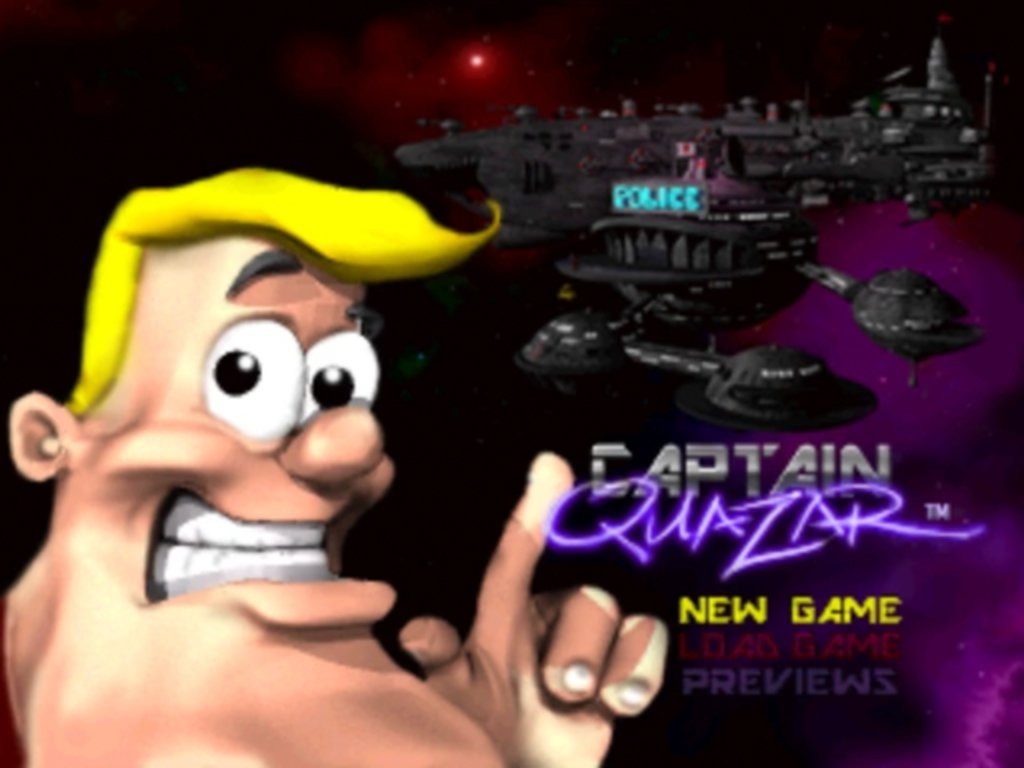
1. Captain Quazar
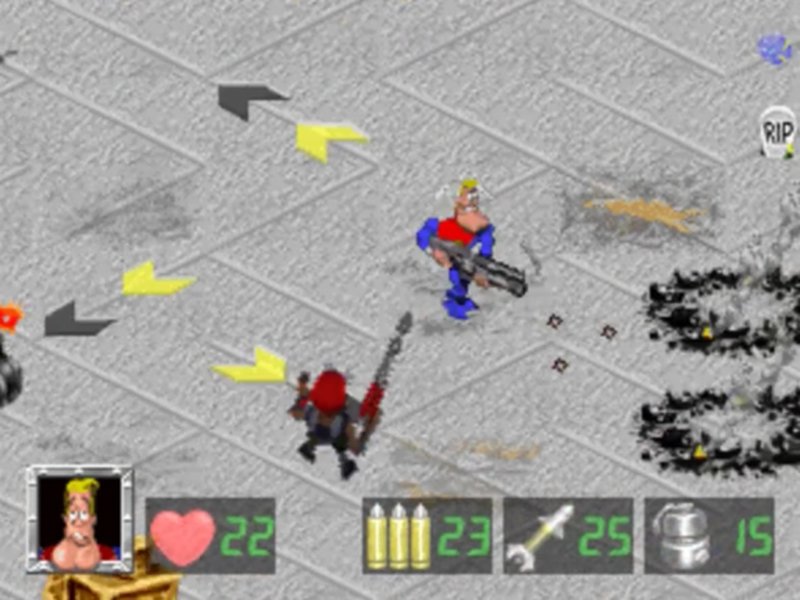
The 3DO’s in-house studio made the machine’s most purely entertaining action game and almost nobody bought it. Captain Quazar is an isometric run-and-gun in which a preening space policeman — all chin, quiff and wisecracks — blasts through the criminal empire of a gangster named Doobar across three planets of warehouses, casinos and spaceports. The viewpoint gives it the flavour of a comic-book Smash TV: huge sprites, screen-filling explosions, hostages to rescue, weapon shops between levels and a two-player mode that turns the whole thing into cooperative mayhem. Its humour is broad, its action is relentless and its presentation — big, colourful, unapologetically cartoonish — was a deliberate antidote to the grey FMV sludge filling the system’s shelves. If the 3DO had a house style worth defending, this was it: expensive-looking, funny and built for the couch.
Its structure deserves a word of its own: three planets of escalating missions, a weapon shop between levels that lets you build the Captain’s arsenal from blaster to rocket-spewing overkill, hostages tucked behind gang strongholds for the rescuing, and bosses scaled like set pieces rather than targets. The cutscenes — brief, brightly performed, and fully aware of the joke — frame the shooting as space opera, but the game’s heart is on the ground, in the thick of a firefight, with the screen full of explosions and the Captain’s health bar doing something alarming. It is the rare early CD action game whose ambition and execution arrive at exactly the same place.
2. Icebreaker
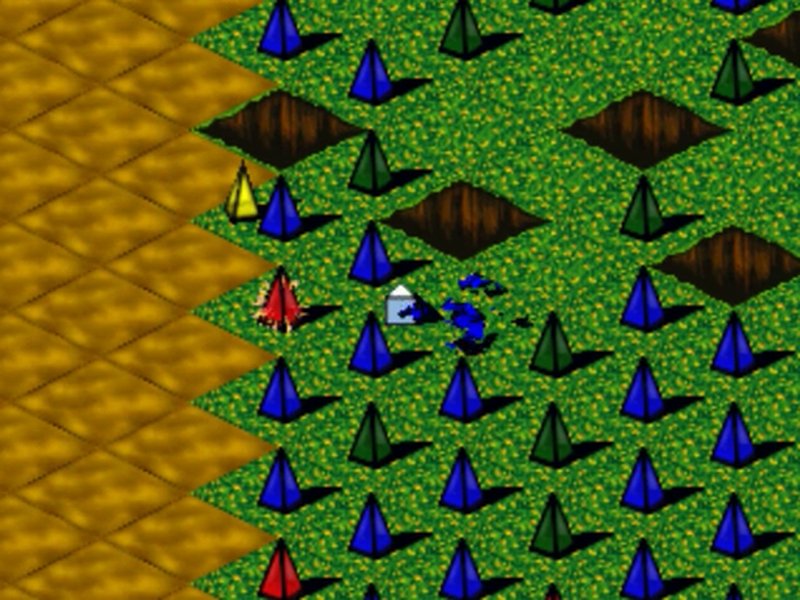
Designer Andrew Looney built one of the smartest little games of the CD era and hid it inside a field of pyramids. You are a white pyramid sliding around a grid of coloured ones, blasting them apart — but each colour plays by different rules: some are stationary, some chase you, some split, some can only be destroyed indirectly, and the pits and lava punish a careless line. Across 150 levels Icebreaker unfolds like a puzzle book written by an action game, teaching one rule at a time and then combining them into beautiful traps. It is the work of a genuine game designer thinking in systems, and it plays as freshly now as anything in the puzzle-action genre. The 3DO was its first home, and the version to own.
3. Phoenix 3
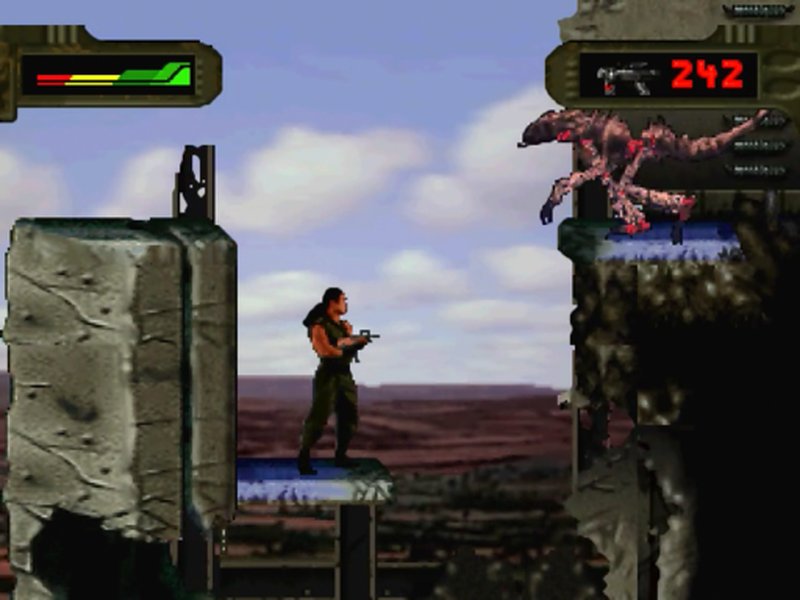
Phoenix 3 is the most gloriously overreaching game on this list: a side-scrolling run-and-gunner, a space combat game and a filmed sci-fi serial, fused into one time-travelling adventure. You play a lone operative hopping between eras — prehistoric plains, alien worlds, futures — shooting through platform levels, then taking the fight upstairs in first-person space sequences, with live-action briefings stitching the eras together. Any one of its pieces would be unremarkable; the audacity is in the combination, and in how earnestly the production commits to all three. It plays like a lost Saturday-morning serial you get to star in, jank and all, and there is simply nothing else in the library — or many libraries — quite like it.
4. Blade Force
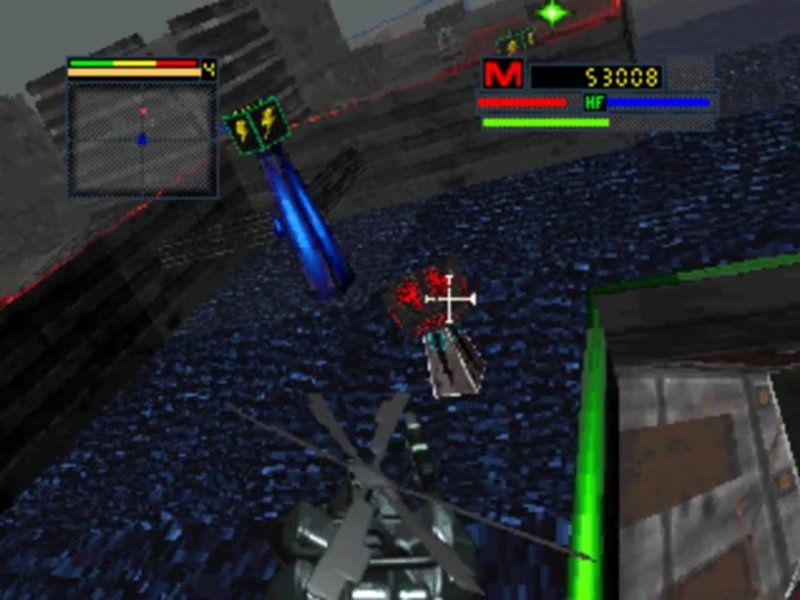
Studio 3DO’s other great experiment straps the player into a helicopter backpack and sets them loose over a texture-mapped 3D city at night — in 1995, when open 3D spaces were still a magic trick. As a member of an airborne police unit, you hunt the Pitt family’s crime syndicates across districts of rooftops, streets and strongholds, managing fuel and ammunition while the city scrolls beneath you in genuine three dimensions. The flight model is the game: swooping, strafing and hovering with a freedom that anticipates the open-world action games of the next decade. Missions repeat their patterns, but the simple act of flying the city — fast, low and armed — never gets old. A technical showpiece that remembered to be fun.
5. Immercenary

In 1995, Electronic Arts published a first-person role-playing game set inside a virtual reality world — a game about logging into a simulated city, taking mercenary jobs, and climbing a ranked ladder of 256 combatants toward the godlike administrator at its top. Immercenary’s Perfect is a strange, empty, fascinating place: wireframe citizens, glitching skies, boss encounters staged like duels in a digital arena, and a story told through full-motion briefings from the real world you have jacked in from. The systems creak — the city is sparse, the combat is an acquired taste — but as a vision of where games were heading, Immercenary was not early; it was from the future, posted back. Playing it now feels like finding a prototype of the modern era buried in the 3DO’s garden.
What elevates it above the era’s crowded virtual-world experiments is the ranking system: every other combatant in Perfect has a number, every duel is a rung, and the slow climb from 255 toward the top gives the exploration a spine. You are not wandering a simulation — you are hunting your way up a ladder of named rivals, each with a fighting style and a lair, in a world that was sketching the massively multiplayer future with a single-player’s tools. Flawed, eerie and impossible to confuse with anything else on the system.
6. Shock Wave
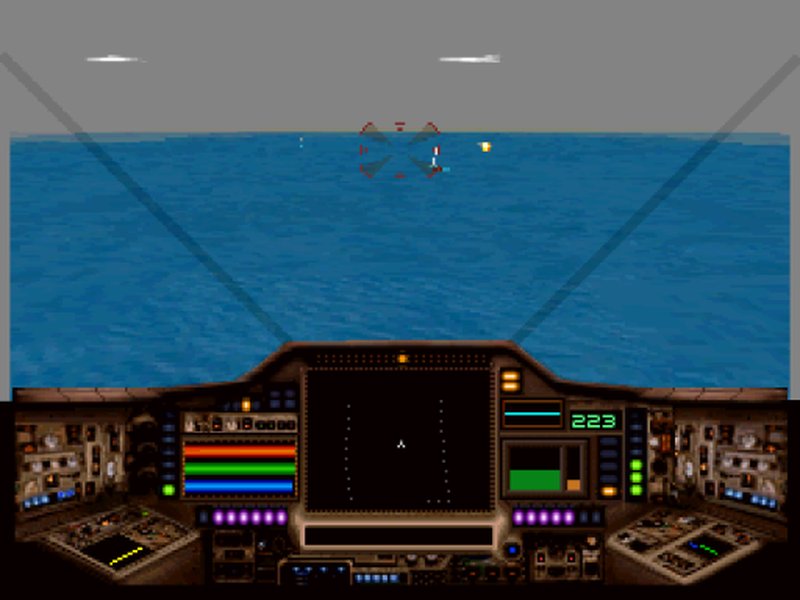
Aliens invade Earth in 2019, and Electronic Arts answers with the most polished flight shooter of the CD era’s first wave. Shock Wave puts you in the cockpit of an F-177 defending real-world locations — Los Angeles, Egypt, the oceans — against an invasion fleet, with your wingmen and commanders played by actors in full-motion briefings that give the campaign a television serial’s momentum. Between the video sits a tight, accessible combat model: canyon runs, capital-ship assaults and ground strikes, all of it handsome and all of it propelled by the sense of a war being lost just off-screen. It earned an expansion, Operation JumpGate, and a sequel elsewhere — but the original’s blend of FMV and flight is peak early-3DO: money on screen, in service of a good time.
7. Total Eclipse

Crystal Dynamics built the 3DO’s Star Fox — and in some ways out-built it. Total Eclipse is an on-rails shooter that throws your fighter down canyons, through tunnels and across alien surfaces at a pace that sold the hardware’s 3D credentials to anyone who saw it running in a shop. The formula is pure arcade: dodge, shoot, barrel-roll through the gaps, and fight the bosses at the end of each world, with a thumping soundtrack and a wingman’s chatter for company. It is not deep — no rail shooter of the era is — but as a sensory experience it remains the most immediate fun-per-minute in the system’s early library, and its tunnels are still the first thing many owners show a sceptic.
8. BattleSport

Take soccer, replace the players with hovertanks, add missiles, and play it in split-screen: BattleSport is the 3DO’s best original sports game and one of its finest two-player experiences. Developed by Cyclone Studios and published by Studio 3DO, it wraps a genuinely sharp arcade sport — pass, tackle, shoot, defend your goal across dozens of arenas and a full league structure — inside a combat game’s toybox, with tank classes, power-ups and an economy of upgrades between matches. Single-player offers a proper career against improving opposition; versus offers the thing the disc was made for, two humans on one couch conducting a small war over a ball. The 3DO is not short of good multiplayer, but BattleSport is the one that feels like it was designed yesterday.
9. Strahl

The interactive-movie era produced dozens of cartoon games; almost none of them were actually good animation. Strahl is the exception: a full-length anime feature — produced with Japanese studio involvement and a proper fantasy plot of crystals, kingdoms and a young hero — that you play through timed controller inputs at its action beats, Dragon’s Lair style. Judged as a game it is a memory test with beautiful consequences; judged as an experience, it is one of the most charming artefacts of the CD era, a lost Saturday-morning epic preserved on a 3DO disc. The English version is rare and the film was barely seen outside Japan in any form. For players who love the era’s ambition, Strahl is the deep cut that justifies the dig.
Two-player BattleSport, it should be added, is a different and better game than the solo league: the arenas tighten, the missile economy turns spiteful, and the split-screen format — both generals watching the same war — produces the kind of running commentary that defined couch multiplayer in the format’s best years. Studio 3DO published bigger titles; it never published a better party game.
10. Off-World Interceptor
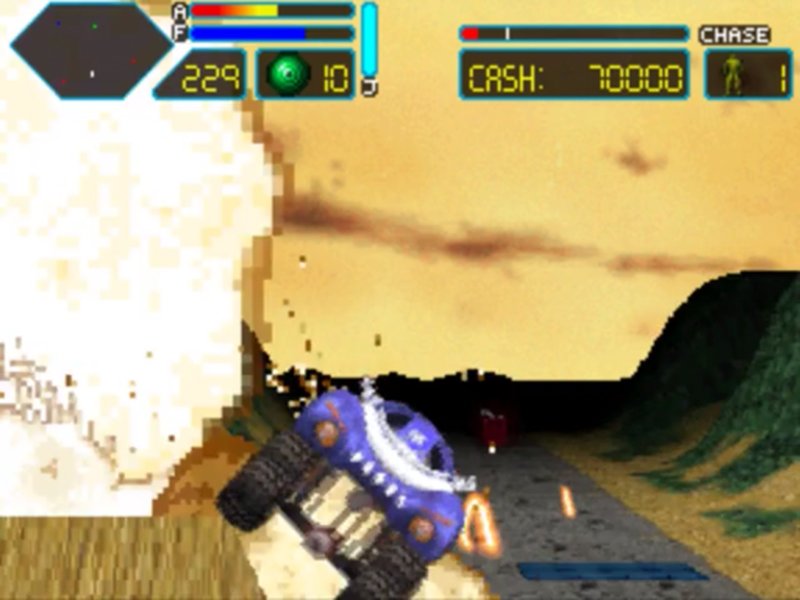
Crystal Dynamics’ other driving game casts you as a bounty hunter in a six-wheeled buggy, chasing criminals across alien worlds in a bouncing, shooting, cash-chasing arcade racer — and then, in its most famous decision, stations two silhouetted hecklers at the bottom of the screen during its full-motion cutscenes to mock the acting, Mystery Science Theater style, years before gaming comedy was an industry. The driving itself is springy, chaotic fun: terrain that launches you, weapons that settle arguments, and a garage economy between hunts. But the hecklers are the legacy — proof that by 1994 a studio could already see the FMV era’s absurdity clearly, and had the confidence to laugh at it from inside its own game. The 3DO library has bigger titles. It has few with this much personality per megabyte.
A closing word on method, because gems lists live or die by it. Every game here was chosen against the same test: it is not a famous title having an off day, not a port you can play better elsewhere, and not a curiosity that collapses after ten minutes. Each is the best version of itself on this machine, most are exclusive to it in any meaningful sense, and all ten reward the player who stays past the first level. That is a stricter standard than the system’s reputation suggests it could meet — and the fact that the argument was over which ten to leave out, rather than how to reach ten, is the library’s real review.
Ten games, ten arguments that the 3DO’s library runs deeper than its reputation. The racers and the FMV epics get the documentaries; the gems get the last laugh — they are the discs still in the machines, thirty years on, being played.