The 3DO has become the connoisseur’s retro console: a small, strange library of genuine classics, a hardware family with real character, and prices that reward knowledge and punish haste. This guide covers the whole purchase in 2026 — which model to buy, how to stop depending on thirty-year-old lasers, which controllers matter, what the games should cost, and how regions work. Buy once, buy right, and the 3DO is one of the most satisfying systems in the hobby. Buy carelessly and it is an expensive paperweight with a motorised tray.
Step one: choose your machine
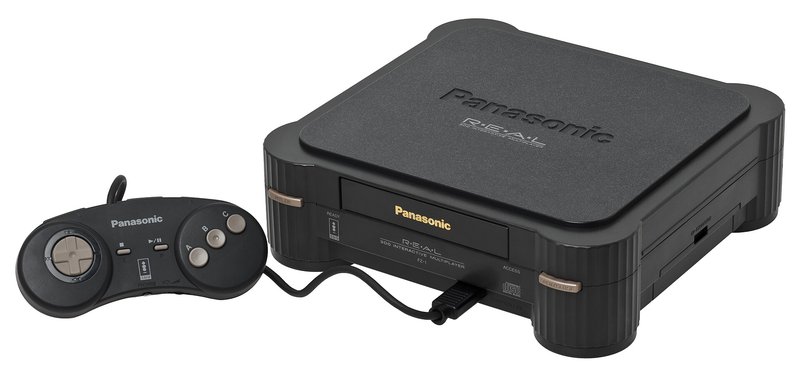
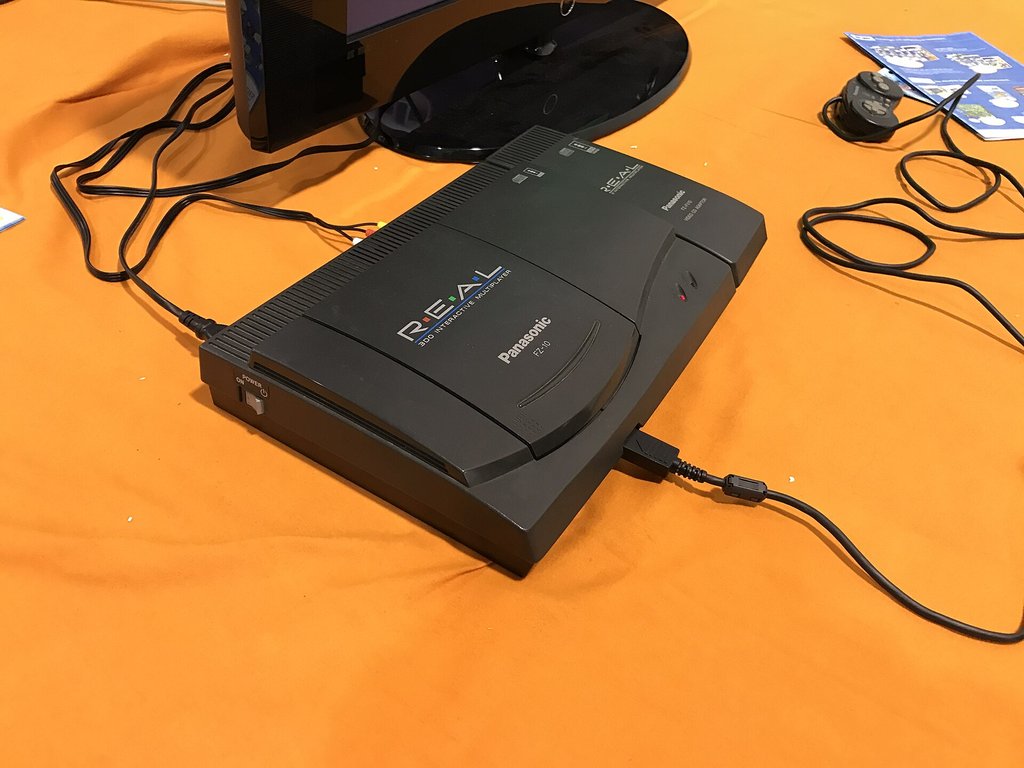
The Panasonic FZ-1 is the icon: the 1993 original, built like hi-fi, with the motorised CD tray that defines it. Expect to pay a premium for a working, serviced example — and budget for the tray mechanism and belts in any unserviced unit. The Panasonic FZ-10 is the sensible buy: the 1994 cost-reduced model with a manual top-loading lid, an integrated memory manager, and far less to go wrong. It is usually the cheapest route into the platform and the one most owners actually play on. The GoldStar GDO-101M splits the difference — distinctive design, competitive pricing then and now, a well-liked controller — with the caveat that its lasers have the family’s weakest survival rate. The Sanyo TRY is the collector’s import: Japan-only, handsome, uncommon outside Japan, and priced accordingly. Whichever you choose, a Japanese or North American machine covers the overwhelming majority of the library; see the region notes below.
Step two: free yourself from the laser
Every 3DO ever made reads its games from a CD drive that is now three decades old, and the single best upgrade in the platform’s modern life is the optical drive emulator: a board that replaces or supplements the drive and loads the entire library from SD card or USB storage. ODE options exist for the FZ-1 and FZ-10 families, at prices comparable to a single top-tier game, and they transform ownership — instant loading, no disc wear, no laser anxiety, and your valuable originals stay on the shelf. If you plan to keep the original drive, buy a machine whose laser has been tested across a long play session, not just a boot screen, and treat CD-Rs with suspicion: ageing 3DO drives are fussy readers, and a library built on burned discs will teach you the meaning of the word stutter.
Step three: controllers and connections

The standard 3DO pad is better than its reputation: a comfortable three-button design with a proper D-pad, a headphone jack and volume control on the pad itself, and the platform’s signature trick — controllers daisy-chain, each pad plugging into the last, so multiplayer needs just one console port. Stock up on two. The essential upgrade is a six-button fighting pad — Capcom’s official controller is the famous one — which transforms Super Street Fighter II Turbo and Way of the Warrior from playable to proper; they command real money now and are worth it if fighters are your purpose. For video, the machines output composite and S-Video natively; S-Video is the sweet spot on a CRT and the baseline for a good upscaled image on a modern panel, while RGB modifications exist for the committed. The FZ-1’s back panel also carries the expansion port for the rare Video CD adaptor — a curiosity, not a necessity.

Step four: what to pay for the games
The 3DO market divides cleanly in two. The common library — the EA sports titles, the FMV discs, the pack-ins — remains genuinely cheap, and a satisfying starter shelf of twenty good games can be built for the price of one modern special edition. The classics sit a tier up: The Need for Speed, Road Rash, Gex and Star Control II in complete, long-box condition are established mid-price collectibles, and condition is everything — the tall North American long boxes are fragile, and a crushed box can halve a price. At the summit sit the famous rarities, with Lucienne’s Quest the library’s four-figure crown: the only traditional JRPG the machine got in the West, in a print run the market never forgave. Two rules protect the buyer: Japanese versions of many titles are dramatically cheaper and often fully playable in English or near it, and loose discs of even rare games trade far below complete copies — decide whether you are buying to play or to shelve before the auction starts, not during it.
Step five: regions, saves and the fine print

The 3DO is essentially region-free in practice: the platform was designed as a worldwide standard, most discs boot on most machines, and the significant exceptions are a handful of Japanese titles with font-based lockouts that collectors document precisely — check the specific game before importing, and you will almost never be surprised. Saving happens to the machine’s internal battery-backed memory — 32KB, shared across your library — so a memory manager is a way of life: the FZ-10 has one built into its interface, the FZ-1 manages saves from a utility disc or supporting games, and deleting old sports-game saves is a rite of passage. A word on power: Japanese machines expect 100V, North American 120V; run imports on the correct voltage, and consider a modern replacement power supply for any machine in daily use — thirty-year-old PSUs are the quiet killers of retro hardware.

Step six: keeping it alive
A 3DO bought in 2026 is a machine entering its fourth decade, and a small maintenance budget is part of the purchase price. The known work, in rough order of urgency: capacitors on the main board and power supply, which leak and drift with age and account for most “mystery” faults; the FZ-1’s tray belts and mechanism, a service job any competent retro technician knows; laser cleaning and, where necessary, replacement on the GoldStar especially; and the internal save battery’s memory, which is maintained by the system but benefits from the machine being powered regularly. None of this is exotic — the 3DO is a well-documented platform with an active repair community, schematics in circulation and parts support that shames younger consoles. Buy a serviced machine, or service a cheap one, and expect it to outlast its second owner.
Step seven: the starter library, prioritised
With the machine sorted, build the shelf by purpose. First five: Road Rash (the racer with fists), The Need for Speed (the racer with manners), Gex (the platformer), Star Control II (the masterpiece — budget for it, it is the system’s blue-chip stock), and Return Fire (the multiplayer essential). Next five: Super Street Fighter II Turbo with the six-button pad, The Horde for strategy, Killing Time for atmosphere, Crash ‘n Burn for history, and Alone in the Dark for the genre’s founding document. Then the deep shelf: Captain Quazar and BattleSport for the couch, Wing Commander III for the epic, Lucienne’s Quest and Guardian War if RPGs are your country, and PO’ed because nothing else in the world is PO’ed. Bought in that order, every purchase teaches you something new about what the machine was — which is the real collection, in the end: not the discs, but the argument they make together.
Where to buy, and how not to get burned
The 3DO market lives in the usual places — auction sites, retro game shops, show floors and the community’s own trading circles — and each has its etiquette. At auction, the discipline is testing: a listing that shows the machine running a game, tray cycling and a controller responding is worth a real premium over “powers on, untested”, which in 3DO language usually means the laser or the tray has already failed. At shows and in shops you can test on the spot, and the community’s sellers know the machines’ weak points and price serviced units accordingly — a serviced FZ-10 from a known seller is frequently the best money in the whole purchase. For games, learn the long box: North American releases came in tall cardboard boxes that crush if you look at them, so “complete” spans a wide quality range, and the disc itself should be checked for the deep scratches that ageing 3DO drives forgive least. Japanese imports, sold through the usual proxies, are the market’s pressure valve — often a third of the Western price for the same game, in a box that has usually been treated better.
A note on the games’ prices in 2026
Prices across the library have firmed as the system’s reputation has been revised upward, but the 3DO remains — Lucienne’s Quest and a handful of rarities aside — one of the most affordable “story” consoles to collect for, precisely because its print runs were small but its games were widely distributed through rental and discount channels in its short life. The smart money buys the mid-tier classics first, while they are still merely collectible rather than investment-grade, and treats the famous top end as a long game. The ODE route, once again, is the pressure release: a player who fits one has bought the entire library’s playability for the price of its single most expensive disc, and can collect the physical games at leisure, for love, in the right order — which is how this hobby is supposed to work.
Accessories worth hunting
Beyond the essentials, a few period accessories repay the shelf space. The flightstick-style analogue controllers transform the flying games and PO’ed’s jetpack alike, and are underpriced because few sellers know what they fit. The mouse, made for the strategy and adventure titles, is a genuine quality-of-life upgrade for The Horde’s building phases. The Video CD adaptor for the FZ-1 is a collector’s flourish rather than a tool — the format it serves is a museum itself — but as a piece of the platform’s “one machine for all media” dream, it completes the FZ-1’s story on the shelf. And a spare standard pad, bought cheap while they are cheap, is the accessory every owner wishes they had bought two of: the daisy-chain only works if the chain exists.
The short version
Buy an FZ-10 if you want to play, an FZ-1 if you want the object, and a GoldStar if the price is right and the laser is proven. Add an ODE before you add a second rare game. Get two pads and, if you can, the six-button fighter. Build the shelf in this order: Road Rash and The Need for Speed for the racing, Gex for the platforming, Star Control II because it is the best game on the machine, Return Fire for the friend you are about to lose to it — and then let the hidden gems pull you deeper. The 3DO was too expensive in 1993 and is, at last, exactly the right price for what it holds. Buy the machine for the library, keep the library for the machine, and expect the pair of them to out-argue every other retro purchase you make this year — the little standard that refused to die has earned its place in the room, and in 2026 it is finally, unambiguously, a buyer’s market for the people who understand it.