At a glance: The 3DO’s Second Life · 3DO · The homebrew community, 2000s–2026 · Preservation
Dead consoles are supposed to stay dead. The 3DO declined to: three decades after Matsushita and GoldStar stopped making the machines, the platform has a development scene, modern storage hardware, an emulator that has become a reference implementation, and a preservation community systematically archiving its library — including the prototypes and regional oddities that the commercial era left behind. The 3DO’s second life is smaller than the Dreamcast’s famous afterlife or the Saturn’s translation scene, but it is arguably more complete: a platform that failed to build an ecosystem in 1994 has finally got one, built by its fans, on their own schedule.
The foundation was legal luck. The 3DO’s system software story ended unusually openly: the platform’s patents expired, its encryption keys surfaced, and — crucially — the machine was designed to boot unsigned code once its checks could be satisfied, which made homebrew development a matter of tooling rather than warfare. When the community released the core system files into practical usability in the 2010s, the door opened for everything that followed: anyone could compile code for the Opera hardware — the architecture’s original codename — and run it on a real machine.
The hardware afterlife: ODEs and new parts
The machines’ weak point was always the CD mechanism — lasers fade, the FZ-1’s motorised tray gives up, and thirty-year-old optics do not care about your collection. The community’s answer mirrors the rest of the retro scene: optical drive emulators that replace the disc drive with solid-state storage, loading the library from SD card or USB while the original machine does everything else. Installations exist across the family, and they change the ownership experience completely: the whole library, instantly, on real hardware, with the original laser retired to a display shelf. Around the ODEs has grown the usual ecosystem of care — capacitor kits, modern power supplies, video output modifications for clean RGB and HDMI-era signals, and replacement parts printed and machined by enthusiasts.
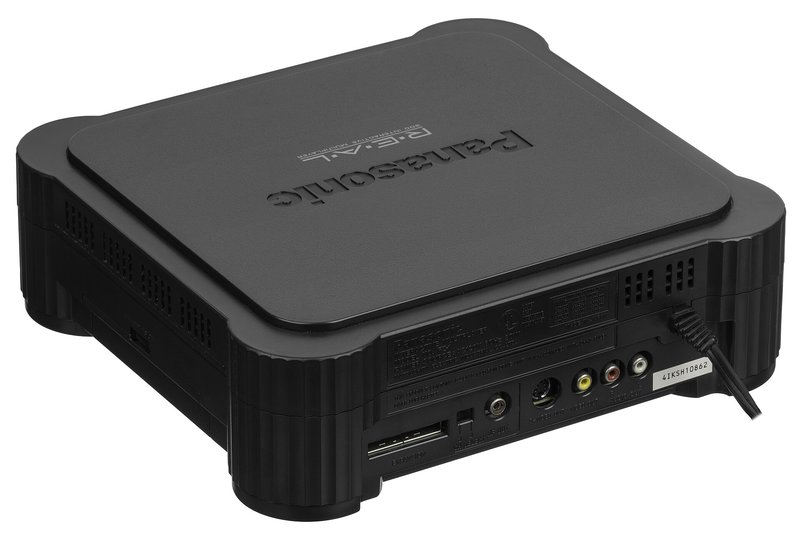
The result is that a 3DO in 2026 is often more usable than it was in 1996: faster loading, quieter, kinder to discs that now cost serious money. The collectors’ market noticed — the best games’ prices climbed as the audience grew — but the ODE route also freed play from price: the library is preserved, dumped and verified, and the machines themselves have become the collectible rather than the media.
Emulation grows up
On the emulation side, the platform’s champion is Phoenix — long known to fans as 4DO in its earlier lineage — alongside the Opera core in RetroArch, which brought 3DO to every modern device. Emulating the 3DO was historically thorny: the custom Madam and Clio chips, the ARM core, the CD streaming behaviours that games like Killing Time depend on. The current state of the art is genuinely good: the great majority of the library runs accurately, at or beyond original performance, with modern conveniences. For a system whose commercial life was brief, its emulation scene is disproportionately diligent — driven, as usual, by the fact that the games are good and the hardware is fragile.
The 3DO was designed as an open standard and failed as one. Its fans simply waited thirty years and finished the job.
Homebrew and the living library
New software completes the picture. The homebrew scene has produced demos pushing the custom chips, ports and experiments from the community’s annual jams, translations of Japanese releases the West never officially got, and — most valuably — preservation work: prototype builds, unreleased games and regional variants documented, dumped and made playable, turning the 3DO’s rumour mill into an archive. An unreleased game on most systems is a forum legend. On the 3DO, increasingly, it is a file with a checksum and a community that can tell you exactly how it plays.
What does this second life prove? Partly that the library deserved it — a platform does not attract thirty years of unpaid engineering without games worth the effort. But partly it proves something about the original design that the market never got to test: the 3DO was built to be a standard, documented and licensable, and that DNA made it unusually preservable. The closed boxes of its rivals resisted their rescuers for years. The open one, in the end, welcomed them in.
The preservation engine
Behind the hardware and the homebrew sits the least glamorous and most important work: the archive. The 3DO library is small enough — a few hundred titles worldwide — to be completely knowable, and the community has treated that as an assignment. Verified disc dumps with checksums, scans of the fragile long boxes and manuals, documentation of regional variants and revision differences, prototype builds rescued from former developers’ closets: the platform’s recorded memory is now more complete than it ever was while the platform was alive. Projects in the preservation community use the 3DO as a proof of concept for what total coverage looks like — every release, every variant, accounted for — precisely because its scale makes totality achievable.
That completeness feeds everything else in the second life. Emulator developers test against a verified library. ODE firmware supports a known catalogue. Translators and ROM hackers work from clean, documented images. Even the market benefits: a collector in 2026 can know, to a certainty earlier generations never had, exactly what a complete copy of a game contains and whether the one in the auction photo matches. The 3DO’s afterlife is, in this sense, the most scholarly of any console’s — a small library, perfectly catalogued, by people who decided that if the industry would not keep the records, they would.
The scene’s next decade
The trajectory points one way. Development tools keep improving — modern compilers and libraries have replaced the era’s official kits, lowering the homebrew barrier to hobbyist level — and the hardware projects keep compounding: ODEs joined by modern video boards, replacement shells, and at least one long-running effort to document the custom silicon completely enough that the platform could, in principle, be manufactured again. FPGA cores for the 3DO have moved from fantasy to work-in-progress in the open-hardware community, the surest sign a platform’s preservation has reached maturity. The 3DO began as an attempt to standardise the future. Its second life is standardising its past — and doing a better job of it than the industry managed the first time.
Why this library, why this loyalty
Ask the community’s engineers why they volunteer years to a console that sold in the low millions and the answers converge on the games themselves — on a library top-heavy with originals that existed nowhere else, made by studios the platform’s friendly licensing invited to experiment. Preservation follows affection, and affection follows quality. The 3DO’s second life is, in the end, the market correcting its first verdict, one ODE installation at a time.
The machine at the show
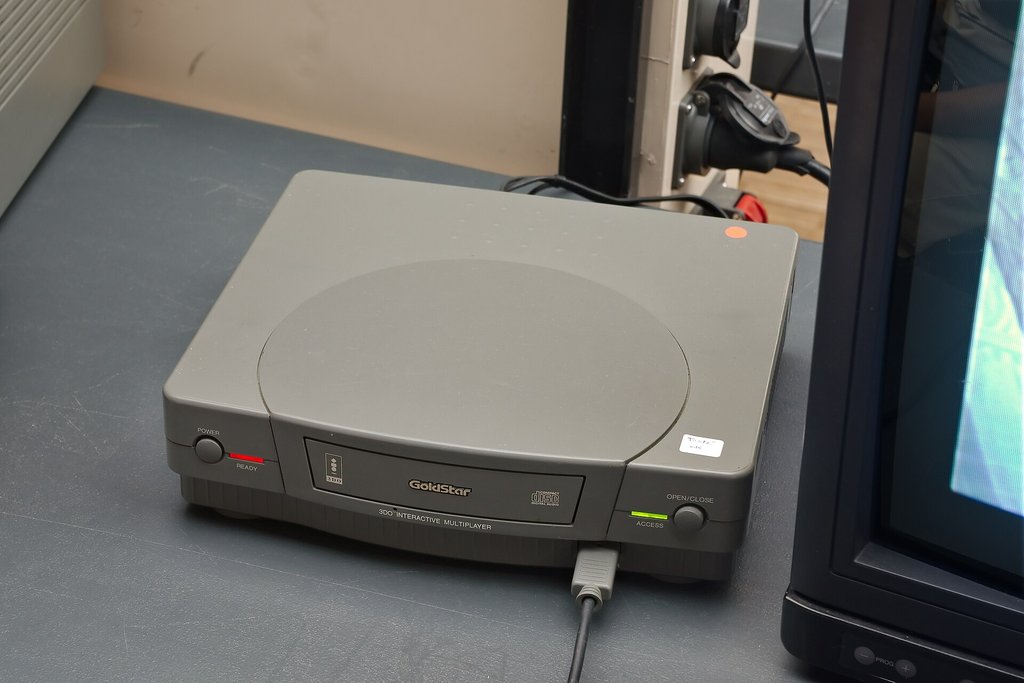
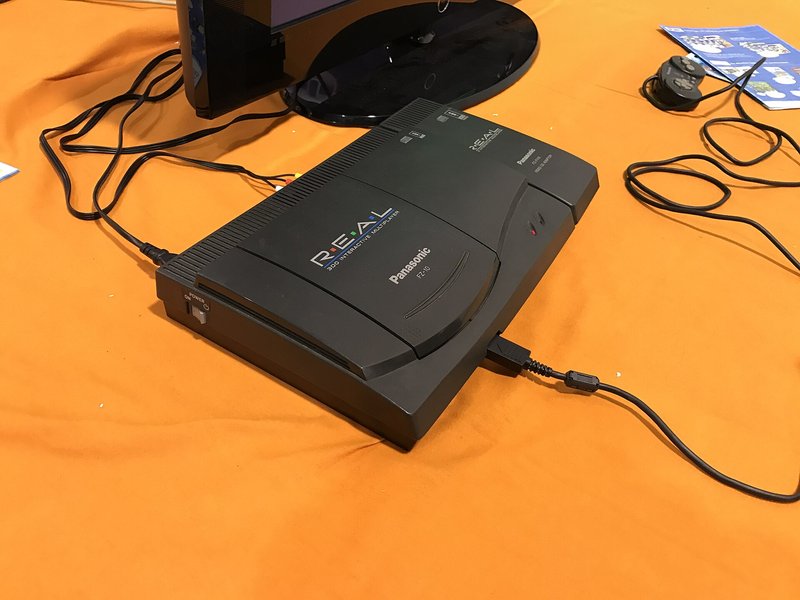
Walk a retro gaming show in 2026 and you will find the family holding its own: an FZ-1 on a stand with its tray gliding out like it still costs $699, a GoldStar running Road Rash, someone’s FZ-10 with an ODE inside and the whole library a menu away. The joke about the price has faded with the people who paid it. What is left is the library, the hardware, and a community that treats both as common heritage. The 3DO’s first life lasted three years. Its second is in its third decade, and shows no sign of stopping.