At a glance: 3DO M2 · 3DO · The 3DO Company / Matsushita, 1995–1997 · The phantom console
Somewhere in the late 1990s, in arcades and in the locked cabinets of game studios, there existed a games console more powerful than the PlayStation, more elegant than the Saturn and more doomed than either: the M2. The 3DO Company’s second-generation design — built around IBM and Motorola’s PowerPC architecture, promising a leap past everything on the market — was demonstrated, developed for, written about, and cancelled so many times that its name became the decade’s shorthand for vapourware. It never launched as a home console. It is also the most fully realised ghost the industry ever produced: real hardware, real games, real developers, and a paper trail that lets us reconstruct the parallel 1997 that never happened.
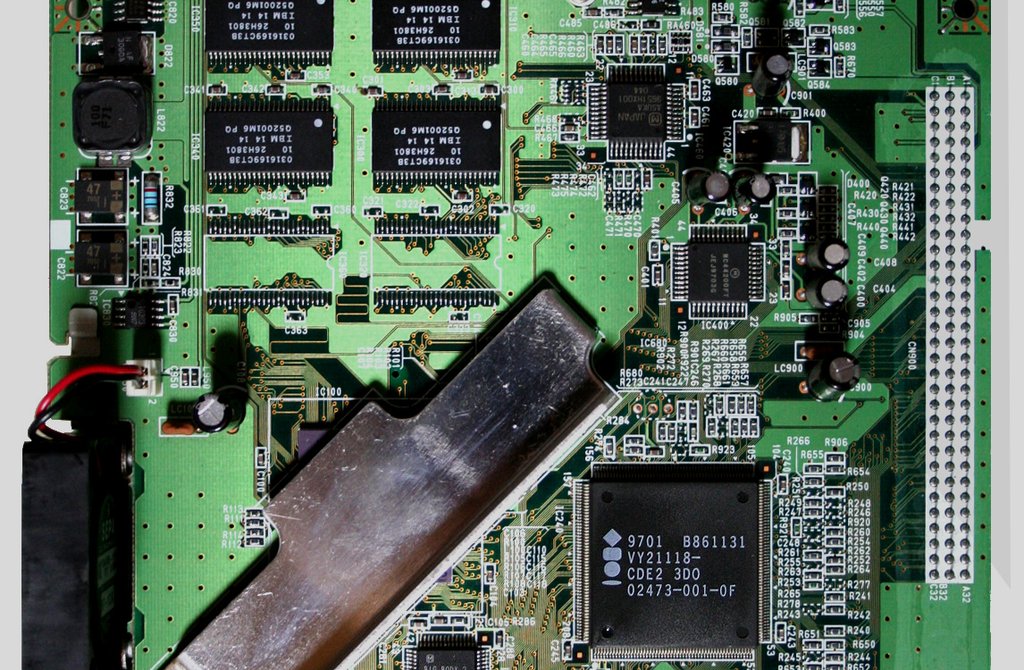
The story begins with ambition properly funded. After the original 3DO’s licensing model stalled, The 3DO Company designed its successor in-house: codenamed Bulldog, built on a PowerPC 602 processor with custom graphics silicon — designed with the same philosophy as the original machine’s Madam and Clio chips, but aimed at the polygon era. Contemporary demonstrations showed rendered scenes that made the PlayStation look like the past. In December 1995, Matsushita — Panasonic’s parent, the original 3DO’s biggest backer — bought the M2 technology outright for a reported $100 million, intending to launch it as its own console. The phantom had a buyer, a budget and a date.
The machine that kept almost existing
What followed was a two-year lesson in how consoles die. Matsushita, a consumer electronics giant with no games-publishing instinct, looked at the market it would enter — Sony ascendant, Nintendo’s 64 arriving, Sega bleeding — and kept hesitating. Launch windows were announced and slipped. Developers who had signed on, including studios with working M2 builds of real franchises, watched their target platform evaporate beneath them; the most famous casualty of the era’s reshuffle was the migration of flagship projects to the PlayStation and Nintendo 64 as their publishers lost faith. Each delay made the next delay more rational: the longer M2 waited, the stronger its competition stood, and the more its technical lead — real in 1995 — eroded toward parity.
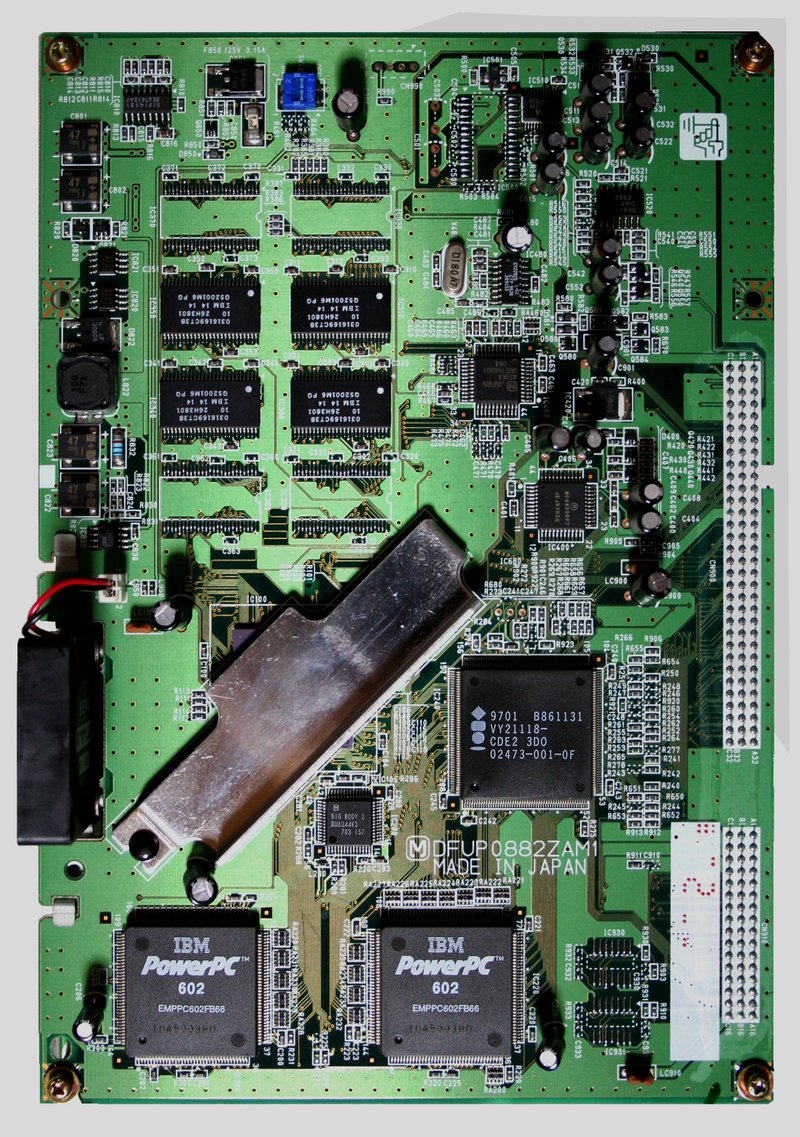
In 1997 Matsushita cancelled the home console, and the M2 passed into its strange second existence. The technology was redirected into industrial and commercial hardware — interactive kiosks, educational systems, and arcade boards built by Konami, which ran a small, fascinating catalogue of late-nineties arcade titles on M2-derived hardware. Development kits had already spread widely; prototypes of the home unit, in near-final industrial design, exist in collectors’ hands today and run. The M2 is not a rumour or a render. It is a finished civilisation that never got its continent.
Why the phantom matters
The M2 haunts the late nineties because it exposes the era’s real rules. The original 3DO had failed on arithmetic; the M2 failed on nerve, and the difference matters. By 1996 the console business was no longer about who had the best silicon — it was about who could subsidise hardware, guarantee a software pipeline, and terrify retailers least. Matsushita could do the first, never organised the second, and flinched at the third. Sony, the outsider electronics giant of the previous round, had learned those lessons; Panasonic, the insider of the 3DO story, discovered that manufacturing greatness and platform courage are different products.
The M2 was not beaten by a better machine. It was beaten by a calendar — every month of hesitation was a month its rivals spent becoming unbeatable.

For collectors and historians, the M2 left the richest artefacts of any unlaunched console: working development systems, playable demos, near-production hardware, and a software trail that includes some of the most sought-after prototypes in the hobby. Its games that did escape — through arcades, through ports, through the slow leak of preservation — read like dispatches from a timeline where the 32-bit war had a fourth army. The hobby’s fascination is not really about power. It is about how complete the illusion was: boxes were designed, controllers were moulded, magazines ran covers. An entire launch, minus the launch.
There is a final, fitting footnote. The engineers and ideas behind M2 scattered into the industry that had out-waited it — into set-top boxes, graphics companies and the next generation of platforms — and the PowerPC architecture at its heart went on to power the GameCube, the Wii and the Xbox 360 generation’s rivals. The phantom’s DNA shipped in the hundreds of millions. It just shipped in other people’s consoles.

What the developers remember
The most poignant evidence in the M2 archive is the software that was finished, or nearly. Studios that built for the machine describe a consistent experience: development hardware that was a pleasure after the era’s crankier kits, performance that made their PlayStation builds look strained, and a platform holder whose silence lengthened from months into a condition. Games migrated rather than died — concepts, engines and in some cases entire designs reappearing on the Nintendo 64 and PlayStation wearing new clothes — which is why the M2’s shadow falls across so many late-nineties releases that never mention it. The industry metabolised the phantom so completely that its influence is untraceable except in the memories of the people who were there, and in the prototype builds that collectors now guard like manuscripts.
The $100 million question — what Matsushita actually bought — has a sadder answer than the number suggests. It bought technology without an ecosystem’s patience: no first-party studio system, no publishing relationships of its own, no stomach for the subsidy war Sony was already winning. The purchase is now a business-school staple, the electronics giant that acquired the future and then declined to schedule it. In the counterfactual where the M2 launches in late 1996 at a subsidised price with its announced software, the 32-bit war has a fourth front and Sega’s collapse accelerates. In the timeline we got, the machine’s most public appearance may have been its longest-running one: as the answer to a trivia question, and as a development board in photographs, gathering the mystique that only the never-shipped can earn.
The specifications, for the record
For the hardware romantics, the phantom’s vital statistics bear recording: a PowerPC 602 at the centre, custom graphics silicon promising polygon counts and texture effects beyond the PlayStation’s reach, CD-ROM storage, and an operating environment inherited from the 3DO’s own — a specification that in 1995 read like next year arriving early, and by its 1997 cancellation read merely like the present tense. That erosion is the whole tragedy in one paragraph: the M2 was not out-designed, it was out-waited, and its specifications are the fossil record of how fast the nineties moved.
The name itself
Even the branding survives as evidence of intent: M2 was positioned not as a new console but as the second generation of a continuing standard — the 3DO idea, rebooted with the subsidy and the software muscle the first attempt lacked. The tragedy is legible in that positioning. Everything about the plan was a correction. It corrected nothing, because it never shipped.
Chasing the ghost today
To meet the M2 now is to join a small, dedicated archaeology: development kits surface at auction, prototype discs are preserved and documented by the community, and the Konami arcade boards keep the hardware’s arcade afterlife playable in the flesh. It remains the definitive answer to a bar-room question — what is the most powerful console that never launched? — and the late nineties’ most instructive ghost story: proof that in the console wars, existing is a decision, renewed monthly, and the M2’s owners kept deciding not yet, until the answer became never.