At a glance: The 7800 Homebrew Renaissance · Atari 7800 · Scene feature · The console that refused to retire
Most consoles die once: commercially, around the time the successor arrives. The Atari 7800 died twice — once in a warehouse in 1984, before it had properly lived, and once in the market around 1992 — and then, quietly, it did something consoles weren’t supposed to do. It came back. Not as a corporate relaunch (though Atari’s modern custodians have lately joined in), but as a hobbyist civilisation: programmers writing new games for forty-year-old silicon, a storefront selling new cartridges in new boxes, prototypes rescued and finished, and a flagship chip — MARIA, designed in 1983 for a war that never happened — finally getting the long career she deserved. This is the story of the 7800 homebrew renaissance.
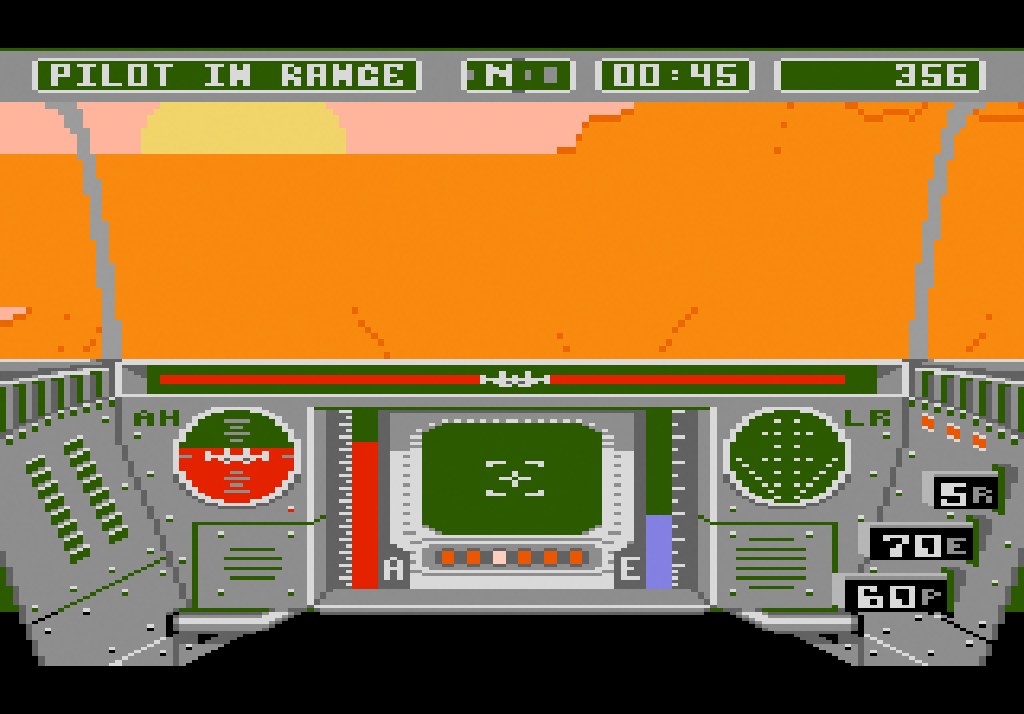
The seed was preservation. Through the 1990s and 2000s, collectors and archivists documented the system’s strange history — the test-market units, the unreleased prototypes, the games that had been finished and shelved. Among the most tantalising was Rescue on Fractalus!, the Lucasfilm fractal-flight game whose 7800 version, developed in the console’s first era, was cancelled before release. When a prototype surfaced, the community didn’t just archive it: they championed its completion and eventual cartridge release through AtariAge, the store and forum that became the renaissance’s capital. A game written for 1984 reached players as a finished product in the 2000s. That sentence describes the whole scene: the warehouse door, pried back open.
The programmers’ console
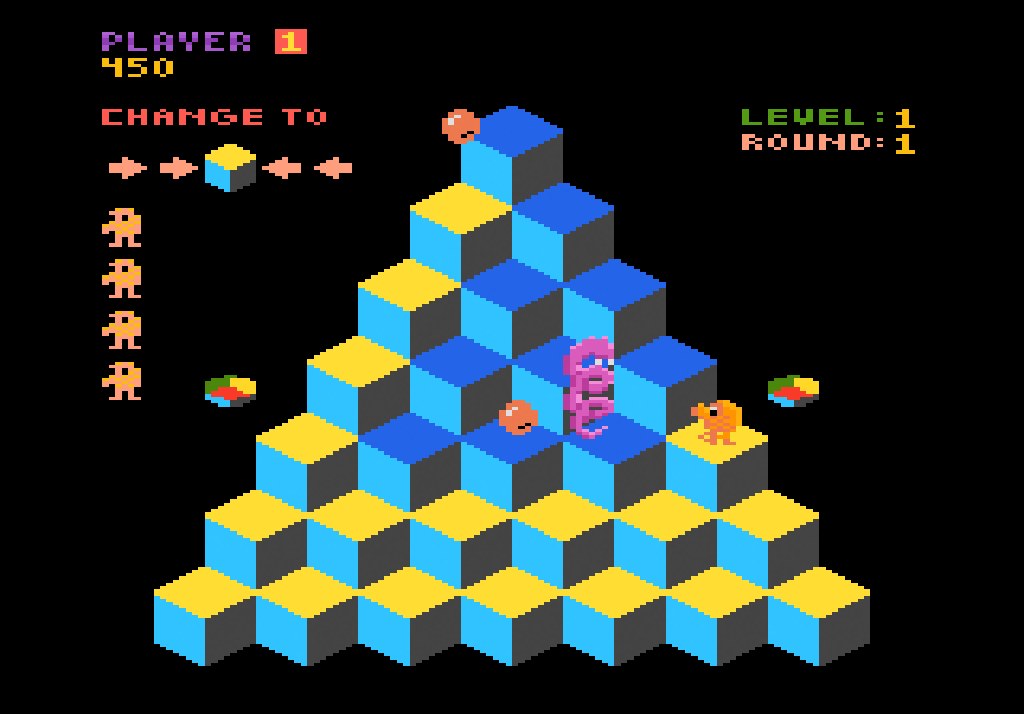
Why the 7800, of all machines? Partly the romance of the unfinished — a console with headroom, whose launch library proved what its chip could do and whose commercial life ended before anyone found its ceiling. Partly the tools: modern cross-development, flash cartridges and eventually dedicated tooling made MARIA’s display lists tameable from a laptop, and her peculiar architecture — no tile engine, total object freedom — rewards exactly the kind of programmer who enjoys an unusual machine. And partly the community’s elder statesmen set a standard. Ken Siders’ b*nQ (2007) took Q*bert’s pyramid and rebuilt it as a love letter with modern polish — new modes, silky control, high-score tables the size of phone books. His Beef Drop did the same for BurgerTime. These weren’t demos; they were releases, in boxes, reviewed like releases.

The roll of honour grew steadily more ambitious. Bob DeCrescenzo — PacManPlus to the forums — produced a body of work that amounts to a second launch library: Pac-Man Collection, bringing the arcade mazes home in definitive form; Frenzy, the Berzerk sequel the 7800 never had; and Bentley Bear’s Crystal Quest, a full platform adventure sequel to Crystal Castles with worlds, bosses and a bear, running on hardware from 1983 and looking like it means it. Asteroids Deluxe took the launch classic itself and rebuilt it in vector style with modern options, released with a 2007 copyright that tells the whole story in four digits: the same company town, still building. Each release made the next one easier to imagine — and the audience, remarkably, kept growing.
The quality bar kept rising because the scene’s elders kept raising it in public: source code shared, techniques documented, works-in-progress critiqued frame by frame on the forums. A programmer arriving in 2010 stood on a decade of accumulated MARIA lore — how to budget her stolen cycles, how to build display lists that sing, how to make the old TIA sound hardware behave. The renaissance is as much a knowledge story as a games story: an oral tradition, written down at last, for a chip the industry had filed under forgotten.
Rikki, Vikki, and the new professionalism
If one release marks the renaissance’s maturity, it is Rikki & Vikki (2018), from PenguiNet: a full-scale, two-player co-operative puzzle-platformer with hand-crafted presentation, a composed soundtrack, and a physical edition produced to commercial standards — later even crossing to modern platforms, where it sits in digital storefronts as a game, not a curiosity. Rikki & Vikki matters because it isn’t an homage or a port. It’s an original, system-defining exclusive, made for the 7800 four decades into the console’s life, by people who chose MARIA the way a musician chooses an instrument. The scene had produced good games for years. Now it had produced a reason to buy the console.

Prototypes rescued, arcades perfected, originals shipped in boxes. The 7800’s second life isn’t a revival act — it’s the first life, finished at last.
The infrastructure matured around the games: development in the open on the AtariAge forums, where works-in-progress are playtested by the community that will buy them; a store selling cartridges, boxes and manuals to commercial standards; flash solutions and the 7800 GameDrive for the try-before-you-buy era; and development frameworks that let new programmers reach MARIA without first surviving her. Corporate Atari, to its credit, eventually stopped ignoring the scene and started nodding at it — the modern 7800+ hardware plays the old cartridges proudly, and the audience it sells to is substantially the audience homebrew kept warm. The warehouse console now has something it never had in 1986: a future tense.
And the pipeline is not slowing. The forums’ work-in-progress threads run to new shooters, new puzzles, new ports of games the 7800 missed the first time; tools improve; print runs sell out and get reprinted. If the pattern holds, the library’s best decade may yet be its fifth — an outcome so improbable that only the 7800, the console that already came back from the warehouse once, could plausibly manage it twice. For new owners arriving via the modern revival hardware, the advice is simple: the classics are essential, but don’t stop at 1992. The new cartridges on the shelf next to them aren’t ephemera. They’re the continuation — the library, still being written, in the present tense.
New cartridges are announced the way albums are: with cover art, feature lists and arguments about the track order of the levels. The audience argues back, buys in, and files the box next to the 1986 originals — where, increasingly, the new spines outnumber the old. Somewhere in that shelf order is the whole story: a library interrupted in 1984, resumed by its readers, and still growing. The warehouse, in the end, was just a long pause between chapters.
To the programmers still submitting display lists to a chip older than many of them: the launch team of 1984, one suspects, would recognise the spirit instantly. They built MARIA to be programmed by people who loved arcade games. It only took forty years for enough of those people to find her. The list, as ever, displays.
Why it matters beyond the 7800
The renaissance is, finally, an argument about what old hardware is for. The 7800 was designed for a commercial war it never got to fight; homebrew gave it the peace to become an instrument instead. Its programmers aren’t nostalgists re-enacting 1986 — they’re composers writing for a peculiar, characterful chip, in a scene that reviews their work with the seriousness of any indie platform. Every console of the era has its devotees, but the 7800’s story is singular: the machine that slept in a warehouse woke up in a community, and the community, forty years on, is still writing its library. Long may the lists display.