At a glance: Bureaucracy · Commodore 128 · Infocom, 1987 · Interactive fiction · Score: 8.0/10
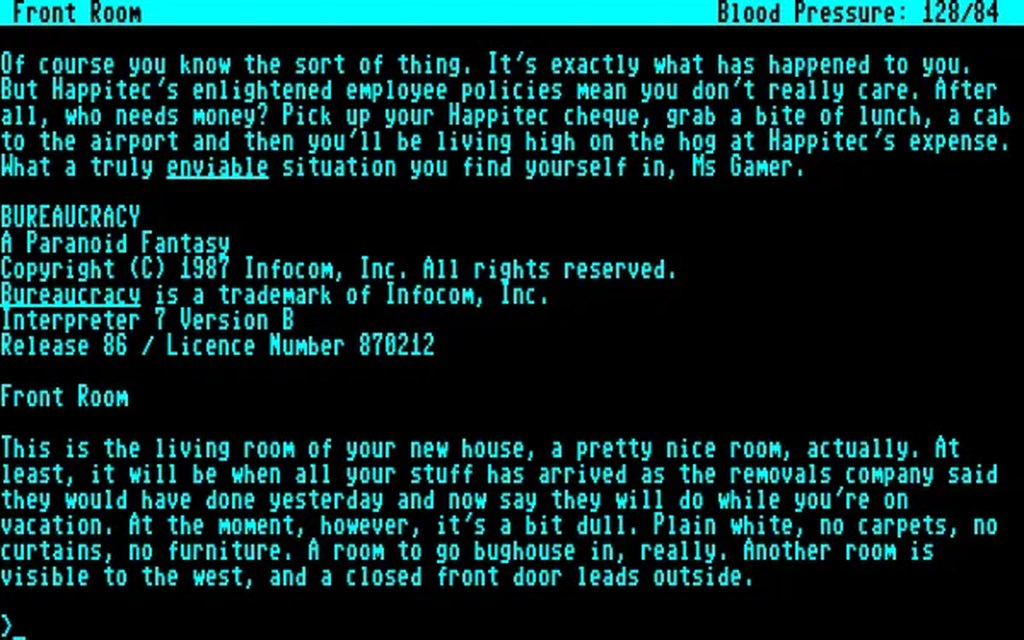
Every games library needs one title that could only have been made by its author, and for the Commodore 128 that title is Bureaucracy — Douglas Adams’ second and final game for Infocom, a paranoid comedy about a change-of-address form. It belongs to Infocom’s Plus range, the line of games that required 128K of memory, which on Commodore meant one thing: this is a C128 game, built for the machine’s 80-column screen and big memory, at a time when almost nobody was building anything for it at all. It is also, not coincidentally, one of the funniest objects ever committed to floppy disk.
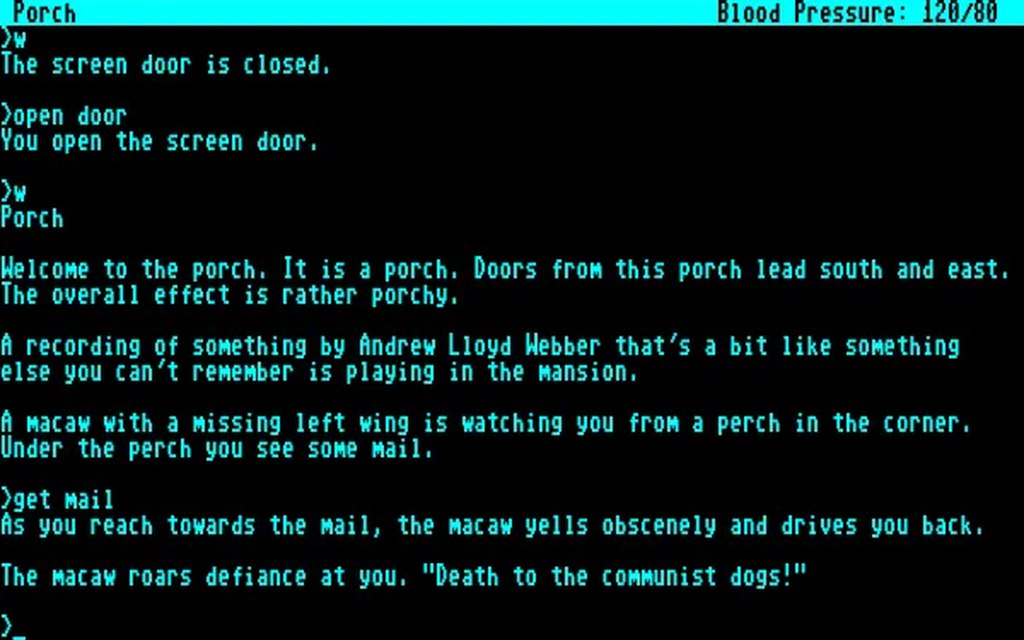
The premise is autobiographical. Adams once moved house, dutifully filed his change-of-address forms — one of them in person, at his bank — and was rewarded with a cancelled credit card and a replacement mailed to the address he had just left. Bureaucracy inflates that grievance into an epic. You have moved into a new house. Your bank, Fillmore Fiduciary Trust, has not caught up. Your mail is going to your old address; a cheque you need in order to fly to Paris for your new job is somewhere in the system; and the system — banks, post offices, airlines, a paranoid neighbour, an antisocial hacker, a llama-food delivery service — is closing around you like weather.
Your blood pressure is a game mechanic
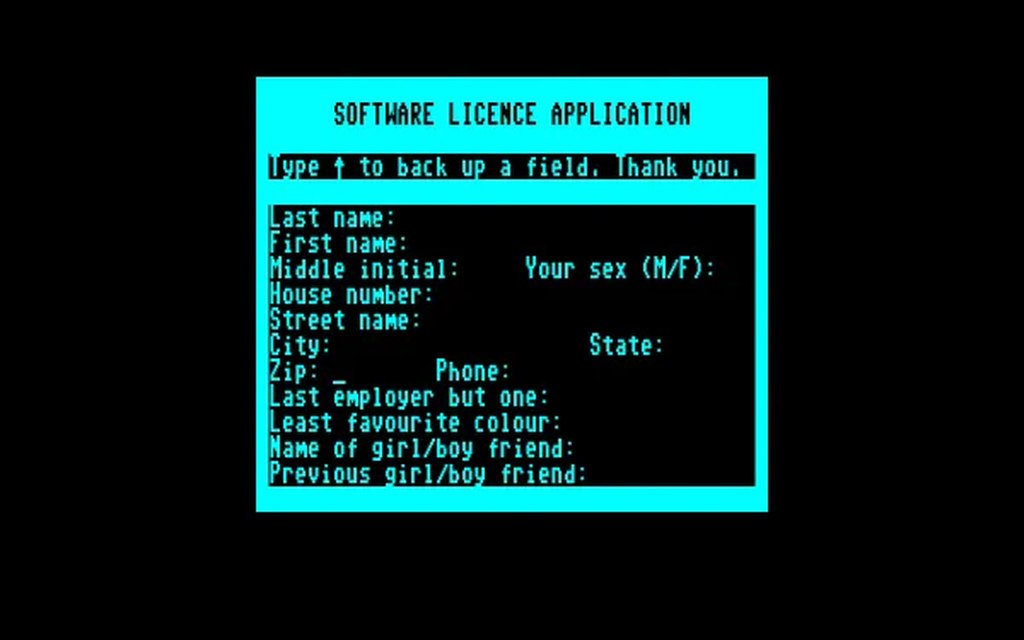
The game’s masterstroke is to make frustration literal. Before play begins you must complete a software licence application — name, address, old address, blood type, the lot — in a form that will not let you go back, skip a field, or behave like a person, and which comments on your answers as you type. The details you enter are then woven into the game itself, which greets you by your own name and mangles your own address with personal malice. Thereafter, a blood-pressure reading runs in the status line. Every bureaucratic outrage — every lost letter, dead phone line and jobsworth refusal — sends it climbing. Let it reach the top and you die of an aneurysm: the only adventure game in which the paperwork can actually kill you, administered in doses.
It is a joke, but it is also design. The blood pressure turns the game’s theme into its difficulty curve, teaching you to route around obstruction with the lateral thinking the story celebrates. The puzzles are Adams puzzles — the bank that will only help account holders, the address that exists in several incompatible versions, the Zalagasan cannibals and the Popular Paranoia magazine subscription that are somehow load-bearing — rated Advanced by Infocom and earned. Players in 1987 who expected Hitchhiker’s Guide with the serial numbers filed off discovered something spikier: a game whose comedy is inseparable from genuine exasperation, by design.
The C128 as the natural home
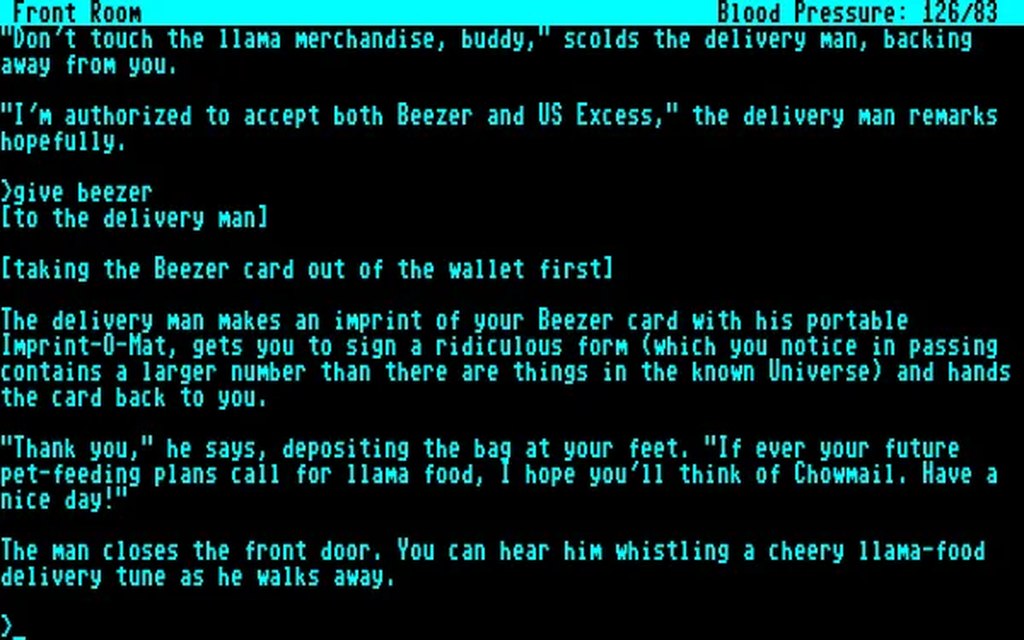
On the 128, Bureaucracy is comfortable in its skin. The Plus-range interpreter uses the machine’s memory to keep the large game resident and responsive, the prose breathes across the full 80-column display (these were games written to be read, and the VDC screen is the best reading screen Commodore ever fitted), and the status line’s blood-pressure gauge sits where your eye can fear it. The surviving C128 screenshots show long, dense passages of Adams prose rendered exactly as a book page — which is what this game is: a short comic novel with a grudge, that you happen to operate.
Adams turned his own bank’s incompetence into the only adventure game where the forms are the final boss — and your blood pressure is the health bar.
The box, inevitably, is part of the work. Infocom’s feelies here include a “You’re ready to move!” brochure from Fillmore Fiduciary, a letter from your new employer, a Popular Paranoia flyer, a pencil, and a Beezer credit-card application in triplicate. In a final in-joke, where other grey-box Infocom games printed praise on the inner flap, Bureaucracy printed complaints the company had received. Adams’ name, at his own era’s strange insistence, appears in small print — “by Douglas Adams and the Staff of Infocom” — as if the marketing department were itself being bureaucratically modest. The game sold modestly, arriving as Infocom’s finances collapsed around it, and has been a word-of-mouth classic ever since.
Adams, between the two games
Bureaucracy was Adams’ second game for Infocom and his last — Hitchhiker’s Guide had made him, briefly, a games-industry headliner, and the years between the two titles filled with the machinery of fame that this game anatomises. Where Hitchhiker’s is a romp that happens to be about the universe’s indifference, Bureaucracy is a grievance that happens to be structured as a romp, and its targets are smaller and therefore sharper: the bank that loses the form it demanded, the airline desk that cannot find the booking it sold, the neighbour whose paranoia is indistinguishable from the state’s. Adams wrote that he wanted the player to feel what he felt — and the game’s cruelty curve, so unusual for Infocom, is fidelity to that brief. You are not failing Bureaucracy when your blood pressure spikes. You are experiencing it correctly.
That fidelity is why the game outlasted its sales. Infocom’s catalogue is full of better-constructed puzzles, but Bureaucracy is the title people describe to friends who don’t play games, because everyone has lived its first hour. On the C128 — the machine whose owners were, disproportionately, the ones running small businesses and wrestling real banks from the desk beside the computer — it must have landed with an almost personal precision.
Playing it today
Bureaucracy is the Infocom title most likely to make a modern player laugh out loud and the one most likely to make them close the game in genuine irritation — sometimes within the same ten minutes, which is its thesis in action. The wise approach is theatrical: lean into the grievance, read the feelies first (the Fillmore Fiduciary brochure is a comedy piece in its own right), keep your real details in the licence form for the full personalised spite, and save whenever the system gives you an inch. The C128 edition’s 80-column comfort matters more here than in any other Infocom game, because Bureaucracy’s prose is denser and more novelistic than the dungeon-crawling titles; Adams writes paragraphs, and the VDC screen is where paragraphs belong. Persevere to Paris: the ending’s view of the whole machine you’ve been fighting is the punchline the frustration was buying.
The verdict
Bureaucracy is not Infocom’s best game, but it may be its most personal, and its comedy has aged the least of the catalogue because its target — the cheerful, unaccountable machinery of modern administration — has only grown. As a C128 title it is doubly precious: a Plus-range game from a famous author that the C64 simply could not run, presented on the machine’s best screen. Play it with a pencil ready and your real bank’s phone number out of sight. Your blood pressure, like the game’s, will rise. That is the point, and it is a triumph.
Score: 8.0/10 — Adams’ paranoid masterpiece of paperwork: the funniest game on the C128, and one of the few that could only live there.