
The Philips CD-i has become the connoisseur’s retro format: a small, strange library with genuine classics, a hardware family with real character, and a second-hand market that rewards knowledge and punishes haste more than any other in the hobby. This guide covers the whole purchase in 2026 — which player to buy, the battery fault that decides whether it works at all, the cartridge that unlocks the best games, which controllers matter, what the notable discs should cost, and the traps that catch first-time buyers every week. Buy once and buy right, and the CD-i is one of the most satisfying systems of the CD era. Buy carelessly, and it is an expensive grey paperweight with a disc tray.
Step one: choose your machine
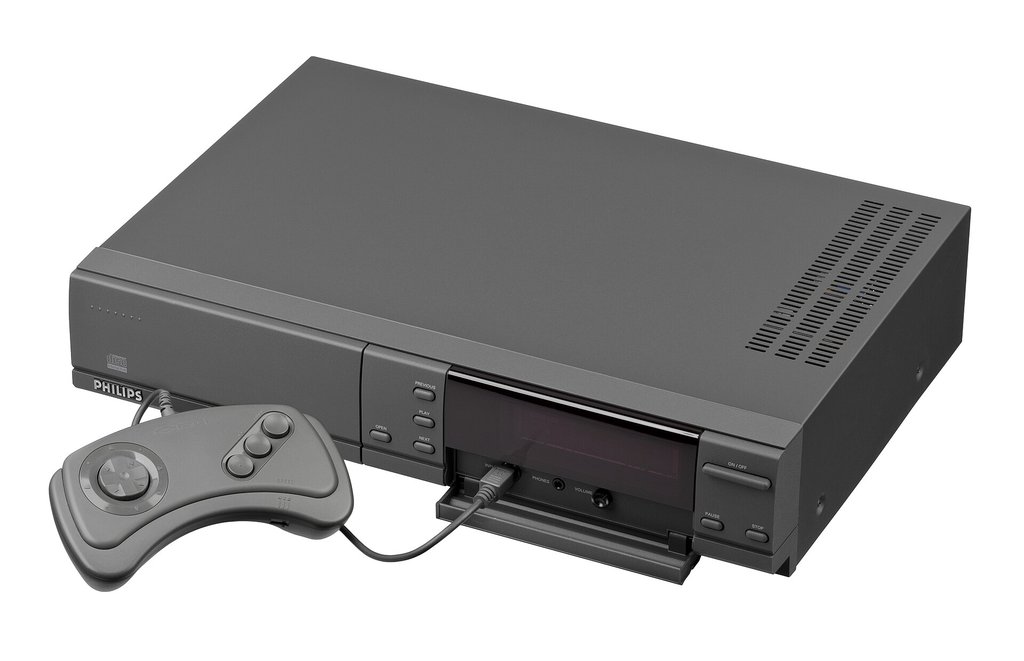
The late-revision CDI 220 is the default recommendation: the family’s most robust loading mechanism in its mature versions, front and rear ports that both accept controllers and pointers, S-Video output, and 32KB of battery-backed memory where lesser players carry 8KB. The CDI 450 is the games-room choice — compact, console-styled, usually cheaper — with a lighter build and a drive that needs checking before money changes hands. The CDI 210 is the budget workhorse, plentiful from its education and kiosk past, basic but honest. The LG (GoldStar) GDI 700 is the connoisseur’s import: built-in digital video, 32KB memory, sharp output and — uniquely in the family — a replaceable clock battery. The CDI 350 portable and 605 professional are specialist exhibits, fascinating and priced like it. Whatever you buy, a serviced, tested player from a seller who can describe its faults is worth more than a sealed mystery at any discount.
Step two: the timekeeper — the fault that decides everything
Every CD-i stores its clock, settings and game saves in a timekeeper module: an ST or Dallas chip with a lithium battery sealed inside the package. The battery was rated for about a decade. It is now three decades old. When it dies, the symptoms are unmistakable — the “memory full” error on boot, settings that never save, high scores that evaporate, and on some models a player that refuses to boot discs properly at all. This is the single most important fact in CD-i buying: an unserviced player is a player whose savings bank has already failed or is about to. The fix is known and permanent — the old module is desoldered, a socket fitted, and a fresh timekeeper (or a modified module with an external, replaceable CR2032 cell) installed — but it is skilled work with a desoldering gun, not a beginner’s first solder job. Price it into every purchase: a player advertised as “timekeeper replaced, socketed” by a seller who shows the work is worth a solid premium over an untouched unit, because you are buying the difference between a console and a project. The LG GDI 700, with its ordinary replaceable battery, is the honourable exception.
Step three: the Digital Video Cartridge

The base player cannot decode full-motion MPEG video; the Digital Video Cartridge — a module slotting into the player’s expansion bay, adding an MPEG-1 decoder and 1.5MB of memory — can. The games that require it include several of the library’s best and most famous: The 7th Guest, Chaos Control, Solar Crusade, Creature Shock and the gun-game shelf, plus the entire Video CD movie catalogue. Decide before you buy the player whether you want that library — most collectors do — and either budget for a cartridge (they trade loose at meaningful money) or buy a player with digital video built in, as the LG GDI 700 and various later models offer. Check the box of every game you buy, too: “Digital Video required” is printed on the DVC titles, and a bargain disc you cannot play is not a bargain.
Step four: controllers — the format’s weak point, managed
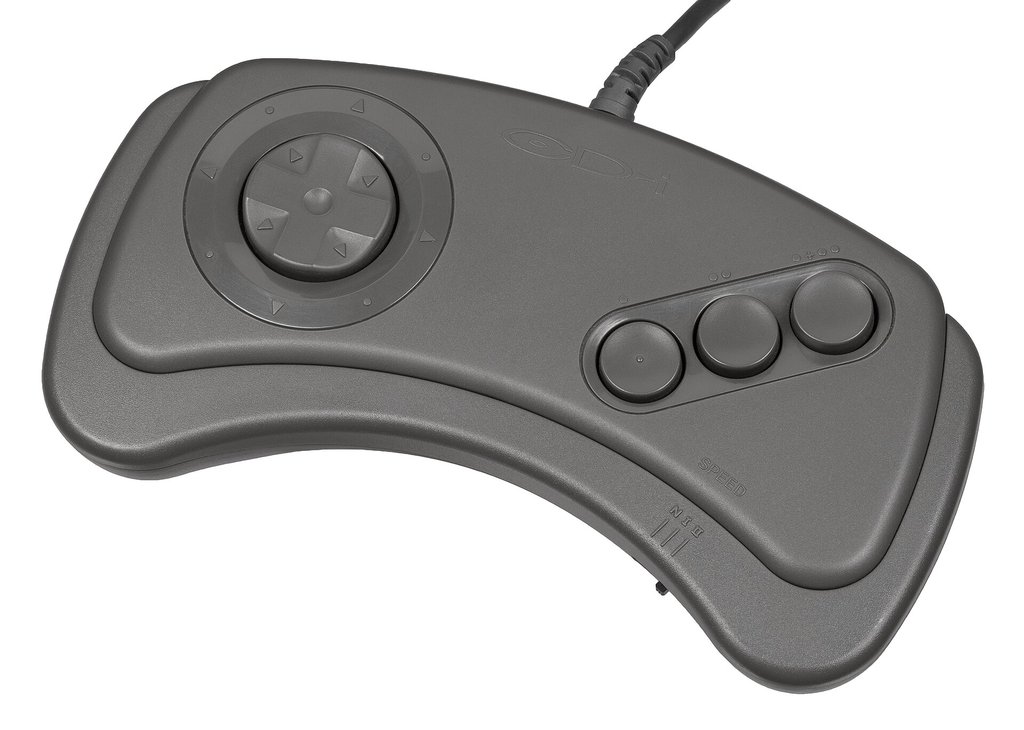
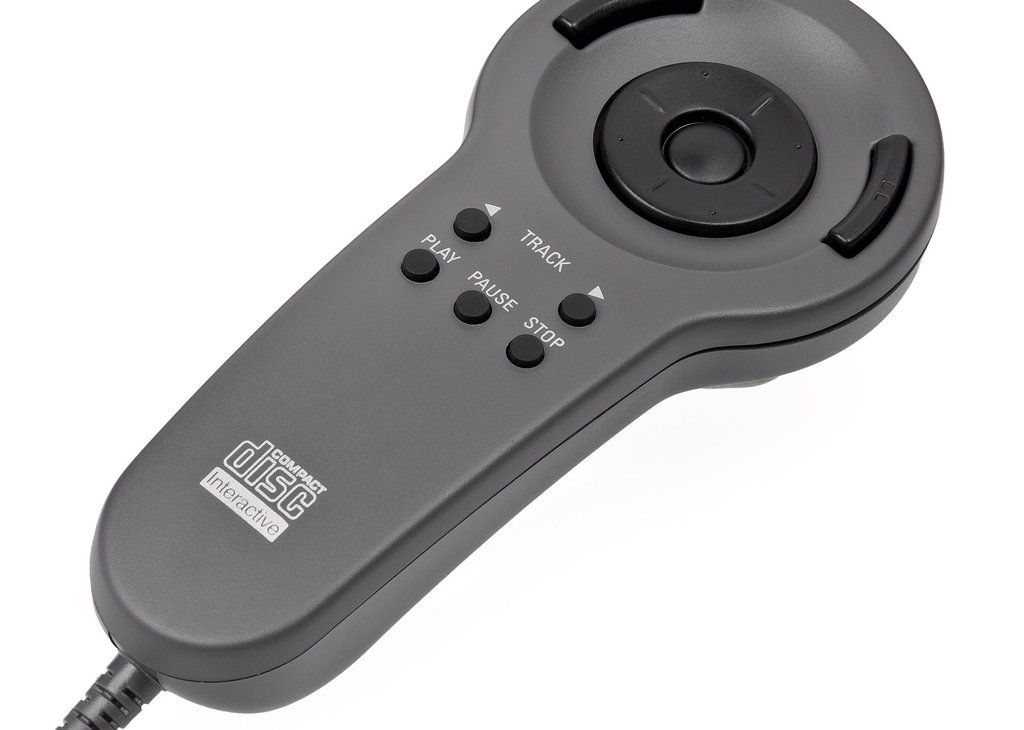
Most CD-i players shipped with remote controls and pointer wands designed for menus, and they are as bad for games as they sound. The essential purchase is the wired CD-i gamepad — the conventional joypad Philips sold separately — which transforms the action library from negotiation to play; expect to pay real money for a clean one, because every informed owner wants the same pad. The trackball and mouse are the connoisseur’s tools for the pointer-driven library (Myst, The 7th Guest, the reference shelf) and are worth it if that shelf is your interest. Two-player games may need the port splitter dongle on many models — the community publishes open-source plans to build one, and originals command silly prices. Budget the controller hunt as part of the console’s true cost; it is the difference between owning the format and fighting it.
Step five: what the discs should cost
The common library — the reference shelf, the children’s titles, the early games — trades cheaply, often in job lots, and patience fills those shelves for very little. The money concentrates where it always does: on the famous and the scarce. The Nintendo four lead the market: Hotel Mario is the affordable entry, the two Animation Magic Zeldas sit in the middle, and Zelda’s Adventure — late, quiet and genuinely rare — is the set’s trophy, commanding the kind of price that demands a tested disc and a complete case. Burn:Cycle, the system’s flagship original, is the next tier down and rising. Solar Crusade, the last game ever released, and the European Creature Shock carry scarcity premiums of their own. As a rule: CD-i discs are hardy, but buy tested — a scratched FMV game is a film with missing reels — and treat “untested, from a house clearance” as the gamble it is.
Two more market notes while money is on the table. First, hardware and software prices move together: when serviced players spike — as they do whenever a documentary or a big channel rediscovers the format — the trophy discs follow within months, so buy the player in the quiet seasons and the discs whenever they are honestly priced. Second, the professional and educational tail of the catalogue (training discs, reference titles, kiosk software) is the cheapest retro software in the hobby and, for the multimedia-curious, genuinely interesting; a collection that only chases games misses half of what the machine was. The complete CD-i shelf, games on one side and the reference revolution on the other, costs less to assemble than almost any comparable format’s games shelf alone — one more reason the diggers in our hidden-gems list keep finding gold at this end of the market.
Step six: traps, regions and final checks

CD-i discs are effectively region-free between players in practice — the library is small enough that European and American releases circulate through the same collections — but video output is not: match the player’s output to your display (S-Video where available is the sweet spot; the family’s composite varies from fine to muddy by model), and remember that PAL and NTSC players expect their own televisions’ timings on older sets, a non-issue on modern scalers. The traps, collected: a player that “powers on” but has never been shown booting a disc (the drive or the timekeeper is dead); belts and trays on the early loaders; third-party and professional units with missing expansion covers or proprietary cables; games sold without their cases in a format whose manuals carry passwords and story material; and any seller who has never heard of the timekeeper — ask the question by name, and let the answer set the price. Buy the player serviced, the cartridge if you want the movies and the flagship games, the gamepad before the games, and the trophy discs tested. Do that, and the strangest machine of the CD era becomes what its owners keep insisting it always was: a pleasure.
While the clock is open, one more inspection habit separates the good buys from the stories: ask for a photograph of the player’s settings screen holding a saved game after a power cycle, or a short video of exactly that. It takes a seller ninety seconds, it proves the timekeeper, the drive and the video output in a single artefact, and a seller who has genuinely serviced the machine will usually be pleased to be asked — it is the question their work deserves. Sellers who cannot or will not show it are telling you the same thing, in the other direction. In a market this small, that one artefact is worth more than any description field ever written, and it is the closest thing CD-i buying has to a universal rule: never pay serviced money for an unverified clock.
Step seven: the modern routes — emulation and spares
Not every collector needs a working player on day one, and the modern alternatives deserve an honest paragraph. Emulation of the CD-i has improved steadily — MAME’s CD-i driver and the dedicated CD-i Emulator project both run a growing share of the library, and enthusiast compatibility lists now grade titles individually — but the format’s video hardware makes it one of the harder CD systems to emulate faithfully, Digital Video titles are the least reliable category of all, and the pointer-first software is happiest with a mouse in hand. Treat emulation as a try-before-you-buy instrument and a preservation triumph, not yet as a full replacement for a serviced player. On the hardware side, the spares situation is better than the format’s size suggests: the community is active, timekeeper replacements and socket conversions are documented in detail, drive belts and the VAM-series laser assemblies for later mechanisms circulate through the usual channels, and open-source projects cover everything from port splitters to controller adapters. The CD-i is a maintainable machine in 2026 — provided you buy one whose previous owner, or whose next repair bill, has already faced the clock.
Finally, insure the collection the cheap way: photograph your timekeeper work, keep the seller’s service notes with the player, and store discs upright, cased, and out of the sun. The format survived its own company. With ordinary care, yours will survive you — which, given that its clock battery was only ever promised a decade, is the most CD-i outcome imaginable.
One last encouragement, because the format rewards the patient disproportionately: every generation of collectors rediscovers the CD-i exactly once, prices spike, the tourists leave, and the discs settle back within reach of the people who actually play them. Buy in the quiet, service what you buy, and keep the clock alive. The bargain bin is not going anywhere — but the serviced players, eventually, are.