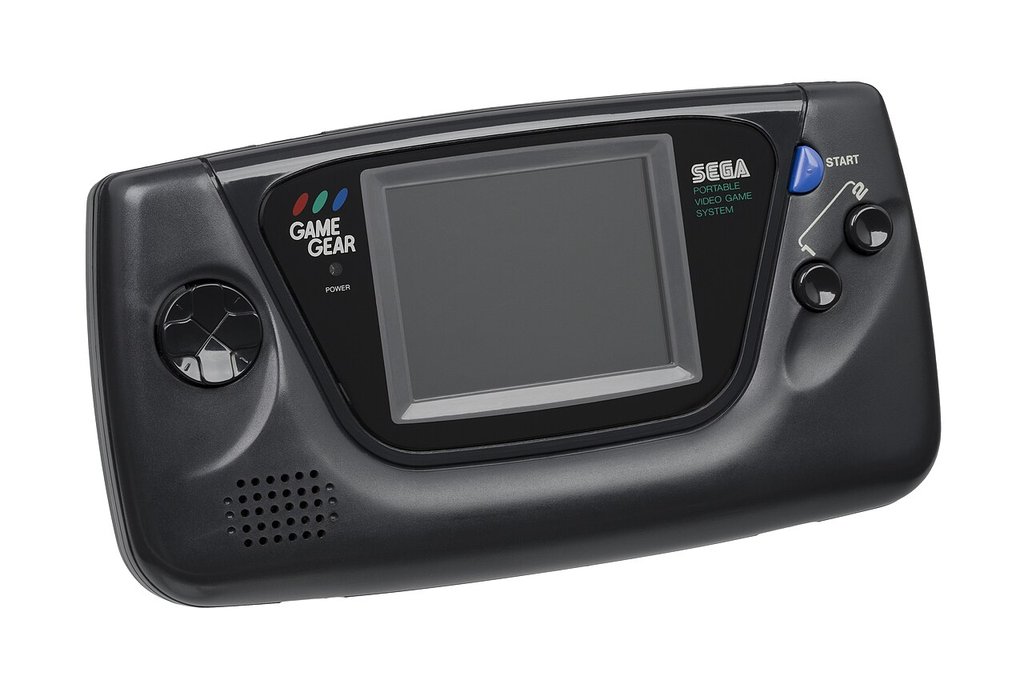
It is the most lopsided famous fight in gaming history. In one corner, the Nintendo Game Boy: monochrome, unlit, technically modest, launched in 1989 with Tetris in its corner. In the other, Sega’s Game Gear of 1990–91: full colour, backlit, a Master System in your hands, carrying Sonic. The Game Boy sold around 118 million units across its family. The Game Gear sold around ten million. History records a rout — but history, for once, is more interesting than the scoreline, because the Game Gear’s war was not lost on quality, and the machines’ descendants have spent thirty years quietly conceding that Sega was right about the future and Nintendo was right about the present.
Two philosophies, one playground
The machines embodied opposite theories of what a handheld was for. Nintendo’s Gunpei Yokoi built the Game Boy on his famous doctrine of lateral thinking with withered technology: mature, cheap, frugal components, combined cleverly — a greenish screen that sipped power, a processor that asked little, four batteries that lasted fifteen hours and more, and a price the market could swallow. Sega, fresh from launching the Mega Drive’s all-out assault on Nintendo’s home empire, built a handheld the same way it built everything then: forward. Colour — 32 colours on screen from 4,096 — a backlight for the dark, stereo sound, console-derived power, and a launch price of around $150 in North America against the Game Boy’s $90. One machine was an appliance. The other was a statement.
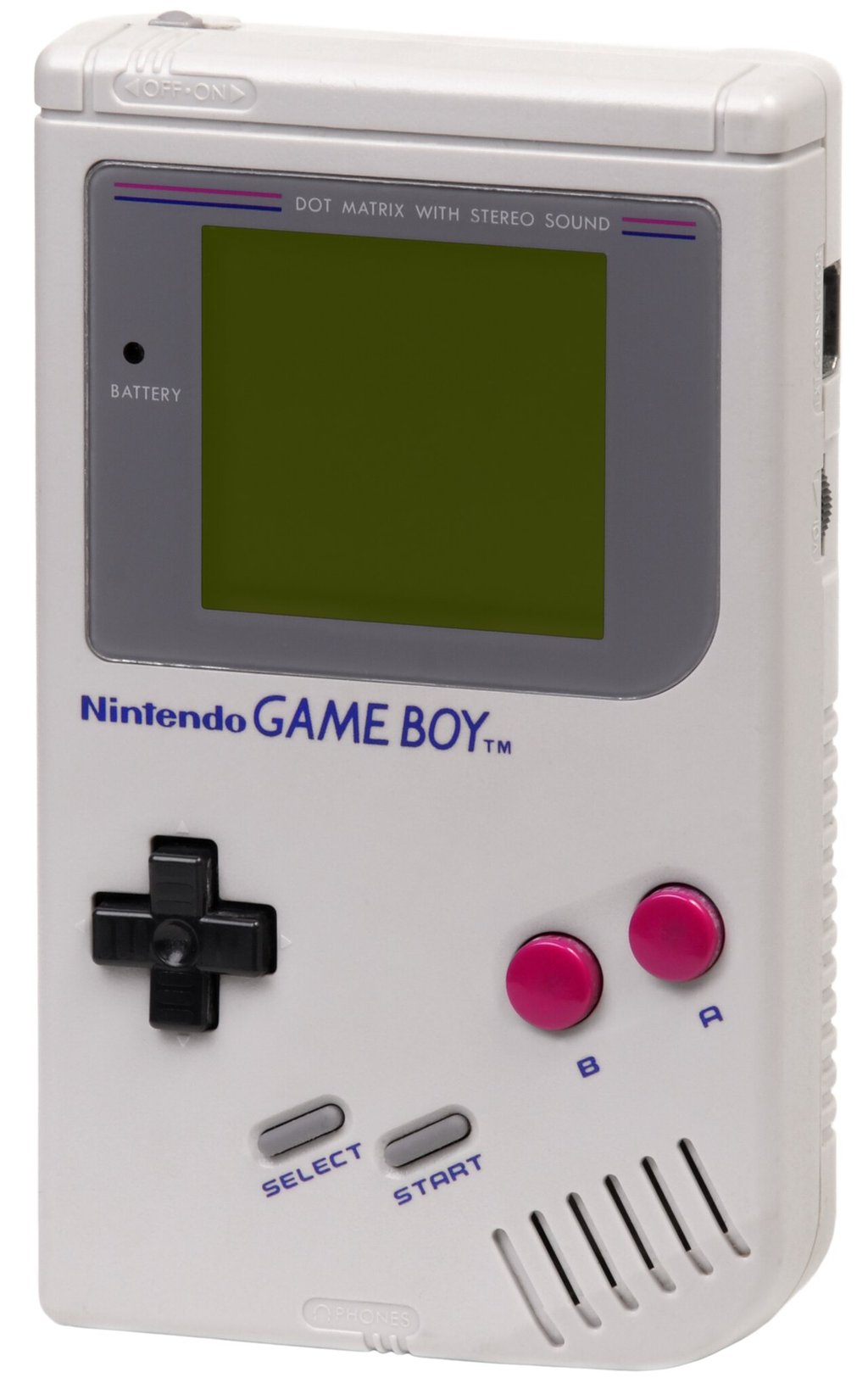
On specifications, it was no contest, and Sega’s marketing said so, loudly and sometimes rudely — the era’s attack ads mocked the Game Boy’s spinach screen with the subtlety the nineties allowed. On the playground, the argument ran on different rails. A Game Gear owner could play in the dark, in colour, with Sonic and Columns and the Master System’s library on a converter; a Game Boy owner could play anywhere, for weeks of recesses, on one set of batteries, in a machine half the price that fit a smaller pocket and survived being dropped down stairs. Both were right. Only one of them was right at $90 with Tetris bundled.
Where the war was actually decided
Battery life is the famous cause, and it mattered — six AAs for three to five hours against four for fifteen-plus was a household-budget argument parents settled at the till. But the war had quieter fronts. Nintendo’s third-party support and its own franchises — Tetris, Super Mario Land, Pokémon at the decade’s end — gave the Game Boy a library with generational reach. Sega’s handheld, for all its colour, leaned on conversions of console games and the 8-bit catalogue; its originals, though often superb, were fewer. Distribution, price, the sheer installed base feeding itself: the Game Boy became the default, and defaults compound. The Game Gear was not even Sega’s only front — the company was fighting Nintendo at home, launching the Mega-CD, preparing the Saturn — and the handheld, profitable and beloved, was never the main effort.
The Game Boy won the war. The Game Gear won the argument: every handheld since — colour, backlit, console-powered — is built to Sega’s specification, not Nintendo’s.
The verdict of the descendants
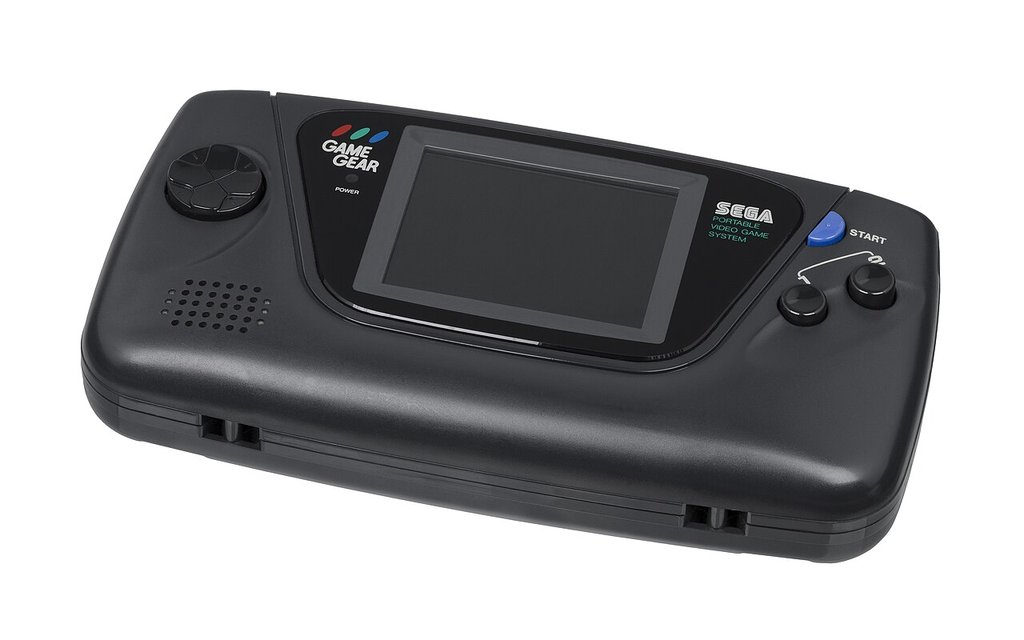
Watch what happened next and the story flips. Nintendo itself abandoned the withered-technology doctrine by degrees — Game Boy Color in 1998, a backlit Game Boy Advance SP in 2003, the DS and Switch dynasties built on colour, light and console-grade games. Sony’s PSP and Vita chased spectacle outright. The modern handheld is, to a unit, a Game Gear in philosophy: a colour, backlit, power-hungry window on console games, saved from the Game Gear’s fate only by three decades of battery and display progress. Sega’s machine did not lose because its vision was wrong. It lost because 1990’s chemistry could not afford 1990’s vision — and because Nintendo, the greatest handheld company in history, was standing on the other side of the till with Tetris.
The European footnote, and the Brazilian echo
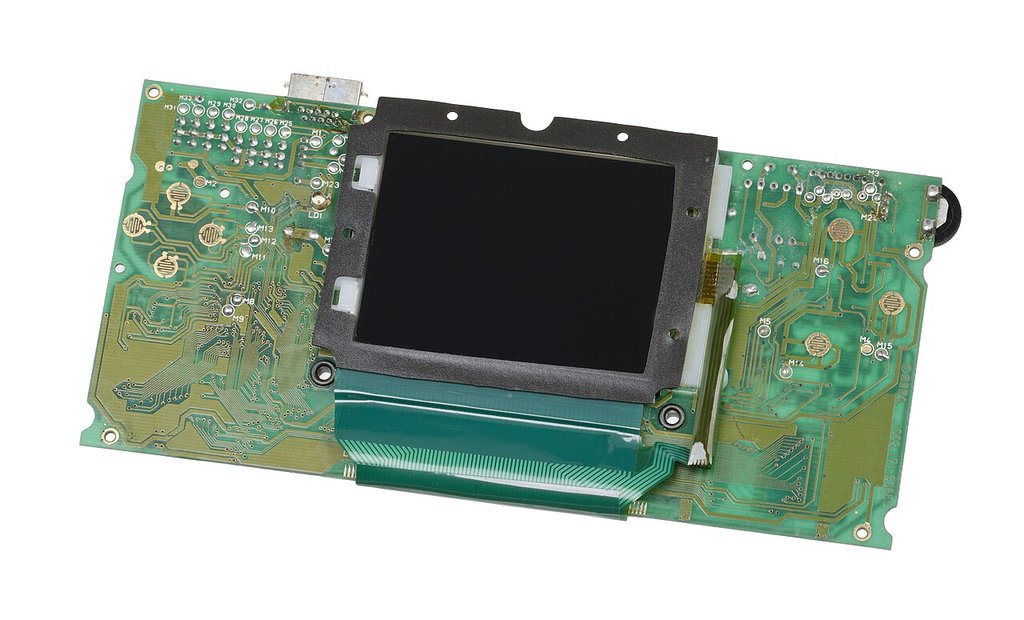
The war’s geography complicates the rout. In Europe, where Sega’s 8-bit ecosystem was strong and the Master System had beaten Nintendo’s console in several markets, the Game Gear performed respectably — buoyed by the converter, by Columns and the Disney games, and by a price that fell as the decade turned. In Brazil, where Tec Toy’s stewardship kept Sega’s 8-bit world alive for a generation, the Game Gear enjoyed a long second life of local releases and repairs. The global scoreline is Nintendo’s, and it is not close; but the map shows a machine that held real territory wherever its ecosystem was tended, which is more than most defeated consoles can claim.
And the playground argument itself deserves a fair retelling, because both sides remember it honestly. The Game Boy owner really did play longer, cheaper and everywhere. The Game Gear owner really did play the prettier, louder, backlit games, and really did finish them in the dark under a duvet while the other machine waited for morning. If you ask the industry which child it resembles now, it points at the colour screen and the console games. If you ask which childhood it sold, it points at the grey brick and the fifteen hours. The war had two winners. It just took thirty years to count the second one’s votes.
How to remember it
The fairest epitaph is a double one. As a product of 1991, the Game Boy was the better buy for most families, and its victory was earned in battery life, price and software as much as in any spec sheet. As a piece of design prophecy, the Game Gear was the most forward-looking handheld of its era, and its ten million owners — who played Sonic in colour, in the dark, while the other side squinted at spinach — were not the war’s losers. They were its early adopters. The batteries were the tax. In 2026, with modern cells and screens fitted to the survivors, the tax is finally repealed, and the argument the playground started can be settled the way it always should have been: by playing the games.
Thomas-era playground veterans on both sides, incidentally, tend to end the argument the same way in 2026: with a recapped Game Gear in one hand and a Game Boy in the other, both still working, both still loved. The war produced two of the most durable objects in gaming history. Whatever else the nineties got wrong, its handhelds were built — and argued over — to last.
And the final irony is Nintendo’s own: the Switch, the best-selling handheld philosophy of the modern age, is a colour, backlit, console-powered machine whose battery is its most-discussed compromise — a Game Gear with better chemistry, designed by the company that beat the Game Gear by refusing to build one. History does not repeat, but in the handheld business it has always rhymed in colour.
So raise a battery — alkaline, rechargeable, it hardly matters now — to both machines. The war made handheld gaming. The peace, thirty years on, is that we get to keep them both.
That is the whole story, in the end: a war decided by batteries and bundles, an argument decided by everything that came after. The Game Gear lost the first and won the second, and in 2026, with both machines loved, serviced and still in print runs of a sort, the playground can finally call it what it always was — the best fight handheld gaming ever had.