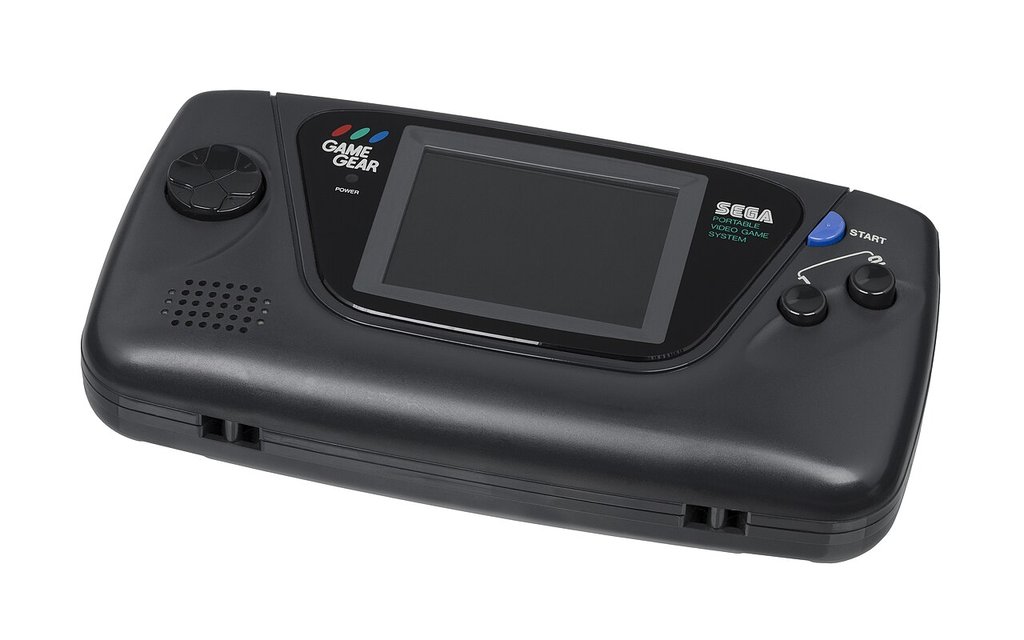
No console of the nineties believed in accessories like the Game Gear believed in accessories. Sega looked at its handheld — colour, backlit, television-blooded — and asked the logical question: if it is basically a portable TV already, why not finish the job? The result was the wildest accessory shelf of the handheld era: a TV tuner that turned the machine into an actual television, a magnifier the size of a dinner plate, link cables, battery bricks, car adapters, carrying cases shaped like small luggage, and a converter that unlocked an entire second console’s library. Some of it was genius. Some of it was madness. All of it was characterful, and all of it is catnip to collectors now.
The TV Tuner: the madness peaks
The TV Tuner Pak was the flagship lunacy: a cartridge-sized slab, released in 1991 at just under a hundred dollars, that slotted into the Game Gear and turned it into a fully functional analogue television, telescopic aerial and all. Reception for VHF and UHF over the airwaves, an AV input that quietly made the Game Gear a tiny portable monitor for other devices — a trick camcorder owners and console tinkerers treasured — and the sheer playground majesty of watching broadcast TV on your games machine. It worked, too, within the honest limits of analogue reception on the move: a watchable picture near a transmitter, a snowstorm anywhere else.
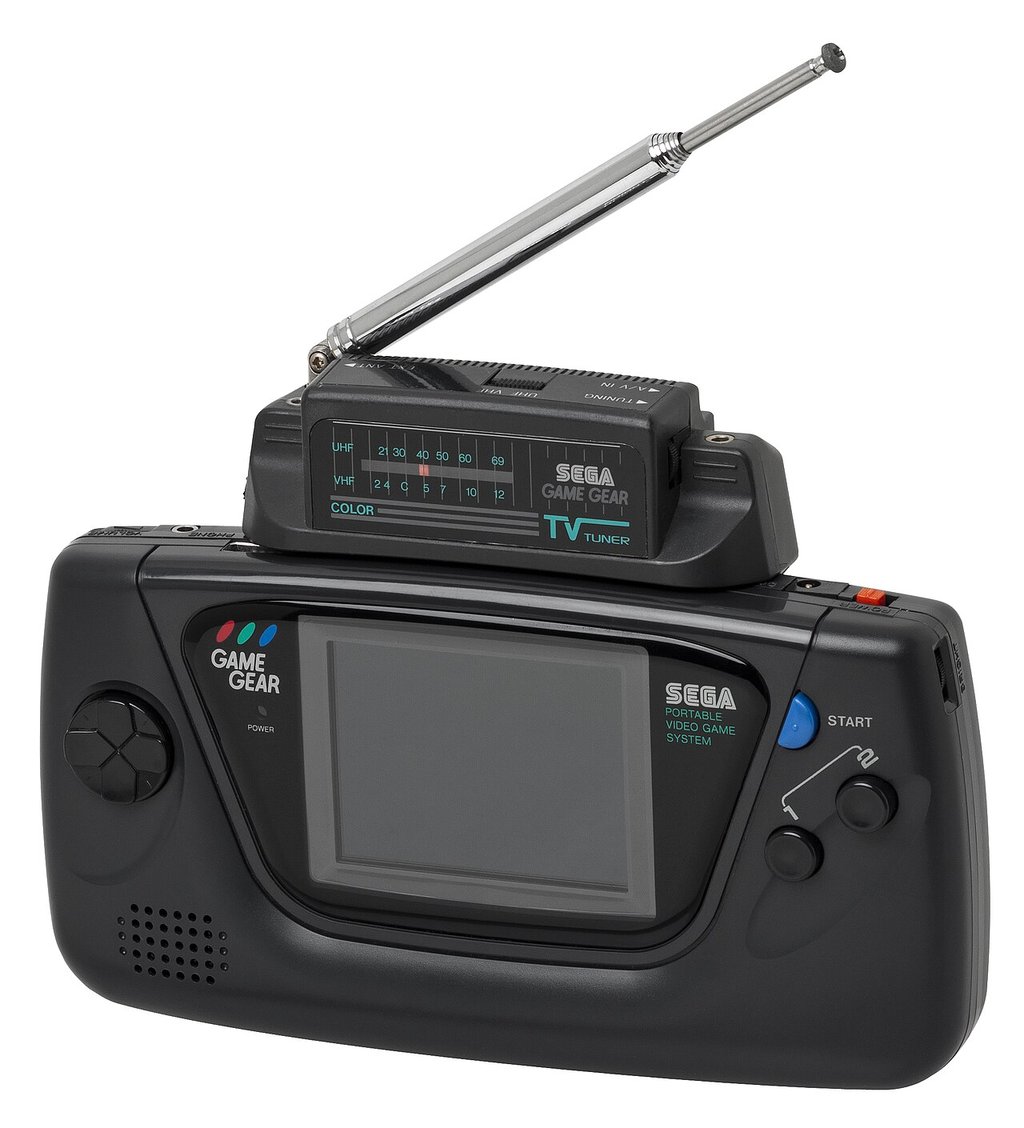
History has played two tricks on the Tuner. Analogue broadcasts are gone, switched off across its home markets, so the device now receives nothing but static and nostalgia. And the Majesco-era Game Gears of 2000, the budget reissue models, are incompatible with it — a footnote that matters to collectors assembling the full shelf. None of it diminishes the Tuner as an artefact: it is the single most 1991 object in gaming, the future as imagined by a company that thought your handheld should do everything. As a portable AV monitor, fed by its input, it even retains a sliver of genuine utility in a retro setup.
The sensible shelf
Beneath the headline madness sat accessories that genuinely improved the machine. The Gear-to-Gear cable — Sega’s link lead — was the essential one: head-to-head Columns, Streets of Rage 2 in co-op, Micro Machines duels, the whole multiplayer soul of the library lives on that cable, and no Game Gear collection is complete without one. The Wide Gear, Sega’s outsized magnifying lens, attacked the small screen’s readability with a fresnel sheet the size of a saucer; mocked then and now, it honestly helped text-heavy RPGs, and its absurd silhouette is pure era. The official Battery Pack — a rechargeable brick on a belt clip, trailing a wire to the machine — was the pragmatic answer to the six-AA problem, graceless and effective in equal measure, joined by the AC adapter for home play and the car adapter for the passenger seat.
A television tuner, a dinner-plate magnifier and a battery you wore on your belt: the Game Gear’s accessory shelf is the nineties, complete and unembarrassed.
The converter, the cases, the clones
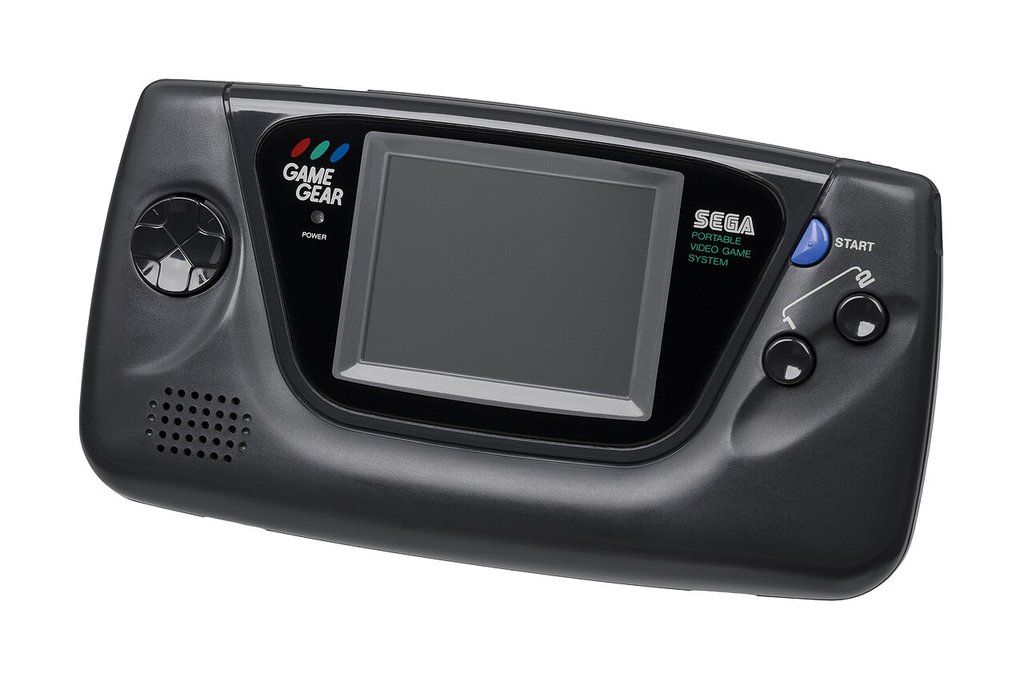
The Master Gear Converter belongs to this shelf too — the plastic pass-through that plays the Master System’s library, covered in its own feature in this series — and it may be the most consequential accessory any handheld ever received. Around the official range swirled the third-party ecosystem: hard cases and soft cases, screen protectors, joystick caps, cleaning kits, and the inevitable unlicensed battery solutions of varying honesty. Sega’s own carrying cases deserve a fond word: several were less cases than miniature suitcases, foam-cut for machine, tuner, converter and a library of cartridges — the full expedition kit for a handheld that was always, in spirit, going somewhere.
The third-party carnival
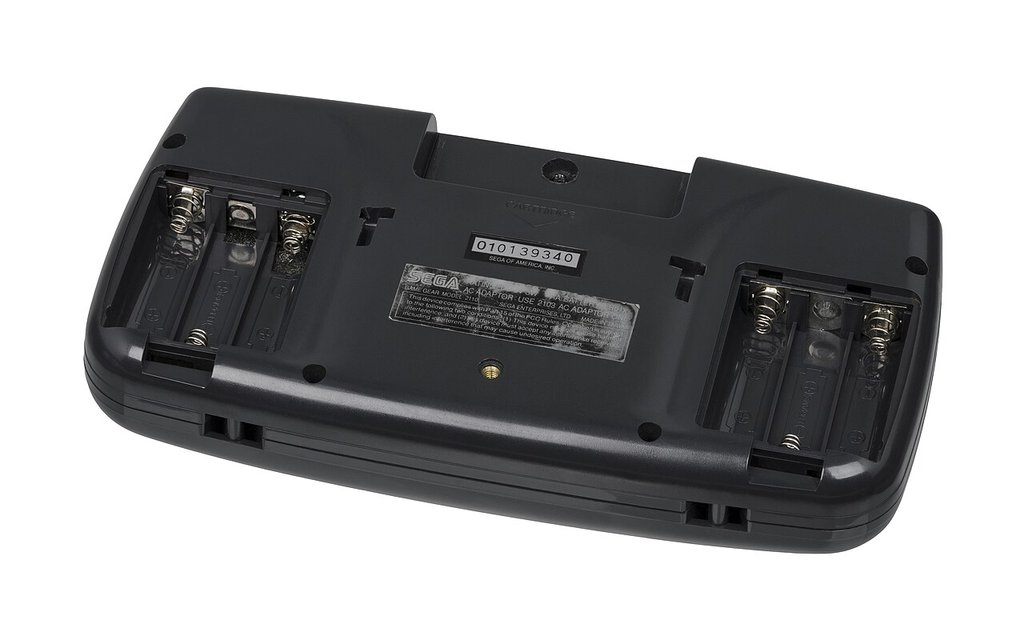
Around Sega’s official range, the unlicensed market threw its carnival: magnifiers from a half-dozen makers in a half-dozen shapes, joystick attachments that promised arcade control and delivered novelty, cleaning kits, worm lights that solved a problem the backlit Game Gear did not have — a confusion imported from the Game Boy aisle — and battery solutions ranging from the ingenious to the faintly dangerous. The era’s magazines reviewed this carnival with straight faces, and its survival in collectors’ hands today is patchy in the most instructive way: the accessories that did something real — the cable, the converter, the cases — are common and cherished, while the novelties survive as curios, bought for the shelf and the laugh. The market, eventually, is a critic.
One more official oddity deserves its line: the infrared and multiplayer experiments that surrounded the link port in Japan, and the parade of regional bundles — Game Gears sold with tuners in one territory, with battery packs in another — that make a complete-in-box collection a genuinely global hunt. No two countries’ Game Gear shelves look quite alike, which is precisely why the accessory hunt has outlived the console hunt for so many collectors. The machine was one object. Its wardrobe was a world tour.
Collecting the shelf in 2026
For today’s collector, the accessory shelf divides neatly. Buy the Gear-to-Gear cable without hesitation — it is cheap, common and unlocks the library’s best mode. Buy the Master Gear Converter for the same reason. Treat the TV Tuner as sculpture: buy it boxed if you love it, verify which Game Gear revision you own before paying, and expect static. The Wide Gear is a delight in inverse proportion to its usefulness, and priced accordingly in the wild. Battery packs of every vintage should be assumed dead until recelled — thirty-year-old rechargeables are chemistry experiments, not power sources — and modern lithium mods have made the whole category a display piece anyway. Which is, in the end, the shelf’s fate and its charm: the Game Gear’s accessories were a young industry dreaming out loud about what a handheld could be. The dreams that came true — the second library, the linked duel — still work. The rest make the best display in retro gaming.
Start, then, with the cable and the converter, photograph the tuner when you find one, and let the magnifier make you smile. The shelf was never really about utility. It was about a moment when a games company looked at a handheld and saw no reason it should not also be a television, a second console and a small expedition — and wrote that optimism into plastic. Collect the plastic. The optimism is included free.
A closing word for the Wide Gear, the shelf’s clown, because clowns earn their keep: fitted over the screen on a long RPG session, on a train, with the machine plugged into the mains and the afternoon free, the great silly lens genuinely works — the text swells, the squint relaxes, and the whole apparatus looks like a deep-sea diver’s helmet for a console. Accessories are promises a company makes about how you will live with a machine. Sega promised expeditions, cinemas and second libraries. That some of the promises were daft matters less, at this distance, than that they were made with a straight face and a games catalogue to back them.
The shelf, in short, is the machine’s autobiography — ambitious, excessive, occasionally absurd and never, ever dull. No other handheld of the era can say as much, because no other handheld of the era tried as much.