
In 1989, multiplayer on a handheld meant two players, one screen, and taking turns. The Atari Lynx launched with a different idea rattling in a port on its back: a serial socket, a three-wire cable, and the belief that a game machine you carried should also be a machine you connected. The system was called ComLynx, and it was decades ahead of the industry that ignored it. Up to eighteen Lynxes could be chained together within the port’s electrical specification — the practical, stable maximum for games settled at eight — at a time when Nintendo’s Game Link cable connected two Game Boys and called it a revolution. This is the story of the cable that turned handhelds social, a generation before handhelds were supposed to be.
RedEye: the infrared that never was
The most revealing detail of ComLynx is that it was nearly something even stranger. Epyx’s engineers originally designed the Lynx’s networking to run over infrared links, a system codenamed RedEye: Lynxes would talk to each other with beams of invisible light, no cables at all. It was abandoned before launch for the most human of reasons — players kept walking through the beams. A networking technology that fails when a parent crosses the room was never going to survive the school playground, so the design fell back to copper: a simple serial cable, one between each pair of machines, daisy-chained into a network. The fallback became the standard, and the standard quietly outperformed every rival: where the Game Boy’s link was a two-player conversation, ComLynx was a room.

The numbers still startle. The ComLynx drivers could address a network of up to eighteen units within specification — seventeen friends and you — and the port ran at speeds up to roughly 62.5 kilobaud, framing data in tidy packets a 1989 handheld could handle. In practice, games set their own ceilings: most supported two to four players, Checkered Flag stretched to six, and exactly one game in the library reached for the stable maximum of eight. But the headroom mattered. ComLynx was not a feature bolted onto finished games. It was a system capability, designed into the hardware from the Handy project’s earliest days, waiting for software brave enough to use all of it.
Every networked game you have ever played on a handheld — every lobby, every local wireless room, every eight-player download-play session — has an ancestor, and the ancestor is a three-wire cable from 1989 that almost nobody bought.
The games that proved it
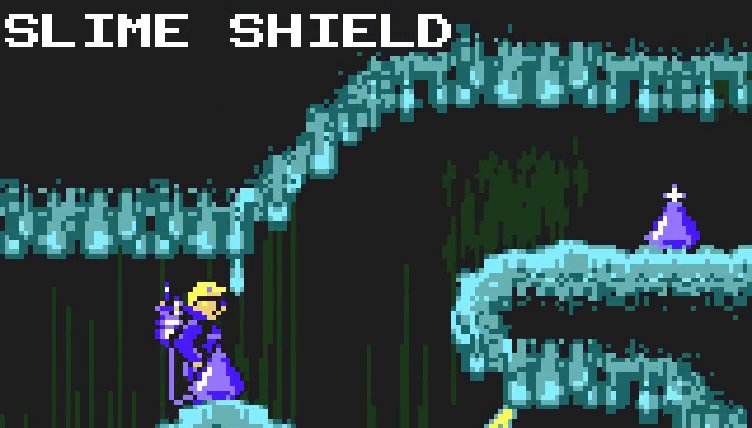
Three cartridges turned the specification into legend. Todd’s Adventures in Slime World, programmed by Peter Engelbrite, remains the only eight-player Lynx game: eight explorers sharing one cavern system, cooperating or competing in real time, with the game itself keeping a record of the session — Engelbrite understood that an event nobody else had ever staged needed minutes taken. Warbirds made the cable a culture: four pilots, one sky, a full flight model, and dogfights that Lynx owners are still organising meet-ups to recreate. Xenophobe went one better than its own arcade parent, using the one-screen-per-player freedom to field four exterminators where Bally Midway’s cabinet managed three — and letting a defeated player return as a Snotterpillar to torment the survivors.
The supporting cast is longer than the legend suggests. Around half of the official Lynx library — some three dozen titles — carried ComLynx support of some kind: Rampart’s castle-versus-castle duels, Gauntlet: The Third Encounter’s four-player dungeon descents, Robotron-style cooperation experiments, racing fields in Checkered Flag, even puzzle and sports games that treated a second machine as the natural state of play. Each player needed their own cartridge as well as their own Lynx, which was the system’s commercial tragedy and its technical integrity in one fact: no demos, no cut-down guest modes, just full games talking to full games.
Why it was ahead — and why “ahead” wasn’t enough
ComLynx anticipated, by years, the ideas the industry now treats as obvious: that portable play is social play, that local multiplayer scales beyond two, that a handheld’s killer feature might be other handhelds. Nintendo’s own path — two-player link, then four-player adapters, then wireless rooms of eight and more — retraced ComLynx’s map at a decade’s delay. The Lynx’s problem was never the idea. It was the arithmetic of adoption: eight-player Slime World required eight of everything in a market where the Lynx itself was the rare item in the playground. The cable shipped in the box with early Lynx bundles; later Lynx II packages dropped it, a small, sad admission that the network’s population had never arrived.

The design details that made it work
Under the legend, the engineering is admirably plain. ComLynx is a UART serial link — the same species of connection that ran printers and modems — dressed in a three-wire cable carrying power, ground and data. Machines listen and send in turn; one unit effectively conducts while the others play along, and because the protocol is simple, it is robust: a network of Lynxes behaves like a conversation in a quiet room rather than a shout across a stadium. The Lynx could even flip its display and controls for left-handed play, which meant a network could seat players on either side of the cable without awkwardness — a small consideration that tells you the designers expected these gatherings to actually happen, around tables, in the wild.
There is one more detail owners remember: the games that supported the cable supported it completely. No linked game was a demo mode or a time trial. If a title said ComLynx on the box, the full game — campaign, roster, arsenal, endings — was on the wire. That completeness set an expectation the Lynx’s small library honoured almost without exception, and it is why veterans describe the system not as a handheld with a multiplayer option but as a network that happened to be portable.
The cable today
And yet the story refuses to end sadly, because the Lynx community simply refused to let it. Collector meets still run Warbirds brackets. Flash cartridges and modern hardware keep the machines alive; cables — original, reproduction, and freshly made — change hands to complete sets; emulators have experimented with networked play for the faithful. The eight-player Slime World session, a logistical fantasy in 1990, is now a scheduled event that actually happens, staged by adults who waited thirty years to have eight of everything. ComLynx was a promise the market couldn’t keep at the time. Its owners kept it instead — which is why, of all the Lynx’s ahead-of-their-time features, the cable may be the one that has aged best.
So the next time a modern handheld assembles a wireless room of eight players in seconds, spare a thought for the cable that did it with copper, patience and 1989 silicon. ComLynx did not lose because it was wrong. It lost because it was early — and early, in technology, is a debt the future eventually pays to somebody. In the Lynx’s case, the owners collected it themselves.
Decades ahead is a phrase reviewers spend carelessly. Here, unusually, the receipts survive: check the dates, check the player counts, check the cable.