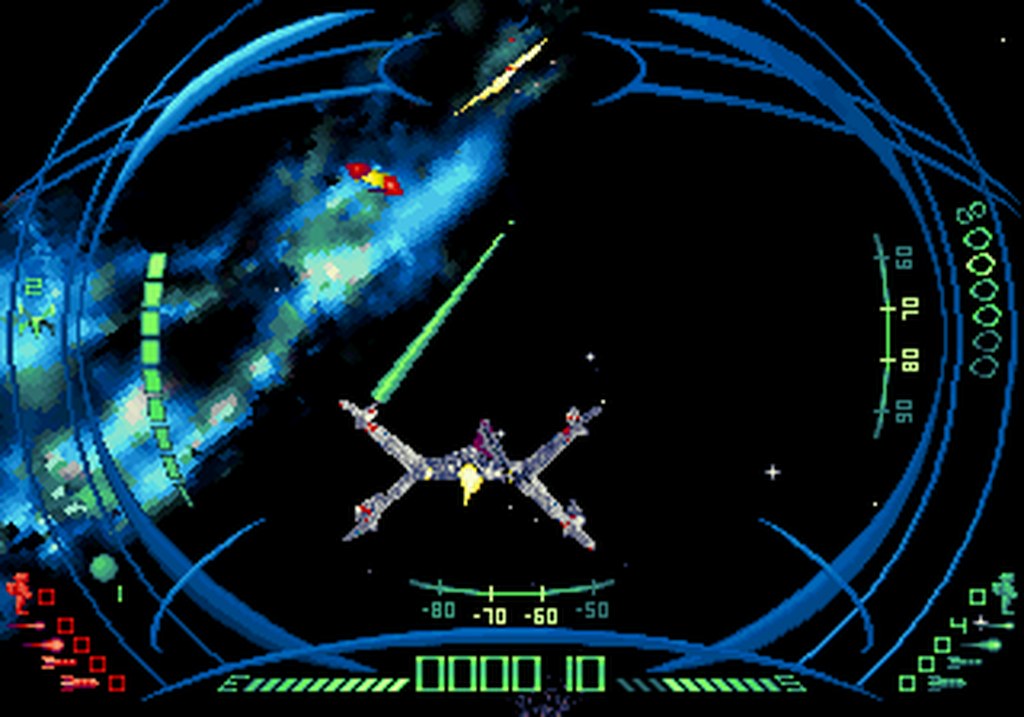
At a glance: Darxide · 32X · Frontier Developments / Sega, 1995 · Space shooter · Score: 7.5/10
Darxide carries more stories than any other 32X cartridge. It was built by Frontier Developments — David Braben’s studio, of Elite lineage — as one of the last first-wave games for a dying add-on; it was released only in Europe, in tiny numbers, in the winter of 1995; and it has become, by the cold arithmetic of scarcity, one of the most valuable cartridges in the entire Mega Drive family. The question a review has to answer is whether the game inside the price tag deserves any of it. The pleasant answer: mostly, yes — Darxide is a thoughtful, technically distinguished space shooter that deserved a market it never got.
The setup is Elite’s DNA in arcade form. Human miners work an asteroid belt; alien raiders — the Darxide of the title — have come to take it. You are the colony’s defence pilot, and missions alternate the two halves of the job: destroy incoming waves before they reach the mining platforms, then sweep the belt clearing the giant asteroids being herded as weapons. Between waves you dock, repair, refuel and rearm, and the campaign’s rhythm — patrol, scramble, dock, breathe — gives the game a frontier cadence quite unlike the 32X’s rail shooters.
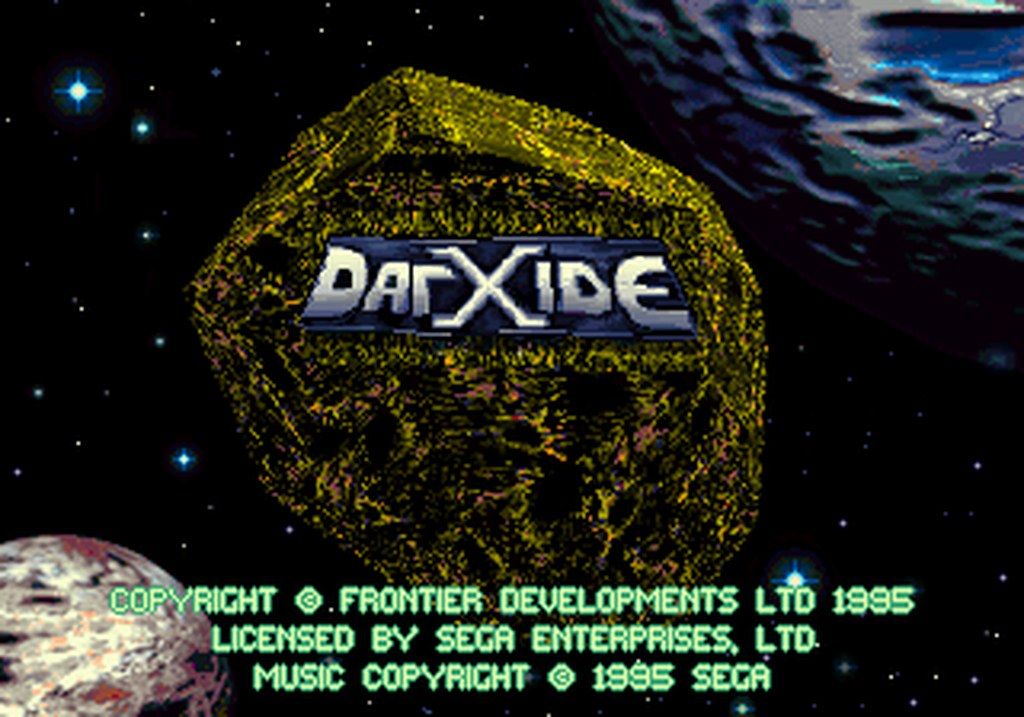
Texture, at last, in space
Technically, Darxide is the library’s quiet flex: fully texture-mapped polygons — asteroids with real rocky surfaces, ships with marked hulls — running at a steadier rate than Metal Head’s city managed, in the emptiness of space where the SH-2s can spend their budget on the objects rather than the world. The asteroid field has genuine physical presence; collisions feel consequential; the mining installations, all gantries and blinking lights, are worth defending visually as well as tactically. For a system sold on flat shading, Darxide is the proof that textured 3D was in its reach all along.
The design intelligence shows in the details. Enemy waves attack with target priorities you can read — ignore the fighters, save the platforms — and your own resources (hull, fuel, missiles) make every sortie a small logistics problem. Difficulty climbs steeply in the later waves, in the honest Frontier manner, and the game’s failure state is earned rather than cheap. What it lacks is variety’s second act: the mission grammar repeats, the belt is one belt, and by campaign’s end you have seen the game’s whole vocabulary — fluently spoken, but finite.
Patrol, scramble, dock, breathe: Darxide’s frontier cadence makes it the most thoughtful shooter on the 32X.
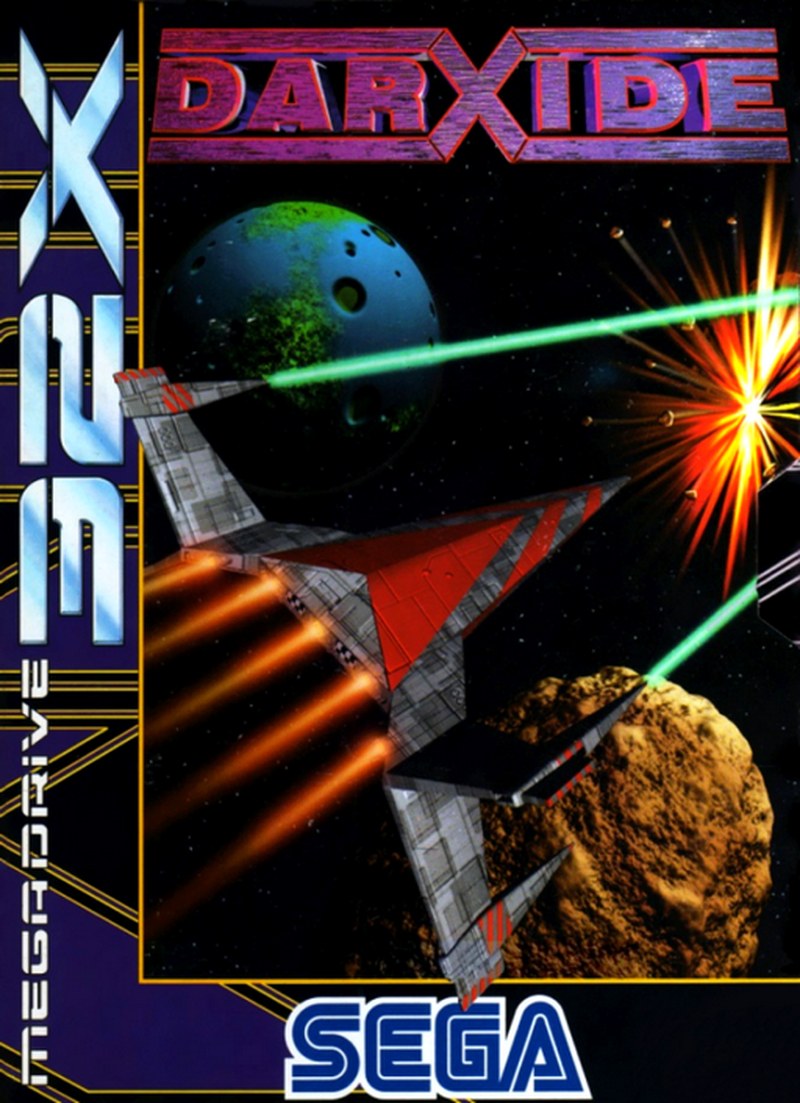
The European-only release is the melancholy postscript. Darxide was built to show Europe what the add-on could do at the precise moment Sega stopped selling the add-on; American players never saw it, print runs were small, and the cartridge began its second life as a collector’s grail almost immediately. Its rarity is an accident of logistics, not quality — which is the best kind of rarity for a game to have, because it means the price chases a game that is actually good.
The 32X version, specifically
There is no other version, and no re-release: the 32X is the only place Darxide has ever officially lived. It is also, regionally, the library’s final statement — the last significant original game the platform received, and a fittingly accomplished one. Judge it as the system’s farewell from its most distinguished developer and it does not disappoint.
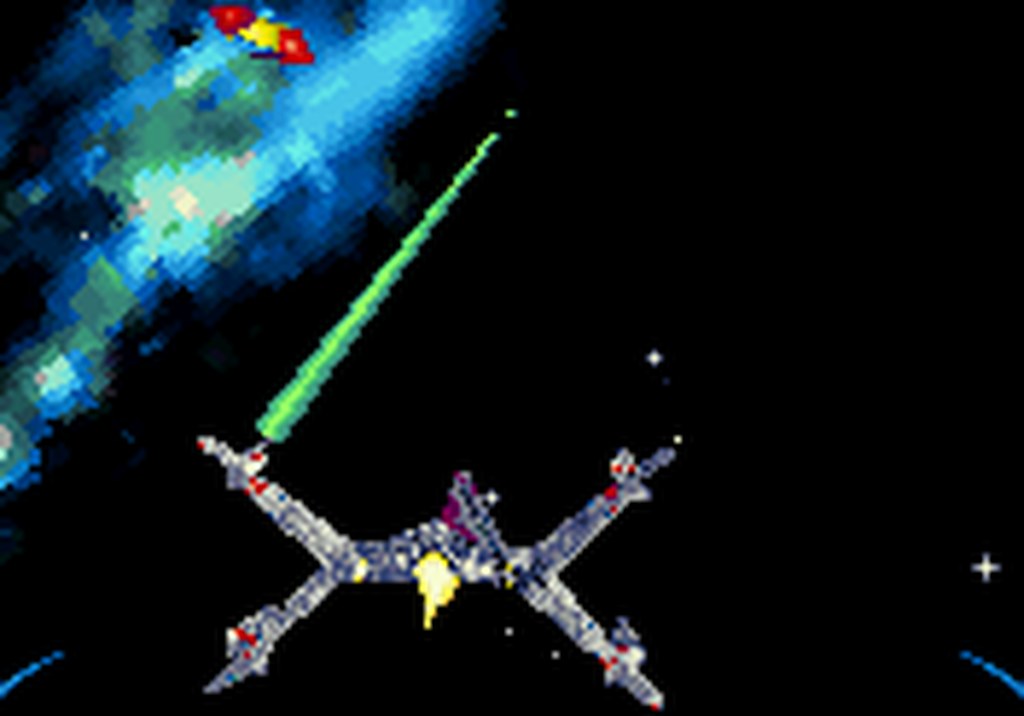
Verdict: a smart, handsome, genuinely distinctive space shooter wrapped in the library’s most extreme scarcity. Play it wherever you legitimately can; the game underneath the price is worth the meeting.
Time has sorted the 32X library into the famous, the infamous and the forgotten, and Darxide rewards being met on its own terms rather than through any of those reputations. Played today — on a serviced stack, through a clean video path, with the six-button pad the era intended — it is a reminder that the mushroom’s forty games were never its problem. The problem was the calendar they were born into, and calendars cannot be replayed. Games can.
There is also the matter of what Darxide says about its machine. The 32X was sold as a bridge to the 32-bit future and remembered as a dead end, but its best cartridges argue a subtler case: that for eighteen months it was simply a good games platform with a small, strange, high-quality library, judged at the speed of a market panic rather than at the pace games deserve. Revisiting it now, without the panic, is the closest thing the platform will ever get to a fair trial — and on the evidence of this cartridge, the defence rests well.
For collectors, Darxide sits in the honest middle of the 32X market: neither the loose-change common nor the four-figure grail, but a cartridge that rewards the hunt and justifies its shelf space every time the stack is powered up. In a library this small, every game is a significant fraction of the whole. This one earns its fraction.
What lingers after the credits is how completely Darxide belongs to its moment — and how well that moment has kept. The early polygon years are often treated as an embarrassing adolescence for the medium, all jagged edges and experimentation. The best 32X games suggest otherwise: the experiments were the point, the edges were the aesthetic, and a generation of designers was learning 3D in public, at full speed, on hardware like this. Darxide is one of their better lessons.
Time has sorted the 32X library into the famous, the infamous and the forgotten, and Darxide rewards being met on its own terms rather than through any of those reputations. Played today — on a serviced stack, through a clean video path, with the six-button pad the era intended — it is a reminder that the mushroom’s forty games were never its problem. The problem was the calendar they were born into, and calendars cannot be replayed. Games can.