At a glance: Zaxxon’s Motherbase 2000 · 32X · Sega, 1995 · Isometric shooter · Score: 6.0/10
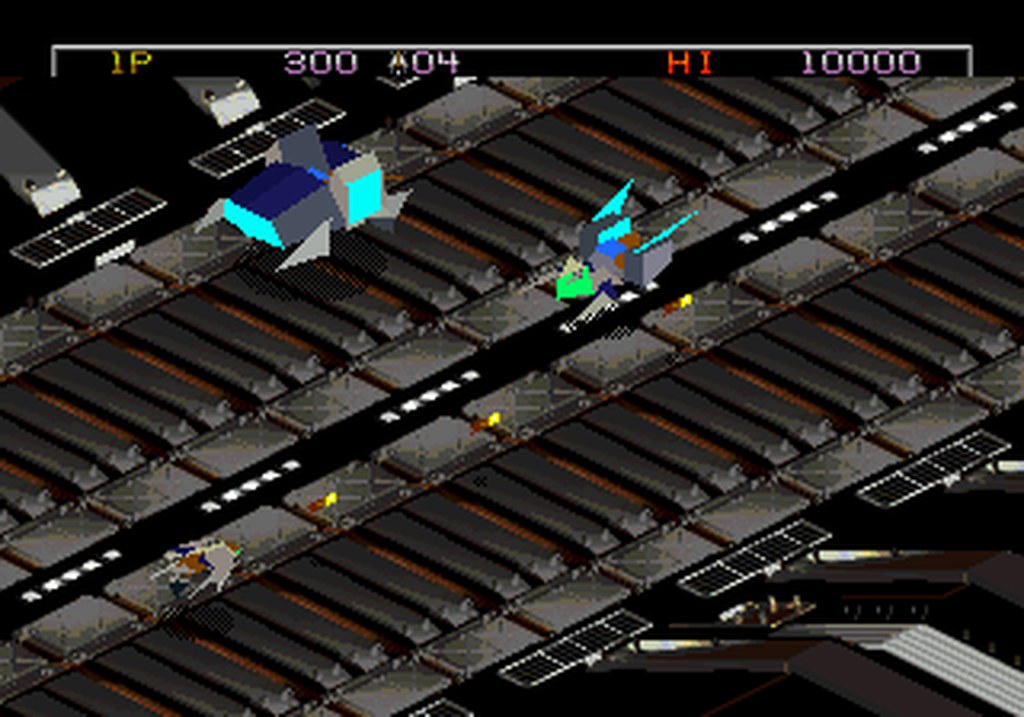
Zaxxon is one of the founding names of the shooter — Sega’s 1982 isometric pioneer, all altitude judgement and brick-wall anxiety. Motherbase 2000, its 32X heir, asks a good question: what does Zaxxon become when the sprites are polygons and the gimmick is theft? Your fighter is feeble. The enemy’s craft are not. So you do the thing the whole game is built around: latch onto a defeated enemy ship, wear it like a captured weapon, and fight on inside its hull until it breaks. It is a genuinely neat idea — Viewpoint meets body-snatching — executed at a frame rate that keeps reminding you whose idea the hardware was.
The campaign sends you against the Motherbase of the title, a planet-sized installation whose defences must be dismantled stage by stage across isometric and, in some stretches, shifting-perspective assaults. Your base ship’s pea-shooter is deliberately pathetic, which makes every hijack a decision: the lumbering gunship with the spread shot, the quick dart with the laser, the tank that turns you into a siege engine. Captured craft absorb damage that would kill you, so the game’s rhythm becomes a chain of thefts — find a ride, ride it hard, bail out shooting as it burns.
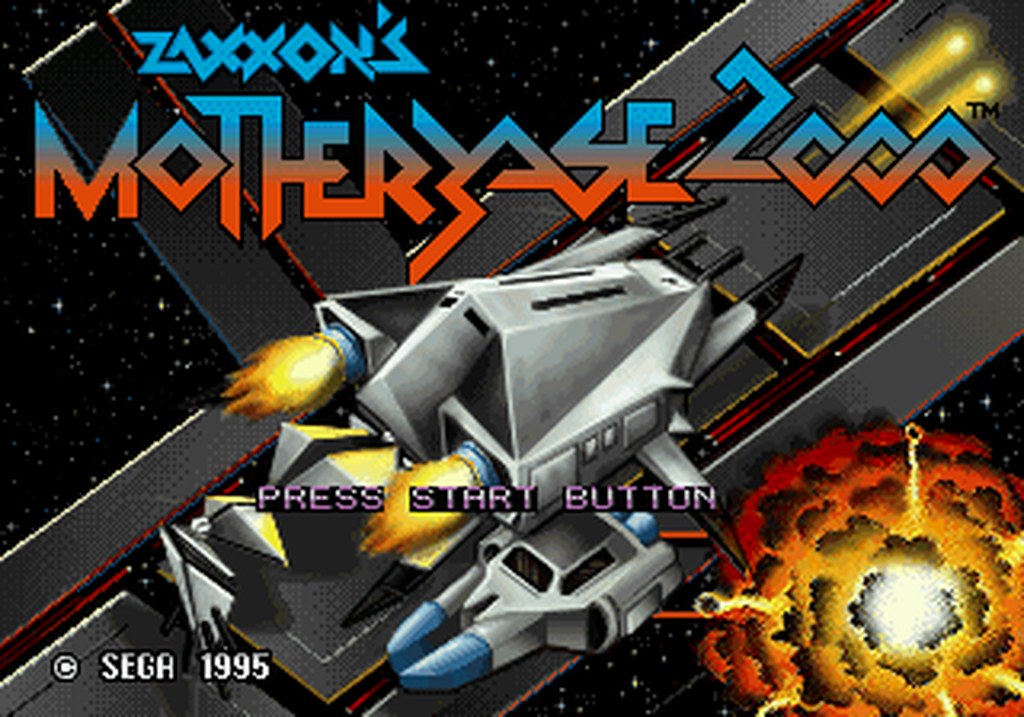
A good idea at fifteen frames
The polygonal fleet is the selling point and the problem. Ships, installations and bosses are real-time 3D models — properly impressive roster-building for a 1995 cartridge — and the isometric camera shows them off handsomely in stills. In motion, the frame rate sags into the teens whenever the Motherbase crowds the screen, and an isometric shooter lives or dies on judging altitude and trajectory, judgements a stuttering update makes approximate. The original Zaxxon’s entire skill was spatial precision; Motherbase 2000 periodically blurs the very skill it inherited.
Two-player support — co-operative and competitive modes — is the quiet redemption: a second ship doubles the theft economy, covers the hijack windows, and turns the campaign into a properly tactical duet. The soundtrack is driving, the boss installations are imaginative constructions, and the sheer oddity of the package — a Sega heritage brand, a body-snatching mechanic, polygon everything — gives it a personality no merely competent shooter matches.
Find a ride, ride it hard, bail out shooting as it burns: the hijack chain is a great idea that the frame rate keeps interrupting.
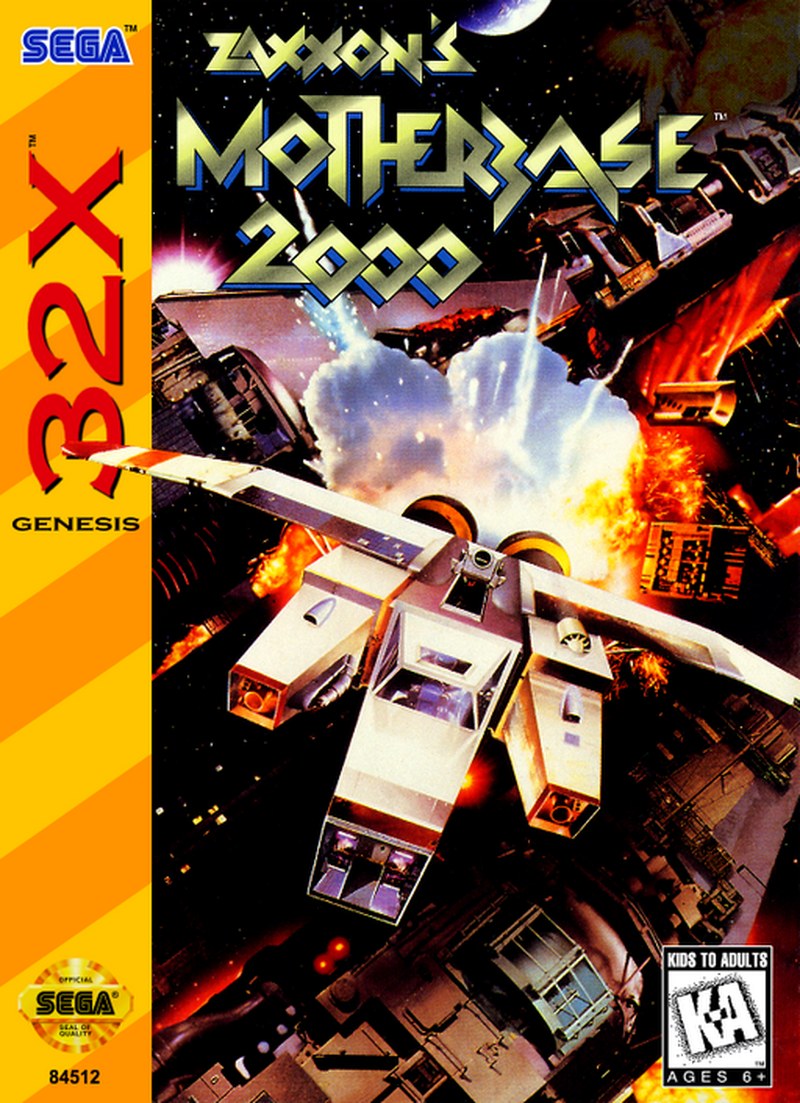
History has been unkind mostly by silence — Motherbase 2000 is the 32X game even 32X owners forget — and the honest verdict can see why while regretting it. The bones are good, the idea is better, and a stable frame rate would have made this a cult favourite instead of a footnote. What survives is a curio with a pulse: the only isometric shooter in the library, and a design document for a better game somebody should still make.
The 32X version, specifically
An exclusive, and a revealing one: it is the library’s clearest case of ambition misjudged against hardware — not beyond the SH-2s, but beyond the time the team plainly had to optimise for them. Judged against the 1982 original it honours the brand’s spatial soul; judged against Shadow Squadron, its shelf-mate in free-form 3D, it shows what that extra polish was worth.
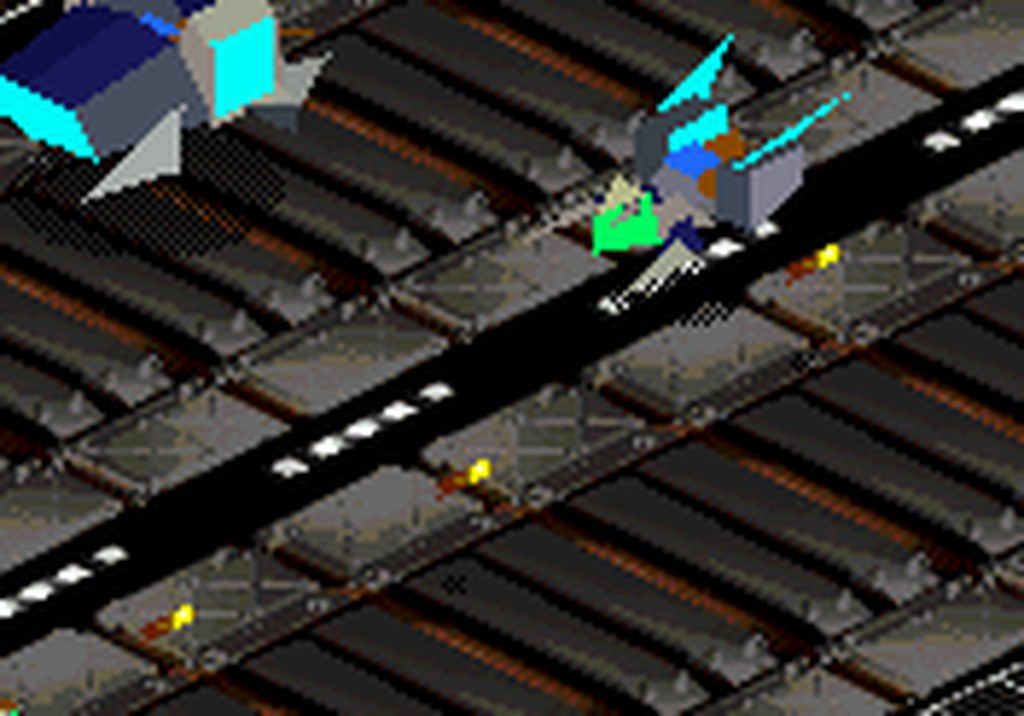
Verdict: a clever, clunky curio — hijack mechanics a decade early, running at a frame rate a beat late. For shooter completists and Zaxxon faithful, a fascinating ride; for everyone else, try before you buy.
Time has sorted the 32X library into the famous, the infamous and the forgotten, and Zaxxon’s Motherbase 2000 rewards being met on its own terms rather than through any of those reputations. Played today — on a serviced stack, through a clean video path, with the six-button pad the era intended — it is a reminder that the mushroom’s forty games were never its problem. The problem was the calendar they were born into, and calendars cannot be replayed. Games can.
There is also the matter of what Zaxxon’s Motherbase 2000 says about its machine. The 32X was sold as a bridge to the 32-bit future and remembered as a dead end, but its best cartridges argue a subtler case: that for eighteen months it was simply a good games platform with a small, strange, high-quality library, judged at the speed of a market panic rather than at the pace games deserve. Revisiting it now, without the panic, is the closest thing the platform will ever get to a fair trial — and on the evidence of this cartridge, the defence rests well.
For collectors, Zaxxon’s Motherbase 2000 sits in the honest middle of the 32X market: neither the loose-change common nor the four-figure grail, but a cartridge that rewards the hunt and justifies its shelf space every time the stack is powered up. In a library this small, every game is a significant fraction of the whole. This one earns its fraction.
What lingers after the credits is how completely Zaxxon’s Motherbase 2000 belongs to its moment — and how well that moment has kept. The early polygon years are often treated as an embarrassing adolescence for the medium, all jagged edges and experimentation. The best 32X games suggest otherwise: the experiments were the point, the edges were the aesthetic, and a generation of designers was learning 3D in public, at full speed, on hardware like this. Zaxxon’s Motherbase 2000 is one of their better lessons.
Time has sorted the 32X library into the famous, the infamous and the forgotten, and Zaxxon’s Motherbase 2000 rewards being met on its own terms rather than through any of those reputations. Played today — on a serviced stack, through a clean video path, with the six-button pad the era intended — it is a reminder that the mushroom’s forty games were never its problem. The problem was the calendar they were born into, and calendars cannot be replayed. Games can.