
Developer: Square Enix · Publisher: Square Enix · Released: March 16, 2006 (Japan) · October 31, 2006 (North America) · Platform: PlayStation 2 · Genre: Role-playing game
Twenty years ago today, Final Fantasy XII arrived in the West carrying five years of development hell, a departed genius, and a battle system so radical that players accused it of playing itself. It was also, not coincidentally, one of the finest RPGs the PlayStation 2 ever hosted. Time has ruled in its favour.
The Longest Five Years in Ivalice

No mainline Final Fantasy had ever taken this long, or cost this much goodwill. Development began around the turn of the decade under Yasumi Matsuno — the mind behind Final Fantasy Tactics and Vagrant Story, returning to his world of Ivalice with the biggest budget and the biggest stage the series could offer. What he was building was audacious: a single-player RPG that moved like the online Final Fantasy XI, set in a world of airships, judges in armour like cathedrals, and small kingdoms crushed between empires. Then, midway through 2005, with the game already years in the making, Matsuno stepped away, citing ill health. Hiroshi Minagawa and battle designer Hiroyuki Ito carried it home. The industry held its breath.
It landed, in Japan in March 2006 and in North America on Halloween of that year, to the kind of reception that shuts down arguments: a perfect 40/40 from Famitsu — only the sixth game in history to manage it at that point — a Metacritic score in the low nineties, and more than five million copies moved within its first year. The PS2 was six years old and supposedly winding down. Final Fantasy XII was its last great monument, a game visibly straining the hardware at every seam and somehow holding together.
It also looked and sounded like nothing else in the series. Akihiko Yoshida’s character designs and Hideo Minaba’s art direction gave Ivalice a sun-baked, Mediterranean-meets-Southeast-Asia texture — all sandstone, bazaars and impossible airship engineering — while Hitoshi Sakimoto, Matsuno’s composer since the Tactics days, wrote a score of marches and melancholy that treated every dungeon like a campaign and every field like a frontier. Final Fantasy had been anime-bright for a decade; XII was painted in earth tones and regret, and the older audience it was aimed at noticed the difference immediately.
A Battle System That Broke the Rules

The first shock, in 2006, was what wasn’t there. No random encounters. No shattering screen, no swirl into an arena, no menu of four heroes standing in a polite line. Enemies roamed the world in plain sight, and if you wanted a fight you walked up and started one; if you didn’t, you ran, and the game let the chase play out across the map with a blue line drawn from your leader to your target like a thread of intent. The Active Dimension Battle system kept the series’ ATB heartbeat — commands charge, then fire — but it happened at walking pace, in real space, with position and distance suddenly mattering in a Final Fantasy.
It sounds like table stakes now, because it is: the seamless, MMO-inflected structure XII pioneered became the genre’s default setting within a generation. At the time it felt like sacrilege of a high order. This was a series that had run on turn-based ritual for two decades, and here was an entry that trusted you to move, think and command all at once. Some players bounced straight off it. Those who stayed found a battle system with the depth of a tactics game wearing the clothes of an adventure.
Programming Your Friends
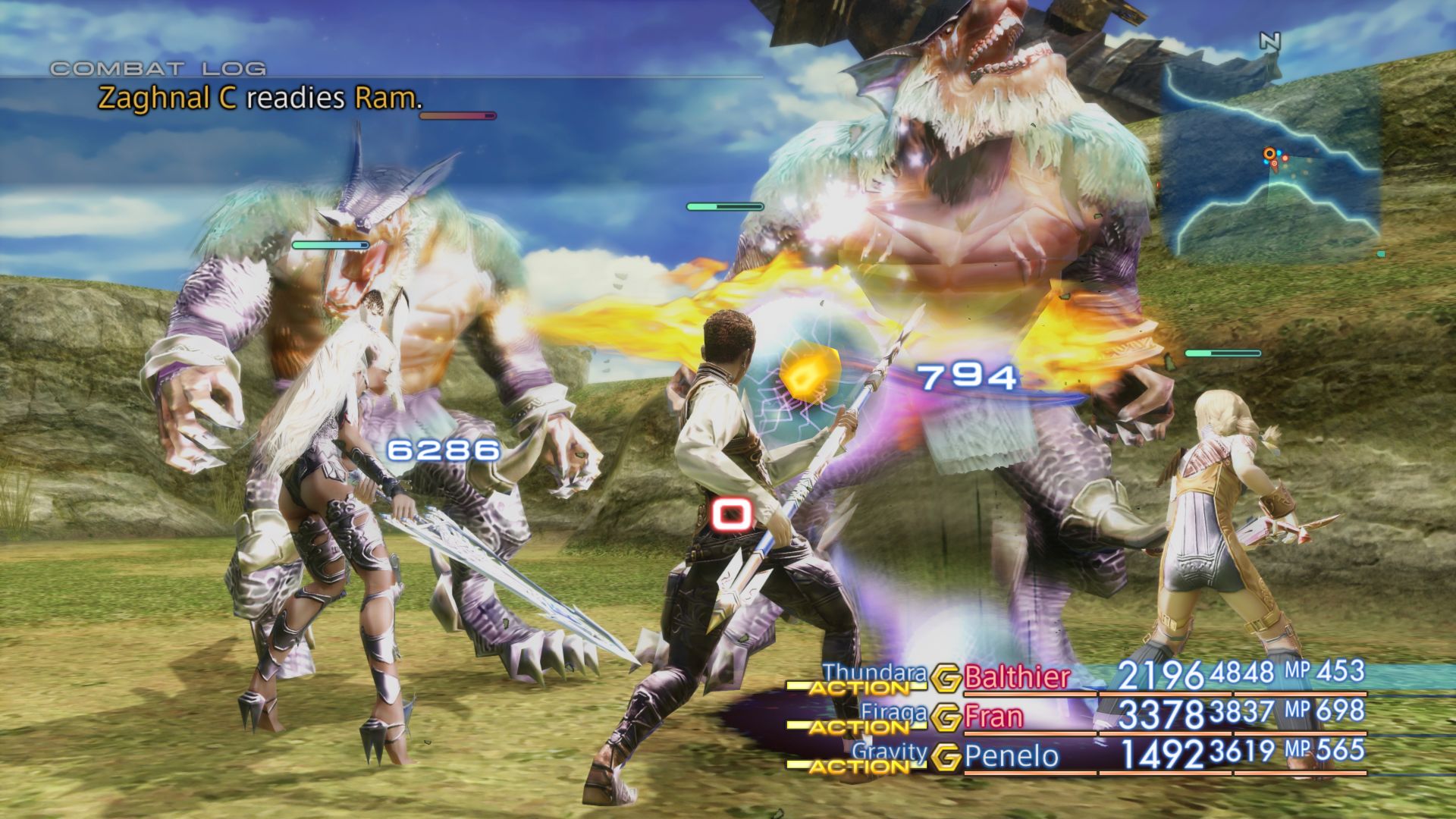
The Gambit system is the most argued-about idea in any Final Fantasy, full stop. The concept is disarmingly simple: each character can be given a list of conditional rules — if an ally falls below 30% health, cast Cure; if a foe is weak to fire, cast Fire; if anyone is poisoned, use an Antidote — and in battle, your party executes your programme. You are not pressing buttons for three people. You are writing three people.
“It plays itself,” said the critics, and for the trash fights along the road they were not entirely wrong. But the accusation misses what the system actually is: a design language. Building a gambit set that survives a boss fight — layering priorities, covering statuses, setting the trap of rules that fires exactly when the fight turns — is gameplay of a high and peculiar order, closer to setting a watch mechanism than to watching a film. When your machine finally clicks through a hunt mark that has killed you four times, the triumph is not despite the automation. The triumph is the automation. You built that. The License Board underneath it was the weaker half in 2006 — one shared board on which every character could eventually learn everything, sanding the party into identical demigods — but the Gambits were a glimpse of where RPG party AI would go for the next twenty years.
“Final Fantasy XII didn’t automate the RPG. It promoted the player — from button-presser to tactician, from soldier to the general writing the standing orders.”
A War Story Told in Politics

Here is the thing the game’s first hours work hard to obscure: Final Fantasy XII is not Vaan’s story. The street orphan and his friend Penelo are the camera, not the subject — widely reported to have been ushered to the front of the party late in development, in a bid for younger players, after an older, sterner leading man was deemed a risk. The actual heart of the thing is Princess Ashe, widowed by the war that opens the game, fighting to reclaim a kingdom the Archadian Empire swallowed in an afternoon — and to decide what price in blood, and in the godlike stones called nethicite, her crown is worth. Around her orbits the series’ best ensemble of the era: Basch, the knight framed for regicide; Fran, the viera exile of unnerving calm; and Balthier, the sky pirate who all but winks at the audience when he declares himself the leading man — then spends the game demonstrating that he was simply correct.
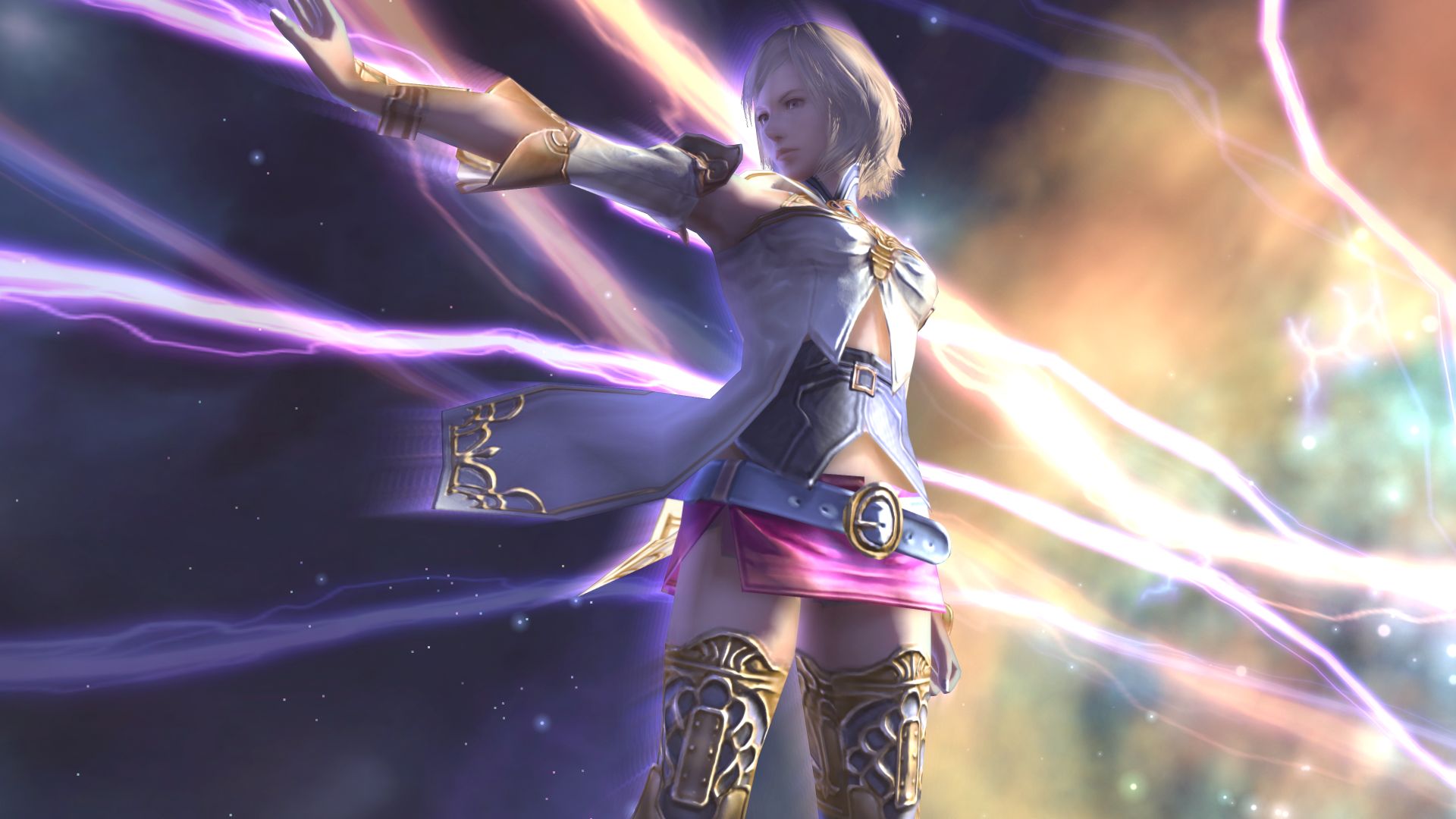
It is a grown-up script — Alexander O. Smith’s localisation gave it a stage-play weight that still embarrasses most of the genre — and a genuinely political one, more concerned with occupation, resistance and the seduction of overwhelming force than with any single villain. If it falters, it falters in the back third, where the conspiracies thin out and the gods behind the curtain, the Occuria, arrive a little too late to earn their menace. But its best trick endures: a finale in which the hero’s victory is not killing the tyrant but refusing the weapon that would have made her one.
The Zodiac Correction

Square Enix got a second swing, and connected. The International Zodiac Job System edition, released in Japan in 2007, replaced the one-size License Board with twelve distinct job boards — Knight, Monk, White Mage, Machinist and friends — locking each character into a chosen trade and restoring the party-building identity the original had dissolved. A decade later that version became the basis of The Zodiac Age, the full remaster for modern machines: redrawn visuals, a re-recorded score from original composer Hitoshi Sakimoto’s sweeping original work, a speed booster that makes the long Ivalice hikes fly, and a hundred-stage Trial Mode for the truly committed. It is rare that a remaster gets to argue that the beloved original was a first draft. The Zodiac Age makes the argument politely, thoroughly, and wins it.
Playing It in 2026

Play The Zodiac Age — it is on everything, it is cheap in every sale, and it is simply the better game. The original PS2 disc remains a magnificent artefact, the last time a Final Fantasy felt handmade at the scale of a small country’s film industry, but the jobs, the pace and the polish of the remaster have settled the question. What surprises returning players, twenty years on, is how contemporary it feels: the gambits anticipate the companion programming of a dozen later RPGs, the seamless world is the water everyone now swims in, and Ivalice — sun-baked, politically rotten, thick with history — remains the most believable place the series ever built. Final Fantasy XII spent its launch arguing with its own audience about the future of RPGs. Twenty years later, the audience lives in that future. The argument is over, and XII won it.
Score: 9/10. A landmark RPG whose battle system was a decade early and whose world has never been bettered in the series — docked a point for a protagonist-shaped hole at its centre and a final act that can’t quite cash the cheques its politics wrote. The Zodiac Age is the definitive way to play it.