PLAYSTATION · FEATURES · FROM THE VAULT
Everyone knows the PlayStation’s famous shelf: Metal Gear Solid, Final Fantasy VII, Gran Turismo, Tekken 3, Resident Evil 2. Deserved classics, all of them. But Sony’s grey box hosted well over seven thousand games worldwide, and the deeper you dig past the Platinum range, the stranger — and often the more wonderful — it gets. This is a list about the other PlayStation: the one where a rabbit walks along a line drawn by your own CD collection, a salaryman dances for his life while a giant globe chases him down a corridor, and a beach ball defies gravity on blocks floating in the sky. These are our favourite PS1 hidden gems — the weird end of the library, where the experiments lived.
A word on the “cheap” part of the legend before we start. Most of these games were cheap once — bargain-bin, ex-rental, three-for-a-tenner cheap — because shops couldn’t give some of them away. A few still are. A few, inevitably, have been discovered by the internet and priced accordingly, and we’ll flag those honestly rather than pretend it’s still 2004. But every game here shares the same original sin: none of them failed because they were bad. They failed, where they failed, because they were odd, or Japanese, or European-only, or North America never got them at all. The PS1 hidden gems are where the system’s imagination ran wildest — and most of them are easier to play today, through PlayStation’s classics catalogues and re-releases, than they have been in years.
11. Bishi Bashi Special (Konami, 2000 in Europe)
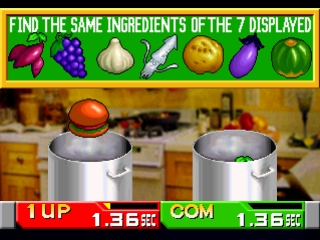
Before WarioWare made microgames fashionable, Konami’s arcade series was already firing five-second challenges at Japanese players — and this Europe-only compilation, bundling Japan’s Bishi Bashi Special 1 and 2, is the one that got away from America entirely. Eighty-five minigames, per MobyGames’ count: bodybuilders on pogo sticks leaping for a dangling piece of meat, a dance-off that grows your afro to screen-filling size, a bride hurling wedding cake down the aisle, and Uncle Launcher, which is exactly what it sounds like. Up to eight players can pile in with two Multi Taps, passing controllers as the rounds demand. Solo it’s a curiosity; with a room full of people it’s the funniest disc on the system — a party game from before “party game” was a marketing category, built entirely around three coloured buttons and total shamelessness.
10. Devil Dice (Shift, 1998)
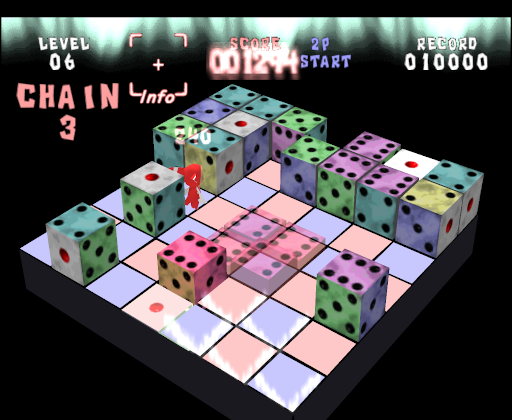
Known in Japan as XI (pronounced “sai”), Devil Dice is a puzzle game with a rule so elegant it hurts that nobody copied it: you play a tiny devil running across the tops of giant dice, rolling them as you go. Line up dice showing the same face, in a group exactly as large as that number — three dice showing three, five showing five — and they sink away in a chain. That’s the whole game, and it’s bottomless. Developed by Shift and published by Sony in Japan (THQ handled North America), it arrived in June 1998 in Japan and that September in the US, sold over a million copies, and took puzzle-game-of-the-year honours — yet it never became a household name, partly because explaining it takes longer than playing a round. It later turned up inside the Japanese PlayStation Classic mini console, which tells you how Sony itself rates it. Puzzle games this pure don’t date.
9. I.Q.: Intelligent Qube (G-Artists, 1997)
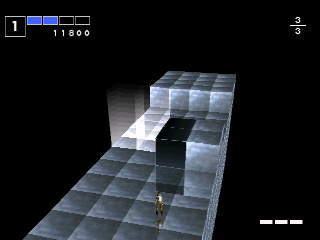
Most puzzle games are cheerful. I.Q. is a black void, a floating slab, and wave after wave of enormous cubes rolling toward a very small man, scored like a disaster movie. Designed by Tokyo University of the Arts professor Masahiko Sato and developed by G-Artists, it launched in Japan on January 31, 1997 and reached North America that November (Europe knew it as Kurushi). You mark squares on the platform to capture cubes as they roll over them — clear the normal ones, never touch the black Forbidden cubes, and grab the green ones to clear whole areas — while Takayuki Hattori’s eerie orchestral score insists something terrible is happening. It sold around 750,000 copies in Japan in its first year and won an Excellence Award at the 1997 Japan Media Arts Festival, then quietly vanished from Western memory. Of everything on this list, it’s the one that feels most like a piece of modern art that happens to be a game — and it’s on PlayStation’s modern classics service, waiting.
8. Kula World (Game Design Sweden AB, 1998)
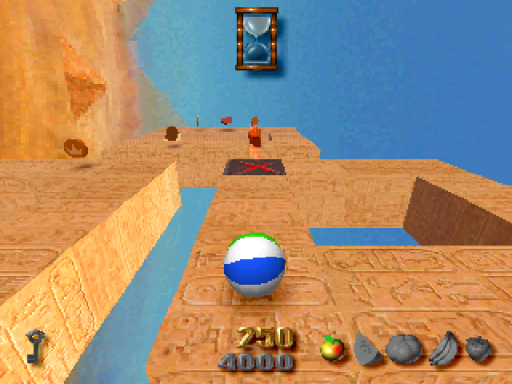
You are a beach ball. That’s the pitch, and Kula World — Roll Away in North America, KulaQuest in Japan — never needed another one. Game Design Sweden’s only game rolls you across 150 levels of blocks suspended in empty sky, collecting keys to unlock the exit, while its central trick rewires your brain: roll off an edge and gravity reorients, so the underside of the world becomes the floor. It arrived in Europe on July 10, 1998 and in North America that November, one of the first games to put the DualShock’s rumble to expressive use, with a spaced-out electronica score by Swedish duo Twice a Man. It reviewed well, sold modestly, and for years original copies were genuinely scarce — the demo, bundled with European consoles on the Demo One disc, may be how most people knew it. Calm, cruel and completely singular, it’s the PS1 puzzle game that feels like it fell through a crack from a better timeline.
7. Pepsiman (KID, 1999)
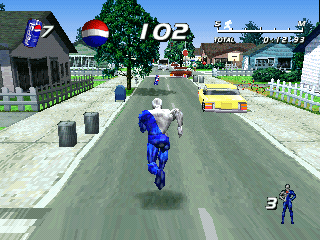
Yes, it’s an advertisement. No, that doesn’t stop it being brilliant. Pepsiman — KID’s Japan-only runner of March 4, 1999 — stars Pepsi’s silver-suited Japanese mascot sprinting automatically through San Francisco, New York, Texas and Pepsi City, leaping trucks, sliding under obstacles and collecting cans to deliver to the thirsty, while live-action cutscenes of a man drinking Pepsi and eating pizza cheer him on. It never officially left Japan, despite being playable entirely in English, and it didn’t sell. But play it now and the shock is how modern it feels: this is the endless-runner template — auto-run, lane-switch, dodge, collect — fully formed in 1999, a decade before the genre ate mobile gaming. As a piece of design it’s a footnote; as an experience it’s ninety-proof joy, and the most fun a drinks commercial has ever been. Import copies are the expensive exception to this list’s cheap rule, sadly — fame did to Pepsiman what it does to everything.
6. Jumping Flash! (Exact / Ultra, 1995)
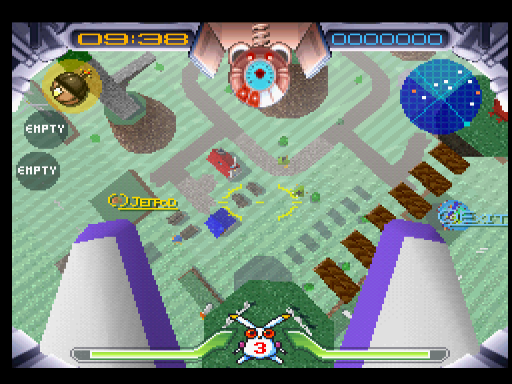
History remembers Super Mario 64 as the birth of the 3D platformer. History is forgetting someone: Jumping Flash! beat it to true 3D platforming by more than a year, and Guinness World Records says so. Released in Japan on April 28, 1995, Exact and Ultra’s first-person platformer puts you inside Robbit, a mechanical rabbit rescuing the stolen jet pods of Crater Planet from the gloriously named Baron Aloha. The genius is in the jump — a triple jump so high that the camera tilts down mid-air so you can watch Robbit’s shadow and place your landing. It feels like flight, and nothing else in 1995 felt like it. Two sequels followed (the third never left Japan), the series stalled, and Robbit became a trivia answer. But every 3D platformer since owes this odd, weightless, wonderful game a royalty cheque — and playing it today, via PlayStation’s classics line, the vertigo is undimmed.
5. Silent Bomber (CyberConnect, 1999)
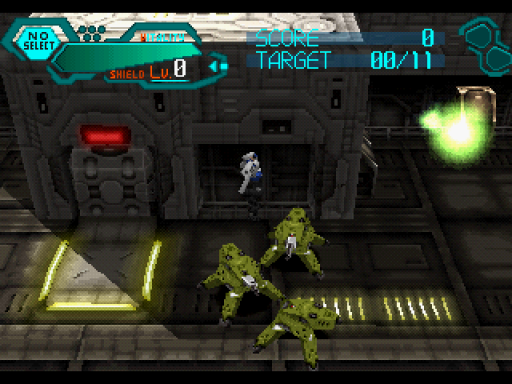
Every other action game on the PlayStation gives you a gun. Silent Bomber gives you bombs — only bombs — and builds one of the system’s fastest, most original action games around them. As Jutah Fate, a genetically engineered soldier assaulting the colossal dreadnought Dante, you plant bombs where you stand or launch them with a lock-on reticle so they stick to enemies and machinery, stack them for bigger blasts, and detonate everything at the moment of maximum disaster. Developed by CyberConnect — the studio that became CyberConnect2, of .hack and Naruto fame — and published by Bandai, it launched in Japan on October 28, 1999 and in North America on February 29, 2000, to strong reviews and near-total public indifference. It’s the definition of a cult game: an arcade heart, a top-down camera, napalm and gravity bombs, and explosions with real weight. If this list sends you to one action game, make it this one.
4. Tomba! (Whoopee Camp, 1997)
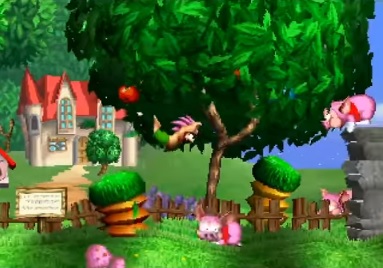
Tokuro Fujiwara created Ghosts ‘n Goblins and produced Resident Evil at Capcom — then walked out in 1995 to make something purely his own. Tomba!, released in Japan on Christmas Day 1997 and across 1998 in the West, is what he made: a wild-haired feral boy hunting the Seven Evil Pigs who stole his grandfather’s bracelet, in a side-scrolling adventure built from 130 overlapping “events” rather than levels. You bite pigs and throw them. You swing, climb, dive between foreground and background planes, and take quests in almost any order — a structure so open that reviewers at the time warned players they’d get happily sidetracked. It reviewed superbly and sold indifferently, Whoopee Camp folded after the sequel, and original discs became some of the priciest on the system — the honest exception that proves this list’s cheap rule ever existed. The mercy: it’s been re-released repeatedly, including Limited Run’s Special Edition in 2024, so nobody has to pay collector ransom to play a masterpiece anymore.
3. Incredible Crisis (Polygon Magic, 1999)
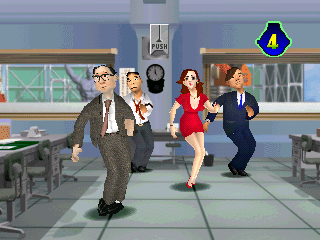
It’s Grandma Hatsu’s birthday, and the Tanamatsuri family have forgotten. That’s the entire plot of Incredible Crisis — Polygon Magic’s 1999 minigame odyssey (Tondemo Crisis in Japan) — and what follows is twenty-four minigames of escalating catastrophe as dad Taneo, mum Etsuko and the kids fight their way home through bank robberies, a shrinking ray, an alien mothership and a giant teddy bear demolishing Tokyo, all scored by the Tokyo Ska Paradise Orchestra. Taneo’s day opens with a synchronised office dance, then a giant globe falls off a neighbouring building and chases him down a corridor, Indiana Jones-style. Designed with Kenichi Nishi, it beat WarioWare to the story-driven minigame collection by years and did it with more heart. The Western release arrived in November 2000 — two weeks after the PlayStation 2 launched, which tells you everything about its chances. Find it, play it, and try not to grin for two straight hours.
2. LSD: Dream Emulator (OutSide Directors Company / Asmik Ace, 1998)
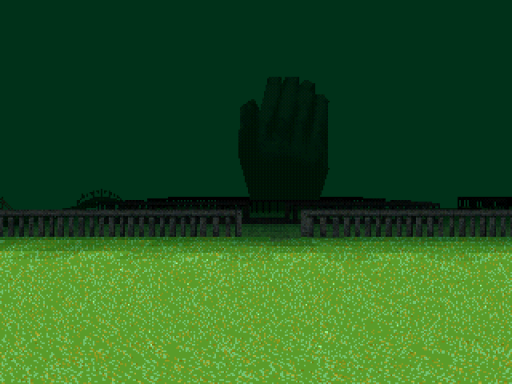
There is nothing else like LSD: Dream Emulator, on the PlayStation or anywhere. Released only in Japan on October 22, 1998, it’s the work of multimedia artist Osamu Sato, who said plainly that he rejected the idea of games and wanted to use the PlayStation as a medium for contemporary art. Built from a dream diary kept for over a decade by Asmik Ace employee Hiroko Nishikawa, it simply walks you, in first person, through surreal linked dreamscapes — a village, a harbour, a field under a giant hand — where touching anything transports you somewhere stranger, across 365 in-game days, with over 500 patterns of Sato’s own electronic music shifting underneath. No score worth chasing, no ending worth the name. It sold poorly, vanished, and then the internet found it: emulation-era players turned this anti-game into one of the most beloved cult objects on the system, and a Japanese PSN re-release followed in 2010. The original disc is now genuinely expensive — the dream, fittingly, is the one thing on this list money struggles to buy. The fan-made remakes and videos are the practical route in.
1. Vib-Ribbon (NanaOn-Sha, 1999)
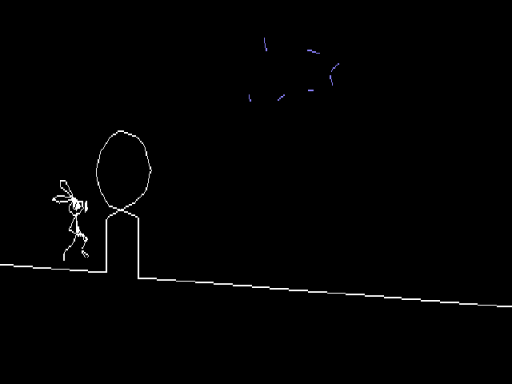
The greatest PS1 hidden gem is a rabbit drawn in white lines on a black screen. Vib-Ribbon, from PaRappa the Rapper creator Masaya Matsuura and his studio NanaOn-Sha, launched in Japan on December 9, 1999: Vibri walks a ribbon that bends into blocks, loops, waves and pits in time with the music, and you press the matching buttons to keep her a rabbit rather than a frog, an insect, or game over. The miracle is technical as much as musical — the whole game loads into the PlayStation’s memory, so you can eject the disc, insert any audio CD you own, and the game generates levels from your music. Sony’s American arm reportedly took one look at the wireframe graphics and passed, so North America never got a PlayStation release at all; Europe did, in August 2000. Fans campaigned for fifteen years, and in October 2014 Vib-Ribbon finally reached North America as a PS3 classic — after Sony’s Shawn Layden name-checked it on the E3 stage, apparently not realising America had never had it. The Museum of Modern Art has it in its permanent collection. A rhythm game with almost no graphics, infinite levels, and your own record collection as its content: nothing on the system was braver, and nothing has aged better.
How to play the PS1 hidden gems today
The good news is that this shelf has never been more reachable. Sony’s modern classics service carries several of these — I.Q.: Intelligent Qube and Jumping Flash! among them, in enhanced form on PS4 and PS5 — and Vib-Ribbon lives on as a PS3-era classic. Tomba! got its Special Edition in 2024. Devil Dice hides inside the Japanese PlayStation Classic. LSD remains the hard case: Japan-only then, Japan-only on PSN, and priced like a relic in the wild, so fan preservation projects carry it now. For the rest, original discs are the honest route — most of this list still trades at mortal prices, because the market, like the shops of 1999, still doesn’t quite know what to make of the weird shelf. That’s rather the point. The famous PlayStation games will always be famous. These eleven needed rescuing — and every one of them repays it.
The grey box sold a hundred million dreams. The best of them were the strangest.