

GAME BOY · FEATURES · FROM THE VAULT
Ask anyone to name the great Game Boy games and you’ll get the same short liturgy: Tetris, Pokémon, Super Mario Land, Link’s Awakening. All masterpieces, all deserved. But the little grey brick sold in the hundreds of millions and hosted well over a thousand cartridges, and a library that size doesn’t end at the famous shelf. Dig one layer down and you find the real treasure: Game Boy hidden gems that were too strange, too late, too Japanese or too quietly brilliant for their own commercial good — a Miyamoto puzzle game almost nobody bought, a platformer where you’re already dead, a pinball table patrolled by an alligator, and an RPG about a prince who turns into a frog that secretly taught Zelda how to be Zelda on a handheld.
These are our nine favourite Game Boy hidden gems, ranked. And here’s the part that would have sounded like fantasy five years ago: thanks to Nintendo’s Classics service — which added three of these very games on October 27, 2026 — most of them are easier to play legally today than they have been in decades. No more squinting at grainy auction photos and paying collector prices for the privilege. Mostly. We’ll get to the painful exceptions.
The machine that hid them in plain sight
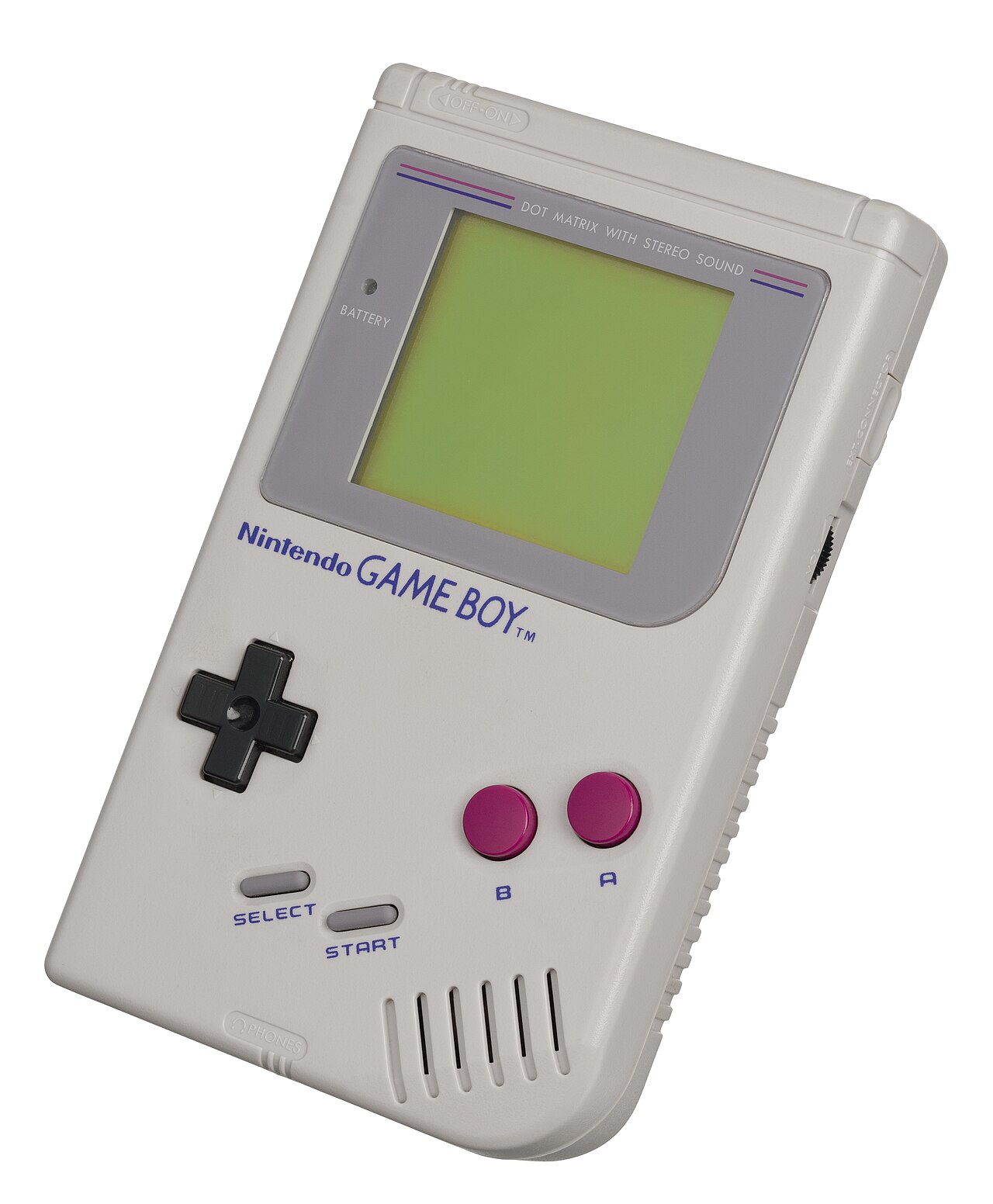
A quick word on why so much quality got buried. The Game Boy launched in Japan on April 21, 1989 and in North America that July, and it won its war early — which meant the shelves filled up fast with licensed filler riding the logo. The good weird stuff had structural problems: it arrived late in the system’s life when shops were clearing space, it never left Japan at all, or it belonged to a genre — puzzle, pinball, first-person RPG — that 1990s marketing departments didn’t know how to sell to children. The games below share one trait: none of them failed because they were bad. They failed, where they failed, because the machine was too successful for its own catalogue. One more rule for this list before we start: everything here is an original monochrome Game Boy game, no Color-only Johnny-come-latelies. The brick, the whole brick, and nothing but the brick.
9. Gargoyle’s Quest (1990)
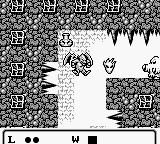
Capcom’s strangest act of generosity: taking Firebrand — the red gargoyle whose entire job in Ghosts ‘n Goblins was to ruin your afternoon — and making him the hero. Released in Japan on May 2, 1990 and in North America that July, Gargoyle’s Quest is two games stitched together with real confidence: overhead RPG-style towns and world-map wandering, broken up by side-scrolling action stages where Firebrand hovers, clings to walls with his claws and spits fire at the Ghoul Realm’s worst. The structure — talk, explore, then a demanding action set-piece — feels closer to Zelda II’s rhythm than to the arcade brutality of its parent series, and it works beautifully on the small screen because every sprite is big, readable and full of menace. It was successful enough to earn an NES prequel in 1992 and the gorgeous SNES sequel Demon’s Crest in 1994, yet the original still gets introduced as a trivia answer rather than a classic. It joined Nintendo Classics in February 2023, so the cheapest way in is also the easiest. Start the series where it started.
8. Catrap (1990)

Every “games that were ahead of their time” list should start here, because Catrap wasn’t just early — it was early by accident, twice. Yutaka Isokawa designed it in 1985 as a type-in BASIC listing for the Sharp MZ-700 in a Japanese magazine; five years later ASK Kodansha turned it into a Game Boy game (Japan, June 1, 1990; North America that October, via Asmik). You guide two cats through 100 single-screen puzzle rooms, pushing blocks, climbing ladders and knocking every monster off the screen. The genius is the button nobody talks about: press A and the game rewinds your movements, step by step, so a ruined puzzle is never a restart — it’s an undo. Destructoid has credited Catrap with using a rewind mechanic before Blinx, before Prince of Persia: The Sands of Time, before Braid made rewinding famous — and here it’s not a story device, just a kindness built into a puzzle game in 1990. It even ships with a level editor, in 1990, on a cartridge. It resurfaced on the 3DS Virtual Console in 2011, and it remains the purest brain-teaser on the system.
7. Pinball: Revenge of the ‘Gator (1989)
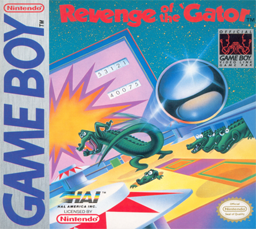
HAL Laboratory made this in the Game Boy’s first year — Japan, October 18, 1989; the West in March 1990 — and it still embarrasses most handheld pinball that followed. The table is a stack of screens you flip between, stuffed with bonus rooms, and the whole thing is patrolled by alligators, including the one waiting beneath your flippers: let the ball drain and it doesn’t just end, it gets eaten. That one joke would be enough, but the physics are the real story — brisk, honest ball movement that reviewers at the time rewarded with scores like Computer and Video Games’ 93%. There’s even a proper competitive streak: Match Play let two players go at each other over the Link Cable, each trying to knock the ball past the other’s flippers. Revenge of the ‘Gator is one of the three games Nintendo added to the Game Boy Classics library on October 27, 2026, so the barrier to entry is now exactly one subscription you probably already have. (The 2023 fan overhaul Revenge of the ‘Gator Gold, which colours the game and fixes its slowdown, is worth hunting down too.)
The Game Boy’s second shelf isn’t a consolation prize. Half the games on it were inventing mechanics the industry wouldn’t catch up with for twenty years.
6. Kid Dracula (1993)
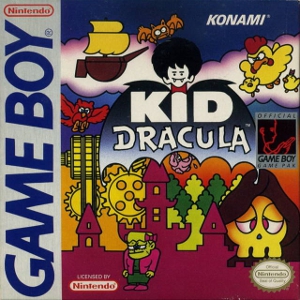
Konami’s in-joke, and a lovely one. Kid Dracula — Japan, January 3, 1993; North America that March — is a Castlevania spinoff played entirely for charm: the chibi lord of darkness has forgotten his powers, and across eight stages (a ghost pirate ship, a volcano, a robot factory) he relearns them one by one. Walk on the ceiling. Turn into a bat. Deploy an umbrella against falling hazards. It’s structured like a parody but built like a real platformer, with big clean sprites that dodge the screen-blur problems that sank faster Game Boy games, and a soundtrack that punches far above the hardware. The catch is the afterlife: original cartridges have become properly expensive — Retro Gamer recently quoted resale prices from £75 to over £300 — because the print run was small and nobody at the time treated a comedy Castlevania as a must-own. The sane route in is the Castlevania Anniversary Collection, which includes it. Play it there, enjoy it fully, and let the collectors fight over the grey plastic.
5. Bionic Commando (1992)
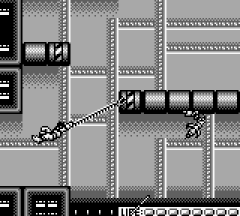
The most confident remake on the system. Capcom handed the NES classic to Minakuchi Engineering, and instead of shrinking it, they reimagined it: the Game Boy Bionic Commando (Japan, July 24, 1992; North America, September 19, 1992) keeps the structure — Rad Spencer, a bionic arm instead of a jump button, a mission to rescue Super Joe and stop the Albatross project — but moves the whole thing into a spiky-haired science-fiction future, adds cinema-style story scenes and character dialogue, and reworks the overhead encounters into side-scrolling action. The grapple is the thing, as always: swinging across ceilings on a wire, in monochrome, on a machine with four buttons, feels like a magic trick every single time, and the level design trusts it completely. Time has been kind — it hit the 3DS Virtual Console in 2011 and joined Nintendo Classics in November 2025. If you only know the NES original, this isn’t a port to skip. It’s the other version of a masterpiece, and on some days we prefer it.
4. The Frog for Whom the Bell Tolls (1992)
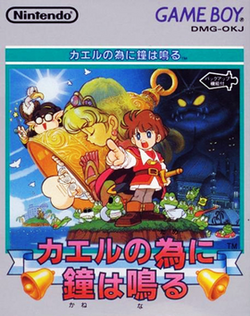
The deepest cut on this list, and the one with the best claim to changing history. Developed by Nintendo R&D1 with Intelligent Systems and released only in Japan on September 14, 1992, The Frog for Whom the Bell Tolls is a comedy action-RPG: you are the Prince of Sablé, racing your rival Prince Richard to rescue Princess Tiramisu, and along the way the witch Mandola’s potions give you the power to become a frog (hop high, swim, chat with frogs) and a snake (slip through gaps, terrify frogs). Battles resolve automatically in little dust-cloud scuffles decided by your stats, which keeps the whole game breezing along on jokes and exploration. Here’s why it matters beyond its own charm: its engine and structure became the foundation for Link’s Awakening a year later — same team DNA, same composer, Kazumi Totaka — and Richard himself cameos in Link’s Awakening, living in a house full of frogs, a joke almost nobody outside Japan could decode in 1993. A fan translation arrived in 2011, and the game joined Nintendo Classics in Japan in May 2024. It remains the strongest argument that Nintendo’s own vault still holds unreleased treasure.
3. Trip World (1992)

Sunsoft looked at the Game Boy’s limitations and simply declined them. Trip World (Japan, November 27, 1992; Europe in 1993; never released in North America) is a five-stage platformer starring Yakopoo, a rabbit-like Shabubu hunting the stolen Maita Flower, and it is — shot for shot — one of the best-looking games on the hardware: huge expressive sprites, parallax dreams of backgrounds, animation with squash and bounce that the screen had no business hosting. Yakopoo shapeshifts between forms — walking and kicking, sprouting wing-ears to glide, turning fish to swim — and in a design decision decades ahead of the cozy-game curve, most enemies don’t even hurt you unless you attack them first; the world is having a bad day, not out to kill you. The honest criticisms are real: it’s short, and it’s easy. The counter-argument is everything else. The team, led by Yuichi Ueda with character designs by Toshihiko Narita, came straight off Gimmick! and built this in its spirit. Scarcity made original carts legendarily expensive, but Limited Run’s Trip World DX (Switch, November 2023; PS4 and PS5, February 2024) is a superb colourised remaster — for once, the reissue is the sensible way to play a rarity.
2. Avenging Spirit (1992)
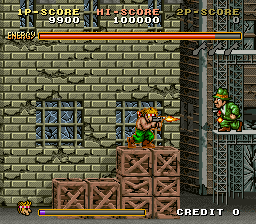
The premise is a pulp novel: a crime syndicate murders you on a walk with your girlfriend, kidnaps her, and — because her father researches ghost energy — you come back as a spirit with one power and one problem. The power is possession: leap into gangsters, ninjas, robots, anything with a pulse, and their weapons and movement become yours. The problem is that outside a body, your spirit energy drains away, so every stage of Jaleco’s Avenging Spirit is a relay race of borrowed lives. It began in arcades in 1991 (developed by C.P.Brain, known in Japan as Phantasm), and the Game Boy version — Japan, November 6, 1992; North America that December — keeps the soul of it intact across six stages, including the quietly brutal branching at the end: collect the three hidden keys and you can free your girlfriend for the good ending; miss them and you face the syndicate boss alone, knowing she’s still in the building when it blows. Two endings, moral weight, a possession system that games like Geist and Ghost Trick would revisit years later — on a 1992 cartridge most people walked straight past. It returned via a 2022 console re-release and a Limited Run cartridge reissue, and on October 27, 2026 it joined Nintendo Classics. Possess it at last.
1. Mole Mania (1996)

Produced by Shigeru Miyamoto. Developed by Nintendo EAD with Pax Softnica. Released in Japan on July 21, 1996 and in North America in February 1997 — into a market already hypnotised by Pokémon’s approach — and almost completely ignored. Mole Mania is the best puzzle game on the Game Boy, full stop. You are Muddy Mole, whose wife and seven children have been taken by the cabbage farmer Jinbe. Each screen is a Sokoban-flavoured problem: push, pull or throw a heavy black ball into the gate. Then the twist that doubles the game — Muddy can dig. The underground is a second, fully connected layer of every puzzle, with its own obstacles, and choosing where to surface (and never, ever dropping the ball down a hole, which sends it back to the start) turns simple rooms into genuine brain-melters across seven worlds. It’s generous, too: battery saves, Super Game Boy enhancements, a two-player versus mode, bosses, and cutscenes with more personality than most mascot platformers managed. IGN scored it 8 out of 10 back in the day and posterity has only raised it. On October 27, 2026, Nintendo put Mole Mania on the Game Boy Classics app, which means the best Game Boy game you never played is now the easiest recommendation on this entire list. If you play one thing here, dig here.
How to play these Game Boy hidden gems today
The Classics effect is the story of this list in 2026. As of this month, Mole Mania, Avenging Spirit and Pinball: Revenge of the ‘Gator are all on the Game Boy – Nintendo Classics app with a base Switch Online membership; Bionic Commando and Gargoyle’s Quest are already in the same library; Kid Dracula rides in the Castlevania Anniversary Collection; Trip World has its DX remaster; Catrap lingers on the (still-switch-on-able) 3DS eShop legacy — check your region — and The Frog for Whom the Bell Tolls asks for either the Japanese Classics library or the excellent fan translation. In other words: for the first time in thirty years, the Game Boy’s second shelf is a weekend project rather than a savings account project.
That’s the real lesson of the brick. Tetris and Pokémon built the legend, but legends are just the front of the shop. Out back, in four shades of green, there’s a mole digging two puzzles at once, a ghost shopping for a body, and a prince who’s half frog — and they were worth the shelf space all along.