

GAMECUBE · NEWS · FRESH CARTRIDGE
Some remasters rescue games that were trapped. This one rescues a party. Godzilla: Destroy All Monsters Melee Remastered launches today, November 3, 2026 — Godzilla Day, naturally — for PlayStation 5, Xbox Series X/S, Nintendo Switch, Nintendo Switch 2 and PC, priced at $29.99. Atari is publishing, and the developer is the one credit that actually matters here: Pipeworks, the studio that built the original in 2002, has come back to rebuild its own game. Not a port, not a filter-and-ship upscale — a ground-up remake in Unreal Engine 5 that keeps, in the studio’s own framing, the majority of the original’s mechanics. Twenty-four years later, the GameCube’s greatest couch-fighting secret gets modern visuals, a kinder unlock system and something the purple lunchbox era could only dream about: online multiplayer.
Full disclosure, because it matters for how you read the rest of this piece: this is a launch-day news feature, not a review. We haven’t put scored hours into the remaster yet — nobody outside the review window has — so what follows is the verified shape of the thing: what the original was, what has demonstrably changed, what the first reviews are flagging, and whether the asking price makes sense. The stomping, we can confirm, is real.
The GameCube’s party secret
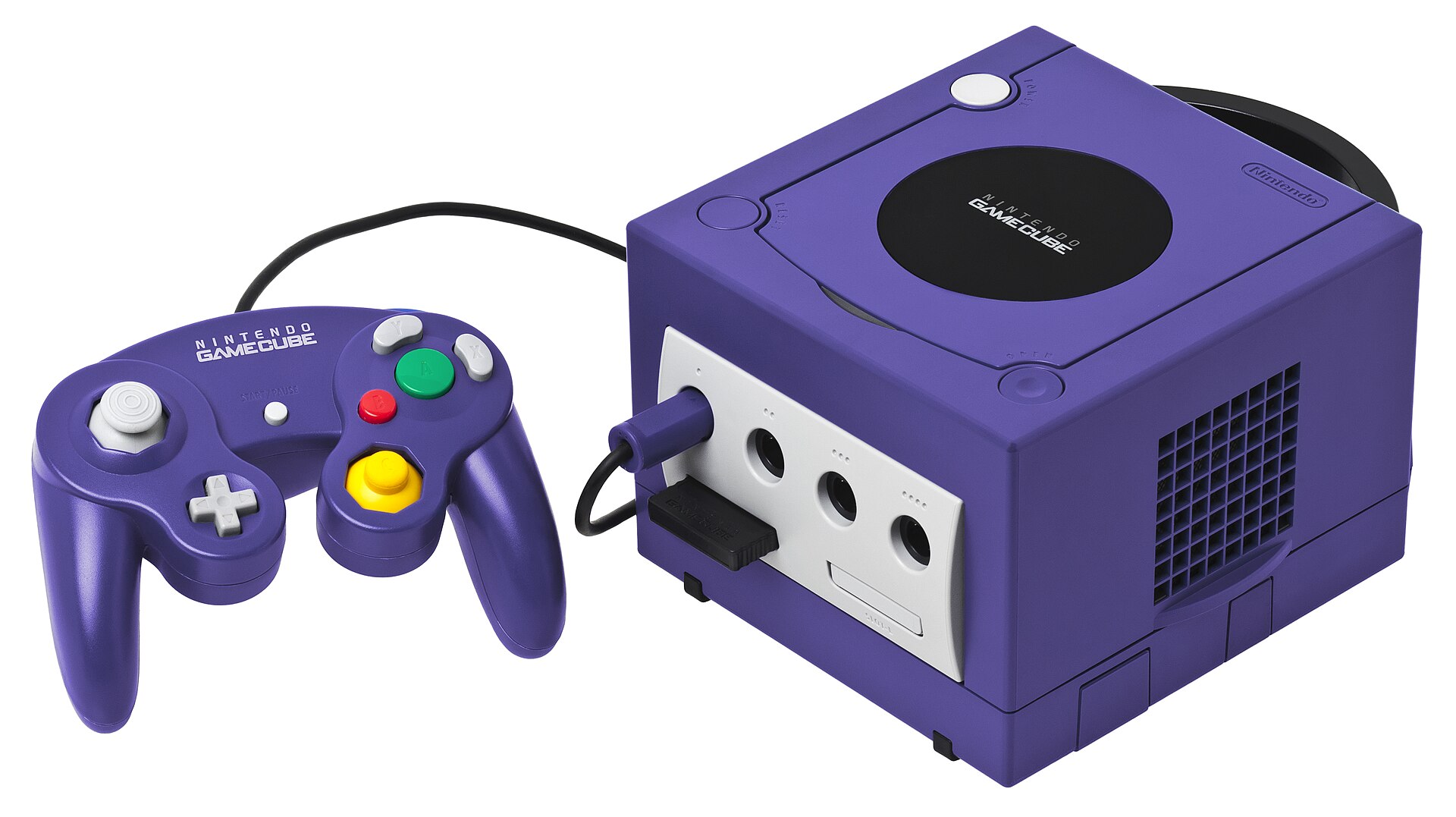
To understand why anyone would rebuild this game in a modern engine, you have to remember what it was in the room. Destroy All Monsters Melee launched on GameCube in North America on October 15, 2002, developed by Pipeworks and published by Infogrames under the Atari brand. The setup is pure Toho Saturday matinee: the alien Vortaak seize control of Earth’s giant monsters and set them on the world’s cities, and one monster — yours — breaks free and fights the rest of the roster back to their senses. Underneath the licence sat a fighting system with genuine ideas: fully destructible city arenas where buildings weren’t scenery but ammunition, a military that shoots at everyone impartially, and a mode list built for a sofa — Adventure, Destruction (demolish the city for points, a mode so honest about the fantasy it hurts), Survival, Team Battle, and a two-to-four-player Melee that turned friendships briefly into property disputes.
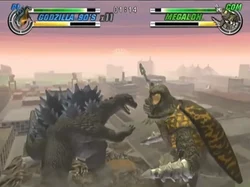
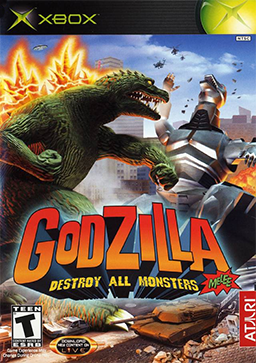
The roster was the other half of the magic: eleven unlockable monsters on GameCube — both a ’90s and a 2000 Godzilla, Anguirus, Megalon, Gigan, King Ghidorah, Destoroyah, Rodan, Orga, Mecha King Ghidorah and Mechagodzilla 2 — with the Xbox version in April 2003 adding a twelfth, Mechagodzilla 3, plus extra stages and polish. Critics at the time were split in an instructive way: IGN adored it (8.4 on GameCube, 8.5 on Xbox), the aggregate settled at a cooler 73 on Metacritic, Entertainment Weekly complained it “just isn’t campy enough,” and the Academy of Interactive Arts & Sciences still nominated it for Console Fighting Game of the Year — it lost to Tekken 4, which is about as honourable as losing gets. It grossed over $15 million in the US, spawned two sequels (Save the Earth in 2004, Unleashed in 2007) and a WayForward-made GBA companion, Godzilla: Domination! — and then, like so many licensed GameCube games, it fell into the licensing void: too beloved to forget, too rights-tangled to re-release. Until now.
Rebuilt, not ported
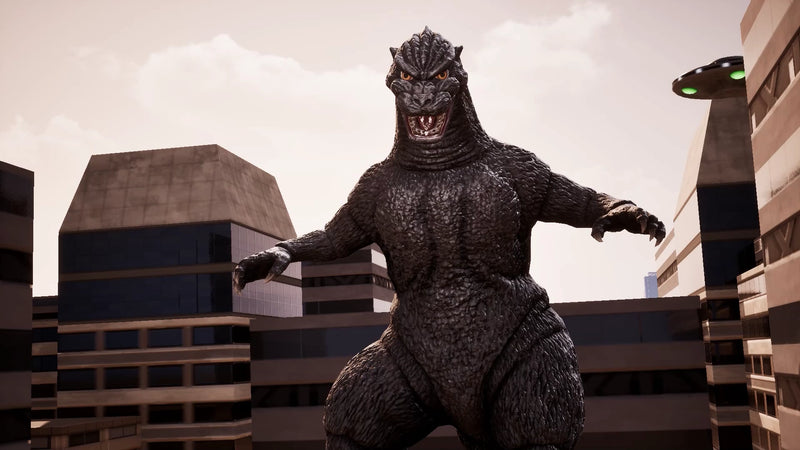
Atari and Pipeworks announced the remaster on June 6, 2026, and the detail that separates this project from the usual retro cash-in is the word “rebuilt.” Rather than emulating or porting the 2002 code, Pipeworks reconstructed the game in Unreal Engine 5, holding onto the original’s mechanics — the grapples, the throws, the building-as-projectile combat, the Rage Mode special strikes — while replacing everything the eye touches. A free Steam Next Fest demo in October let players take Godzilla, Gigan and King Ghidorah out early, and the reports from that build matched the promise: this feels like the game you remember, drawn the way you remember it rather than the way it was. That’s the heaviest lift in any remaster of a multiplayer game, because what a room full of friends is actually nostalgic for is timing and weight, not polygons. Keep the timing, redraw the polygons. Pipeworks, having invented the timing, was always the right studio to attempt it.
What Godzilla Destroy All Monsters Melee Remastered actually changes
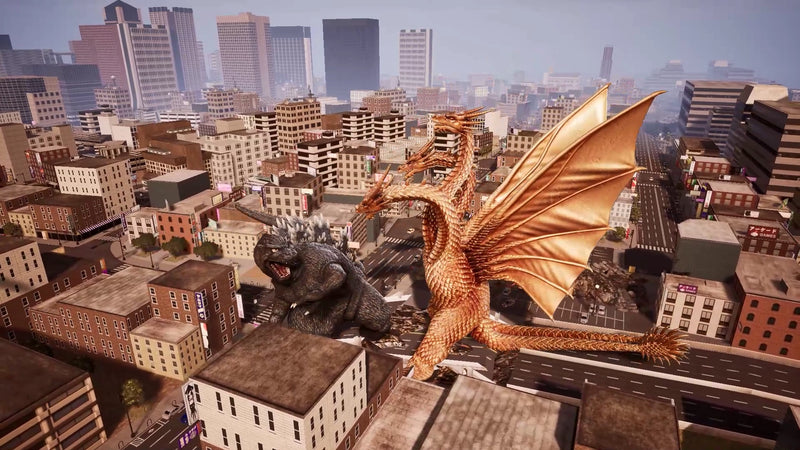
The spec sheet, verified against Atari’s own product page: twelve playable monsters, as the Xbox version had — with one roster edit that will start arguments, the original Showa-era Mechagodzilla replacing Mechagodzilla 2. Eight locations, each with day and night variations, running from real-world cities to Monster Island and the Vortaak Mothership. Every monster mixes melee combos, ranged energy blasts and a Rage Mode strike, and the arenas stay strategic: buildings can be weaponised, landmarks hurled, and the environment is a combatant, not a backdrop. The quality-of-life layer is where 2026 really shows: the unlock system has been rebuilt so monsters, locations and gallery items can be unlocked in any order you choose — a direct answer to the original’s grind-through-Adventure-with-everyone structure. And the headline addition: online multiplayer joins the local versus and Melee modes, so the four-player sofa chaos finally survives your friends moving to different postcodes. Physical editions sit alongside the $29.99 digital release — Atari’s own store lists a PlayStation 5 disc at the same $29.99 and a Nintendo Switch 2 full-cartridge edition at $39.99 — for those of us who still believe a kaiju game belongs on a shelf.
The honest caveats
Now the part where we earn the “not a review” label by telling you what the actual reviews say. The first wave, landing November 2, is warm with a wince: the rebuilt visuals and the core arena destruction are drawing genuine praise, while more than one critic has flagged that some of the 2002 game’s stiffness came across in the rebuild — mechanics that probably should have stayed in the early 2000s, in one review’s phrase — and roundups have noted grumbling about unlock grind despite the new system. That combination is, frankly, the most believable early signal a remake like this can produce: it suggests Pipeworks really did preserve the original game rather than sanding it into a modern brawler wearing a Godzilla skin, for better and for worse. If you loved the original, “for worse” is doing very little work in that sentence. If you bounced off it in 2002, wait for our scored review and the deeper post-launch coverage before you spend.
Should you stomp back in?
At $29.99, the maths is friendly. This was the GameCube party game that wasn’t Smash Bros. or Mario Kart — the one pulled out when the room wanted something dumber and louder and more destructive — and it has been legally unavailable in any form for over two decades, on hardware an entire generation of players never owned. The remaster’s pitch is narrow and honest: the same monster roster (with one swapped robot), the same collapsing cities, the same four-player nonsense, now in Unreal Engine 5, with online play and unlocks that respect your evening. For GameCube nostalgists and couch-multiplayer households, that’s an easy yes at this price. For everyone else, it’s a cult classic with its working parts finally showing — and showing them in public, on modern machines, for the first time since the Bush administration.
Godzilla Day comes round every November 3. This year, for the first time in twenty-four years, the King of the Monsters’ best game is actually in the shops for it. Stomp responsibly.