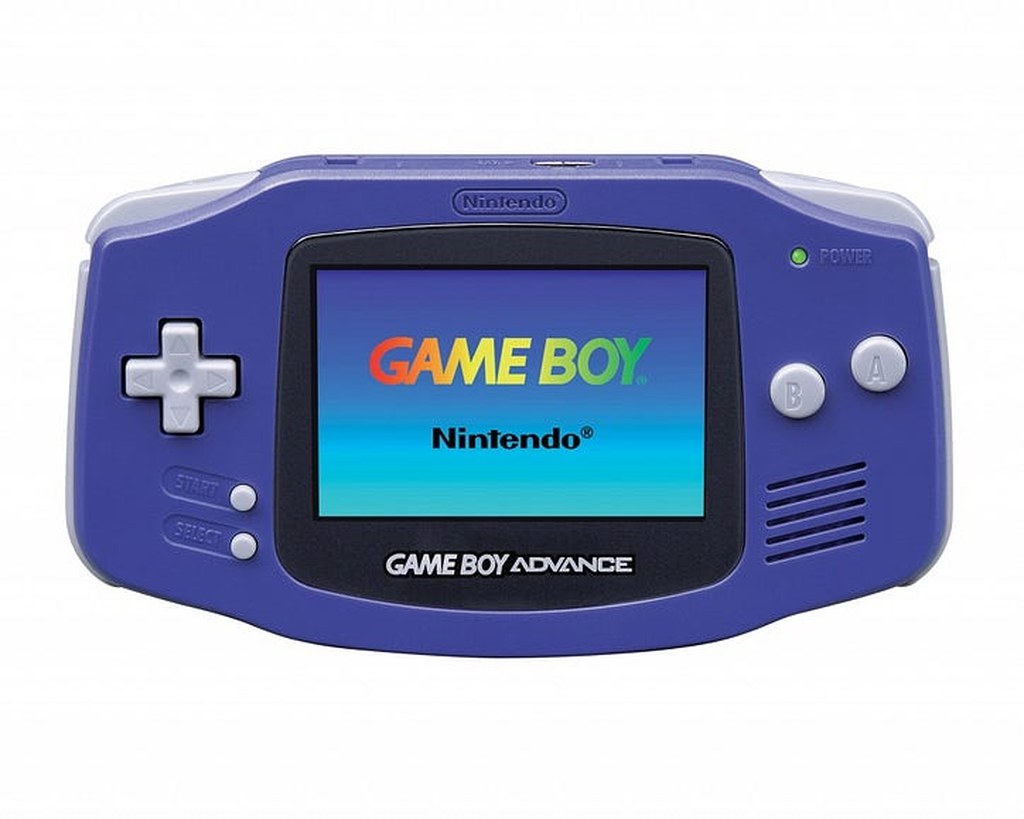
The Game Boy Advance is not one machine. Between 2001 and 2005 Nintendo sold three distinct designs — the original, the clamshell SP in two screen variants, and the tiny Micro — plus a family of cables, readers and oddities that turned a handheld into a multiplayer hub and even a GameCube controller. Choosing between them today is the first decision every GBA buyer faces, and it is really a decision about light: none of this is confusing once you understand how each model lights its screen. This guide covers the hardware honestly and qualitatively — what each version does, what to watch for, and which accessories actually matter. No prices: the market moves too fast for printed numbers to stay honest.

The original GBA (2001): the comfortable one with the dark secret
The launch model — model AGB-001 — is a wide, curved, two-AA-powered handheld with the best ergonomics of the family: proper shoulder buttons, a roomy grip, a headphone jack, and a 2.9-inch reflective colour screen. That screen is the catch. The original GBA has no light of any kind; its reflective display needs a strong external light source angled just so, which is why a generation of players has memories of passenger-seat streetlight gaming and worm-light accessories. In good light the picture is crisp and the colours true. In normal indoor light it is famously, sometimes unusably, dim. Its afterlife is therefore as a modding platform: the shell, controls and board are the foundation for the thriving backlit-screen mod scene, and an original GBA fitted with a modern IPS display is many enthusiasts’ favourite way to play. Buying advice, qualitatively: buy it for the shape and the modding potential, not for the stock screen — or bring a lamp and low expectations.
The SP (2003): the clamshell, and the AGS-001 vs AGS-101 question
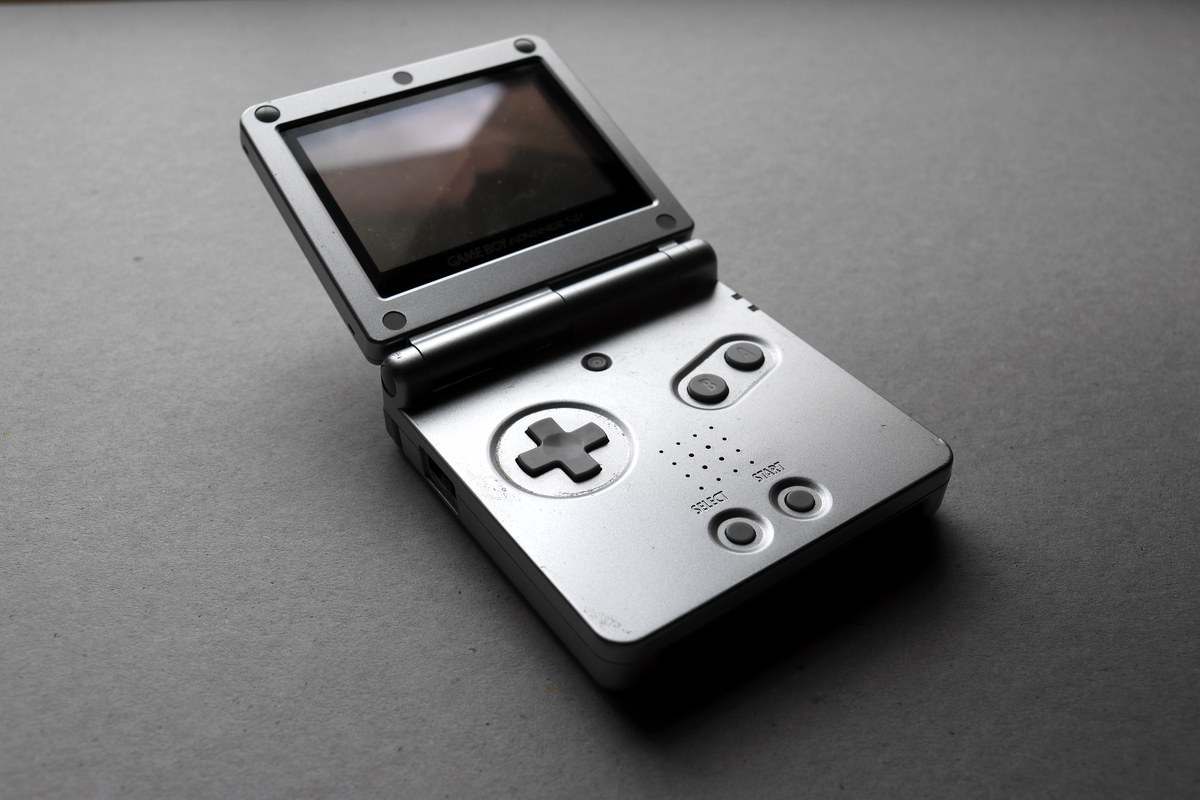
The Game Boy Advance SP (2003) folded the machine in half: a pocketable clamshell that protects its own screen, runs on a built-in rechargeable battery, and added the family’s first built-in light. It also removed the headphone jack — audio needs a dongle through the charging port, the SP’s one notorious annoyance. But ‘the SP’ is really two machines, and telling them apart matters more than any other fact in this guide. The original SP, model AGS-001, is front-lit: a light washes over the screen from the front, hugely better than darkness but with washed-out colours and uneven brightness. The later revision, model AGS-101 (sold from 2005, often in brighter colour editions), is back-lit: a true, even, vivid display that makes GBA games look the way their art always intended, and which most collectors consider the finest stock screen Nintendo ever put in the line. How to tell: the model number is printed on the back label — check before you buy, because listings confuse the two constantly. The AGS-101’s screen is brighter in every sense; the 001 remains perfectly playable and historically was the one most children actually owned.
The Micro (2005): the jewel
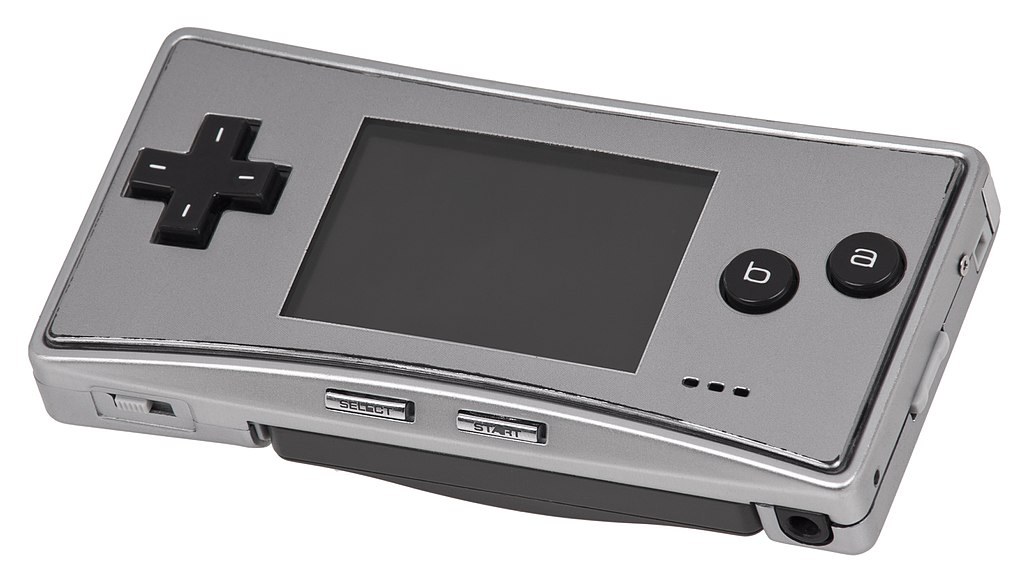
Nintendo’s final Game Boy, the Game Boy Micro (2005), shrank the Advance to the size of a candy bar: a tiny 2-inch backlit screen of exceptional sharpness and brightness, a metal body, swappable faceplates, and the best pixel density of the family — games look jewel-like on it. The compromises are equally clear. It plays only GBA cartridges (the SP and original also play Game Boy and Game Boy Color games; the Micro does not), its controls are small for adult hands over long sessions, and its link port is a different, smaller connector needing its own cables and adapters. As a collector’s object and a pocket carry, it is unmatched; as an only GBA, its incompatibility with the older library is a real cost. Know which buyer you are.
Playing on the TV, linking up, and reading cards
The accessories define the GBA’s social history. The GameCube Game Boy Player (2003) is the official route to the big screen: a base unit under the GameCube that plays GB, GBC and GBA cartridges on a television with a GameCube controller — the way many players prefer the library today. The Game Link Cable family enabled the era’s multiplayer: four-player games on titles like Mario Kart: Super Circuit and Advance Wars, trading and battling in Pokémon, and the GameCube-GBA cable that made the GBA a controller and second screen for GameCube games (the connection behind The Legend of Zelda: Four Swords Adventures and Final Fantasy Crystal Chronicles’ multiplayer). A Wireless Adapter, bundled with Pokémon FireRed and LeafGreen, briefly cut the cord for supported games. And then there is the e-Reader: a bulky cartridge-slot scanner that read data encoded in dot codes on trading cards — unlocking levels in Super Mario Advance 4, minigames, items for Animal Crossing on GameCube and more. It is the family’s strangest peripheral, a paper-powered DLC system from before DLC, and cards remain collectible in their own right; compatibility and card availability vary by region, so research before hunting one.
One clarification before the extras, because listings blur it constantly: ‘front-lit’ and ‘back-lit’ are not marketing synonyms. On the AGS-001, the light sits in front of the LCD and reflects back at you — visibility solved, contrast taxed, colours pale at the edges. On the AGS-101, the light sits behind the panel and shines through it — the image is luminous rather than illuminated, closer to how the games look in emulation on a modern screen. Players raised on the 001 remember the SP fondly and are not wrong to; players choosing today, with both models circulating at once, should simply know which experience a given listing is actually selling. The same caution applies to ‘IPS-modded’ machines sold complete: quality varies with the kit and the installer, which is an argument for the established sellers and community guides rather than against the practice.
Batteries, power and the link-cable drawer
Power tells the family’s story in miniature. The original GBA runs on two AA batteries for a long, honest stretch of play (period estimates put it in the mid-teens of hours, varying with volume and game), which makes it the easiest model to keep alive forever — rechargeable AAs are its eternal fuel. The SP introduced Nintendo’s handheld rechargeable era with a built-in lithium pack behind a small screwed cover; the Micro followed with its own smaller cell. Both are replaceable today with basic tools, and replacement packs are a normal part of SP and Micro ownership rather than a repair event — though a battery that has swollen enough to bulge the cover is a battery to remove and recycle promptly, not to charge and hope about. Chargers: the SP and Micro use different connectors from each other, and the SP’s charger also fits the original-model Nintendo DS — a useful cross-compatibility when hunting spares.
The link drawer deserves a paragraph, because GBA multiplayer is a small archaeology of cables. The standard Game Link Cable serves two players; a four-player variant (with its daisy-chain hubs) serves titles built for four — Mario Kart: Super Circuit, Advance Wars and the Pokémon games among them. GameCube owners used the dedicated GBA-to-GameCube cable, which is a different plug again, and the Micro’s smaller link port means Micro multiplayer needs the Micro-specific link cable or adapters — the single most common surprise for new Micro owners. The Wireless Adapter, meanwhile, only works with the games written for it (Pokémon FireRed, LeafGreen and Emerald headline the list), so a drawer full of adapters is not a universal key. None of this is complicated once seen in a list; all of it is baffling if discovered one eBay parcel at a time.
Screens, mods and the modern middle path
Finally, the option this guide has circled since its first paragraph: modification. The GBA modding scene is mature and mostly reversible-friendly — drop-in and soldered IPS screen kits for the original model and SP, replacement shells, USB-C battery conversions and audio upgrades are all established crafts with deep community documentation. A modded original GBA (that shape, that headphone jack, a modern backlit screen) is many veterans’ endgame machine, and an unmodded AGS-101 remains the purist’s. Neither answer is wrong; the wrong answer is buying an AGS-001 at AGS-101 expectations because a listing said ‘backlit SP’. Check the model number on the back label, every time — it is printed right there, and it is the most valuable sentence in GBA collecting.
The e-Reader deserves one more honest paragraph, because it is the accessory most often bought on nostalgia and least often used. Its dot-code cards are region-specific in practice (cards and readers were sold for Japanese and North American markets, with a limited European presence), the scanning itself is a learned knack — a smooth, even swipe at the reader’s pace — and the content unlocked is mostly delightful miniatures rather than essentials: extra levels for Super Mario Advance 4 are the headline act and the main reason the hardware still changes hands. Treat it as a collector’s instrument and a piece of gaming history you can operate, not as a library expansion, and it will not disappoint you. The same realism applies to the Game Boy Player’s start-up disc, which the Player requires and which should be part of any complete-unit listing you consider — a Player without its disc is a paperweight with potential.
Region freedom deserves one final underline, because it shapes collecting strategy for the whole family: every GBA model plays every GBA cartridge from every territory, and the older Game Boy and Game Boy Color libraries (on the models that support them) are likewise region-free. A Japanese copy of a game that never left Japan, a European variant with a different print run, a North American staple — all of them simply work, in any machine, which is more than can be said for most of the GBA’s contemporaries and one more reason its library remains so pleasantly hunt-able today.
Caring for the machines, and choosing yours
Practical notes that apply across the family: cartridge slots and game contacts respond well to isopropyl alcohol and patience; SP and Micro batteries are replaceable with a small screwdriver when they swell or fade — a swollen SP battery is a stop-using-it signal, not a quirk. Screen lenses on SPs scratch in pockets despite the clamshell, and Micro faceplates scuff; both are cosmetic, not fatal. The GBA library itself is region-free, so Japanese and European cartridges and hardware mix freely — a real advantage for import gems. So which should you choose? For an unmodified, play-it-tonight machine, the AGS-101 SP is the default answer: lit, pocketable, compatible with everything. For comfort and modding, the original with a modern screen. For beauty and pocketability above all, the Micro — accepting its GBA-only diet. For the television, a Game Boy Player. Whichever you pick, you are buying into the deepest handheld library of its era, and every model in this guide will play all of it. Choose your light, and start.