Everyone knows the Game Boy Advance canon — the Marios, Zeldas, Metroids and Castlevanias. This list is for the second shelf: ten real GBA games that sold modestly, reviewed well or vanished entirely, and still play brilliantly today. Every entry below is a genuine Game Boy Advance release, chosen for depth over fame — you will find no borderline-canon picks filling space. Some are expensive curiosities now; some are still cheap. All of them deserve an afternoon of your life.
A note on method before we start: a hidden gem, for this list, means a game whose quality wildly exceeds its fame — not a masterpiece everyone already owns under a different name. That is why you will not find Kirby & the Amazing Mirror here (a fine game, but a Kirby), nor the GBA’s celebrated ports and remakes. These ten are the discoveries: the games passed hand to hand, the imports, the late releases, the licensed miracle and the rumble cartridge. Where a game is Japan-only or region-skewed, we say so — the GBA is region-free, which makes this entire list unusually playable.
1. Drill Dozer
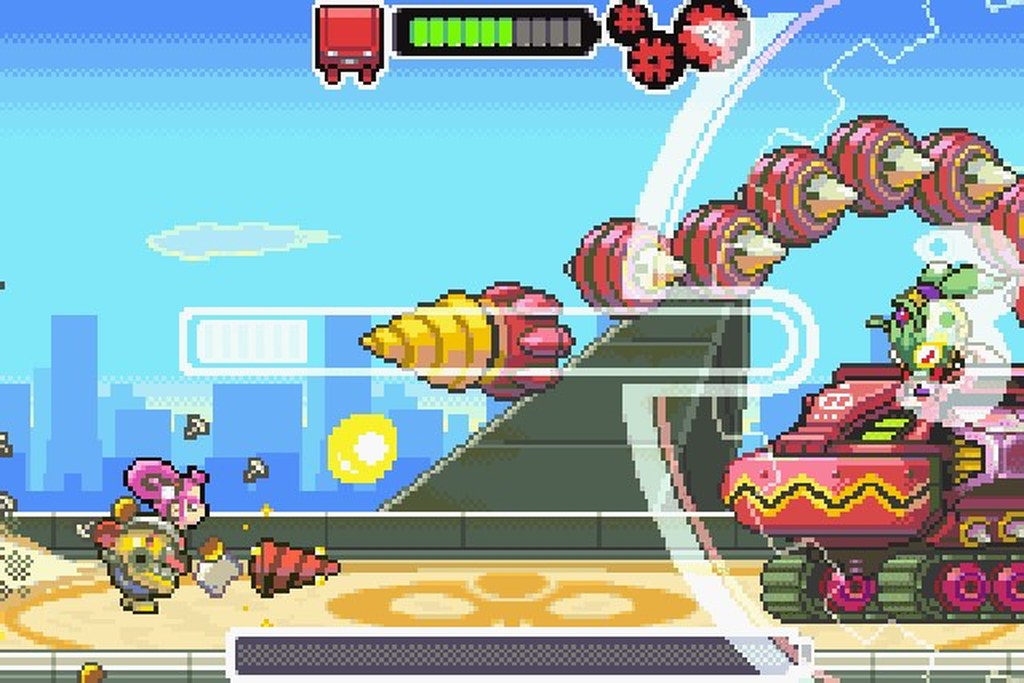
Game Freak — yes, the Pokémon studio — made this inventive platformer in 2005, and it is the most tactile game on the GBA. You play Jill, a young thief whose vehicle is a walking drill mech, and the cartridge itself rumbles: the drill is worked with the shoulder buttons, shifting up through gears as it chews through walls, enemies and entire levels. Drilling is movement, combat, puzzle-solving and lock-picking in one mechanic, explored with a designer’s glee — levels are built to be shredded. It underperformed commercially and became a cult object, complete with its chunky rumble cartridge. If you try one game from this list, try the one where the controller shakes back. It helps that the game around the gimmick is excellent even with the rumble ignored: a generous campaign of drilling set-pieces, boss fights against rival gangs, hidden gears that upgrade your drill’s top speed, and a script (Game Freak letting its hair down) about a family of gentleman thieves drilling a crime syndicate out of business. The Red Dozer deserves a comeback.
2. Astro Boy: Omega Factor
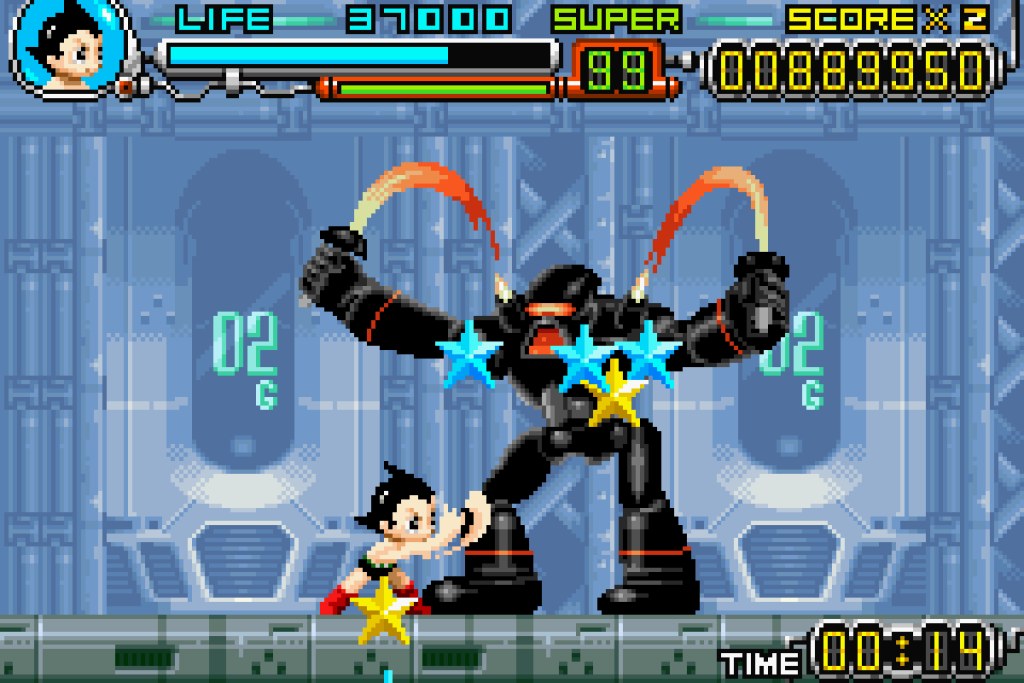
Treasure and Hitmaker teamed up for this 2003 (Japan) / 2004 (West) action game, and it may be the best licensed game on the system. A fast, combo-happy brawler-shooter hybrid, it wraps Tezuka’s entire universe into one story — characters from across his manga appear — and hides its masterstroke in plain sight: the first playthrough is only half the game. A second loop recontextualises the story, demands you find every hidden character to complete the ‘Omega Factor’ heart system, and unlocks the true ending. Tight, generous and replayable — everything a Treasure game should be. The beat-’em-up fundamentals are superb in their own right: Astro’s dash, double jump and screen-clearing super moves chain into juggles that fighting-game players will recognise, enemies are placed to be styled on rather than endured, and the difficulty is tuned to Treasure’s house standard — fair, firm, and thrilled to kill you if you get casual. That it is also a love letter to sixty years of manga is the bonus, not the excuse.
3. Ninja Five-O

Konami’s 2003 action-platformer casts you as a ninja detective — the premise alone deserves respect — rescuing hostages and cutting down terrorists across banks, airports and trains. Its grappling hook is the star: swing, climb and dive with momentum physics that make every room a playground, in the lineage of Bionic Commando and Shinobi at their best. Small print run, word of mouth forever: original cartridges are famously scarce, which is exactly why it belongs on a list like this rather than a sales chart. Short, exacting and superb. Its five-stage structure hides real depth: hostages to rescue in every room (with rankings that grade your mercy as much as your speed), a time-attack culture that grew around its grapple routes, and boss fights that test the hook rather than your health bar. It was developed by Hudson Soft and published by Konami with almost no marketing — the kind of game that became legendary precisely because the few who found it could not stop talking about it.
4. Boktai: The Sun Is in Your Hand

Hideo Kojima’s GBA experiment came in a cartridge with a real solar sensor, and its vampire-hunting hero Django literally charges his solar gun with the sun over your shoulder. Stealth-action dungeons by night are only half the deal: defeated vampires must be dragged back to a sunlight pile-driver and purified outdoors, in actual daylight, with the game’s clock and weather tracking your world. Cloudy-day workarounds and moonlit cheating are part of its folklore. No other game on any system has asked so much of the sky. Play it on a bright afternoon, as intended, and it is magic. Practical notes from its devoted players: the sensor wants real sunlight, not a desk lamp, and the game’s adventure is a substantial one — isometric stealth dungeons, a day-night structure, and a story that takes its gothic material surprisingly seriously for a game you play outdoors. Two sequels followed (the second also solar, the third — Lunar Knights, on DS — reworked the idea for a new machine). The original remains the purest expression of Kojima’s strangest good idea.
5. Car Battler Joe

Ancient (the studio co-founded by Yuzo Koshiro) fused a top-down vehicular combat game with a full RPG in 2001 (Japan) / 2002 (West): drive an armed car between towns, take jobs, duel rival drivers in arena-style battles, and spend winnings on parts that visibly rebuild your machine. It plays like a lost SNES-era hybrid — a little Twisted Metal, a little Final Fantasy — with a garage system deep enough to plan builds around. Almost nobody played it. Almost everybody who did remembers it. That is the definition of a hidden gem. Its structure rewards the garage-tinker brain in a way few GBA games attempt: parts have weight, tyres have tempers, and a build tuned for arena duels sulks on rally stages — so the game keeps you rebuilding, re-testing and re-entering, a pocket-sized loop of the garage-RPG that later series would polish into hits. Ancient were masters of this hybrid warmth (their ActRaiser and Soul Blazer lineage shows in the towns), and Car Battler Joe is their most forgotten good idea.
6. Guru Logi Champ
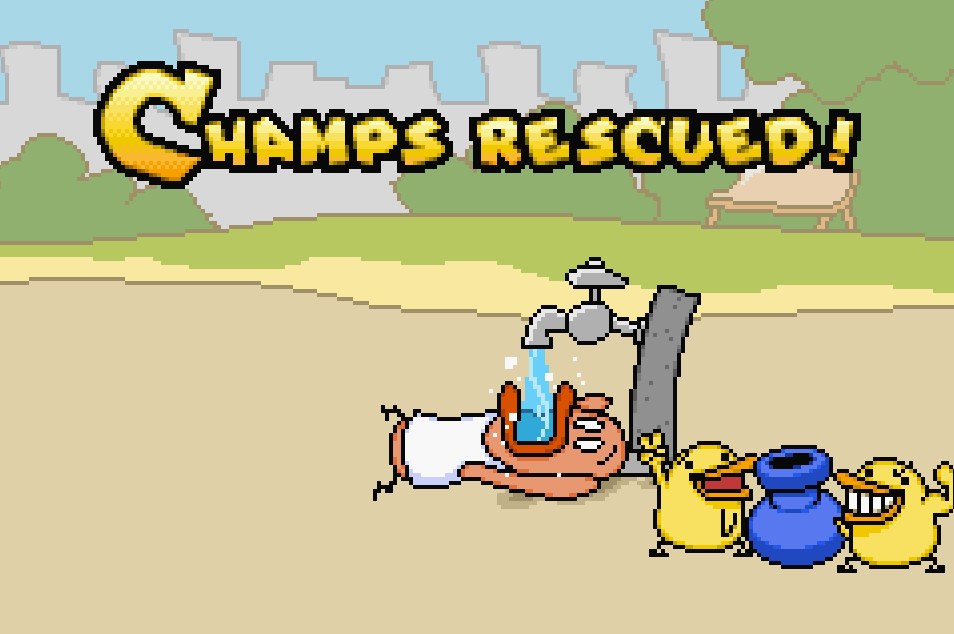
Compile’s Japan-only 2001 puzzler is the connoisseur’s import pick. The idea sounds impossible: you complete pixel pictures by firing blocks from a cannon at a board you rotate in 90-degree turns, with a limited supply and the ability to suck blocks back out — a construction puzzle where gravity is a suggestion and every board is a small logic sculpture. It teaches itself in pictures, needs almost no Japanese to enjoy, and delivers that specific Compile cleverness that Puyo Puyo fans will recognise instantly. The GBA’s region-free nature makes this the easiest import on the list to actually play.
7. Kuru Kuru Kururin

A launch title in Japan and Europe (2001) that never reached North America on GBA, Kuru Kuru Kururin gives you one job: pilot a constantly rotating stick — the Helirin — through mazes without touching the walls. That is the entire game, and it is magnificent: a study in spatial judgement and nerve, with springs that change your spin, levels that demand you plan three rotations ahead, and a difficulty curve that goes from nursery to nightmare with total fairness. It later reached Western players through Nintendo Switch Online, but the original cartridge, with a link cable and a friend, is the purest form of a perfect idea. It also has one of the GBA’s sneakiest multiplayer modes — up to four players racing the same corridor with one cartridge among the connected systems in its home regions — because a game about watching a stick spin should, of course, be suffered socially. Its sequels added tilting and polish; the original’s minimalism remains the purest cut.
8. Lady Sia
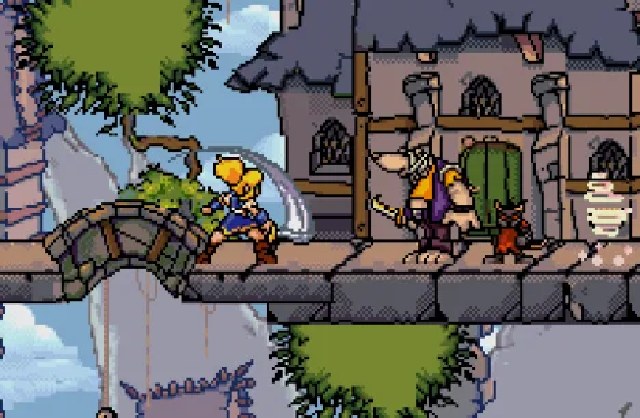
This 2001 action-platformer from RFX Interactive stars a warrior princess fighting to free her kingdoms, and it stands out for sheer craft: big, fluidly animated sprites, shapeshifting animal forms, sword combat with a satisfying weight, and levels that mix exploration with set-piece escapes. It reviewed respectably and was promptly forgotten by a launch-era market drowning in mascot platformers — which makes rediscovering it now a genuine pleasure. It feels like a lost Amiga classic reborn on stronger hardware, and in the best way.
9. CT Special Forces
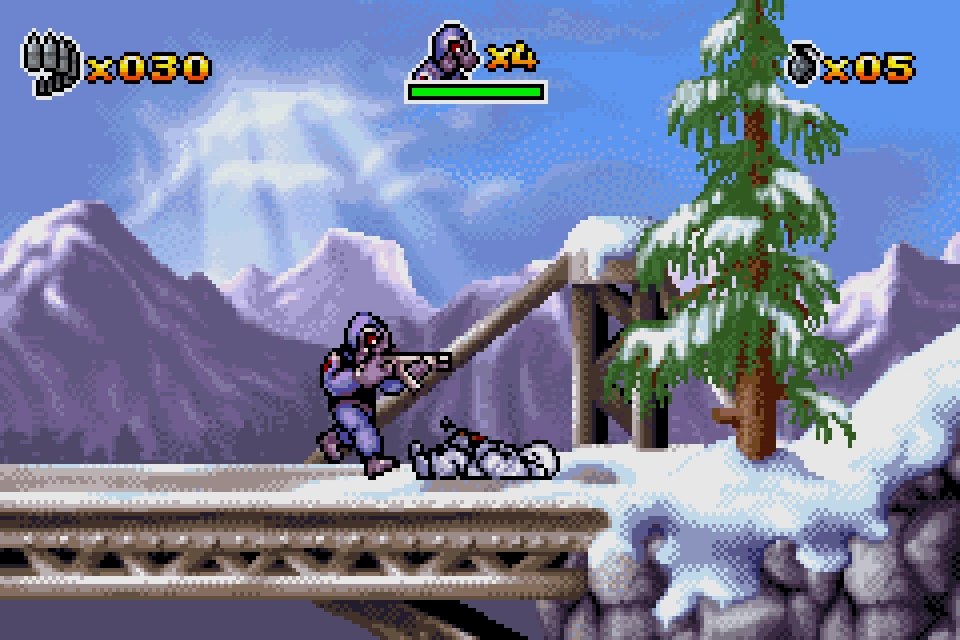
European studio Light & Shadow Productions made this 2002 run-and-gun as an unabashed love letter to Metal Slug, and the homage is in the pixels: richly animated soldiers, vehicles to commandeer, sniping sections, parachute drops and screen-filling explosions, all drawn with a detail level that pushes the GBA hard. It reviewed well in Europe, barely registered in North America, and plays today like the handheld Metal Slug SNK never made. Two sequels followed; the original remains the purest shot of arcade adrenaline on this list.
10. Rebelstar: Tactical Command
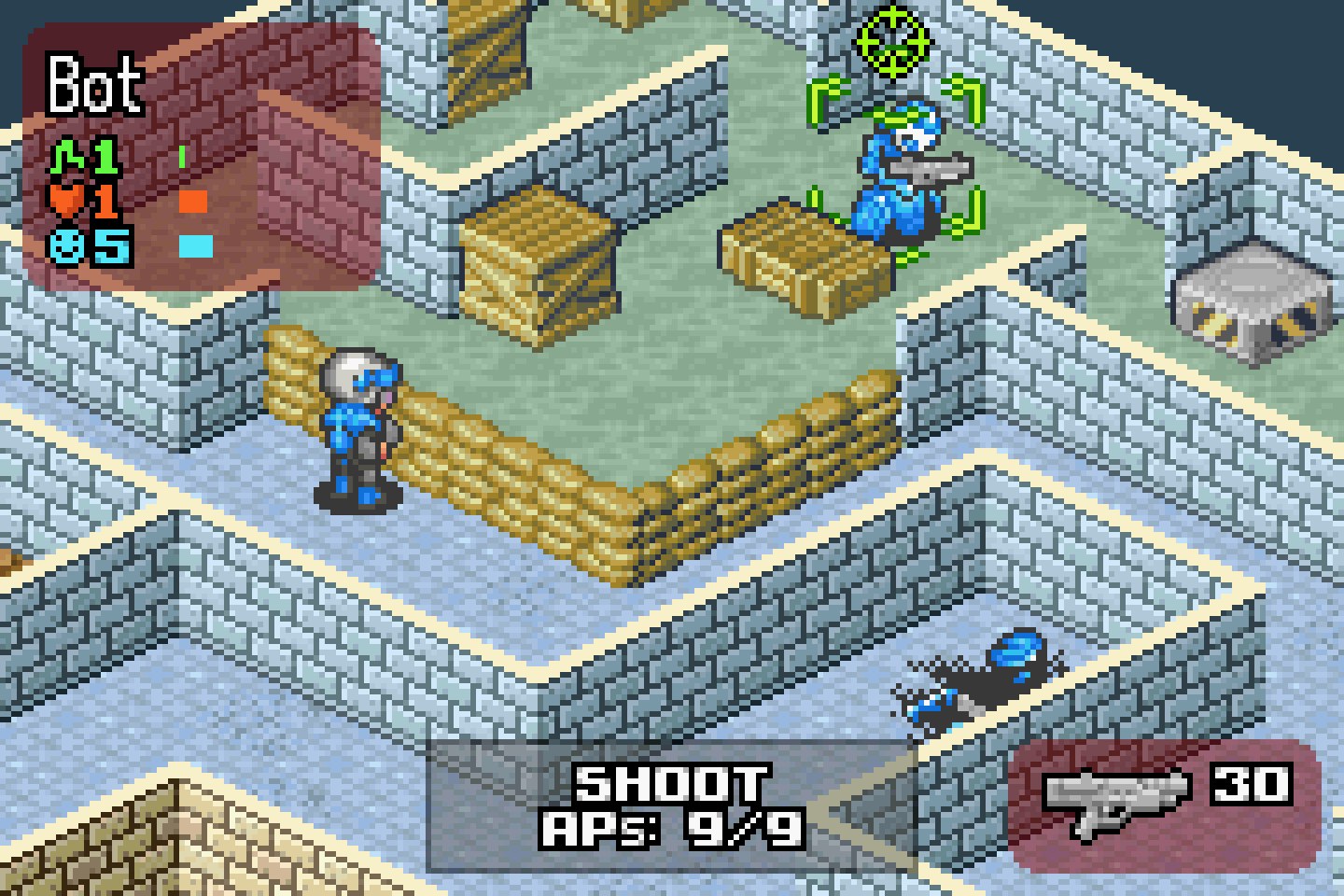
Julian Gollop — co-creator of X-COM — made a turn-based tactics game for the GBA in 2005, and Rebelstar is exactly what that pedigree promises: a squad of human rebels against alien overlords, with action points, overwatch, destructible cover, line-of-sight done honestly and a campaign that teaches X-COM’s eternal lessons (never end a turn in the open) to a handheld audience. It arrived late in the GBA’s life to modest attention and deserves its cult entirely: this is genuine, deep tactics design from one of the genre’s inventors, in your pocket.
Honourable mentions from the third shelf
Ten slots force hard cuts, so spare a thought for the near-misses: Summon Night: Swordcraft Story, Atlus’s action-RPG about crafting weapons and the partners bound to them; Gunstar Super Heroes, Treasure’s beautiful, divisive sequel; Mario Golf: Advance Tour, secretly a full Camelot RPG wearing golf clothes; Sigma Star Saga, a shmup-RPG hybrid years ahead of its genre-mashing time; and Racing Gears Advance, an isometric racer of real quality. Any of them could headline a second list — which is, in the end, the point of this one.
One pattern runs through all ten picks, and it is worth naming before you go hunting: the GBA rewarded small teams with strange ideas. A solar sensor, a rumble motor, a grappling hook, a rotating stick — the system’s modest hardware and huge audience made it the last mainstream platform where a five-person experiment could ship in a box at retail. That ecosystem is exactly what this list is really documenting. The canon tells you what the GBA was famous for. The second shelf tells you what it was like.
The second shelf awaits
Ten games, ten different arguments that the Game Boy Advance’s library runs far deeper than its canon. Hunt them as original cartridges if you collect, import the region-free Japanese and European releases freely — the GBA never locked its games by territory — and give the second shelf the hours it has been waiting twenty years for.