At a glance: Gears of War · Xbox 360 · Epic Games / Microsoft Game Studios, 2006 · Third-person cover shooter · Score: 9.0/10
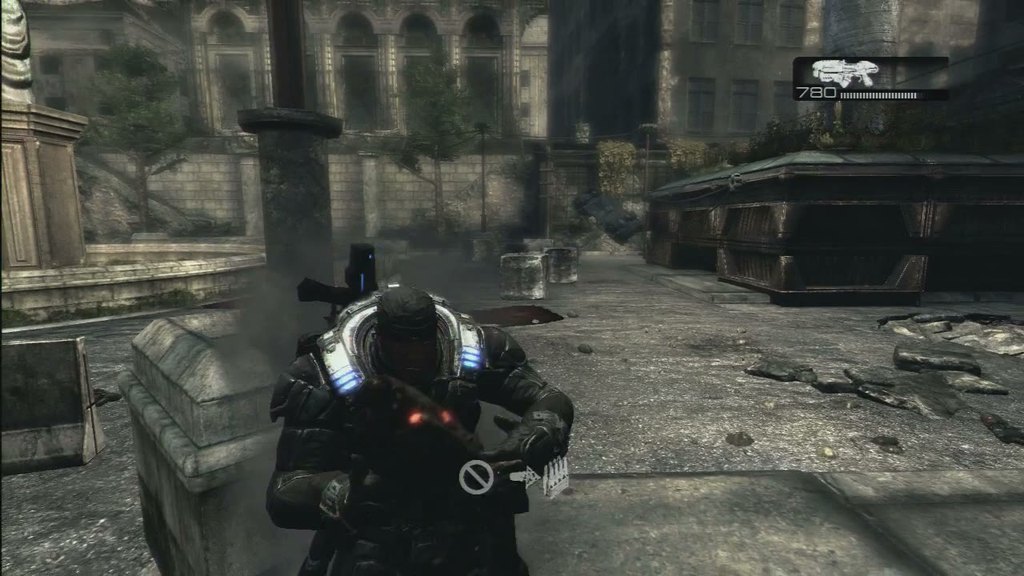
In November 2006, Gears of War was the Xbox 360’s first true system-defining game — the one that showed what “next generation” actually meant. The ruined gothic cities of Sera, the chainsaw bayonet, the active reload, Marcus Fenix growling through a throat full of gravel: it arrived as a complete aesthetic, a complete vocabulary, and within months virtually every third-person shooter on the market was copying its homework. Playing the original today, stripped of two decades of imitators, what surprises is how lean and strange it still is. This is a heavy metal album cover of a game, and it absolutely rips.
Emergence Day plus fourteen
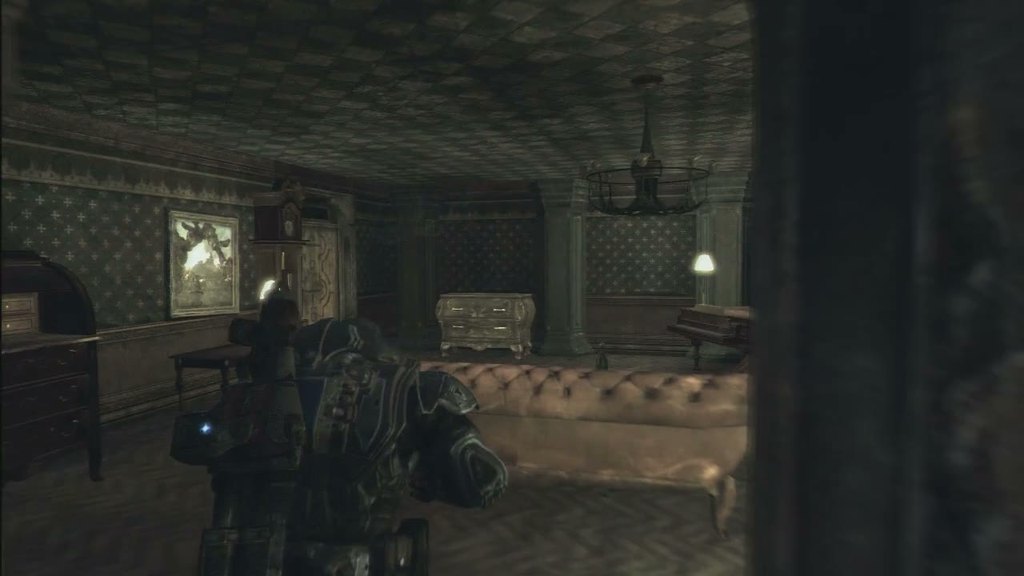
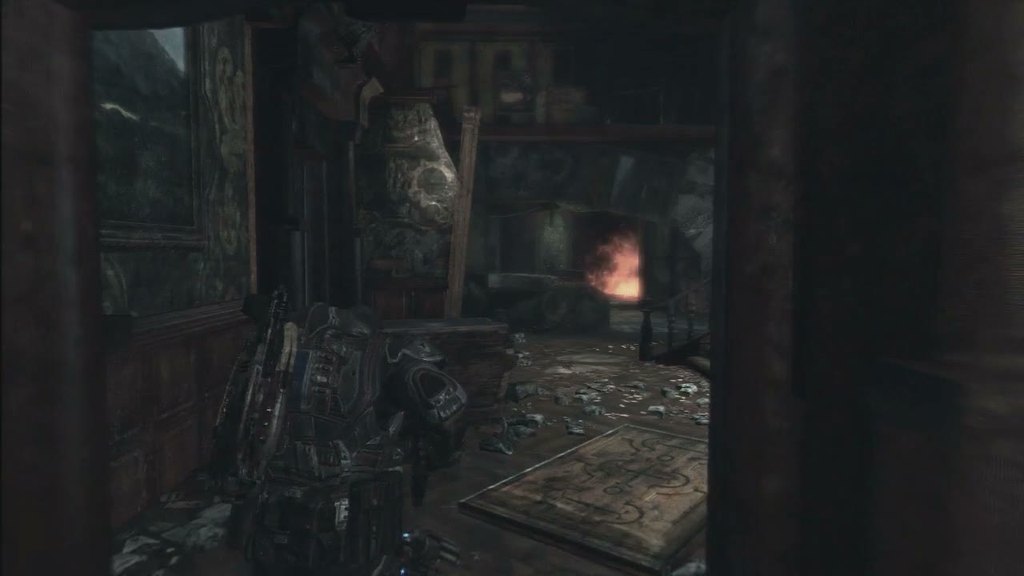
The setup is pulp in the best way. Fourteen years after the Locust Horde burst from beneath the planet Sera and killed a quarter of humanity in a day, disgraced soldier Marcus Fenix is busted out of prison by his best friend Dom Santiago to rejoin Delta Squad on a suicide errand: deploy a resonator, map the Locust tunnels, and drop a Lightmass bomb into them. The campaign moves through a superbly judged sequence of set pieces — a prison break, a burning city’s night streets patrolled by light-fearing Kryll, a stranded mining town, a mansion under siege, and a final runaway train sequence that ends with one of the great boss fights of the generation against the enormous, bullet-sponge nightmare General RAAM.
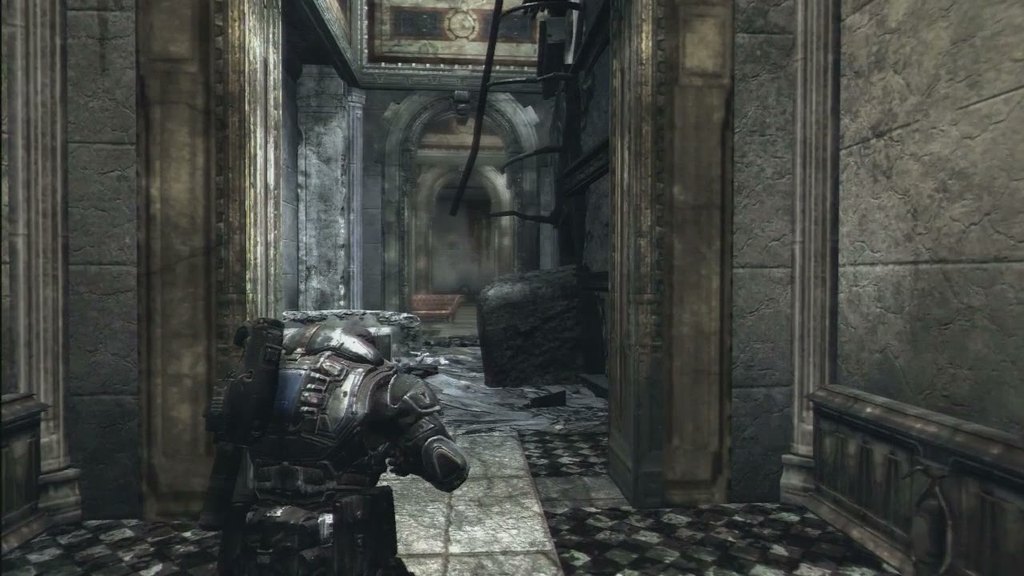
It is worth remembering how little exposition the game bothers with. You’re told almost nothing about the Pendulum Wars, Imulsion or the Locust’s origins; instead the world is sold through its art direction — grand neoclassical architecture shredded by war, all rendered in the then-mind-blowing Unreal Engine 3. In 2006, nothing on a console looked like this: the rain-slicked streets, the dust, the sheer material density of every shattered wall. The 360 had found its showpiece.
The cover system that ate a genre
Gears’ core invention is the way it treats cover not as a hiding place but as the whole grammar of combat. One button sticks Fenix to the scenery with a satisfying thunk; from there you blind-fire, pop up to aim, vault, swivel between pillars, or launch into the roadie run — that hunched, camera-shaking sprint that made simply moving feel like an action scene. Firefights become chess problems at ten paces: Locust Wretches rush your position, Boomers stride through your fire, and the mighty Lancer’s underslung chainsaw bayonet turns any enemy who gets too close into an exclamation point.
The active reload deserves its own sentence in gaming history: time the second button press as the reload bar sweeps its sweet spot and you reload faster with a damage bonus; fumble it and your gun jams while Locust close in. It is a tiny risk-reward loop embedded in an action you perform a thousand times, and it keeps even a reload tense. Add weapons with real character — the one-shot-kill Longshot sniper rifle, the explosive Torque Bow, the Hammer of Dawn orbital strike, usable only outdoors and only when the satellites align — and every encounter offers three different ways to be spectacular.
Co-op, versus, and the two-player rule
Gears was designed around two-player co-op in an era when that was still a statement. Dom is always there — played by a friend in split-screen or drop-in online play — and the campaign makes deliberate use of the pairing: split paths that cover each other, simultaneous sniper posts, one player turning a valve while the other holds the door. The whole game is simply better with a partner, and its structure taught a generation of shooters to build for two.
Competitive multiplayer, by contrast, is a fascinating fossil: small 4v4 team deathmatches on tight maps, no respawns in the headline modes, shotguns ruling the close game and executions as the punctuation. It was enormously influential in its day and remains playable via system link and local play on the disc — the online population has long since migrated to the sequels and the Ultimate Edition remaster, but as a document of 2006 multiplayer design it is superbly preserved here.
Rough edges, honestly noted
Not everything has aged gracefully. The vehicle section — a junker with a UV spotlight, driven through Kryll-infested darkness — was the campaign’s weak link in 2006 and remains so. The friendly AI Dom occasionally wanders into fire with a death wish, and the story’s abrupt ending clearly leans on a sequel that, at the time, didn’t exist. The colour palette, all granite and gunmetal, can blur together in the middle acts. None of this dents the core achievement, but a modern player should know the jewel has scratches.
The game that taught the industry its manners
Measure Gears’ influence by its fingerprints. Within three years of its release, the third-person shooter had standardised around its template almost completely: sticky cover, over-the-shoulder aim, roadie-run sprinting, regenerating health behind scenery, two-weapon limits, co-op as a design pillar rather than a bonus mode. Uncharted built its gunplay on it. Mass Effect rebuilt its combat around it. Even the vocabulary stuck — “cover shooter” is simply the name of the genre Gears founded, the way “Doom clone” once named another. The chainsaw bayonet, meanwhile, became one of the decade’s defining images of what games were: absurd, excessive, and rendered in loving technical detail.
There is also the matter of what it did for the console itself. The 360’s first year had been promising but soft — good games, no landmark. Gears arrived as the first title that made owners of rival hardware genuinely envious, the first demonstration that Microsoft’s machine could host the industry’s cutting edge, and the anchor of the holiday season that established the 360 as the generation’s hardcore machine of choice in North America. Consoles are defined by perhaps three games each. For the 360, this is the first of them.
Playing it now
The original disc remains a handsome way to play: the campaign and all local modes intact, the two-player split-screen co-op exactly as designed. The 2015 Ultimate Edition remaster polishes the visuals and adds chapters, and it is the better choice for a first playthrough in 2026 — but the 2006 original keeps its own claim: the darker, grainier art direction Epic later brightened, the original multiplayer’s stark no-respawn purity, and the simple historical fact of it. This is the disc that started it. On a shelf of 360 games, it belongs in the front row.
The score, defended
Nine, then, and not higher — because the campaign’s brevity, the vehicle act and the abrupt ending are real, and because its own sequel exists to show what the formula looks like with every dial turned up. But let the record show what the nine contains: a genre founded, a console defined, a co-op standard set, and a chainsaw that still, after twenty years of imitations, sounds like the future arriving. Some games on this shelf are better-rounded. None is more consequential.
The verdict
Gears of War didn’t just move the goalposts for shooters — it built the stadium everyone else has played in since.
As the 360’s first defining exclusive, Gears of War holds a secure place in the console’s story, and as a game it remains a muscular, confident, hugely enjoyable cover shooter — best experienced exactly as designed, shoulder to shoulder with a friend on a couch. The chainsaw still revs. The cover still thunks. Sera still burns beautifully.
Score: 9.0/10