
In Japan, the Mega Drive finished third. In America, the Genesis nearly won. Same circuit board, two destinies – and the difference was not the hardware. It was a marketing department that declared war on the biggest company in games, a blue hedgehog running at speeds the other side’s hardware couldn’t draw, a wall of sports games that annexed the American living room, and an attitude – loud, bratty, anti-establishment – that made Nintendo look like your parents. The Genesis is the great underdog story of the console wars: the machine that took Sega from a distant also-ran to, for one shining stretch of the early 1990s, the leader of the American market, outselling the Super Nintendo in the country that mattered most. This is the story of the American campaign – and of the war’s strange end, in which Sega, having fought Nintendo to a standstill, managed to defeat only itself.
The Beachhead: 1989-1990
The Genesis arrived in America in August 1989 with excellent hardware and no story. Sega of America’s early campaign leaned on arcade ports – Altered Beast was the pack-in, a choice that told you everything about a company still thinking in coin-ops – and on licensing coups like the Michael Jackson and Joe Montana deals. Sales were respectable and irrelevant; the NES owned something like nine-tenths of the market, and Nintendo’s grip on retailers and third parties was the grip of a company that had never been challenged. The beachhead years mattered for what they taught Sega: that matching Nintendo title for title was death, that the Genesis’s 68000 processor – a real computer’s chip, the heart of the Macintosh and the Amiga – was waiting for software that showed the speed gap, and that the audience Nintendo served worst was the one aging out of childhood. The teenagers were unclaimed territory. Sega was about to claim them with a hedgehog and a war cry.
Kalinske’s War
In 1990 Sega of America got a new president: Tom Kalinske, the Mattel executive who had built Barbie and Hot Wheels into empires, a man who understood toys, television, and the uses of disrespect. His plan, approved over furious objections from Sega of Japan, had four parts, and each one was heresy. Cut the price. Replace the pack-in with a new mascot game – a blue hedgehog named Sonic, built in Japan expressly to humiliate Mario with speed. Give that game away free by mail to sell consoles. And advertise the difference directly: “Genesis does what Nintendon’t,” a slogan that named the enemy on national television, in an era when competitors were not named at all. Sega’s famous internal research had shown that blindfolded kids picked Genesis games over Nintendo’s; Kalinske turned the playground argument into a media strategy. “Welcome to the Next Level” came later, with pirates and anarchy and a scream. The tone – Sega as the loud friend who snuck you into the good party – was not an accident of advertising. It was the product.

The Machine in the War
“Blast Processing” was a marketing invention, and like all good inventions it pointed at something real: the Genesis’s 68000 ran at 7.6 MHz against the Super Nintendo’s slower, quirkier CPU, and in practiced hands the Sega machine scrolled, sprinted and swarmed sprites in ways that made speed itself a genre. Sonic the Hedgehog, June 1991, was the demonstration – loops, corkscrews, a hero whose impatience was the brand, animated at a pace the SNES’s launch titles couldn’t attempt. The Genesis’s weaknesses were real too: a smaller on-screen colour palette and sound hardware that, beside the SNES’s graceful Sony-designed audio, could sound like a wasp in a jar. America’s verdict was that it didn’t care. The Genesis sold attitude and velocity; its library filled with arcade conversions, shooters with genuine violence, and games that felt smuggled past a censor. Which, once Mortal Kombat arrived in 1993 – with blood, while the SNES version sweated – they literally were. That single difference sold a million Genesis consoles and helped trigger Congressional hearings. Sega’s response to the hearings, the industry’s first ratings system, was the most grown-up move anyone made in the whole moral panic – and it was made by the company that had caused it, as a competitive weapon.
Christmas 1991: The Winter the War Turned
Console wars are decided in December, and December 1991 was the first fair fight. The Super Nintendo had arrived in August with the prestige of the incumbent and a $199 price; the Genesis countered at $149 with Sonic in the box, a hedgehog whose game had spent the summer rewriting expectations at the speed of its own loops. Sega’s mail-in offer and aggressive bundling meant a family could walk out of a toy store with the challenger, its best game included, for fifty dollars less than the champion’s bare console and a Mario game sold separately. The playground arithmetic was merciless and, for once, quantifiable: magazine coverage tilted, rental charts tilted, and the question children asked changed from whether Sega was real to whether Sonic 2 would beat Super Mario World’s sequel-that-wasn’t-coming. Nintendo’s corporate posture – serene, dismissive, above the fray – began to look less like confidence and more like a failure to notice the weather. Kalinske’s team noticed nothing else. They bought television like a toy company in a toy season, aimed every spot at the older brother rather than the child, and let the product’s speed close the sale at the kiosk. By January, the scoreboard no honest observer could spin: the Genesis had won Christmas in America. Wars aren’t won in a month, but they can be lost in one, and Nintendo very nearly lost its home market that winter to a machine its own executives had publicly considered a toy-company fad. The recovery Nintendo mounted over 1992 – price cuts, Street Fighter II exclusivity windows, its own marketing swagger – is the surest evidence of how close the thing came. Sega had wanted a fight. It had gotten a war, and for three Decembers it was, by the only metric the season keeps, winning it.
The Floodgates: Third Parties and the Open Door
Nintendo’s empire ran on control: a lockout chip, a five-games-a-year limit, exclusivity demands, and approval over content. Sega’s counter-offer was a door standing open. The defining moment came in 1990, when Electronic Arts – having reverse-engineered the Genesis and prepared to publish with or without permission – negotiated instead from its position of strength and walked away with an unusually generous licensing deal: low fees, freedom to publish, no carried inventory risk. Trip Hawkins later called it the making of modern EA; at the time it simply made the Genesis the Western industry’s favorite machine. Acclaim, Capcom (by 1992, Street Fighter II: Champion Edition – unthinkable two years earlier), Konami, and a generation of American and British studios followed, and the library’s character changed accordingly: brasher, more Western, more willing to ship the weird. Treasure, founded in 1992 by ex-Konami staff who had chafed under sequel duty, chose the Genesis for its debut precisely because the door was open – Gunstar Heroes exists because Sega let a new studio make the game Nintendo’s rules would have assigned to a committee. The contrast was the campaign in miniature: Nintendo curated a garden, beautifully; Sega threw a block party, and the block showed up.
The Sports Annexation and the Peak
The war’s decisive theater was not platformers. It was sports. Electronic Arts – which had reverse-engineered the Genesis, negotiated a sweetheart licensing deal from the position of strength that created, and then published at a flood – turned the machine into America’s sports console: Madden NFL, NHL, FIFA, a yearly liturgy that Nintendo’s machine served worse and later. For a certain American teenager, the Genesis was not the Sonic machine. It was the Madden machine, the console of dorm rooms and rec rooms, and its audience was older, louder and richer than the one Nintendo had raised. By 1992-93 the impossible had happened: the Genesis was outselling the Super Nintendo in North America, commanding roughly half the 16-bit market or better in its peak stretches, and Sega – Sega – was the name on the playground. Sonic 2’s launch, “Sonic 2sday,” was a global media event. Sonic 3 and Sonic & Knuckles pushed lock-on cartridges and spectacle. Ecco the Dolphin, Gunstar Heroes, Streets of Rage 2, Phantasy Star IV (late, beloved), Castlevania: Bloodlines and Contra: Hard Corps from a Konami that Nintendo had kept exclusive for a decade – the library had depth everywhere the marketing pointed. This was the peak: roughly 20 million Genesis consoles in North America alone on the way to some 30 million Mega Drives worldwide, and a company transformed from challenger to co-champion.
The Undoing: Add-Ons and Civil War
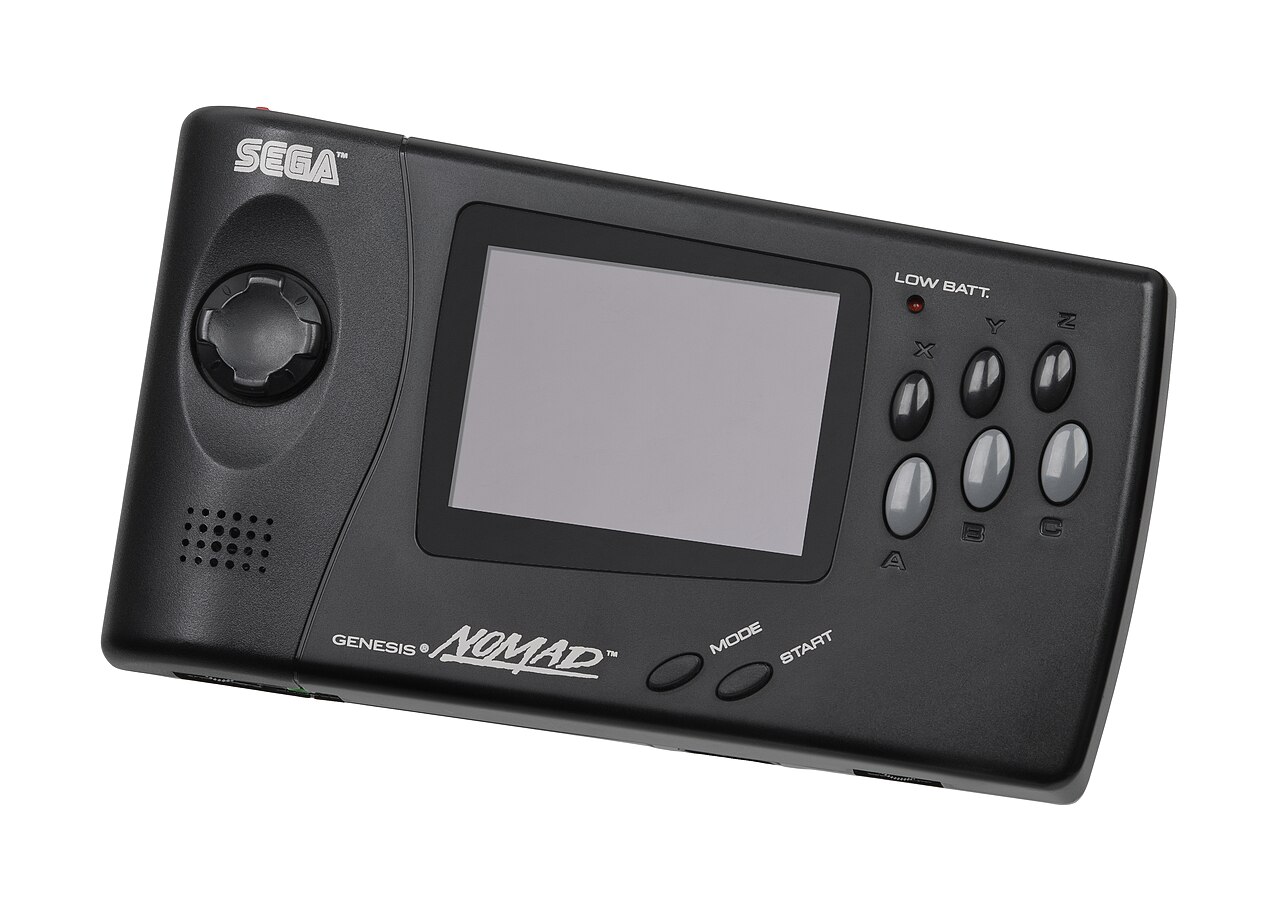
And then Sega spent its winnings on fragmentation. The Sega CD (1992) promised the future at $299 and delivered full-motion video experiments – some brilliant (Lunar, Snatcher, Sonic CD), many infamous. The 32X (1994) was worse: a mushroom of extra processors sold as a bridge to the 32-bit era, abandoned within a year, burning the exact retailers and fans the war had won. Behind the add-ons sat the war’s real tragedy: Sega of America and Sega of Japan had become rival companies sharing a logo. Japan, where the Mega Drive had lost to NEC and Nintendo, resented America’s success and its methods; America watched Japan design the Saturn for the Japanese market – hard to program, launched by ambush in May 1995 at a surprise $399, killing the Genesis’s still-healthy business to force a transition its audience hadn’t asked for. The Genesis didn’t lose the 16-bit war. It was recalled from it. Nintendo, patient and singular, ground the SNES on to 1997 and won the generation on totals while Sega counted three platforms’ worth of confusion. The Nomad – a portable Genesis, 1995, gorgeous and battery-starved – was the era’s perfect epitaph: brilliant hardware, impossible timing.
The Peripheral Zoo and the Channel From the Future
Success made Sega experimental, and the experiments are a museum of glorious nerve. The Menacer light gun chased the Super Scope. The Activator – a full-body infrared ring you stood inside, punching the air to punch the screen – chased nothing but its own magnificence and failed heroically. The 6-button pad quietly fixed fighting games. And then, in 1994, came the Sega Channel: a cable-television adapter that delivered a rotating library of fifty games a month, downloaded through your TV subscription for about thirteen dollars. It peaked at a quarter-million subscribers, won an Emmy for its engineering, and prefigured – by a quarter-century – the subscription libraries the entire industry now runs on. That it was shut down in 1998 as the web arrived doesn’t dim the fact: the Genesis, the machine of “blast processing,” also beta-tested Game Pass in the age of dial-up. The zoo and the channel belong in the same sentence as the add-ons because they were the same instinct – ship the future now, apologize at the earnings call.
The Afterlife: The First Retro Console
The Genesis refused the grave with unusual energy. Majesco’s Genesis 3 kept it in production to 1998 on budget shelves. AtGames’ licensed clones – imperfect, ubiquitous – put it in a hundred million stockings. The emulation and FPGA scenes treat the 68000 library as a first-class canon; the Genesis Mini of 2019, Sega’s own and lovingly made, was received like a state funeral done right. Analogue’s Mega Sg, the same year, made the Genesis a boutique object – machined precision, FPGA-perfect, sold to adults who had been the teenagers of the war and now had salaries to match their loyalty. That is the deepest change the afterlife worked: the audience the Genesis was invented for grew up without surrendering, and the market learned to sell the machine back to them at every tier, from stocking-stuffer clone to collector’s instrument. The teen console became the heritage console without ever passing through the embarrassment phase most platforms endure. The homebrew scene ships new cartridges; the demoscene squeezes the Yamaha sound chip into instruments its designers never imagined; and the system’s American mythology – the scream, the slogan, the hedgehog with attitude – became the permanent template for how a challenger brand talks. Every “console war” since is fought in the Genesis’s accent.
The Canon
Sonic the Hedgehog 2 (1992) – speed perfected; the war’s winning argument. Streets of Rage 2 (1992) – the brawler as symphony (Yuzo Koshiro’s soundtrack alone justifies the machine). Gunstar Heroes (1993) – Treasure’s debut detonation. Madden NFL ’94 / NHL ’94 – the sports annexation; NHL ’94 is still called the greatest hockey game ever made. Phantasy Star IV (1994) – the RPG that answered Final Fantasy in full. Shining Force II (1993) – tactics with heart. Castlevania: Bloodlines (1994) – Konami defects, gloriously. Contra: Hard Corps (1994) – excess as design. Ecco the Dolphin (1992) – beauty and dread in equal measure. Sonic 3 & Knuckles (1994) – lock-on ambition, the epic complete. Road Rash II (1992) – violence, velocity, chain-whips. Landstalker (1992) – isometric adventure with a fairy and a temper. Herzog Zwei (1989) – the real-time strategy genre, invented on a launch-window cartridge. Aladdin (1993) – Virgin’s Disney-animated blockbuster; a million-selling argument that Sega had the culture. ToeJam & Earl (1991) – the weird heart of the library; funk as a design document. Desert Strike (1992) – EA’s isometric war, a dorm-room staple. Comix Zone (1995) – the panel-hopping brawler as late-era art piece. Vectorman (1995) – Sega’s answer to Donkey Kong Country, rendered in orbs and spite.
What the War Was For
The Genesis story is the story of competition itself: of what happens to an industry when a monopoly gets punched. Prices fell, audiences widened, teenagers got games of their own, sports became a pillar genre, a ratings system was born, and Nintendo – the great Nintendo – was forced to be better. That the puncher then punched itself into the Saturn era does not diminish the campaign. For three years in the early nineties, the loud black box from the challenger was the center of American gaming, and the echoes never stopped: the Mega Drive/Genesis remains the most argued-over, most mythologized, most purely fun chapter of the 16-bit age. Sega does what Nintendon’t turned out to be true in both directions. Only one of them was a warning. The chant survives them both: three decades later, sports arenas still sample that sampled scream – SE-GA! – for the Jumbotron, most of the crowd too young to know it was once a declaration of war. The Genesis lost its company the future and won its audience forever, which in this industry is the trade that matters.