
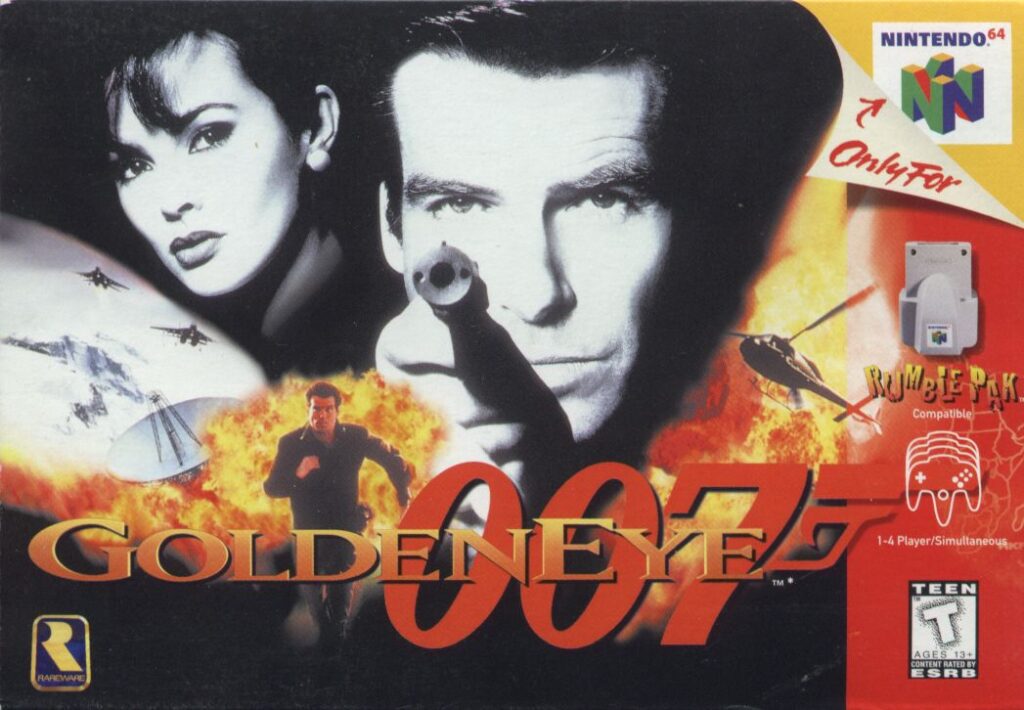
N64 · FIRST-PERSON SHOOTER · FROM THE VAULT — REPLAY REVIEW
Developer: Rare · Publisher: Nintendo · Released: August 25, 1997 (North America) · Platform: Nintendo 64 · Genre: First-person shooter
We need to talk about a deadline, because this one is personal. GoldenEye 007 leaves Xbox Game Pass for console and cloud on Sunday, November 15 — which means the easiest, cheapest way most of us have had to revisit the greatest split-screen shooter ever made is about to close its doors. You have one week. One last week to be Bond again on the subscription you already pay for, before you have to go and find another way in. So consider this both a review and a house call: I went back to the Dam, back to the Facility, back to that cramped little quarter of a television screen where my friendships were tested in the late nineties — and I am happy, almost relieved, to report that the king has not abdicated. Not even a little.
I remember exactly where I was the first time GoldenEye 007 made sense to me. Not my house — a friend’s basement, the kind with the wood panelling and a television big enough that four of us could each claim a corner of it without going cross-eyed. Four controllers, one of them the grey one nobody wanted, a pizza going cold on the carpet, and a house rule spoken like it was law: no Oddjob. We will get to Oddjob. Everybody gets to Oddjob eventually. What matters is that before that afternoon, a movie game was a thing you endured, and a shooter was a thing that lived on somebody’s dad’s PC. After that afternoon, the living room belonged to us.
GoldenEye 007 Taught the Living Room How to Play a Shooter
It is easy to forget, from here, how unlikely this game was. GoldenEye 007 arrived in North America on August 25, 1997 — nearly two years after the Pierce Brosnan film it was licensed from, which in movie-game terms is not a launch window, it is an archaeology project. It was made by Rare, a British studio better known at the time for Donkey Kong Country, and much of the team had never shipped a game before. By every sensible measure it should have been a footnote. Instead it sold in the millions, became the Nintendo 64’s defining shooter, and quietly rewrote what a console game could be.
The campaign is where the rewiring starts. This was not a corridor with targets glued to it. Each mission handed you objectives — real, written-down, MI6-briefing objectives — and added more of them as you climbed from Agent through Secret Agent to 00 Agent, so the game you mastered on easy was only the rehearsal for the game waiting on hard. Stealth mattered. Alarms mattered. A guard’s hat would fly off if you clipped it, enemies reacted to where a shot actually landed, and the whole thing felt less like a shooting gallery and more like being dropped, underdressed and outnumbered, into the film.
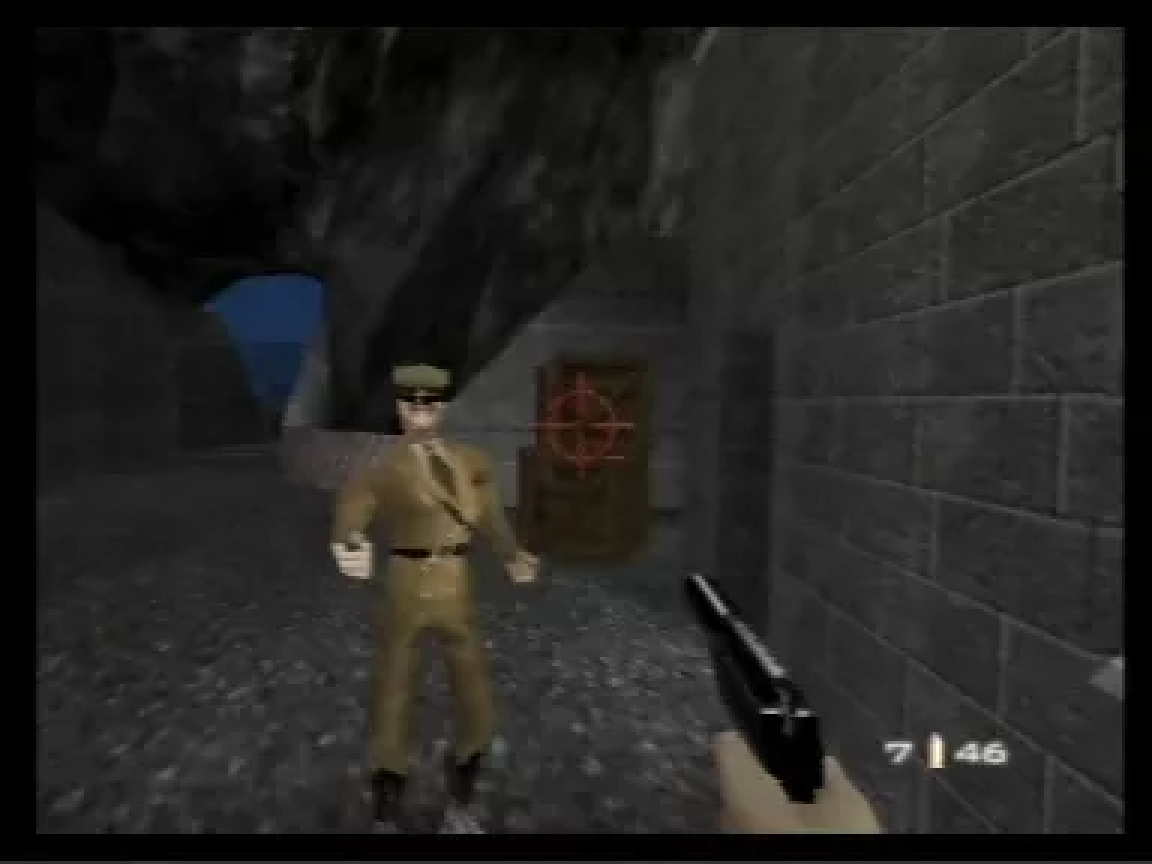
That first mission still gives me a small, specific chill. The drive through the tunnel, the truck, the guards who have no idea what is about to happen to their evening — and then the walk out onto the Dam itself, the whole valley spread out below you, ending in the bungee jump straight off the edge and into the title sequence of your own memory. Games in 1997 were not supposed to stage a moment like that. GoldenEye 007 staged one in its first ten minutes and then, level after level, kept finding more.
The Facility, the Bunker, and the Art of the Objective
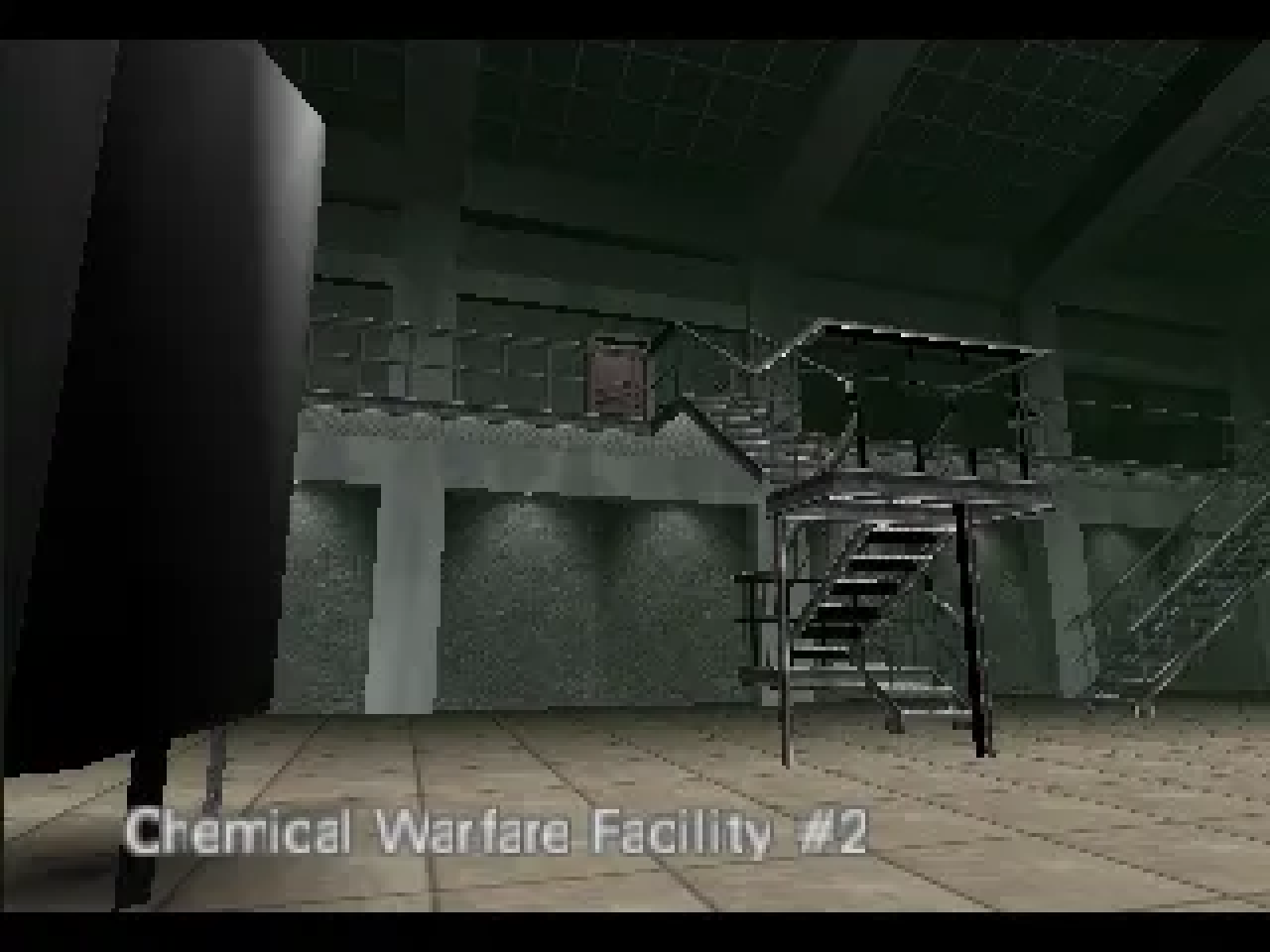
If I had to pick the level that lives in my head rent-free, it is the Facility, and I do not think I am unusual in that. You start in a vent — in a vent, above a toilet, in a game from 1997 — and you drop down into a bottling plant full of patrols, scientists you must absolutely not shoot, and a rendezvous with Alec Trevelyan that goes the way reunions with Alec Trevelyan tend to go. The level is a masterclass in teaching you a space: by the third run you know every corner, every door delay, every guard’s little route, and that knowledge feels earned rather than handed over.
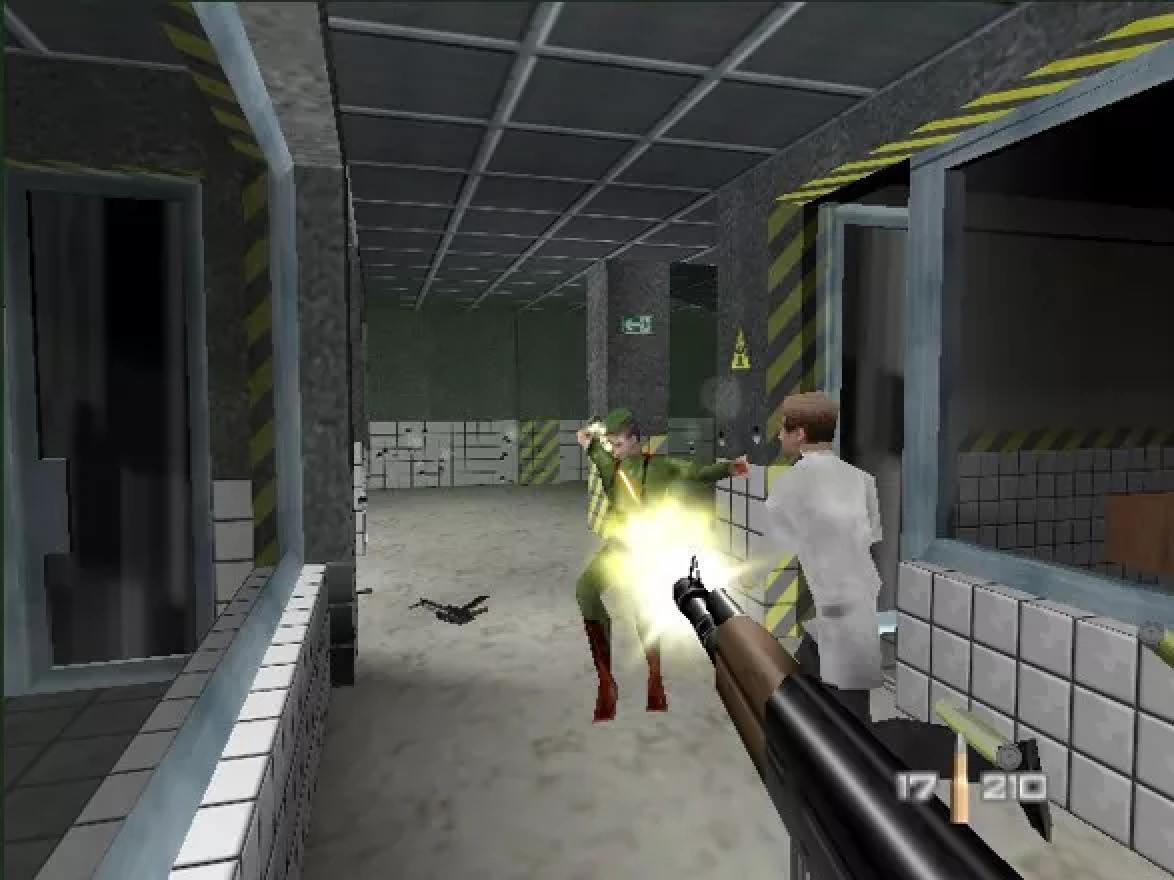
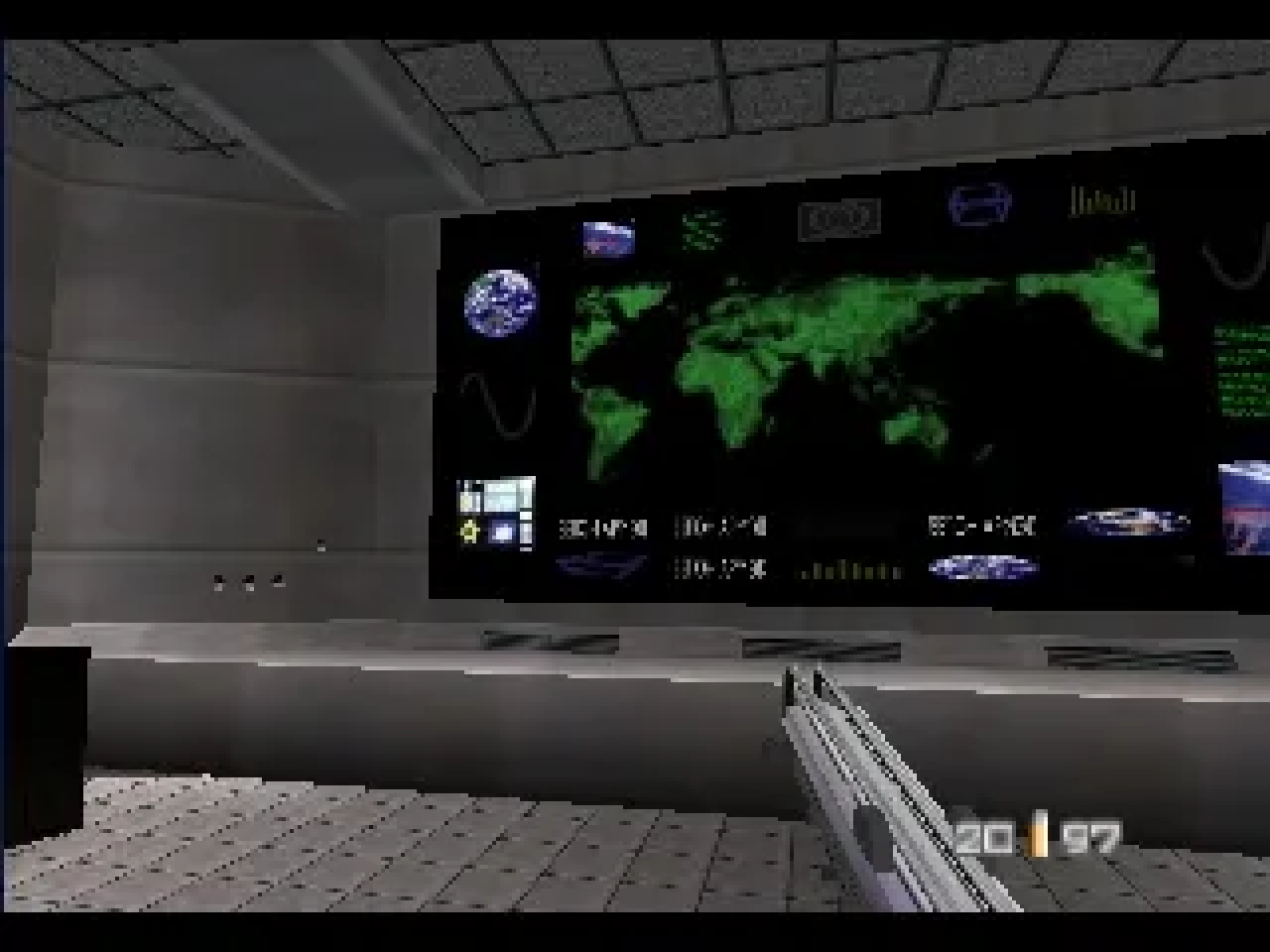
And the game keeps widening. The Bunker, visited twice, turns into an escape story. The Control room, with its great green world map glowing on the wall, is where the GoldenEye satellite stops being a plot word and becomes a place you are standing in, defending Natalya while she works and the alarms do their worst. None of it is padding. Twenty missions, each with a shape of its own, and a difficulty system that respects you enough to make you prove it all over again, properly, the second and third times through.
Four Controllers, One Television, No Mercy
But let us be honest about why we are really here. The campaign made GoldenEye 007 respected. The multiplayer made it immortal. Up to four players, one screen, split four ways, in an era when playing a shooter against your friends usually meant owning two computers and a degree of patience nobody actually had. Rare reportedly added the mode late, almost as an afterthought, which I have always found perfect: the feature that defined a generation was the one nobody had scheduled.
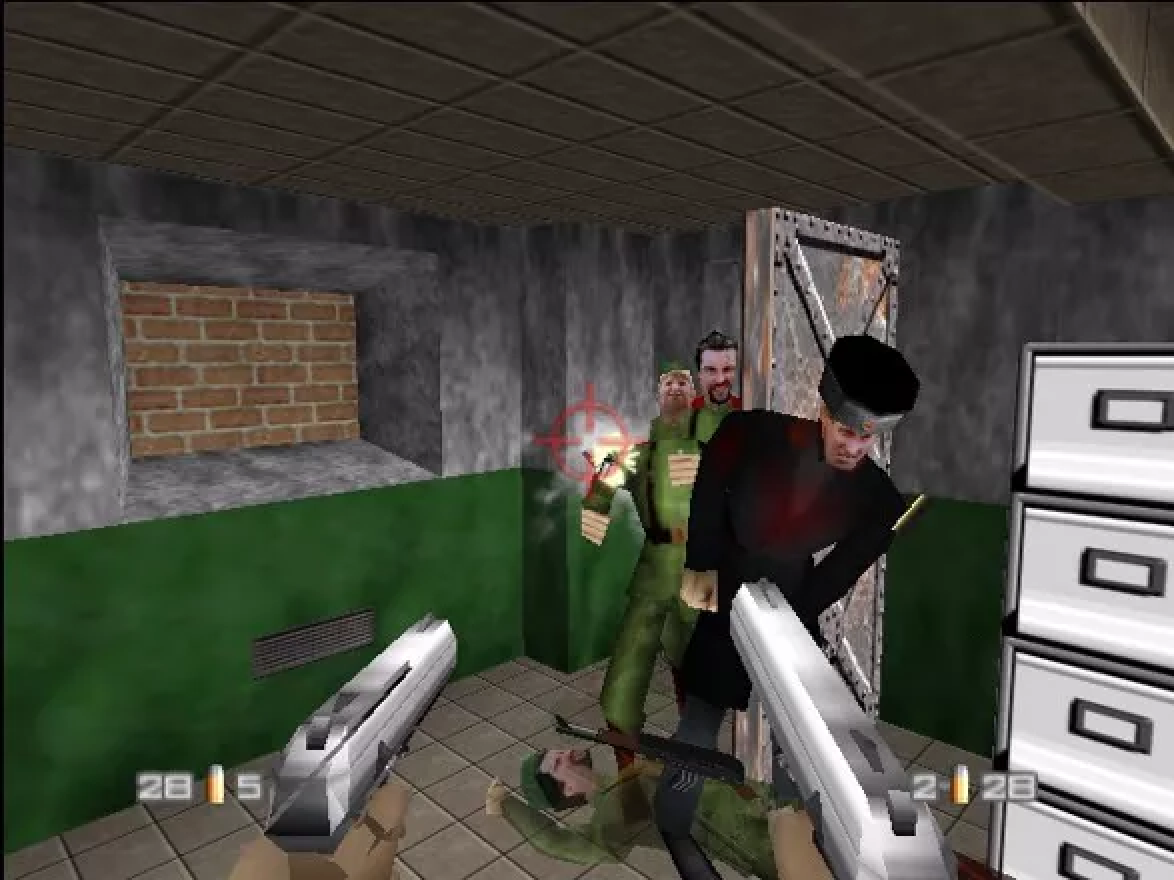
The rules we invented around it became folklore, and the game egged us on with its own. Licence to Kill, where a single hit from anything — anything — puts you down, and a friendly game turns into a western standoff conducted at a crouch. Slappers only, no weapons at all, four grown secret agents sprinting in circles trying to karate-chop each other into next week, which remains, frame for frame, the funniest mode ever put in a serious spy game. Proximity mines, the coward’s best friend: lace the Facility’s doors and the armour spawn with them, then listen for the explosion and the shouting from the other end of the couch. The Facility was our Colosseum — remade years later in Perfect Dark as Felicity, which felt less like a new map than a homecoming — and the Archives and the Complex ran it close.
And yes: Oddjob. The shortest man on the character select screen, hat and all, standing a full head below everybody else’s aim in a game where you aimed, roughly, at chest height. Picking him was legal. Picking him was also a declaration of war, and every group of friends in the world independently arrived at the same constitutional amendment about it. That is not a balance flaw; that is culture. The cheats only widened the blast radius — DK Mode, with its enormous heads and arms, turned every match into a cartoon, and Paintball Mode turned the Facility’s walls into a modern art exhibition. We were not playing a shooter anymore. We were running a small, loud, four-person society with proximity mines.
Screen-watching? Of course we screen-watched. Your quarter of the screen was yours; the other three quarters were intelligence, freely gathered, and anybody who claims their house played it differently is remembering a better class of friend than the rest of us had.
Where Bond Goes After Game Pass
So, the practical part, because November 15 is coming whether we are ready or not. When GoldenEye 007 leaves Game Pass on console and cloud, it does not vanish from the modern world — this is one classic the licensing goblins have, for once, left us proper doors into. If you own a digital copy of Rare Replay on Xbox, GoldenEye 007 comes with it: the game was made available to digital Rare Replay owners when it returned in January 2023, so check your library before you mourn. On Nintendo’s side, it sits in the Nintendo 64 library for Nintendo Switch Online + Expansion Pack members, and the Switch version even adds online play — the split-screen, shared, everybody-can-see-everybody format preserved over the internet, which is either a betrayal or a miracle depending on how your basement group feels about it. And of course the original cartridge still exists, still boots, still smells faintly of 1997 if you have kept it in the box like a civilised person. The grey controller nobody wanted is, by now, a family heirloom.
What has aged? The honest list is short and mostly charming. The frame rate dips when four players and a roomful of explosions share the screen, exactly as it did then, and we forgave it then. The single-stick aiming asks a small apprenticeship of anyone raised on twin sticks, and repays it within an evening. The faces, bless them, are photographs wrapped around polygons with more confidence than technology. None of it touches the core of the thing, because the core was never the technology. The core was objectives with real texture, levels built to be learned, and four people on one couch who could not pause being friends just because somebody had picked up the Golden Gun.
GoldenEye 007 is not a museum piece and it is not a nostalgia tax. It is still the best seat in the house: a campaign that respects your intelligence and a split-screen mode that built a generation’s friendships out of proximity mines and house rules. Play it this week while Game Pass still has it — then keep it, any way you can. Some kings you do not let leave the building.
One week, then. Call the group chat — you know the one, it has been dormant since the last reunion that never happened — and tell them the basement rules are back in force. No Oddjob. Proximity mines are a personality flaw we have chosen to celebrate. And if nobody can make it over, the campaign is still there, the Dam is still waiting, and that jump off the edge still feels exactly the way it did the first time. For England, James. For the couch, for all of us.