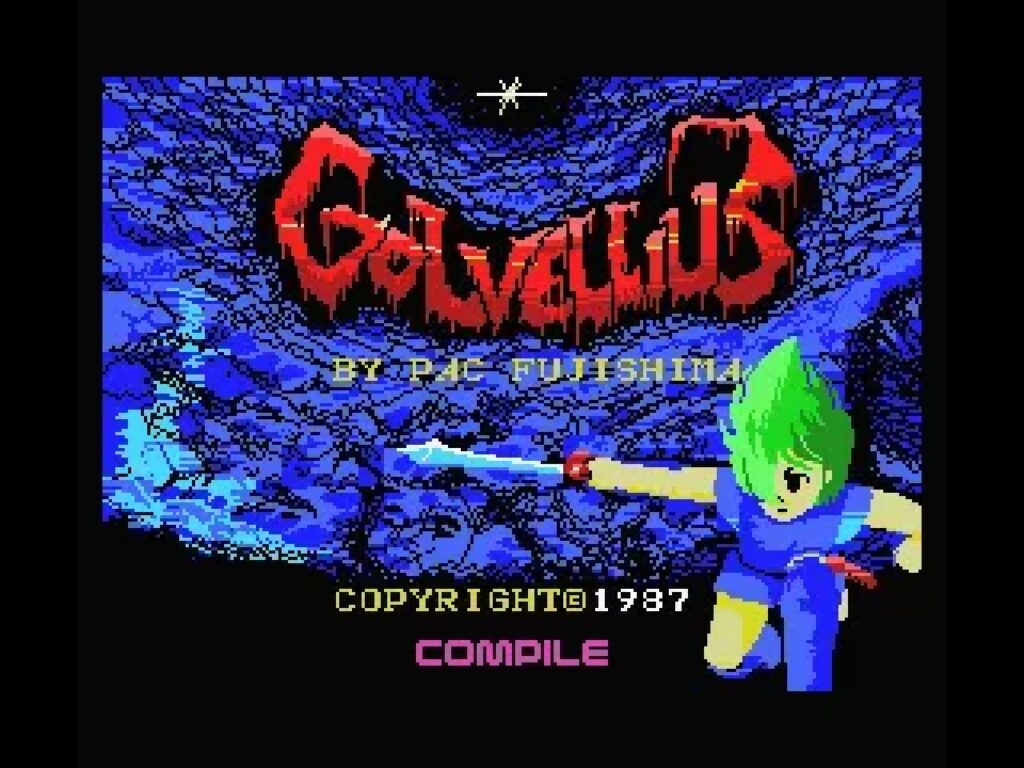
Compile made its name on shooters, which makes Golvellius the studio’s great left turn: a sprawling action-adventure for MSX, released in 1987, that answers a question nobody had thought to ask the platform — what if Zelda, but built by the Zanac people? The result, later famous in its Master System incarnation, begins here: the young warrior Kelesis, a kidnapped princess, a valley ruled by the demon Golvellius, and one of the largest quests the standard ever hosted.
At a glance: Compile, 1987 · MSX · Action-adventure · The valley of doom
Two Games in One Cartridge
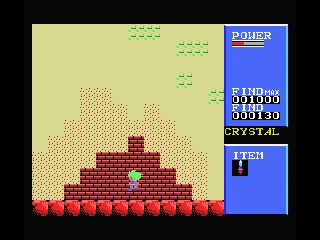
Golvellius is structurally generous to a fault. Its overworld is a top-down expanse of fields, deserts and guarded passes in the Zelda manner — explore, prod, find the caves. Below ground, the game changes grammar entirely: side-scrolling action stages where Kelesis fights through caverns and towers in platforming combat. The alternation keeps both halves fresh, and the quest’s scale — seven dungeons’ worth of demons between you and the valley’s tyrant — gives the adventure a genuine epic’s gait. Secrets hide everywhere: strike the right scenery, revisit the right corners, and the valley yields equipment, gold, and counsel.
Randar and the Economy of Wisdom
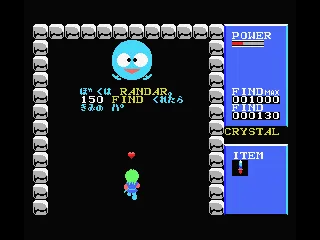
The game’s most charming institution is Randar, the blue orb who appears throughout the valley selling the two currencies that matter: equipment and advice. Golvellius runs on information — which sword for which demon, which cave conceals which necessity — and its cast of fairies, hermits and orbs dispenses that information with personality, for a price. It creates a rhythm distinct from Zelda’s solitude: this valley feels inhabited, gossipy, alive. Combat is the era’s honest bump-and-slash, elevated by the sheer variety of enemies Compile’s artists conjure — the studio’s shooter imagination applied to a bestiary.
The MSX Original
Western players met Golvellius on the Master System in 1988, in a handsome and expanded edition; the MSX original is leaner, harder in places, and closer to Compile’s raw intent. The palette is the standard’s own, the soundtrack rides the PSG with the studio’s usual melodic conviction, and the difficulty curve assumes the home-computer player’s patience — passwords carry your quest between sessions. For the platform, it was a flagship adventure of the first rank, proof that the MSX could host a quest in the console style without surrendering its own character.
A Valley Worth Getting Lost In
Scale claims are cheap in game writing, so let this one be specific: Golvellius’s quest sprawls across a surface world dense with caves, towers, deserts and guarded chokepoints, and beneath it a second game of side-scrolling dungeons, each ruled by one of the demon Golvellius’s seven lieutenants, each demanding its own equipment and intelligence. The connective tissue is information — bought from Randar, earned from fairies, scratched from the valley’s hermits — and the game’s masterstroke is making knowledge feel like treasure. A Zelda player will recognize the skeleton; a Compile player will recognize the flesh: enemy designs with shooter-bred imagination, musical themes that lodge permanently, and a difficulty curve that treats the player as a grown-up. The password system preserves your campaign between sessions like a bookmark in an epic, and finishing the valley — genuinely finishing it, demon by demon — remains one of the MSX’s great certificates of persistence.
Two Golvellii, One Legacy
The Master System version’s fame creates a small injustice this review is happy to correct: the MSX original is not a rough draft of the console game but its own distinct edition, shaped by the standard’s culture of long quests and password saves, and by Compile’s MSX division at the height of its confidence. Played side by side, the two are siblings, not sketches — and the MSX sibling has its own colors, its own pacing, and the home-field advantage of the platform where Compile’s adventure ambitions were born. For collectors, the MSX Golvellius is also the connoisseur’s copy: less common in the West, more storied in the scene, and the version this site’s shelf is proud to keep. Seek the valley out in whichever form you can. Just seek it.
The Sound of the Valley
A paragraph for the ears, because Compile’s musical identity is half of Golvellius’s spell. The studio’s MSX soundtracks of this period have a signature — melodies built like fanfares, basslines that stride rather than accompany — and this game’s score deploys it across a whole world: distinct themes for the valley’s regions, a dungeon pulse that keeps the side-scrolling stages urgent, and town-adjacent motifs with genuine warmth. On a platform whose standard sound chip was a modest three-channel PSG, this is composition as world-building, the valley’s geography made audible. Players who know Compile only from the 16-bit era’s celebrated soundtracks will find the accent familiar and the achievement, given the tools, frankly startling. The valley sings. It is a large part of why leaving it takes so long.
Kelesis, Considered
And a word for the hero, because Golvellius’s quiet radicalism is its casting of the quest as a rescue performed with manners. Kelesis is no brooding anti-hero; he is a decent young swordsman in a valley full of talkative fairies, orb salesmen and hermits who tease him — a protagonist the game clearly likes, in a world that rewards curiosity and courtesy as much as swordplay. The tone that results is the game’s secret weapon: an epic that feels kind. Between the era’s grimdark adventures and its mute errand-runners, Golvellius found a third register — warmth with stakes — and the modern action-adventure’s friendliest entries still live in the house it built. The valley of doom, it turns out, is a lovely place to spend a quest. That is not a contradiction. That is the review.
Verdict
A Zelda-scale epic with a shooter’s heart — generous, characterful, and far bigger than its era required. Compile’s adventure triumph.
Eight out of ten. Golvellius is the MSX action-adventure for players who want a world, not a corridor — and a standing reminder that Compile’s genius was never confined to the vertical scroll.
The Demons’ Design
Compile’s shooter imagination shows most clearly in Golvellius’s demons. The seven lieutenants are not palette-swapped brutes but distinct mechanical arguments — each arena a small essay on the equipment and intelligence the valley has been selling you, each victory a receipt proving the economy of wisdom works. Around them, the ordinary bestiary keeps Compile’s house style: enemies with silhouettes you can read at a glance and behaviors you learn the honest way. It gives the long quest a texture that pure Zelda-likes of the era often lacked — this valley is not a map with monsters sprinkled on it, but an ecosystem with opinions. Kelesis’s sword settles the arguments one by one, and the satisfaction compounds like interest until the final confrontation feels less like a boss fight than a graduation. Few MSX adventures sustain that feeling across an entire campaign. Golvellius banks it from the first cave.
Bring a notebook, then, and a free weekend. The valley rewards both, and Kelesis — decent, determined, and better company than most 8-bit heroes — will handle the rest. Compile’s adventure masterpiece has waited nearly forty years for its audience to finish arriving. It can wait out your first dungeon. It has practice.