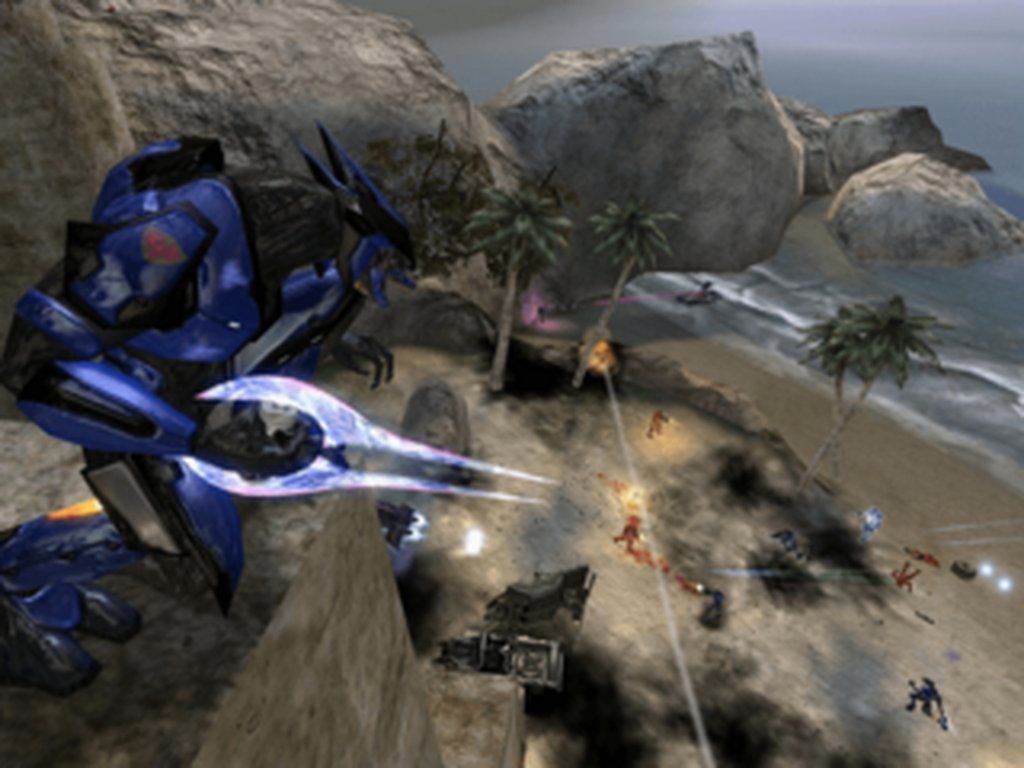
At a glance: Halo 2 · Xbox · Bungie / Microsoft Game Studios, 2004 · First-person shooter · Score: 9.5/10
Halo 2 is the sequel that had to do two impossible things at once: follow one of the greatest launch games ever made, and invent console online multiplayer as the world now understands it. On the first count it is a louder, faster, more cinematic campaign that stumbles at the finish line. On the second, it is close to flawless — the matchmaking, lobbies, clans and friends-list architecture Bungie shipped in November 2004 became the template every console service still follows. Played today on the original Xbox, what surprises is not the history. It is how modern the whole package still feels under your thumbs.
The campaign’s boldest move is structural. Half the game follows the Master Chief defending Earth — the Cairo Station defence, the scarab chase through New Mombasa, the delta halo — and half follows the Arbiter, a disgraced Covenant commander whose missions peel the enemy empire open from inside. In 2004, players who wanted only Chief complained. With distance, the Arbiter’s arc is plainly the braver and more interesting half: it gives the Covenant politics, heresy and civil war, and it sets up the alliance that defines the finale. The dual-wielding that headlines the new mechanics suits both halves — pair a plasma pistol with an SMG and the old two-weapon puzzle gains a third, greedier answer: power now, reloads and grenades later.

Combat itself is tuned tighter and meaner than the original. The battle rifle replaces the pistol as the precision workhorse, the energy sword arrives as the great equaliser, and vehicle hijacking fixes the one frustration of the first game — a Ghost bearing down on you is now an opportunity rather than a death sentence. Enemy variety widens: Drones swarm, Brutes charge, and the Flood return meaner. Level design trades some of the original’s open valleys for set-piece momentum — gondolas, Scarab boarding, a tank run across a bridge under a burning sky. It is less of a sandbox and more of a rollercoaster, and reasonable players still argue about which philosophy wins. What is not arguable is the polish: checkpointing, pacing and spectacle are a generation ahead of the 2001 game.
The ending, honestly
Every honest Halo 2 review has to stop at the cliffhanger. The campaign does not conclude; it halts, mid-sentence, with Earth invaded and the Chief promising to finish a fight the credits refuse to show. Bungie’s development crunch is well documented elsewhere, and the missing final act is felt in the playing: the last Arbiter missions feel compressed, and the Tartarus boss fight — a bullet-sponge brute in an arena — is the series’ weakest finale. It costs the campaign a half-step against its predecessor. It does not cost the game its greatness, because Halo 2 was never only its campaign, even in 2004.
Other games had online modes. Halo 2 had a society: ranks, clans, lobbies that held together between matches, and a friends list that felt like a place.
Because the multiplayer is the thing. Xbox Live play in Halo 2 introduced the playlist-and-matchmaking model: pick a flavour — Team Slayer, Rumble Pit, Big Team Battle — and the system builds a fair game, tracks your rank, and keeps your party together into the next lobby. Add proximity voice chat, clan matches, and maps like Lockout, Midship, Zanzibar and Headlong that reward a decade of study, and you have the most influential console multiplayer ever shipped. The original servers are long closed on stock hardware, but the community revival service Insignia now runs Halo 2 online again on real Xboxes, and the game slots back into its natural habitat instantly. Even offline, four-player split-screen and system link remain superb.

Technically this was the original Xbox at full stretch: bump-mapped armour, huge skyboxes, a fully orchestrated score with licensed needle-drops that somehow work, and Steve Vai guitar solos over the main theme’s monk chants. It pushes the hardware visibly harder than the first game — pop-in on texture detail during the fastest campaign transitions is the tell — and the trade was worth it. The Xbox version is also, for purists, the only unaltered text: later collections re-lit and rebalanced things. Here, the 2004 balance, the button-combo quirks and all, survives intact.
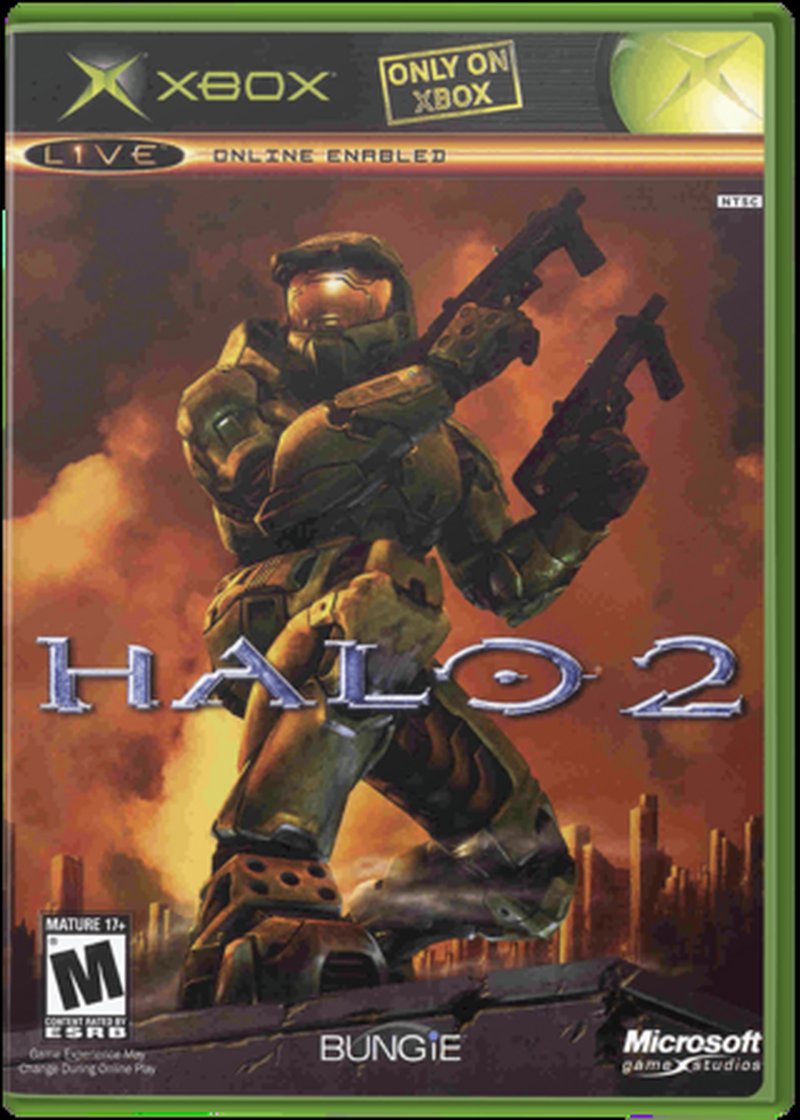
The Xbox version in 2026
Ownership notes for the modern player: Halo 2 shipped on a single disc with the campaign, the full multiplayer suite and, in the limited edition, a steelbook and bonus materials that collectors still chase. The Multiplayer Map Pack disc that followed added nine maps and is worth owning alongside, since it installs content the base disc lacks. On original hardware everything here is local-first and server-independent except ranked Live play, which the Insignia revival now restores — matchmaking, ranks and voice included — on unmodified and modified consoles alike through the community network. Split-screen supports four players, system link supports whole buildings of Xboxes, and the co-operative campaign, split-screen only and all the better for the arguments it causes, remains one of the great shared ways through a shooter story.
One more virtue deserves recording: the difficulty design. Where the first game’s Legendary was a war of attrition, Halo 2’s is famously the hardest in the series — snipers kill in one shot, and the co-op rule that one death restarts both players turns Legendary into a genuine relationship test. Heroic, again, is the recommended first run: hard enough to make the systems matter, fair enough to keep the story moving. Between the Arbiter’s stealth-opening missions, the Scarab set-piece and the multiplayer suite’s endless depth, the disc justifies its shelf space from three directions at once. Few sequels can say they advanced their genre’s storytelling ambitions and rebuilt its social infrastructure in the same box. This one did both before breakfast.
The sound of a sequel growing up
One under-credited upgrade deserves its sentence before the verdict: the audio. Halo 2’s mix is bigger in every direction — weapons with genuine weight, vehicles that roar rather than hum, battle chatter that sells the scale of the Earth defence, and a score that swings from the monks of the theme to full rock instrumentation without embarrassment. The voice cast, swollen with film and television talent, gives the Covenant’s political drama the gravity the Arbiter’s half needs. Played through a decent system, the campaign’s biggest battles are heard as much as seen — a sequel announcing, in every department, that the budget and the ambition had both doubled.
It is also the rare sequel whose flaws became folklore rather than verdicts — the cliffhanger is a scar the whole generation shares, retold like weather. Games are not usually forgiven their endings. Halo 2 was, because everything around the ending had already changed the medium.
Verdict
Halo 2’s campaign is a magnificent near-miss — bolder, prettier and better acted than the original, docked by an ending that is really a postponement. Its multiplayer is not a near-miss at all; it is the foundation stone of modern console online gaming, and it remains thrillingly playable. Weigh the whole disc, as a review should, and Halo 2 stands level with its predecessor: a slightly lesser story wrapped around a far greater social machine. On an original Xbox shelf, it is not a sequel. It is the centrepiece.