At a glance: Heavy Rain · PlayStation 3 · Quantic Dream / Sony Computer Entertainment, 2010 · Interactive drama · Score: 8.0/10
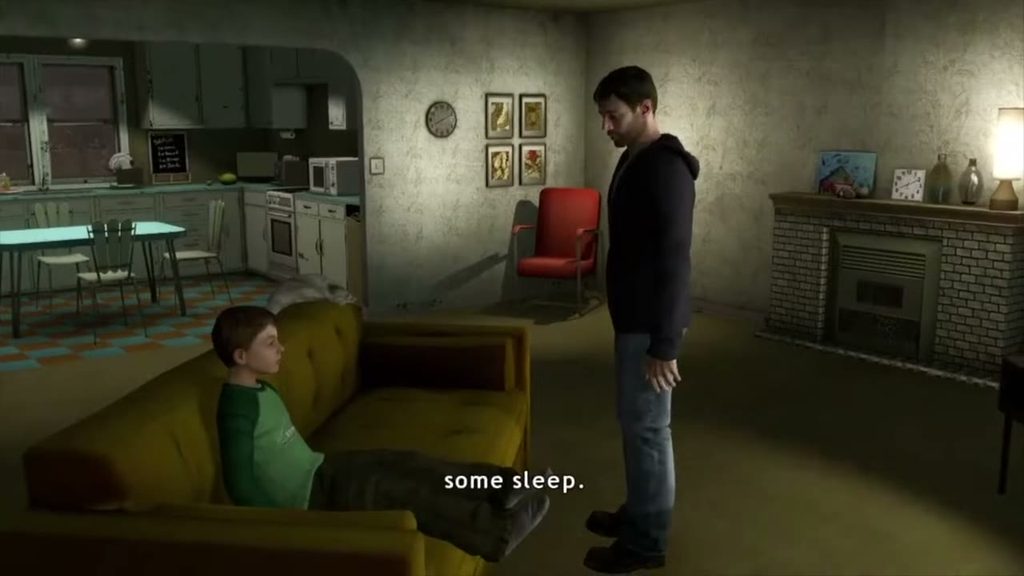
Heavy Rain begins with a birthday party, a balloon, and a father buying a balloon for his son in a sunlit mall — and within twenty minutes it has shown you the worst day of Ethan Mars’ life, twice over. Quantic Dream’s 2010 PS3 exclusive was the console’s great narrative experiment: a serial-killer thriller with no health bar, no game over screen, and a promise that the story would continue no matter what you did — fail, flee, or let a hero die, and the plot would simply carry their absence. Sixteen years of narrative games have been living in its house ever since. It is flawed, occasionally preposterous, and completely singular.
How far are you prepared to go?
Two years after losing his elder son in an accident that was nobody’s fault and entirely his, Ethan Mars is divorced, depressed and losing time to blackouts when his younger son Shaun is taken by the Origami Killer — a murderer who drowns boys in rainwater and leaves an origami figure in their hands. Ethan receives a box of trials: drive against traffic, crawl through glass, cut, burn, kill — each ordeal buying letters of the address where Shaun is drowning, on a deadline set by the rainfall. Interleaved with Ethan are three other playable lives: an insomniac photojournalist, Madison Paige; an FBI profiler, Norman Jayden, whose augmented-reality glasses and drug addiction make his chapters half procedural, half hallucination; and a private detective, Scott Shelby, working the same case from the parents’ side. Four threads, one storm system, and a structure borrowed from the best television — years before games routinely admitted the debt.

Playing as performance
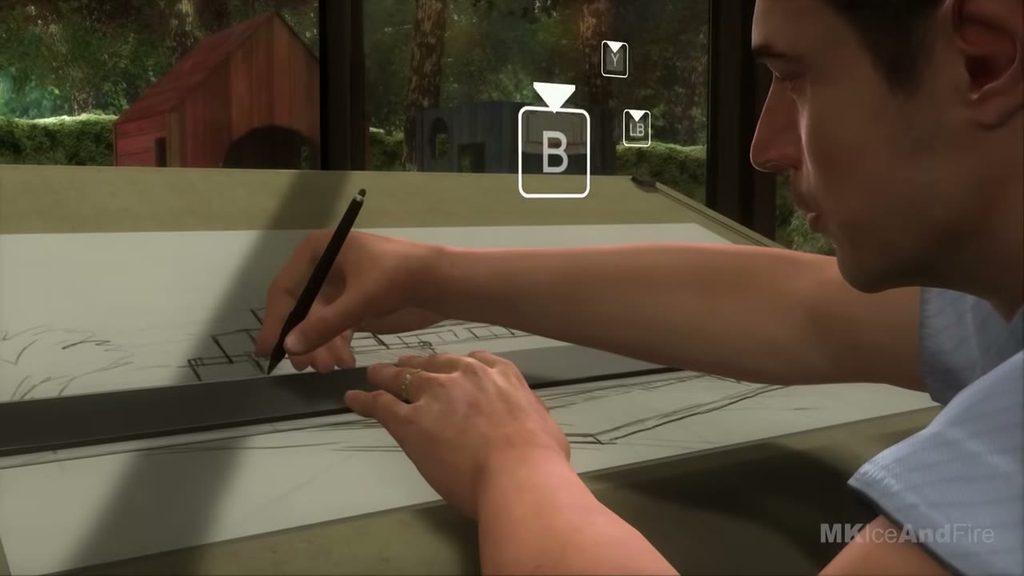
The control scheme was the revolution and the controversy. Heavy Rain plays through context: hold buttons in sequence to climb, flick the stick to open doors the way a hand opens them, follow prompts woven into the world rather than pasted over it, and — in its signature demand — physically shake and strain with characters who are straining. Quick-time events, a term the game could not escape, are here rebuilt as choreography: a fight in a muddy junkyard or a desperate escape from a burning building becomes a duet between the player’s hands and the character’s panic, and failure rarely stops the scene — it scars it. Ethan can lose a trial, a finger’s worth of choices, his nerve, and the story metabolises every loss. Characters can die, permanently, hours before the ending, and the finale simply arrives with whoever is left standing to attend it.
Heavy Rain’s true subject is not catching a killer. It is the discovery that a story can survive your failure — and that surviving it feels worse, and better, than any game over.
The thriller, honestly assessed
The plot is a airport-novel serial-killer engine, and it knows the genre’s moves: red herrings, a ticking water level, a killer whose identity the game guards with one genuinely controversial cheat that players still argue about. The voice performances in English are famously uneven — accents wander across the Atlantic mid-sentence, and a mall scene involving a shouted name became an early internet meme for good reason. And yet. The set-pieces land: the trial in the power station, strung with live wires; the nightclub negotiation; a quiet chapter of caring for a baby that does more character work than any shootout of its year. The game’s willingness to be slow, domestic and sad in a medium sprinting toward spectacle was its bravest feature, and its influence — on everything from episodic adventures to the biggest Sony blockbusters, whose directors cite it openly — is the verdict history has already delivered.
The PS3 showcase angle
As a technical object, Heavy Rain was one of the console’s showpieces: faces built from full performance capture with skin and eye work that embarrassed 2010 rivals, rain and wet surfaces as a house style, and a camera language cribbed from Fincher. It loads slowly and its frame rate dips in crowded scenes, and the Move edition’s motion controls are a curiosity best left in their box. The original controller scheme — every button of the DualShock conscripted into gesture — remains the intended way to play, and the PS3 version is the native one, before later ports tidied the interface and lost a little of the strangeness.
Endings, plural
The game’s seventeen-odd endings form a spectrum from rescue to a cemetery in the rain, and the spread between a perfect playthrough and a disastrous one is the widest in any game of its era. A second run, played carelessly on purpose, is practically a different genre — tragedy curdling into black comedy as the cast thins. Heavy Rain rewards the opposite of save-scumming: play it once, honestly, live with it. Then argue about it, as players have for sixteen years.
The Cage question
No retrospective escapes the argument about its director. David Cage’s games attract a particular critical weather — accusations of pretension, of cinema envy, of scripts that reach for profundity and grab melodrama — and Heavy Rain contains evidence for the prosecution: a plot twist that cheats, dialogue that occasionally creaks in translation, symbolism with its sleeves rolled up. But the defence’s exhibit is the game’s actual historical position. In 2010, the proposition that a big-budget console exclusive could be a slow, sad, rain-soaked drama with no shooting to speak of — and could top charts, win BAFTAs and sell in the millions — was not obvious. It was a gamble Sony took on a French studio’s conviction, and it paid out across the entire following decade of narrative design: the branching mainstream adventure, the prestige episodic, the walking-and-choosing grammar that everything from Life is Strange to the biggest first-party dramas would adopt. You can trace the bloodline in a straight line, and it starts in this storm. Heavy Rain’s flaws are the flaws of a pioneer — it was inventing its genre’s conventions in public, including some the genre wisely discarded. What it never lacks is conviction, and conviction, in a medium of focus-tested caution, is the rarest special effect of all. Play it as the flawed founding document it is; there would be no shelf of modern narrative games without it, and on the PS3 it still rains hardest.
The Chronicles
Seek out, too, the small downloadable prequel chapter, The Taxidermist, which follows Madison into a house of stuffed horrors and plays as a perfect ninety-minute distillation of the whole game’s method — snooping, dread, branching escapes, consequences. It was the series’ proof of concept, released as an appetiser, and it remains the easiest recommendation for the Heavy Rain-curious who want the flavour before committing to the storm.
The verdict
Heavy Rain is a flawed thriller and a landmark game, and the second fact is bigger. It proved on the PS3 — as a mainstream, chart-topping exclusive — that a game could be about grief, guilt and fatherhood, could let its heroes die unglamorously mid-story, and could find an audience of millions for the experiment. Play it for the trials, the storm, and the argument you’ll have afterwards.
Score: 8.0/10 — The PS3’s defining interactive drama. Imperfect, influential, unforgettable.