At a glance: Resistance: Fall of Man · PlayStation 3 · Insomniac Games / Sony Computer Entertainment, 2006 · First-person shooter · Score: 8.0/10
Every console launch has a proof-of-life game, and for the PlayStation 3 — arriving in November 2006 under a cloud of price shock and scepticism — that game was Resistance: Fall of Man. Insomniac, the Ratchet & Clank studio, of all people, delivered a grim alternate-history shooter in which the Second World War never happened because something worse arrived first. It was not the best game of the PS3’s launch window by accident. It was nearly the only substantial one, it carried the console’s first online community, and it remains a fascinating, sturdy piece of work: the moment a great studio changed genres in public and got away with it.
Britain, 1951, under new management
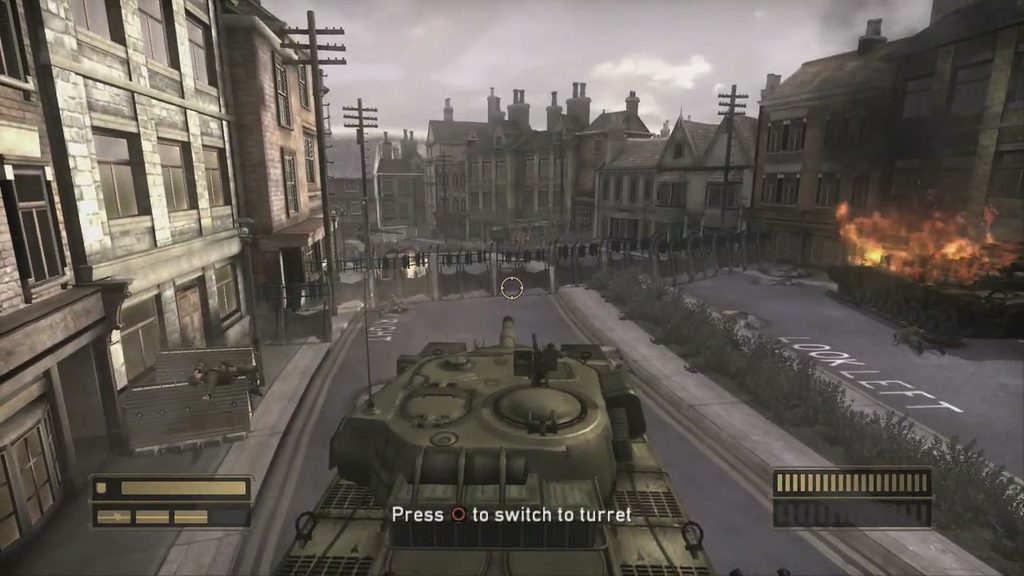
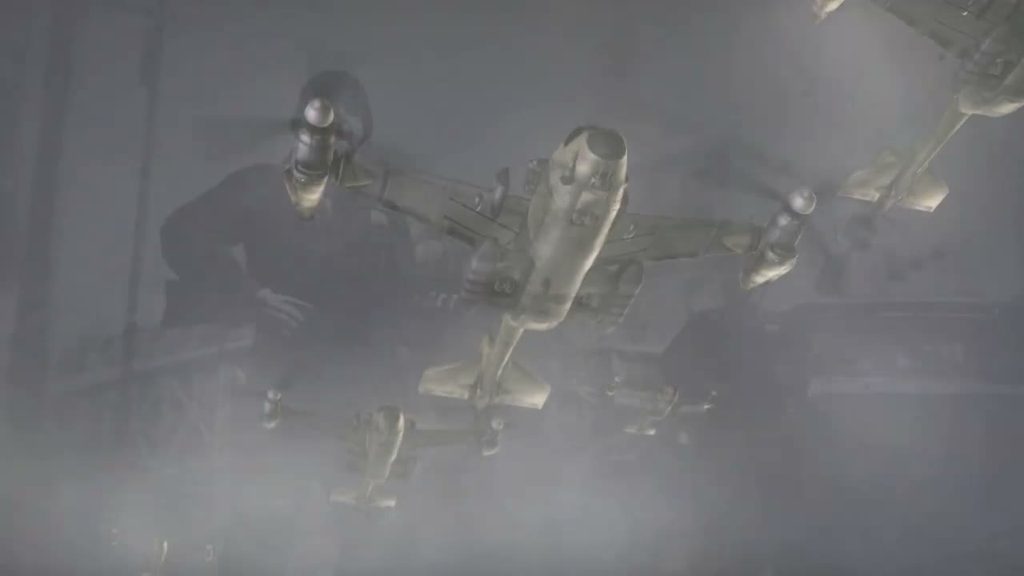
The premise is pulp handled with a straight face. The Chimera — a viral, insectile army converting humans into soldiers — swept Russia in the 1930s, crossed Europe in weeks, and tunnelled under the Channel into a Britain that fell in two months. You are Nathan Hale, an American sergeant delivered with the last US expeditionary force, infected in the opening battle and somehow not converted — a man becoming something else on a timetable the narration, delivered in plummy retrospect by Captain Rachel Parker, keeps ominously vague. The tour of a fallen Britain is the game’s soul: York, Grimsby, Manchester, a shattered London finale, all rendered in a palette of grey stone, brown smoke and Chimeran gold, with cathedral cities full of trenches and conversion centres. Alternate-history shooters were thick on the ground in the 2000s; few committed to their geography like this.
The Insomniac arsenal
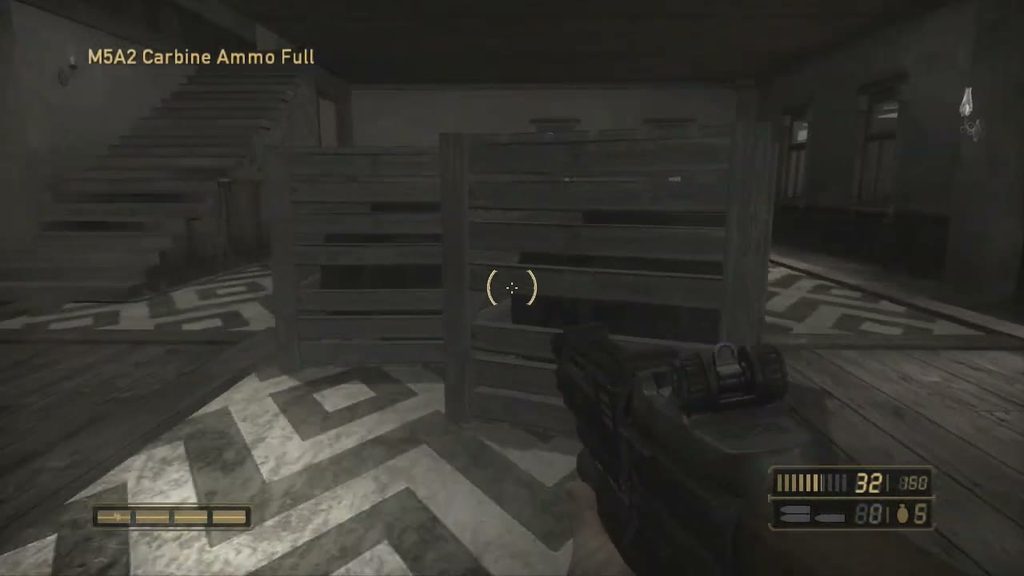
The Ratchet DNA shows in the best possible place: the weapons. Resistance’s arsenal is a toybox disguised as an armoury. The Bullseye tags a target and bends its fire around corners. The Auger shoots through cover and raises its own energy shield. The Fareye slows time to a sniper’s heartbeat; the Hedgehog grenade bursts into spikes; the Hailstorm ricochets its whole magazine off walls and then, as its party trick, releases the stored rounds as a hovering auto-turret. Every gun has an alternate fire, most have a personality, and the weapon wheel — a full radial arsenal carried at once, in defiance of the two-weapon fashion of the day — encourages the experimentation that becomes the game’s combat language. Enemy variety supports it: leapers, rollers, steelheads, the stalkers that stride over trenches like Wellsian tripods, and the Widowmakers that remain the launch window’s best giant-spider problem.
Resistance is what happens when a studio famous for inventing a new gun every sequel is asked to make a serious war shooter. They made the war shooter — and kept inventing the guns.
A launch game doing launch-game work
Judged as a 2006 object, the craft is impressive. The campaign runs ten to twelve hours — enormous for a launch shooter — at a mostly steady thirty frames, with a full co-operative split-screen playthrough of the entire story, a feature the sequels’ fans never stopped missing. Forty-player online matches, at a time when the PlayStation Network was a rumour and a prayer, actually worked, and Resistance’s lobbies were where the PS3’s first online community formed; the servers closed in 2014, ending that chapter, but the campaign and couch co-op remain complete on the disc. The visuals sit exactly where a launch title should: clean, atmospheric, unshowy by the standards the console would reach by 2009, with art direction — all that fog, that ruined masonry — doing the heavy lifting the polygon counts could not yet.
Where it creaks
Hale is a nearly silent protagonist in a narrated story, a design that was already old-fashioned in 2006 and leaves the campaign’s emotional register to Parker’s voiceover. Checkpoint spacing can be cruel in the middle acts, the vehicle sections are perfunctory, and a few Chimeran encounters lean on numbers rather than placement. The grey-brown palette, praised at launch as grit, was within two years the era’s cliché, and Resistance cannot fully escape the company it kept. None of this is fatal. It is the patina on a launch game that had a console to carry and carried it.
The trilogy’s foundation
Resistance matters beyond its own campaign because of what it started: a trilogy that took the war to America, an 8-player co-op experiment in the sequel, PSP and Vita spin-offs, and Insomniac’s reinvention as a studio that could do anything — a line that runs directly from this game’s success to their later Spider-Man work. The first game remains the most grounded of its series, the most British, and the most focused on the simple pleasure of an excellent weapon in a ruined street. As a history lesson in how the PS3 began, it is indispensable; as a shooter, it is still genuinely good.

What the launch window teaches
Replaying Resistance now is also a lesson in how much a console’s software can grow, because the distance between this game and the PS3’s late flagships is the distance of a whole education — and Resistance is where the education started. Its streaming world, its 40-player ambitions, its insistence on a full-length campaign when launch games were supposed to be tech demos with delusions, set the floor the library then rose from. There is a specific texture to its ambition: an American studio making a war epic set entirely in a lovingly researched, rain-grey Britain, narrated like a BBC history of a war that never happened, released to sell a Japanese console whose launch it effectively carried in the West. Globalisation rarely produces anything this characterful any more. The sequels chased bigger scales and American settings; the original keeps its damp, cathedral-haunted identity intact, and for players assembling the console’s story on one shelf, it is the first chapter — the sound of a great studio clearing its throat in a new genre and finding, to everyone’s relief including its own, that it could sing in it.
One more run, in co-op
A practical recommendation to close: if you can, play the campaign the way 2006 intended — split-screen, with a friend, on one couch. The co-op is not a mode bolted onto the campaign; it is the campaign, whole, with a second soldier in every trench, and the game’s difficulty and weapon variety open up in company. Many modern shooters have forgotten how to do this. Resistance never learned how to forget.
That is the right spirit in which to shelf it: not as a museum label reading ‘launch game,’ but as a shooter you will actually finish, probably twice — once for the story, and once for the arsenal’s sake.
Britain fell in two months. This game has stood for twenty years.
The verdict
Resistance: Fall of Man is the PS3’s definitive launch game: a substantial, atmospheric shooter with a best-in-class arsenal, a full co-op campaign, and the historical weight of having proved the console could host a community. Its sequels went bigger; this one went first, and it holds up with more dignity than launch games usually manage.
Score: 8.0/10 — The shot that started the PS3. Insomniac’s war is still worth enlisting in.