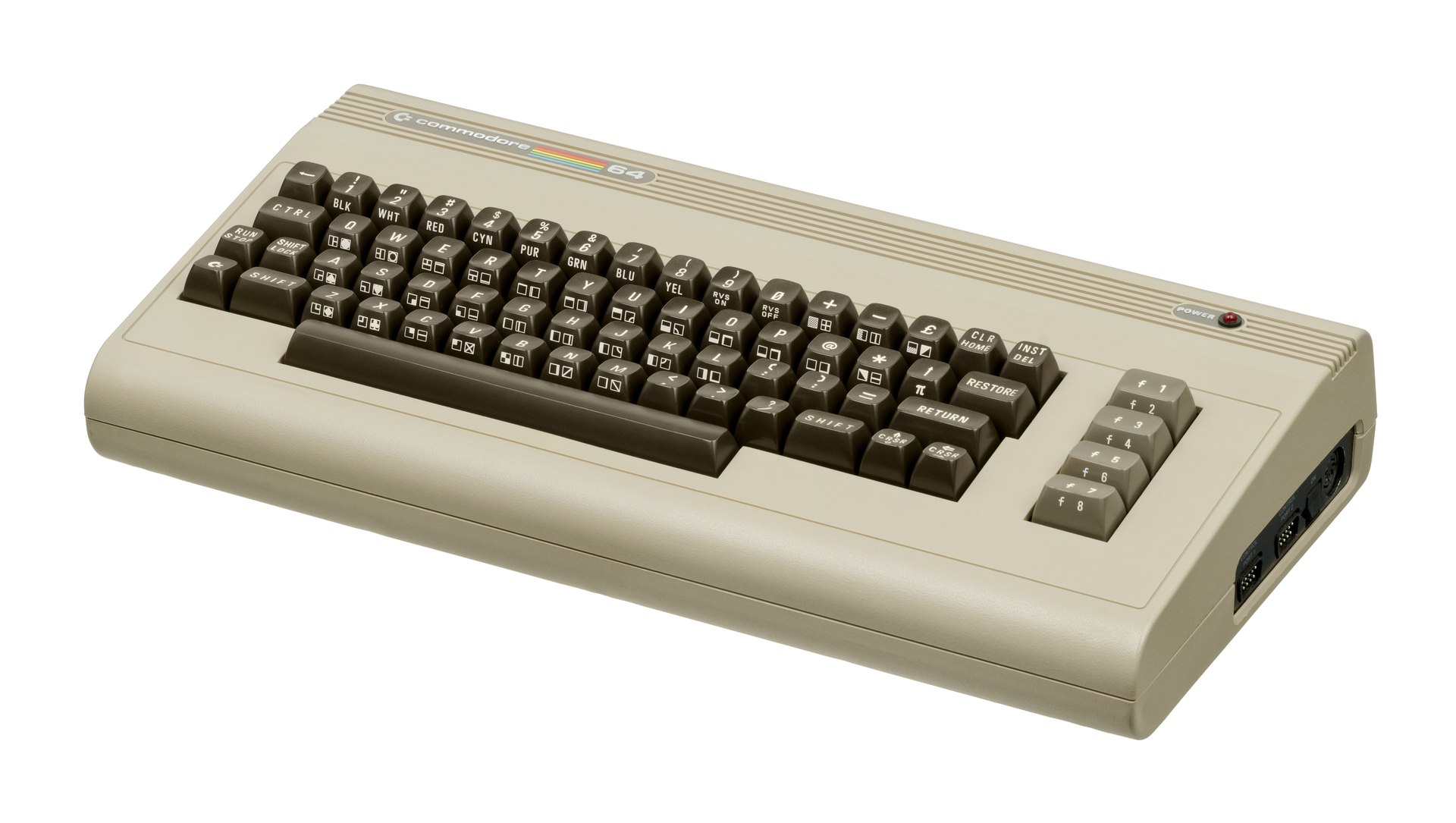
Every great 8-bit machine has a game it envies. For Commodore 64 owners in 1983, the object of envy was unusually specific: Jetpac, Ultimate Play The Game’s jetpack-and-rocket-kit miniature masterpiece, which appeared on the ZX Spectrum, the VIC-20 and the BBC Micro but never on the C64. It took thirty years, a cartridge competition and two Scandinavian developers to settle the score. Rocket Smash EX, released by RGCD in January 2015, is not a port of Jetpac — and that distinction, which our original stub blurred, is exactly why it deserves attention. It is a new game built in Jetpac‘s image, expanded well beyond it, and finished to a standard that made it one of the defining C64 cartridge releases of its decade.

The hole in the C64 library
First, the classic itself. Jetpac was Ultimate’s debut, written by Chris Stamper with graphics by his brother Tim and released in May 1983 — a single screen, three platforms, and a perfect loop: Jetman assembles his rocket from three falling sections, feeds it six fuel pods while shooting the planet’s increasingly rude wildlife, grabs falling treasure for points, and blasts off to do it all again with a new rocket every four levels. It ran in 16K, won Game of the Year at the 1983 Golden Joystick Awards, and sold over 300,000 copies, bankrolling the company that became Rare. Its sequels wandered — Lunar Jetman stayed home on the Spectrum, Solar Jetman went to the NES, and a finished C64 Solar Jetman died unpublished when the NES version underperformed — but the original’s C64 absence remained total. The machine that outsold everything else in the eighties simply never got the game, which made it irresistible raw material for the homebrew era.
A competition entry with unfinished business
Rocket Smash began as an entry in RGCD’s 2013 C64 16KB Cartridge Game Development Competition, released on 1 December 2013. The credits are worth stating precisely, because they are sometimes garbled in retelling: code by John Christian Lønningdal, and design, music and graphics by Saul Cross — both RGCD members — with the game placing fifth in the competition on 64.2 points. Judges singled out its presentation and slickness, and players responded the way they had in 1983: here, at last, was the C64 doing the rocket-assembly loop with colour, speed and a proper laser. But a 16KB competition build is a sketch by definition, and the team always intended more. RGCD’s own launch post for the finished version admits the expanded game then sat on the back burner for almost two years while real life intervened, with fans nagging for its completion throughout — a development timeline any hobbyist will recognise in their bones.
What the EX actually adds
The EX is a 64KB cartridge — four times the competition build’s budget — and the expansion is spent on structure, not just decoration. The core loop honours the inspiration while re-choreographing it: levels are grouped in four stages, the first asking you to collect and stack your crashed rocket’s sections before ferrying fuel pods to it, the remaining stages being refuelling runs, with the rocket’s hull changing colour as it fills and blast-off only possible once it is full. Around that loop the EX wraps a daft workplace-in-space fiction entirely its own — a hated boss, a psychotic company computer, a dwindling oxygen supply as the real clock, the chance of meeting an exotic alien princess, and precious stones to skim as a pay supplement. There is a story mode with cutscenes alongside the pure arcade loop, three difficulty levels, oxygen capsules to grab mid-stage, three lives, and a hidden Easter-egg game contributed by chiptune musician 4mat. Controls are one joystick and total clarity: up thrusts, left and right drift, fire shoots. Rock Paper Shotgun’s contemporary verdict caught the balance well, calling it an homage that was far from a straight remake — a brand-new shooter wearing contemporary design sense, built for hardware from 1982.
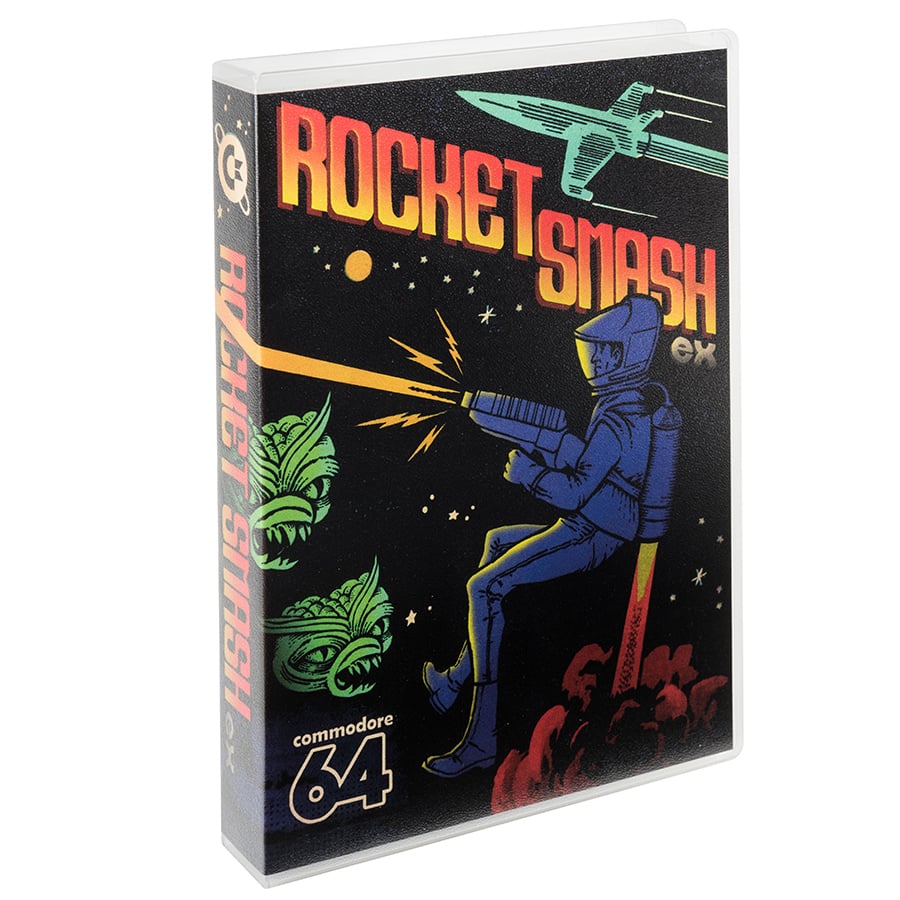
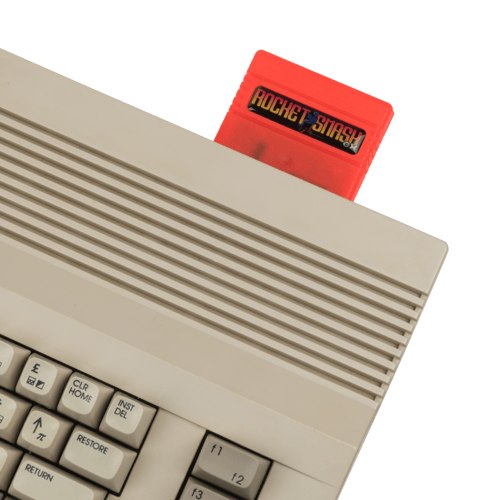
The presentation was a team effort in the full RGCD style: Flemming Dupont provided the 1950s B-movie cover illustration, Dr. Martin Wendt gave technical support, and Tim Harris and Ray Lejuez are thanked for help along the way. The physical release, on sale from late January 2015 (the CSDb records the cartridge release on 29 January), was priced at £25 for the standard edition and £30 for the deluxe: a 64KB board in a transparent neon-orange shell lit from within by a white LED, the deluxe version in a modified Universal Game Case with a twelve-page manual, an A3 poster and a bundle of stickers. Psytronik Software sold cassette and disk editions alongside, and the digital version was given away free or pay-what-you-want — the scene’s standard, generous model of charging for the object and gifting the code. Commodore Free magazine’s reviewer ran out of criticisms and awarded it 10/10.

Thirty seconds to learn
What makes the EX worth the extra two years becomes clear within a single credit. The screen is a small arena of platforms above a planet’s surface, your crashed rocket waiting in pieces or standing thirsty at the side. Rocket sections and fuel pods arrive one at a time and must be ferried — carried by flying into them, delivered by passing over the ship — while meteor showers streak through the playfield and each planet’s alien fauna patrols its own rude patterns. Your laser handles the fauna. Nothing handles the clock except speed: oxygen drains continuously, topped up only by the capsules that periodically appear, and a collision with anything hostile costs one of your three lives just as surely as suffocation does. Every pod delivered visibly fills the rocket, its hull shifting colour as the tank rises, so the whole screen is a progress bar you can die next to. It is Jetpac‘s grammar — assemble, fuel, survive, launch — but rephrased at a brisker tempo, with more on screen, more variety between planets, and a difficulty curve that assumes you have had forty years of practice at this sort of thing. Lemon64’s voters, rarely sentimental, rate it 8.29; the cartridge sold through its later reissue entirely.
Why a Jetpac homage mattered in 2015
It is tempting to file Rocket Smash EX as nostalgia, but its real subject is the C64 cartridge scene’s maturity. RGCD’s annual 16KB competitions had become a reliable pipeline — constraint first, expansion later — and Rocket Smash is the pipeline’s textbook success: a fifth-place compo entry polished, over two years of evenings, into a flagship commercial release without losing the compo version’s snap. CSDb voters still rate the EX cartridge at 9.46 out of 10, and RGCD’s later reissue kept it in print at £32 until it sold out. The game also quietly completes a historical rhyme. Ultimate never gave the C64 a Jetpac; Rare’s eventual Jetpac revivals went to Nintendo and Xbox hardware. So the C64’s definitive rocket-assembly game arrived instead from two fans working in the demoscene tradition, on a glowing orange cartridge, thirty-two years late and entirely on the machine’s own terms. Some debts take a while to settle. This one was worth the wait.