
In 1982, Mattel sold a plastic module that plugged into the side of the Intellivision, cost real money, and did exactly one thing: it let your games talk. The Intellivoice Voice Synthesis Module is easy to explain and hard to overstate. Inside consumer hardware of the day, speech was synthesised by a dedicated General Instrument voice chip — the family of technology behind the era’s talking dashboards and Speak & Spell-style toys — capable of producing intelligible, if distinctly robotic, words and phrases. Mattel built the module, designed three launch games around it, and promised a library. What it delivered, in the end, was only a handful of cartridges. What it proved was much bigger: that a game console could speak, that players would listen, and that an entire design discipline — audio as an information channel — was waiting on the other side of the cartridge slot.

Why voice, and why then?
Context is everything. The Intellivision’s whole proposition was sophistication: better graphics than the Atari 2600, a keypad controller built for strategy and simulation, sports games that looked like television. Mattel’s famous comparison advertisements — George Plimpton, patrician and amused, walking viewers through side-by-side humiliations of Atari — sold the machine as the thinking person’s console. Voice fit that pitch perfectly. Arcade games had begun to speak (Berzerk’s taunts, Gorf’s mockery), and speech read as the future arriving on schedule. A module that made the home machine talk was not a gimmick in Mattel’s strategy; it was the flagship of the sophistication fleet, announced with confidence and launched in 1982 alongside three games engineered to show three different things voice could do.
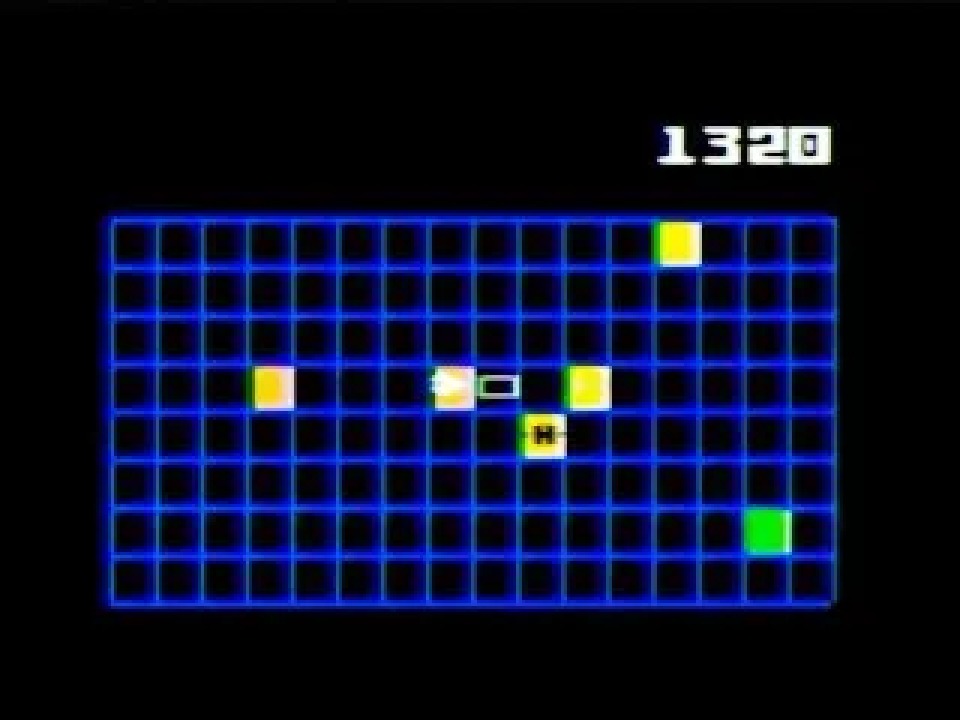
Those three games remain the core of the Intellivoice story, and each chose a different job for speech. Space Spartans made the voice a ship’s computer — narrating a strategy campaign, reporting damage, confirming repairs — turning speech into a second pair of eyes for a game whose visuals were deliberately abstract. B-17 Bomber made it a crew: fighter warnings delivered as clock positions, exactly as a real bomber’s intercom worked, so your eyes could stay on the flying. Bomb Squad made it theatre — an expert talking you through a defusal while the bomb itself heckled. Three games, three theories of voice design, all sound. The tragedy of the Intellivoice is not that the idea failed. It is that the idea worked, immediately and obviously, and the economics of 1982–84 killed it anyway.
What went wrong
The arithmetic was brutal. The module was an extra purchase on top of an already premium console, and voice games cost more to develop: speech data was bulky by cartridge standards, recording and encoding it was a specialist process in an era before cheap audio, and the synthesised vocabulary had to be planned word by word. Each voice game therefore carried a cost structure that only made sense at mass-market volumes — and the mass market, in late 1982, was about to fall out of the industry entirely. The great video game crash of 1983–84 crushed exactly the kind of discretionary, premium, add-on economics the Intellivoice depended on. Mattel’s announced pipeline — more voice titles were promised and previewed — evaporated as Mattel Electronics itself was shut down in early 1984. A small number of additional voice games did reach the Intellivision, including a voice edition of Tron Solar Sailer and World Series Major League Baseball, but the line ended as a fascinating cul-de-sac: roughly a handful of cartridges, one module, and a design idea orphaned for the rest of the decade.
It is worth resisting the easy conclusion that the market rejected talking games. Players who owned the module loved it — the three launch titles are still, individually, among the most respected games on the system (all three are reviewed in this wave) — and the technology’s descendants are everywhere. Voice as a gameplay channel returned through CD-ROM storage, through headsets and multiplayer chat, through every squad game whose callouts assume your eyes are busy. The Intellivoice didn’t guess wrong about the future. It arrived about ten years before the storage economics that made the future cheap, which is a different and much more honourable way to be early.

The games that almost were
The saddest documents in the Intellivoice archive are the catalogues. Mattel’s marketing promised a growing voice library, and period previews and internal lists name further voice projects that the crash cancelled before release — the module’s installed base was supposed to be served by a continuing line, not a launch trio and a coda. The pattern is a familiar one in hardware history: the add-on’s economics needed the games, the games’ economics needed the add-on’s installed base, and the whole circle needed one more healthy year than 1983 was willing to give it. When Mattel Electronics closed, the voice programme closed with it, mid-sentence — an apt, if cruel, metaphor for a talking machine.
What survived is nonetheless a complete idea in miniature. Three launch games demonstrating narration, crew communication and theatre; a sports title proving voice could carry statistics and play-by-play flavour; a Tron game proving the module could serve licences too. As a proof of concept for an entire design discipline, the Intellivoice library is small, finished and eloquent — which is more than most cancelled futures leave behind.
The voice itself
And then there is the sound, which no account of the module should skip. The Intellivoice does not sound like a person, and it never tried to. It sounds like 1982’s idea of a machine mind: flattened, buzzing, eerily calm, pronouncing doom and encouragement in the same unhurried register. “Mattel Electronics presents… Space Spartans,” it announces at boot, and four decades of owners can still hear the exact cadence. That voice has become the Intellivision’s audio signature — sampled, imitated and lovingly parodied — the way the 2600’s beeps belong to Atari. Synthesised speech dated fast as technology; as character, it never dated at all.
Collecting the voice today
There is a coda that says everything about the module’s strange immortality. The Intellivoice has become the Intellivision’s party trick in the emulation and compilation era — the feature curators demonstrate, the voice impression every fan can do, the sound that instantly identifies the system in a documentary. Technologies that ship in the millions become invisible. The Intellivoice, which shipped in a fraction of that, became unforgettable, for the oldest reason in entertainment: it had a voice, and the voice had character.
For today’s Intellivision owner, the Intellivoice is one of the system’s most rewarding side quests. The module itself is common enough on the second-hand market — it sold respectably in its window — and the launch trio are all findable cartridges; the later voice releases are scarcer and carry the premium to prove it. Two practical notes: the games require the module absolutely (they are not the same games with the sound off; the speech is the interface), and the module is a pass-through device, so a working chain of console–module–cartridge is the thing to test when buying. What you get for the effort is the most distinctive evening the Intellivision offers — a television that talks to you in a robot’s voice while you fly a bomber over Europe. In 1982 that was the future. Played today, it still feels like somebody’s future. Just not the one that happened.