
At a glance: Jelly Monsters · VIC-20 · Commodore, 1981 · Maze chase · Score: 8.5/10
Jelly Monsters is the most famous withdrawn game on the VIC-20, and the story is the review in miniature: Commodore commissioned a Pac-Man-style game from HAL Laboratory, the Japanese studio then supplying much of the machine’s early software, and HAL delivered a conversion so close to Namco’s arcade original — same maze logic, same ghost personalities, same fruit bonuses, same feel — that it could not stay on sale once Atari’s home rights to Pac-Man entered the argument. It was pulled, replaced in Commodore’s catalogue by the legally safer Cosmic Cruncher, and instantly became the connoisseur’s cartridge. Play it today and the legend makes sense within one maze: this is not a clone wearing Pac-Man’s clothes. It is Pac-Man, wearing a false moustache, on a machine with 5K of memory.
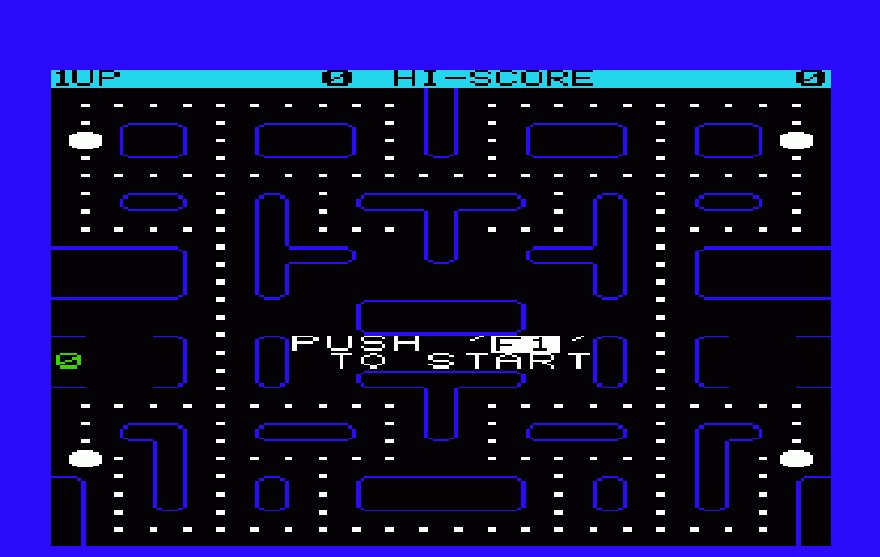
Arcade fidelity in 5K
The fidelity is the astonishment. The maze layout, the energisers, the side tunnel, the fruit appearing under the ghost house, the four pursuers with their distinct hunting temperaments — the one who chases, the one who ambushes, the one who patrols, the one who wanders — HAL rebuilt the arcade’s behavioural symphony in the VIC’s character graphics, and it sings. Your hero, a yellow chomper in all but trademark, handles with the crispness the genre lives by: corners cut cleanly, reversals are instant, and the speed curve climbs the way the arcade’s does. Even the intermission spirit of the original survives in miniature. On a machine whose other maze games were approximations and inspirations, Jelly Monsters is a document of what the VIC-20 could do in the hands of programmers who refused to approximate.
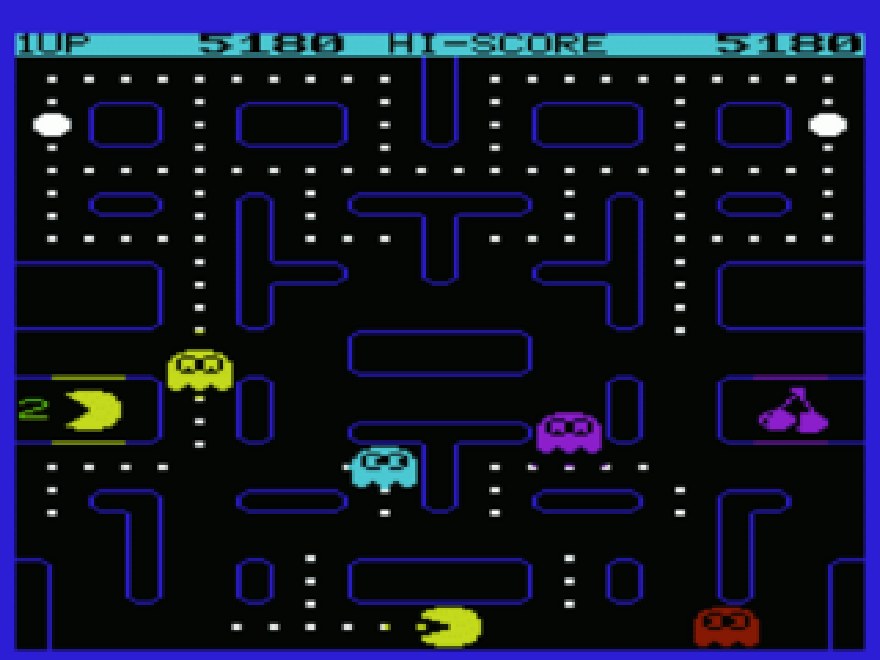
Judged as a VIC-20 program specifically — which is where its legend must be earned — it might be the most impressive cartridge of the machine’s first year. HAL’s Japanese team understood the VIC hardware at a level Commodore’s Western software had not yet reached, and Jelly Monsters shows it in a hundred small ways: no slowdown with all four monsters hunting, clean sprite-substitutes built from characters, sound that apes the arcade’s wail and munch with the VIC chip’s limited voices. The withdrawal adds mystique, but the mystique is earned. If the lawyers had never existed, this would simply have been the VIC’s official Pac-Man, and remembered as one of the best home versions of the era on any system.
Hunting the withdrawn cartridge
Because it was pulled, original Jelly Monsters cartridges are scarcer than Commodore’s standard fare — scarcer, not rare — and the hunt is part of the fun for collectors. The game’s afterlife is pure VIC folklore: it is the cartridge that demonstrates both the machine’s hidden depths and the era’s chaotic licensing, when a Japanese studio could accidentally out-convert the rights holders. It also reframes its replacement: Cosmic Cruncher is not a lesser game because Commodore lacked talent, but because Commodore’s lawyers required distance. Distance is the one thing Jelly Monsters refuses to keep.
For players rather than historians, the verdict is simpler. This is the maze chase to own on the VIC-20, the one that still draws a crowd, and the one whose high-score chase feels most like the arcade’s — patterns learnable, ghosts readable, energiser counterattacks glorious. Forty-plus years on, the monsters are still jelly, the maze is still perfect, and the little yellow hero is still running. Catch him while you can — Commodore once had to.
The masterpiece and the moral
There is a larger lesson in Jelly Monsters that the retro era keeps relearning: fidelity is a form of respect. HAL Laboratory’s programmers — the same Japanese studio culture that supplied several of the VIC’s most polished early titles — plainly believed that the VIC-20’s owners deserved the arcade game itself, not a gesture toward it, and they spent the machine’s tiny resources accordingly: behaviour before decoration, pattern before palette. The withdrawal that followed is usually told as a comedy of licensing, and it is funny — but it is also a tribute. Nobody withdraws a mediocre clone with this much urgency. Jelly Monsters was pulled because it was, in the only sense the market cared about, too good at being Pac-Man for a machine that did not have the rights to be Pac-Man.
For the VIC-20 library, its survival in collectors’ hands completes a satisfying arc. The machine that was sold as the friendly computer for everyone turns out to have hosted, briefly and semi-legally, one of the finest home conversions of the biggest arcade game on Earth. Every VIC collection tells the machine’s story; a collection with Jelly Monsters in it tells the story with its best anecdote included.
In the slot today
A technical postscript, because the how deserves it: HAL’s team achieved the arcade’s behaviour with the VIC’s character graphics by treating the maze itself as the machine’s home turf — the VIC was always happiest moving characters, and Jelly Monsters is a game that never asks it to do anything else. Every celebrated VIC trick is in service here: redefined characters for the monsters’ animation, multicolour modes for the maze’s glow, timing that keeps four independent ghost logics running inside a television frame. It is the definitive proof that the VIC-20’s constraints were a style waiting for masters, and that in 1981 the masters were, briefly, working for Commodore Japan. The rights dispute ended the arrangement. The cartridge it produced did not end.
That is the final reason this review scores Jelly Monsters at the top of the maze scale: it is simultaneously the best game of its kind on the machine and the best evidence of what the machine, and its first great studio, could do together. Legends in retro gaming are usually inflated by scarcity. This one was deflated by it for years — dismissed as a rumour by those who had never played it. Play it. The rumour is true, and better than the telling.
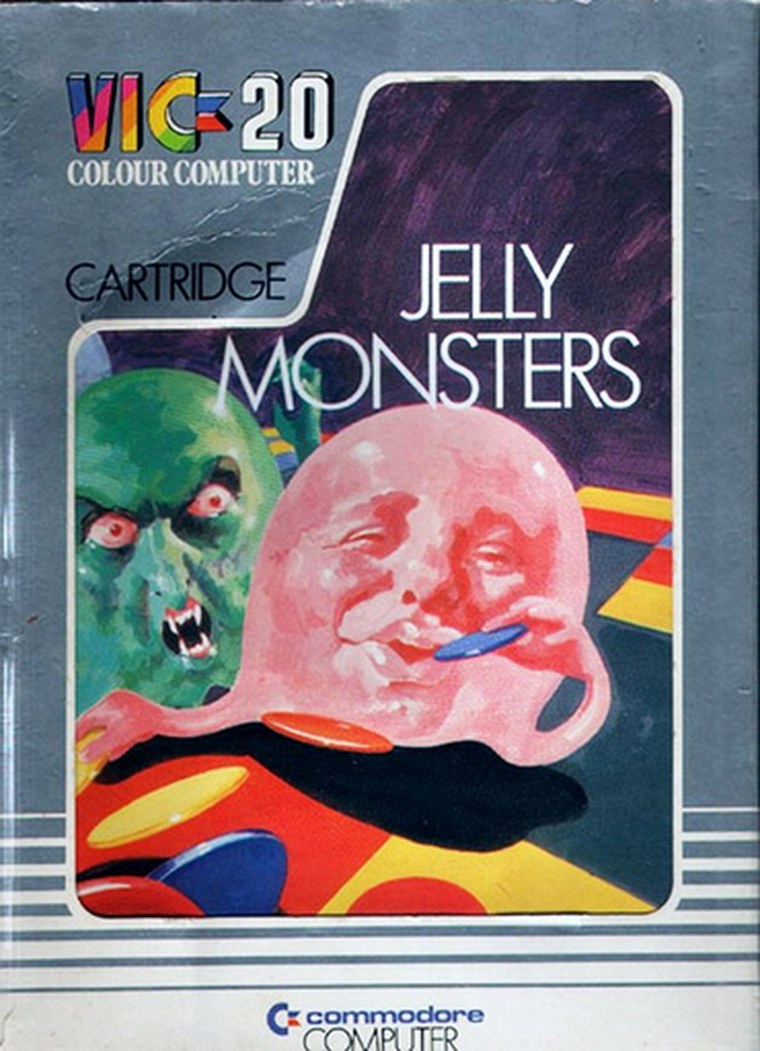
One more practical grace: Jelly Monsters is, by the standards of withdrawn software, a merciful hunt. Commodore manufactured in real quantity before the axe fell, and the cartridge surfaces regularly in bundles and job lots, often unrecognised by sellers as anything special — which means the best maze game on the machine is also one of its best-value connoisseur purchases. Learn to spot its label across a retro fair and you will, eventually, be rewarded with the VIC-20’s worst-kept secret at a common game’s price. Then the only remaining task is the one HAL set in 1981: clear the maze, learn the monsters, and try to leave the arcade’s ghost — all four of them — behind you.
This is not a clone wearing Pac-Man’s clothes. It is Pac-Man, wearing a false moustache, on a machine with 5K of memory.
Jelly Monsters is the VIC-20’s definitive maze chase and a landmark of early conversion craft — arcade fidelity that embarrassed the lawyers and delights players to this day. Scarcer than most Commodore cartridges and worth every bit of the hunt.
Verdict: the withdrawn wonder. If you buy one maze game for the VIC-20, buy this one.
Hunt it patiently, pay the modest premium without complaint, and then do the only thing that honours it: learn the patterns, master the maze, and beat your own score. The monsters were withdrawn from sale, never from duty. They are still in the maze, waiting for the yellow hero. Be the hero.