At a glance: The King of Fighters R-2 · Neo Geo Pocket Color · SNK, 1999 · Fighting · Score: 8.5/10
The King of Fighters R-1 had been the monochrome Neo Geo Pocket’s proof of concept; R-2, a launch-window title for the Color in 1999, is the finished article. Adapting the enormous King of Fighters ’98 — a game with nearly forty fighters in its arcade form — into a two-button pocket fighter sounds like an exercise in loss. Instead, SNK treated it as an exercise in editing, and what survives the edit is the essence of KOF: team tactics, meter management, and characters with more attitude than the screen can hold.
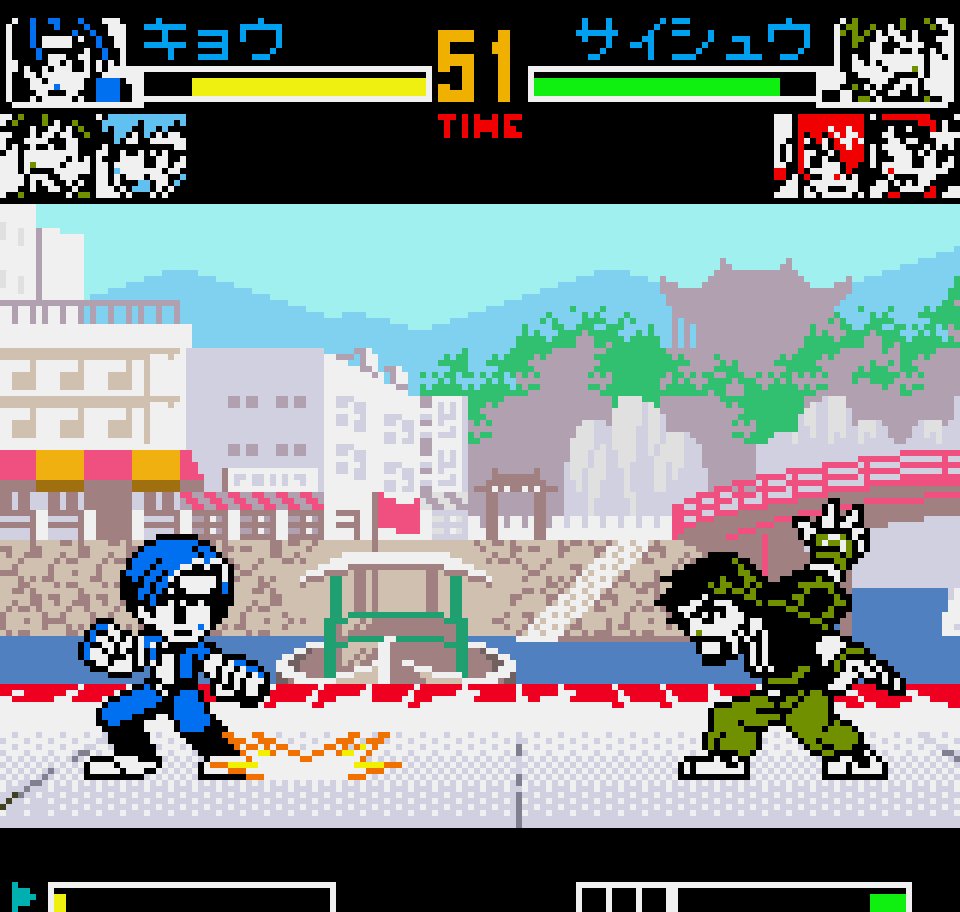
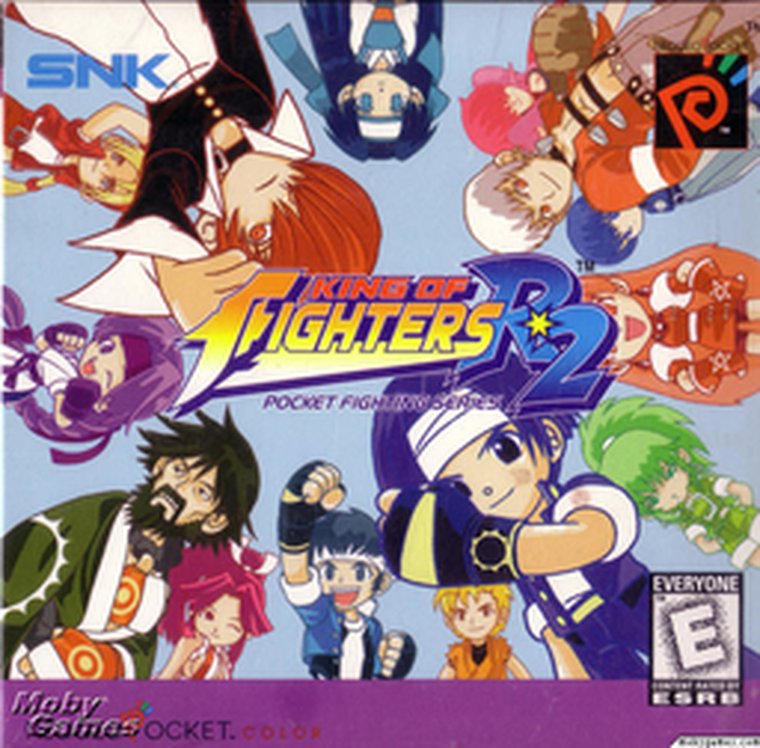
Fourteen fighters take the stage in super-deformed form, drawn largely from the ’98 roster: Kyo and Iori headline, Terry Bogard and Ryo Sakazaki represent the older SNK houses, Athena and Mai fly the flag for the fan favourites, and Saisyu Kusanagi and Kasumi Todoh join from the wider family. Everyone’s signature specials are present and recognisable — the fireballs arc right, the uppercuts bite, Iori’s Rekka chains flow — translated into a control scheme where taps and holds of two buttons choose light and heavy strikes, and the clicky stick handles the quarter-circles with arcade positivity.

Teams, singles and the Making mode
The KOF format is respected. Team Play fields three-fighter squads in the series tradition, Single Play runs one-on-one, and a link cable opens two-player versus. The headline addition is Making mode, R-2’s most forward-thinking feature: you take a fighter on a quest against Rugal Bernstein, and between bouts you customise them with skills — new abilities, stat changes, special properties — building, in effect, your own variant of a classic character. RPG-flavoured character building in a 1999 handheld fighter was close to unheard of, and it gives solo players a long game to chew on after the ladders are cleared.
Then there is the famous link. Connect R-2 to a Sega Dreamcast running King of Fighters: Dream Match 1999 or ’99 Evolution via the NGPC-Dreamcast cable, and data flows both ways: points earned on the big screen unlock skills in Making mode, and your pocket progress feeds gallery unlocks at home. Nintendo would market GameCube-GBA connectivity as revolutionary two years later; SNK and Sega’s customers were already doing it, across rival hardware no less.
Character building, team tactics and a Dreamcast link that anticipated Nintendo’s connectivity push by two years — R-2 was ahead of the whole industry.
How it plays, honestly
The fighting itself is brisk and readable. The super-deformed sprites sacrifice reach and menace but gain clarity, combos are short and satisfying rather than technical, and the AI ladder climbs fairly toward a Rugal who remains, contractually, a wall. Presentation is bright without being busy; stages are simplified but characterful, and the chiptune soundtrack keeps the ’98 themes’ swagger. What you lose versus the arcade is real: fewer characters, shorter movelists, none of ’98’s depth in team order strategy. What you keep is speed, feel and personality, which for a pocket fighter is the right trade every time.
R-2’s modern afterlife is kind — it headlines the Neo Geo Pocket Color Selection releases on Switch and PC, where its charms read clearly to new players. On original hardware it benefits, as every NGPC fighter does, from the micro-switched stick, and from battery life measured in dozens of hours rather than the Game Boy Color era’s usual compromises elsewhere.
A launch line-up’s anchor
R-2’s timing mattered. As a first-wave Color title in every territory, it was for many buyers the second cartridge they ever owned for the machine, and it carried the job of proving the Pocket Fighting Series concept: that chibi sprites and two buttons could hold a real KOF. Its success — it is among the system’s best-remembered and most widely owned games — green-lit the whole subsequent line. Look at it next to its monochrome predecessor, R-1, and the generational leap inside a single handheld family is vivid: colour alone transforms the stages, but the real gains are in speed, roster polish and the Making mode’s ambition.
One more virtue deserves record: the cartridge’s generosity with single players. Between Team and Single ladders, the Making quest, unlockable skills and the gallery ambitions fed by the Dreamcast link, R-2 understood that a handheld fighter lives or dies on what it offers a person alone on a train. Modern fighting games build entire live-service structures around that insight. R-2 did it with a link cable, a notebook’s worth of skills and 1999 technology.
Presentation details reward a closer look. The stages compress KOF ’98’s globe-trotting into backdrops that still read as places — a street, a shrine, a harbour at dusk — and the between-round presentation keeps the series’ tournament electricity: the announcer’s text flourishes, the win poses, the team celebrations. The super-deformed style, so easy to dismiss as cuteness, is doing structural work here: at 160 pixels wide, a normally-proportioned fighter is a smudge, but a big-headed one has a face, and a face has character. R-2’s cast has more visible personality per pixel than any fighter of its generation.
For series historians, one more layer: R-2 is effectively the last word of the ’98 era, a victory-lap edition of the Dream Match concept built for the pocket while the arcade line moved on to ’99’s new saga. It plays like a love letter written at exactly the right moment — after the masterpiece, before the reinvention — and that timing is part of why it feels so complete.
For the modern player meeting R-2 in the Selection compilations, one tip from the veterans: spend your first hours in Making mode. It is the feature with no equivalent in the arcade canon, the one that turns a conversion into an original — and it explains, better than any review can, why this cartridge’s owners kept it in the slot long after the ladders were memorised. Your fighter, your build, your quest against Rugal: in 1999, in a pocket, that was the future arriving early.
The R-line would not continue on the system — SNK’s fighting future on the NGPC belonged to the crossovers — which leaves R-2 as the definitive pocket King of Fighters, complete in itself. Definitive is the right word. The crown fits.
Set it beside its contemporaries one final time. In 1999, the Game Boy Color’s fighting shelf held conversions that apologised for themselves; the WonderSwan’s held curiosities; and here was a pocket KOF with teams, tactics, a customisation quest and a wire to a Dreamcast. The gap was not incremental — it was categorical, and it explains why this cartridge, more than any other, converted fighting-game players into NGPC owners. Systems are bought for one game. For a remarkable number of people in 1999, this was the game, and the system it sold them turned out to be full of them.
Verdict
Match of the Millennium would outshine it within the year, and R-2 knows its place in the pecking order: it is the consummate series conversion rather than the crossover event. But as a distillation of the biggest fighting series of its day into a genuinely excellent pocket game — with ideas about customisation and connectivity the industry took years to catch up with — R-2 is essential SNK. Pocket royalty, fairly crowned.