
LEAPFROG · PRESERVATION · FRESH CARTRIDGE — FEATURE & INTERVIEW
Project: LeapArchive · Run by: GhostyTongue (ParkRelics Labs) · Covers: LeapFrog LeapPad and Leapster Explorer software · Interview: conducted by email, November 2026
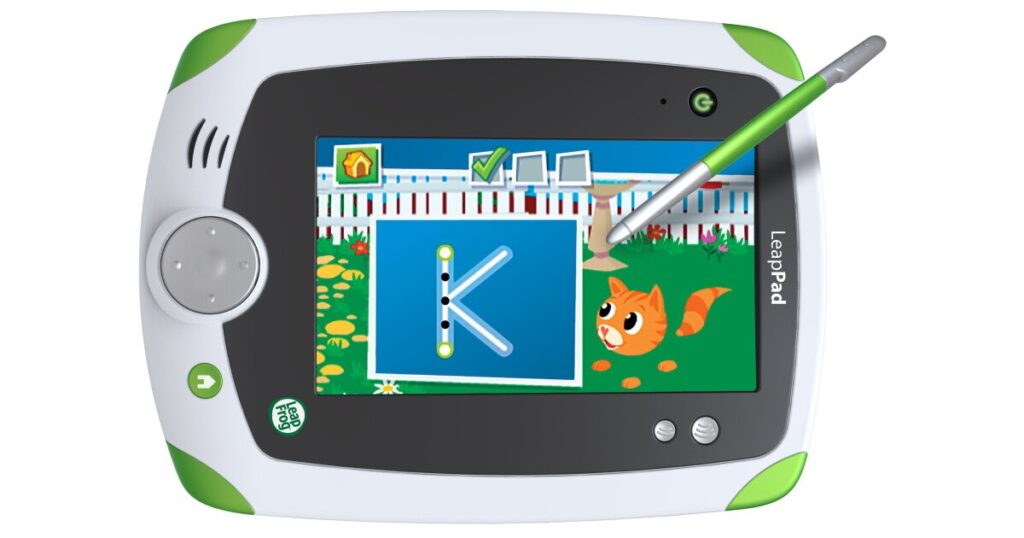
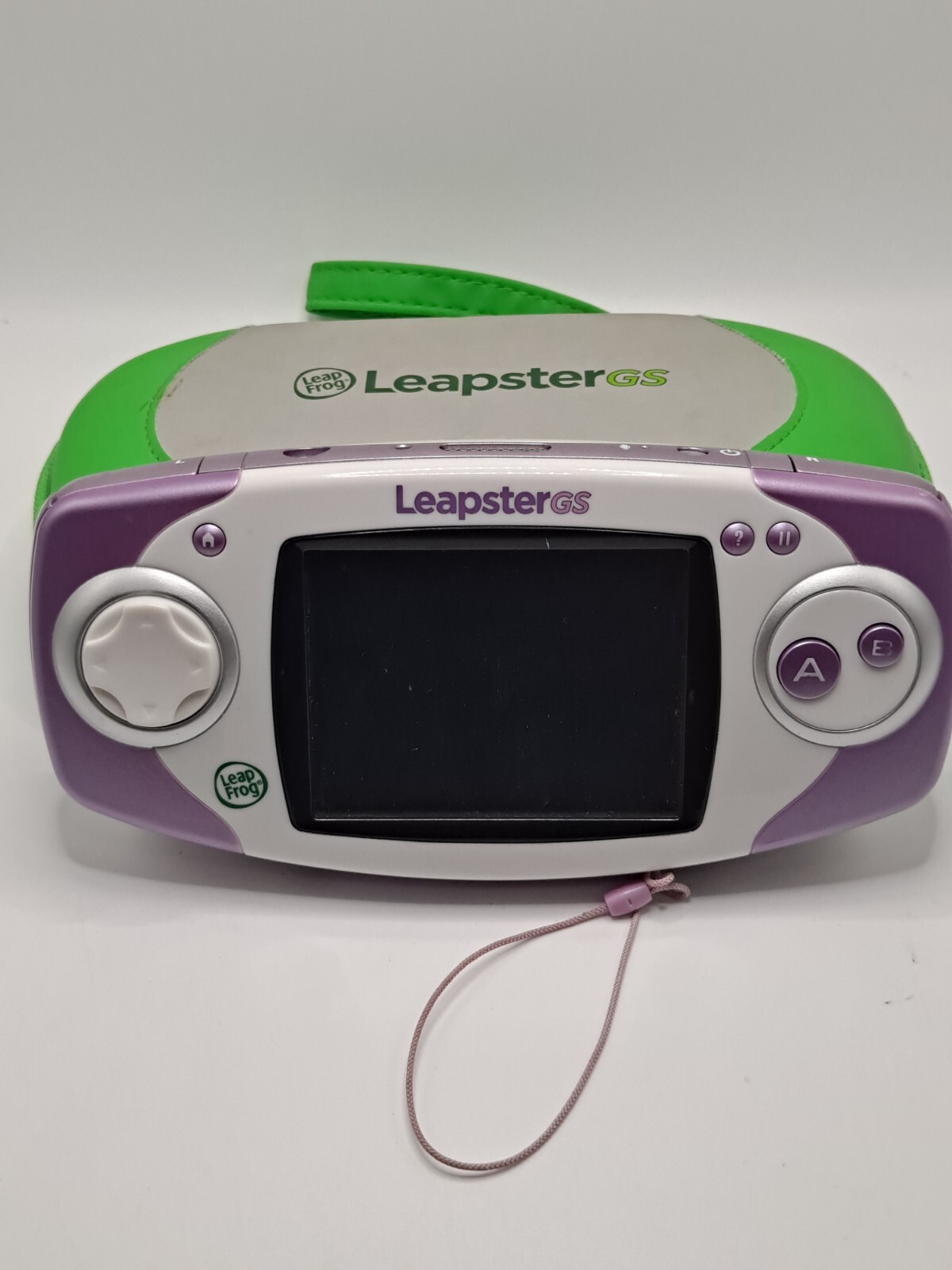
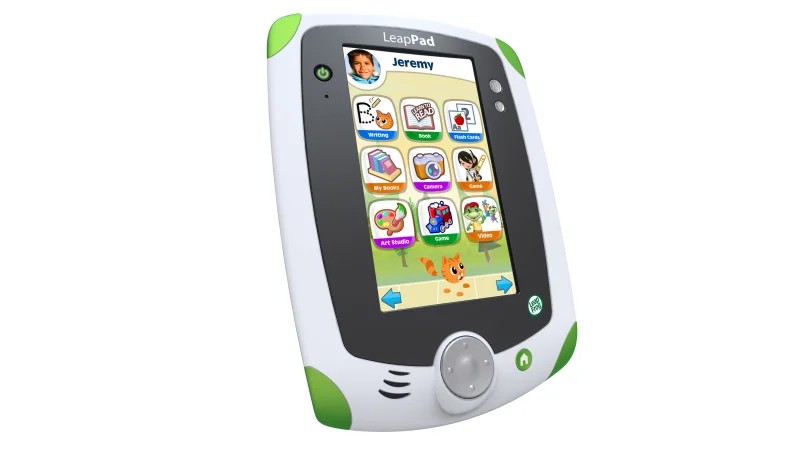
On September 30, 2021, LeapFrog quietly switched off a world. The company’s support page still carries the notice, in the flat language of end-of-life announcements: “Effective September 30, 2021, LeapFrog Connect and the App Center for these devices have been discontinued and are no longer available.” The hardware — LeapPad tablets, the Leapster Explorer and LeapsterGS handhelds — would “continue to operate as normal with the last content that was loaded.” Which is a gentle way of saying that whatever was on your child’s tablet that morning is all there will ever be. The store is dark. The library is closed.
Physical cartridges survive this kind of death. They sit in toy boxes and thrift-store bins, patient as fossils, waiting for a battery and a curious hand. Downloads do not. The App Center sold games, apps, e-books and videos that existed only as files on LeapFrog’s servers, delivered through the LeapFrog Connect software to parent accounts that could hold purchases on up to five devices each. When the servers went away, the only complete copy of that library went with them — unless somebody had already made one.
Somebody had. Since early 2024, an archivist working under the name GhostyTongue, through a small outfit called ParkRelics Labs, has been building LeapArchive — a catalog of the LeapPad and Leapster Explorer software ecosystem that, by his latest inventory, now runs to approximately 1,958 titles and 8,544 software files, around 638 GB in total. He believes it may be close to the whole thing. Before we go further, here is what “the whole thing” involves.
FULL DISCLOSURE — READ THIS FIRST. LeapArchive is an independent project, run by GhostyTongue under the name ParkRelics Labs, that catalogs software released for LeapFrog’s LeapPad tablets and Leapster Explorer handhelds. Readers should know that the project does not stop at cataloging: its site distributes downloads of the actual commercial LeapFrog software packages it preserves. LeapFrog has not authorized those downloads, and their legal standing is, at best, unsettled.
The founder’s background is part of the record, too. In a July 2023 interview with the security-news outlet HackRead, GhostyTongue described how he first got into archiving through leaking: he discovered documents on two Walt Disney Company content-delivery networks that contained FTP login credentials, used them to access two FTP servers, saved the data he found there, and shared it gradually through his Internet Archive account. The interview ran alongside HackRead’s reporting on a major Nickelodeon data leak, in which he had been a vocal source with inside information.
We are covering LeapArchive because the cataloging work — a census of a library the industry let vanish — is preservation work that matters, and because nobody else is doing it for these machines. We do not endorse the downloads, we do not link to them, and nothing in this article will point you toward them.
A Census of a Vanished Store
Start with the arithmetic of disappearance. LeapFrog historically advertised more than 1,000 titles in its digital ecosystem. The web storefront GhostyTongue examined in the course of his research displays approximately 330. His catalog holds nearly 2,000 entries. The gap between the second and third numbers is the story: hundreds upon hundreds of pieces of software that were sold, downloaded and played — and that no store, no publisher page and no official record now admits to existing.
He is careful about the claim, and we will be careful repeating it. “That’s my current assessment, rather than something I can independently guarantee with absolute certainty,” he says of his belief that the archive may approach the complete App Center ecosystem. “Catalog entries, unique games, regional variations, revisions, and individual software packages aren’t necessarily interchangeable measurements. I don’t want to suggest that every entry represents a completely different game.” Nor is this a games library in the way this site usually means it: by the archive’s own catalog count, only around 200 of its titles are games at all. The rest is the long tail of a dead ecosystem — learning apps, e-books, videos and regional variants — precisely the material that evaporates first, because nobody ever thought it was worth keeping.
That is the gap LeapArchive exists to fill. As GhostyTongue put it when he first wrote to us: “Educational gaming platforms don’t always receive the same preservation attention as traditional consoles.” He is right, and the reason is structural. The Game Boy gets preservationists because adults collect their own childhoods. A LeapPad was somebody else’s childhood, and its software lived on a server, behind a parent account, in a store that has now been switched off. When a platform like that dies, it does not leave a collector market behind to catch it. It leaves an archivist, or it leaves nothing.
LeapFrog Preservation Is a Dating Problem
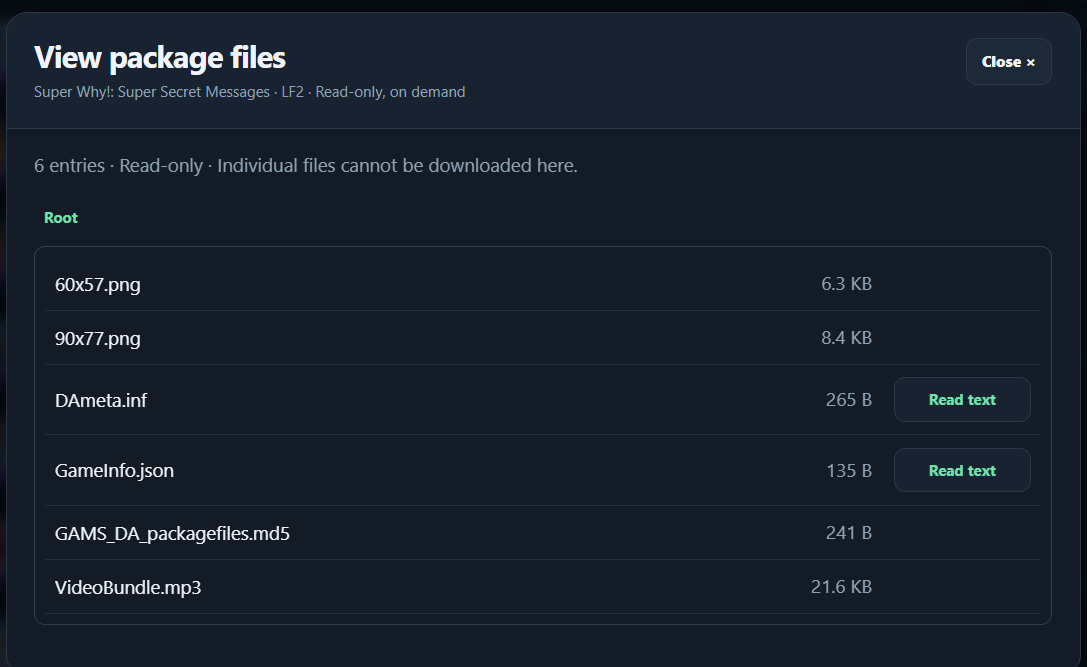
What separates LeapArchive from a hard drive full of files is the cataloging discipline. GhostyTongue does not trust filenames or leftover store descriptions. Verification, in his process, means opening the packages: examining actual contents, internal structures, file sizes, timestamps and information embedded in the software itself, then reconciling all of it against product identifiers and catalog records.
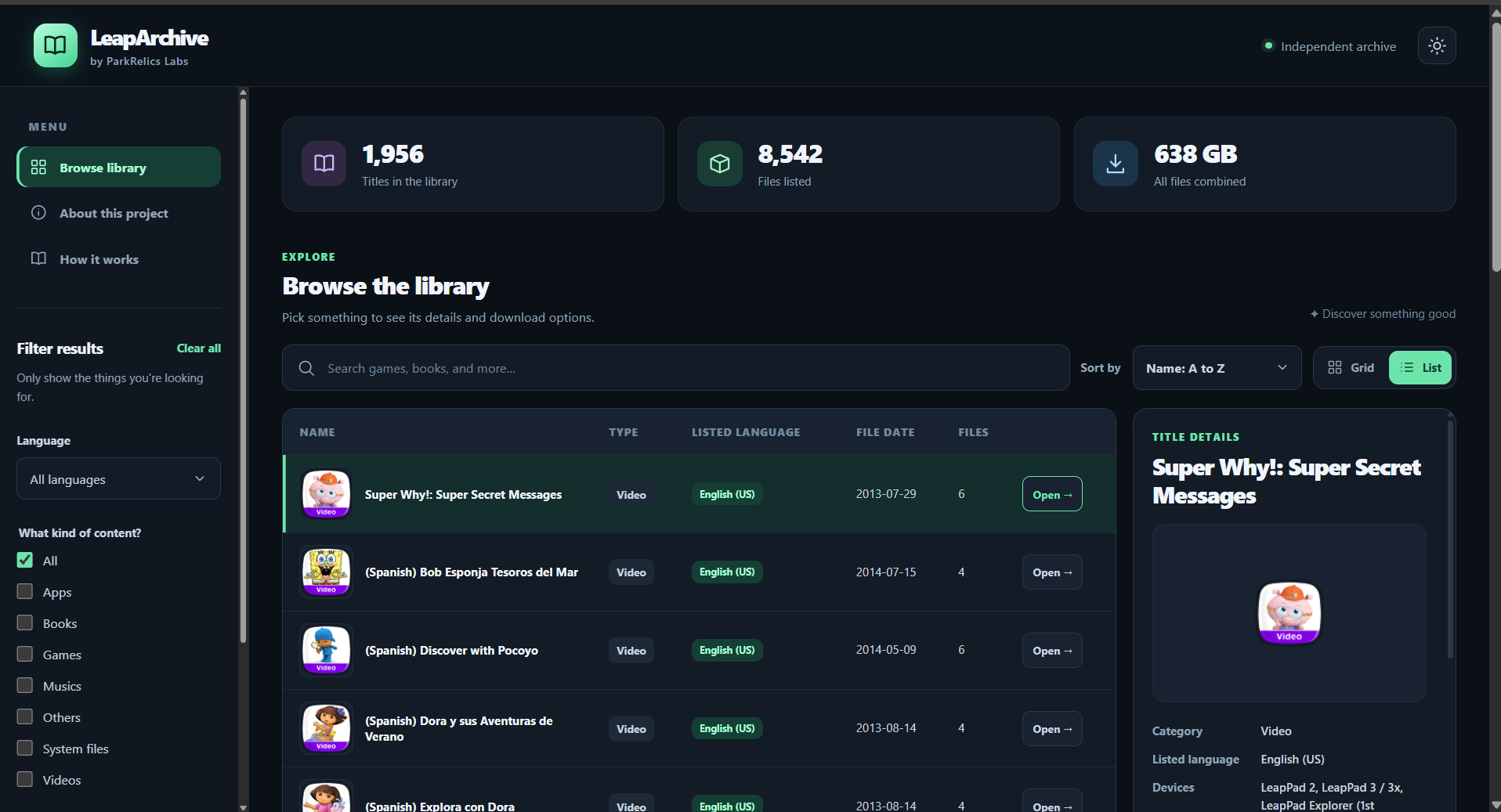
The hardest part is time. He describes “a major file-date investigation and categorization process” in which the storage modification dates of files were examined alongside date information found inside the packages themselves — because a file’s date on a server tells you when it was stored or modified, not when the software was built. The results are recorded with date classifications and notes on where each date came from, and the system explicitly distinguishes stronger evidence from uncertain or unverified dates. Alongside that runs the unglamorous correction work: fixing wrong language information, separating regional variations, telling one revision of a title from another. It is, in other words, an attempt to write the reference record of the App Center ecosystem — what existed, in which versions, for which devices, and when.
The Interview: GhostyTongue, by Email
We put our questions to GhostyTongue by email in November 2026. His written answers follow, edited for length and clarity.
16 Bit World: How many titles have you cataloged so far — and how do you verify what you’ve got?
GhostyTongue: “My latest inventory contains approximately 1,958 titles and 8,544 software files, totaling around 638 GB, based on recorded file sizes. For verification, I’ve gone beyond simply trusting filenames or existing descriptions. I’ve examined actual package contents, internal structures, file sizes, timestamps, and embedded information. I’ve also completed a major file-date investigation and categorization process in the database — examining the files’ storage modification dates alongside timestamps and other date information found inside the software packages themselves, to distinguish when a file was stored or modified from when the software may have originally been built or packaged.”
16 Bit World: You believe this could be close to the entire App Center library. How confident are you?
GhostyTongue: “Based on the research I’ve conducted and the amount of material I’ve identified, I personally believe LeapArchive may contain the entire historical collection of software distributed through LeapFrog’s digital App Center/store ecosystem. That’s my current assessment, rather than something I can independently guarantee with absolute certainty. LeapFrog has advertised having over 1,000 titles available through its digital ecosystem; however, the web storefront I’ve examined only displays approximately 330 titles. Of course, catalog entries, unique games, regional variations, revisions, and individual software packages aren’t necessarily interchangeable measurements — I don’t want to suggest that every entry represents a completely different game. Still, the scale of the material, combined with how the software was organized and the historical storefront information, makes me believe I may have recovered something much closer to the complete digital ecosystem than the storefront shows today.”
16 Bit World: How was the archive assembled?
GhostyTongue: “A significant portion of the research involved investigating publicly accessible storage infrastructure, identifying file locations, examining catalog information, and developing scripts to enumerate and collect software metadata. I worked with product identifiers, package information, file listings, and different LeapFrog software formats. It involved a lot of trial and error, scripting, troubleshooting, and figuring out how the software ecosystem was organized. After gathering the information, I built a database and developed LeapArchive as a publicly accessible website.”
16 Bit World: What do you hope comes of it?
GhostyTongue: “My main goal is to preserve and document as much of LeapFrog’s digital software history as possible. These devices played a major role in educational gaming, but their digital libraries haven’t received the same level of attention as those of traditional gaming systems. Even if the collection turns out not to be entirely complete, I think documenting thousands of software files, their internal differences, their dates, and their historical context is worthwhile. I hope LeapArchive encourages more people to research these systems, identify missing information, and contribute to preserving this part of gaming history.”
What a Catalog Can Save
A switched-off store is an extinction event with no crater. Nothing burns; the files simply stop being reachable, and a few years later nobody can even say with confidence what was lost, because the list of what existed was kept on the same servers as the software. That is the quiet catastrophe LeapArchive is aimed at. Whatever arguments surround the project — and we have laid ours out above — the catalog is the kind of record that can never be reconstructed from memory once the material is gone. It exists because one person started counting in early 2024, while counting was still possible.
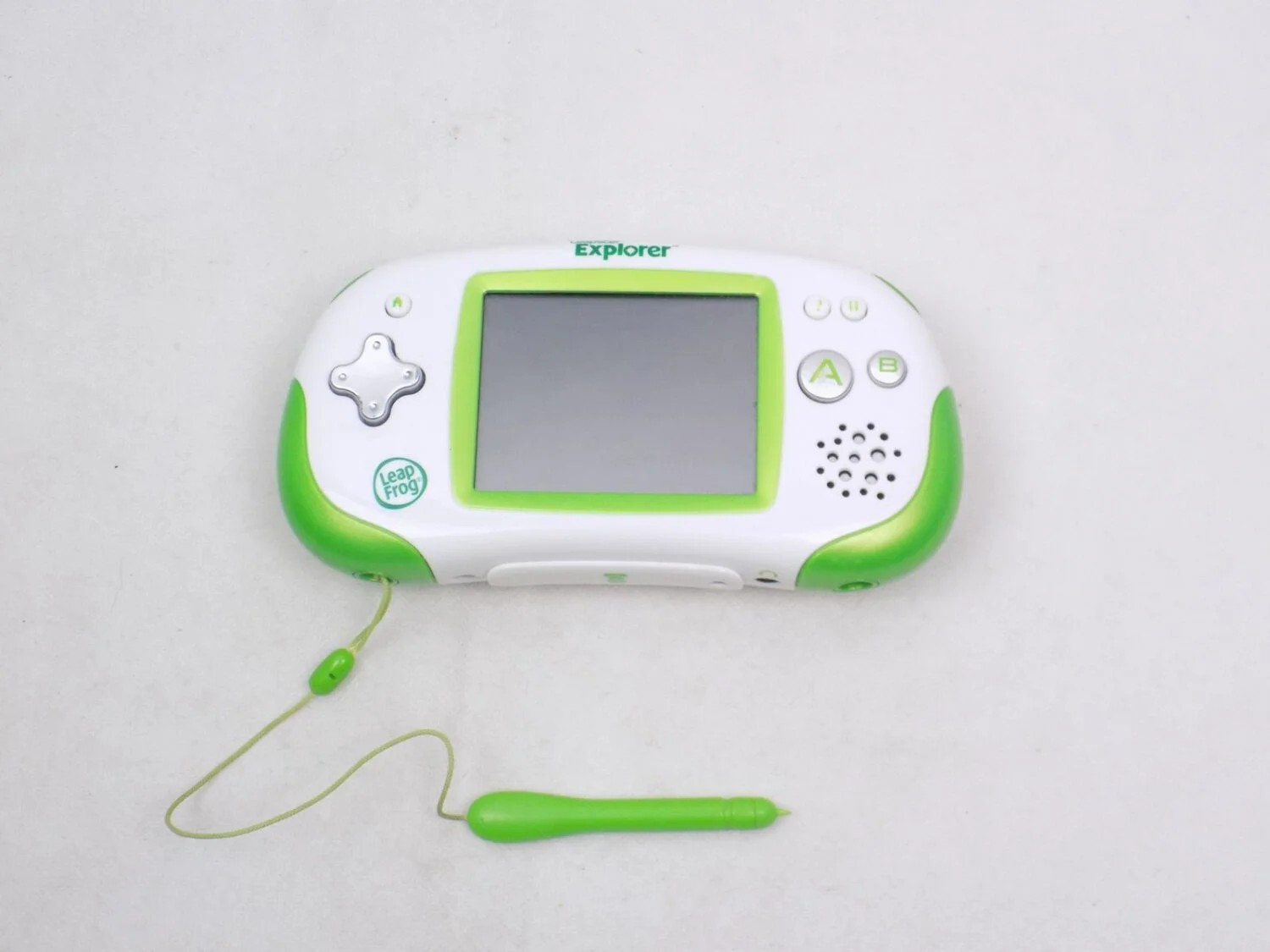
The LeapPad on a thrift-store shelf will still light up. It will still run whatever was loaded onto it before the fall of 2021. Everything else that machine was ever supposed to be — a library of nearly two thousand titles, built for the youngest players in gaming — survives, if it survives, as an entry in one archivist’s database. Preservation usually arrives too late and calls itself archaeology. This time, at least, somebody got there while it was still rescue.