At a glance: The Legendary Axe · TurboGrafx-16 HuCard · Victor Musical Industries / Aicom, 1988 (Japan) / 1989 (North America) · Action platformer · Score: 8.5/10
Launch line-ups are remembered for their mascots, but the TurboGrafx-16’s North American launch in August 1989 was quietly stolen by a barbarian. The Legendary Axe — Makyō Densetsu in Japan, where it had appeared on the PC Engine in September 1988 — cast you as Gogan, a villager handed the legendary axe Sting to storm the Evil Place, break the cult of Jagu and rescue his beloved Flare from becoming its annual sacrifice. It was the system’s showpiece adventure, and the industry noticed in a way launch games rarely enjoy: it took top TurboGrafx honours and game-of-the-year recognition from major magazines of the day, against competition from every console.
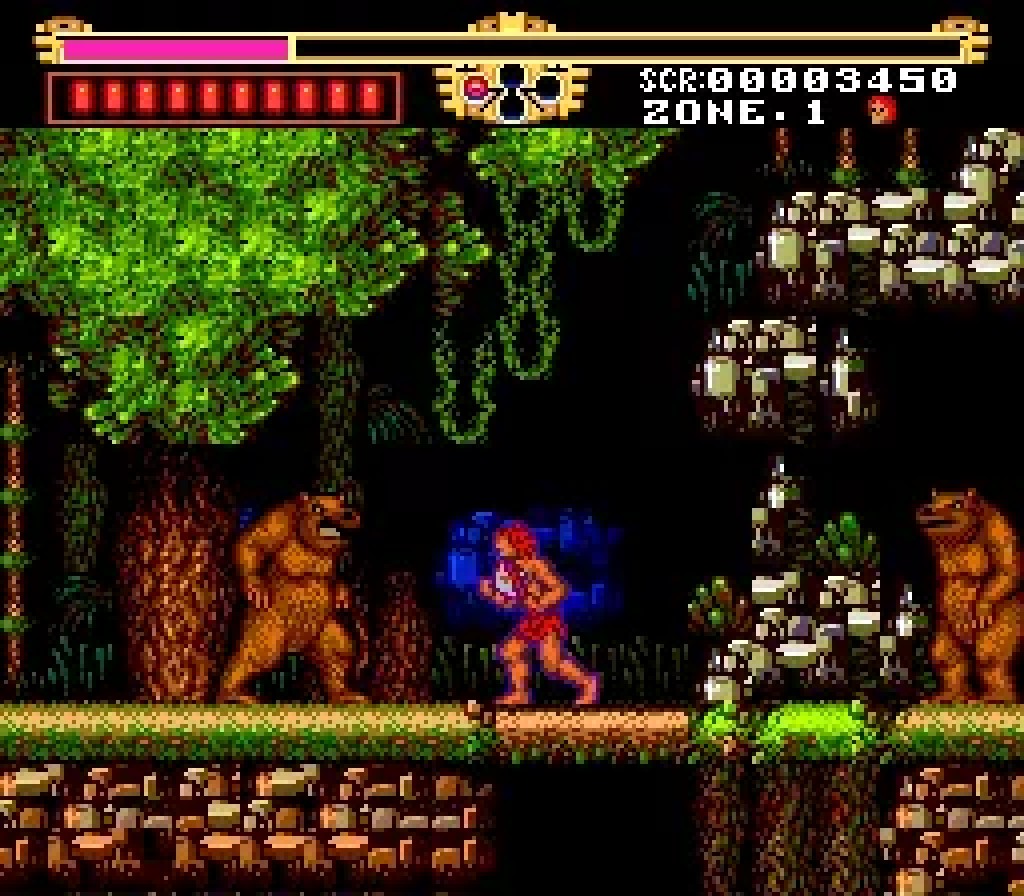
Why it won is visible in the first minute. The sprites are large and richly coloured, the jungle of the opening zone scrolls in layers, and Gogan himself animates with a weight that NES action games could not match. But the mechanic that made critics sit up is in your thumb: the strength meter.
Charge the axe, choose your moment
Every swing of Sting is governed by a meter that refills over time. Swing in a panic and you tap enemies with a half-charged axe; wait a beat, let the meter fill, and the same swing lands with a screen-shaking crack that fells in one blow what would otherwise take three. Combat becomes rhythm. Six zones — jungle, caves, mountains, a lake, the cult’s stronghold — are populated by frog-men, bears, giant spiders, axe-throwing nomads and worse, and each enemy is a small timing problem: bait the attack, let Sting charge, answer once, decisively.
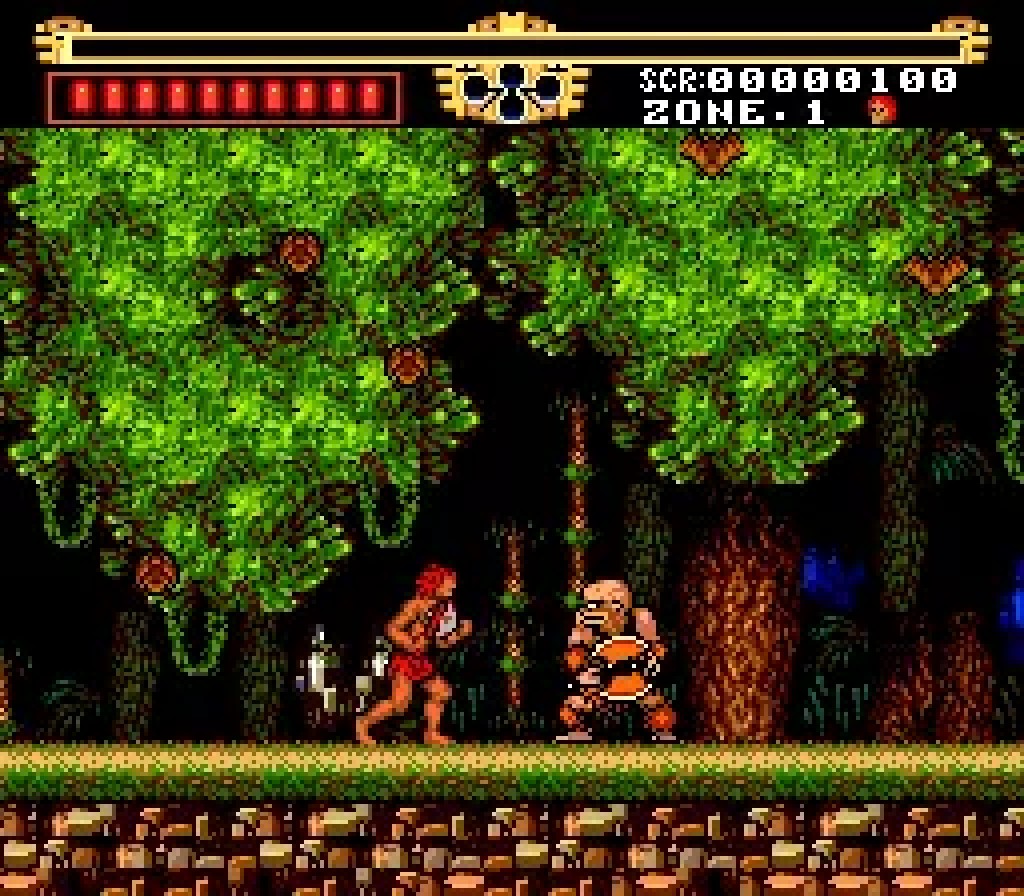
Power extends the system rather than replacing it. Jars and pick-ups lengthen the meter, raise Gogan’s health and add the occasional fairy companion, and hidden rooms — found by striking suspicious scenery, a habit the game teaches early — hold the best of it. The platforming is of the committed school: Gogan jumps in an arc you cannot correct, ropes and moving platforms demand planning, and the infamous precision jumps of the later zones will test exactly the patience the combat taught you. It is a fair bargain, mostly — the game’s few cruel jumps are famous precisely because the rest is so measured.
A world with a mood
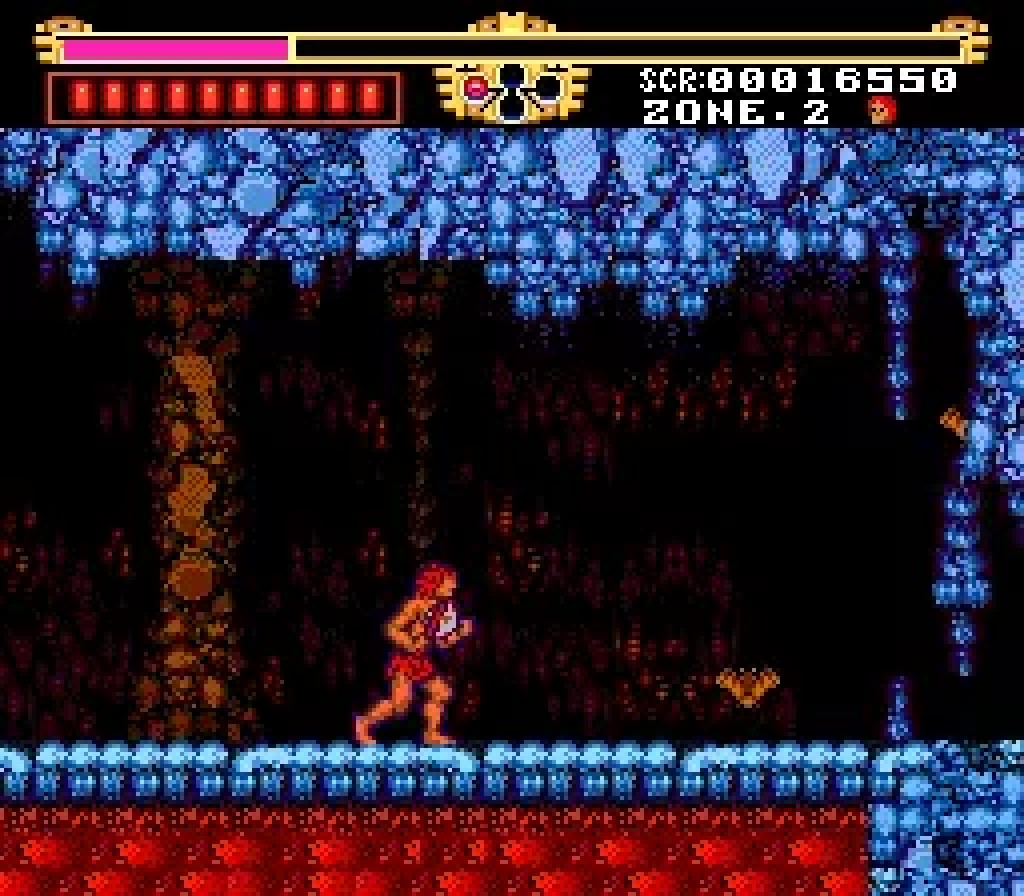
Developer Aicom built a barbarian world with unusual tonal control. The palette shifts by zone from lush green to cavern gloom to the cult’s torch-lit stonework, and Jun Chikuma and Toshiaki Takimoto’s soundtrack is one of the HuCard era’s best — melodic, strange, and brave enough to go quiet. Bosses are exercises in pattern and nerve, culminating in Jagu himself, and the ending pays off the rescue premise with more ceremony than the era usually bothered with.
Context matters for its reputation. In 1989, a home action game with sprites this size, a charge mechanic this central and presentation this confident had few peers anywhere; it is no accident that the same team’s fingerprints are discussed alongside NES contemporary Astyanax, a kindred barbarian adventure. The sequel, The Legendary Axe II, would go darker and stranger; the original remains the cleaner, brighter landmark.
How it plays now
Modern players should expect deliberate pacing: Gogan walks, charges and commits, and the game has no interest in the momentum platforming that would come later. Some hit detection around ledges is period-typical, and the difficulty climbs steeply in the final two zones. But the core loop — read, charge, strike — is so well tuned that the game teaches itself, and a full run is a satisfying evening rather than a war of attrition. It is also, not incidentally, one of the best-looking HuCards of the system’s first year.
The zones, and what each one teaches
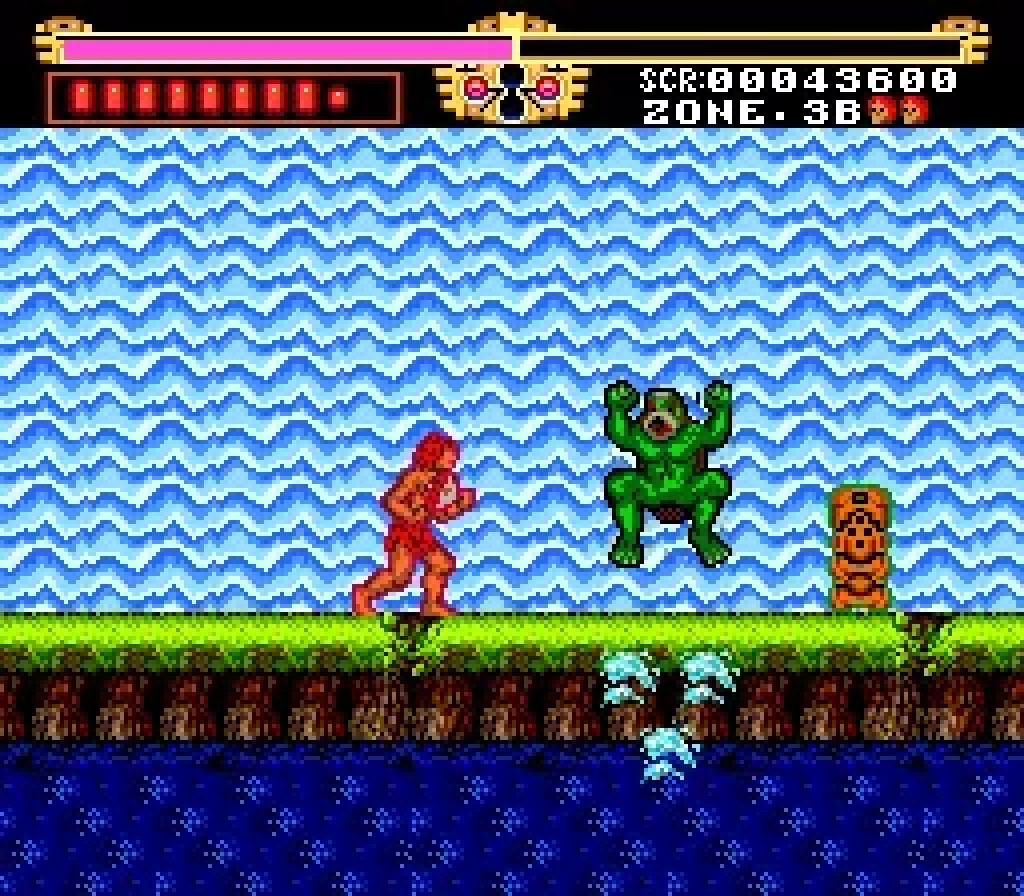
The six zones are a curriculum disguised as a map. The opening jungle is generous with space and slow enemies — it exists to teach the charge rhythm, and its famous first bear is a tutorial with fur: approach, wait for the meter, one full-strength swing, lesson learned. The caves that follow compress the game — spiders dropping from ceilings, tighter platforms, the first genuine tests of the jump’s commitment. The mountain zone opens the sky and the difficulty together, with axe-throwing nomads whose projectiles must be read, not reacted to. The lake and marsh stages slow Gogan’s footing and speed the enemy’s, and the final approach through the cult’s stronghold layers every earlier lesson under torchlight, building to Jagu with the game’s whole vocabulary in play.
The hidden-room system is the game’s second curriculum. Striking scenery — a particular stone, a suspicious stretch of wall — reveals chambers holding the meter extensions and health that separate a comfortable run from a desperate one, and the game trains the habit so thoroughly that veteran players bonk every surface on instinct, a behaviour the series’ players will recognise from a certain caveboy’s influence running the other way. It is exploration design from before the term existed: the world is the same size for everyone, but it is bigger for the curious.
Strength, health and the economy of patience
Look closer at the meter and the design philosophy sharpens. Health and strength are separate economies: health is survival, strength is time. A full meter is not merely damage, it is tempo — the difference between a screen that takes twenty seconds and one that takes six — and because the meter refills on its own, the game is constantly offering a bargain: wait here, in this moment of relative safety, and buy speed for the next fight. Speedrunners and cautious players draw opposite conclusions from the same system, which is the mark of a real mechanic. The fairy companions and pick-ups that trail Gogan extend the same idea: support that rewards the composed, and evaporates for the panicked.
Finally, the historical frame is worth holding onto while you play. This was a Japanese PC Engine game of September 1988 — the console’s first year — achieving a scale of sprite, a richness of colour and a confidence of design that the 8-bit incumbents simply had no answer to, and its American launch-window arrival a year later was effectively the TurboGrafx-16’s mission statement. The awards followed because the comparison was not close. Every charge of Sting carries that context: this is what the new machine was for.
How to approach it fresh
Three habits will carry a new player through Minofu’s troubles. Charge by default: let the meter fill between engagements rather than during them, and walk into fights already dangerous. Strike the scenery: the hidden rooms are not secrets for other people, they are the difficulty settings the game hides in its walls, and a Gogan with a lengthened meter is playing a kinder game. And respect the jump — plan landings the way you plan swings, because the zones’ cruelest moments are all the same shape: a charge mechanic and a platforming mechanic demanding patience in the same second. Master those, and the cult of Jagu is a weekend’s work. A glorious one.
Verdict
The Legendary Axe earned its launch-era awards honestly: a beautiful, confident action platformer built on one perfectly judged mechanic. As a first adventure for a new TurboGrafx owner in 1989 or a returning one today, it still swings true.
Score: 8.5/10