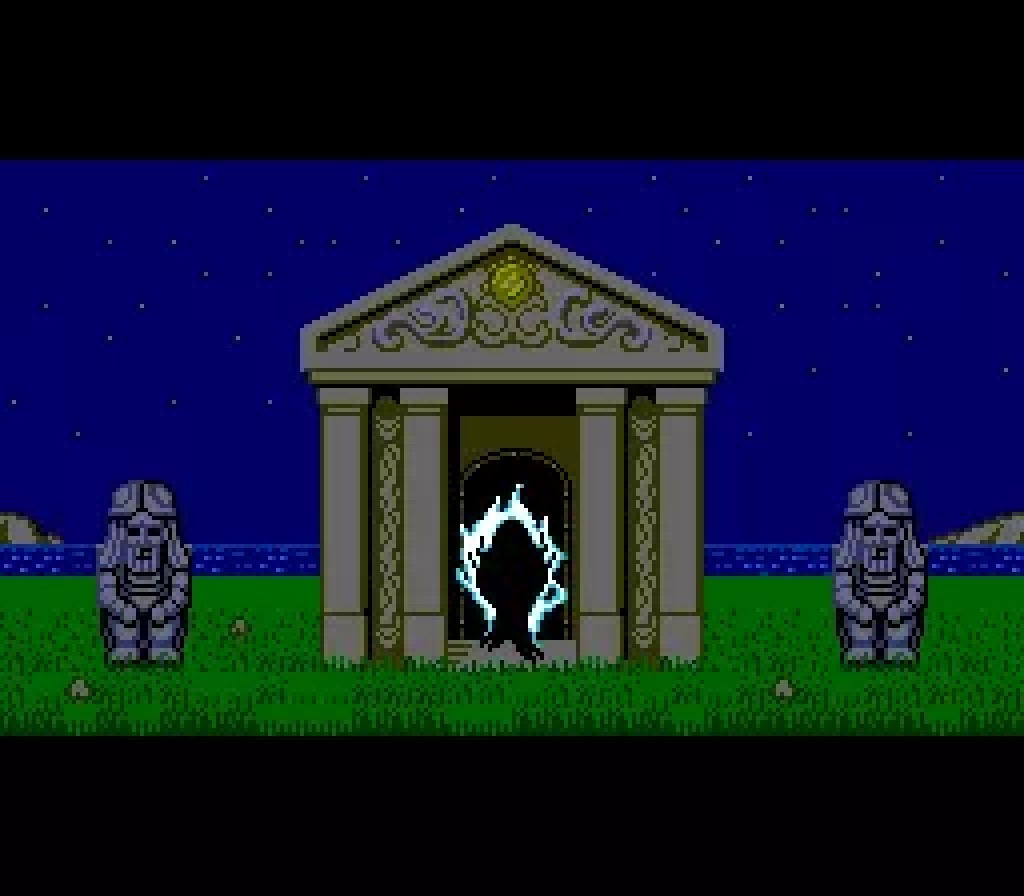
At a glance: Neutopia · TurboGrafx-16 HuCard · Hudson Soft, 1989 (Japan) / 1990 (North America) · Action-adventure · Score: 8.0/10
Let us settle the obvious first: Neutopia is Hudson Soft’s answer to The Legend of Zelda, and it does not hide it. A young hero, Jazeta, is sent to recover eight medallions from labyrinths scattered across four overworld regions, rescue Princess Aurora and seal away the demon Dirth, whom the medallions once imprisoned. The debt to Nintendo’s 1986 blueprint is structural and total. What makes Neutopia worth reviewing on its own terms in 1990 — and replaying now — is everything Hudson did with the borrowed frame: a visual leap, a brisker pace, and quality-of-life touches that, for a brief window, put the clone ahead of the original.
The world is divided into four themed spheres — land, subterranean, sea and sky — each with its own overworld character and a pair of labyrinths. Progression is gated by items in the classic manner: the fire rod that burns obstacles and enemies alike, wings, rings and armour upgrades, bombs for the cracked walls that this genre legally requires. Passwords record your progress, long but serviceable, in the era before battery saves were a given on the system.
The Zelda formula, refined in specific ways
Combat is where Neutopia first distinguishes itself. Jazeta’s sword swings faster and with a cleaner arc than Link’s original stab, enemies telegraph and die with satisfying snap, and the screen-to-screen overworld scrolls rather than flips, which makes the world feel continuous rather than tiled. Townsfolk give directions that are actually useful — a mercy anyone who burned a bush for an old man’s riddle will appreciate — and the labyrinths signpost their critical paths more fairly than their inspiration did. None of this is revolution. All of it is polish, applied by a team that clearly loved the template.

The labyrinths themselves are the game’s meat: multi-floor descents of locked doors, block puzzles, compasses and maps, and bosses that scale from armoured knights to screen-filling dragons. The fire rod becomes a genuine second weapon rather than a key with ambitions, and managing its mana-free generosity is a pleasure. If the dungeons lack the cruel ingenuity of Zelda’s second quest, they are also mercifully free of its dead ends — Neutopia respects the player’s evening.
Colour as the headline feature
It is impossible to overstate how this game looked in 1990 next to its 8-bit inspiration. The TurboGrafx palette floods the overworld — saturated greens, real blues, dungeons with actual atmosphere — and the sprites are bigger, softer and more expressive. Keita Hoshi’s music keeps the adventure buoyant. This was the system’s demonstration that the action-adventure genre had a 16-bit future, arriving a full year before A Link to the Past would redefine that future on rival hardware. For that window, Neutopia was not the imitation. It was the state of the art.
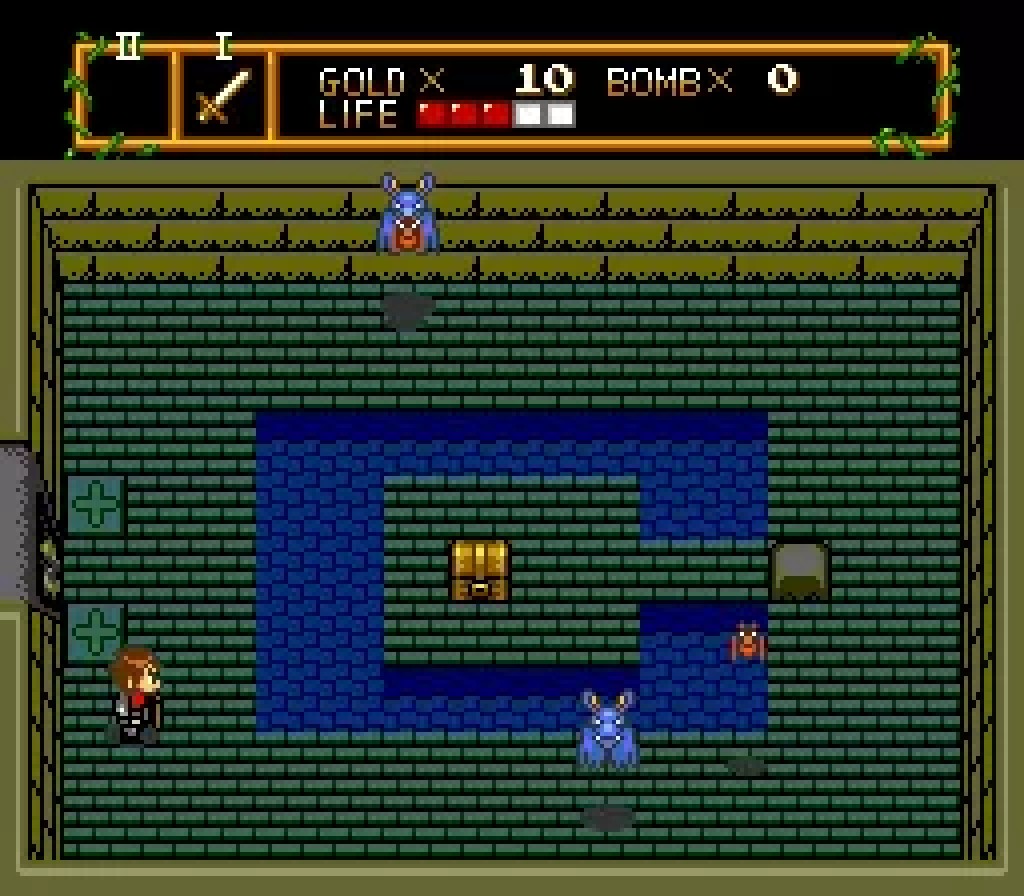
The criticisms are real and should be logged. The debt to Zelda extends to specific room layouts and item functions that go beyond homage. The overworld, for all its colour, is less dense with secrets than Hyrule’s; bombing every wall yields fewer surprises. And the password system — long strings, faithfully transcribed — is the era’s tax on adventure, paid in full.
Its place in the library
Neutopia sold the TurboGrafx to adventure players and earned a sequel, Neutopia II, that expanded the world and the ambition. As a standalone game it sits in the most interesting category a clone can occupy: better than its reputation, distinct in its details, and historically pivotal for its system. Played today, ideally discussed as its own adventure rather than a footnote, it is a warm, brisk, handsome quest.
The four spheres, surveyed
The world’s division into four spheres is more than a map screen. The land sphere is the tutorial continent — towns, the first labyrinths, enemies tuned to teach the sword’s arc — and its openness is a deliberate statement of confidence after Zelda’s denser Hyrule. The subterranean sphere darkens the palette and the labyrinth design together, introducing the game’s fondness for flooded floors and bombed walls. The sea sphere is the navigation exam: an archipelago overworld where the fire rod becomes a tool of passage as much as a weapon, and the sky sphere, reached late, plays like a victory lap designed by the team that made the rest — confident, colourful and stocked with the game’s best bosses. Each sphere’s pair of labyrinths escalates the lock-and-key logic honestly: new item, new verb, new door.
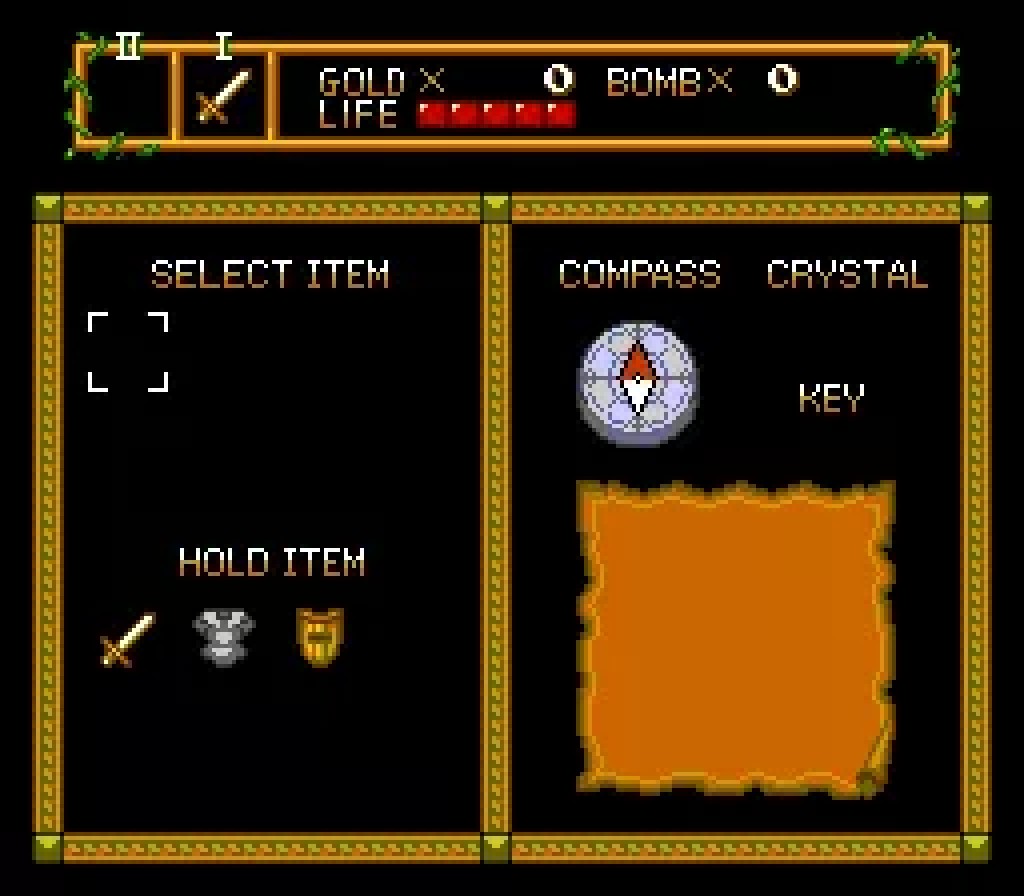
The item set rewards a listing, because its borrowings and inventions sit side by side. Bombs, the compass and map equivalents, the strongest swords and armour in their tiers — the expected liturgy. But the fire rod is genuinely Neutopia‘s own emphasis: a ranged weapon with real power that changes how rooms are solved, rather than a key that occasionally glows. The wings and the sphere-crossing structure give the late game a mobility Zelda’s original never attempted, and the medicine economy — buyable, carryable healing — smooths the difficulty curve in a way that respects a player’s time.
On influence, honestly assessed
The comparison that follows this game everywhere deserves one careful paragraph. Yes, the debt is structural and sometimes specific. But the direction of influence in 1989 ran in a circle the industry rarely acknowledges: Nintendo’s own sequel would adopt a scrolling overworld feel, friendlier signposting and a richer palette that Neutopia had already normalised on more powerful hardware, and the action-adventure genre’s centre of gravity shifted partly because Hudson demonstrated what the template looked like in 16-bit dress. Imitation is the sincerest form of market research, and Neutopia is best understood not as a copy that failed to hide, but as a rival interpretation that occasionally led. Its sequel — bigger, stranger, with a world that opens by ship — is the proof that Hudson thought of this as a series with its own future, and history has been kinder to that view every decade since.
Practical notes for the modern player: the password system is long, so photograph it rather than transcribing it; the fire rod is worth its price in every sphere, buy its upgrades first; and the labyrinths’ compasses are worth the detours, because this game’s secrets are placed for the thorough. Set aside two or three evenings. Neutopia is a journey paced like one.
Who should play it now
The honest recommendation writes itself. Players who love the original Zelda and want to see its blueprint developed by a rival with better hardware and a kindlier heart: this is your game, and it has been waiting since 1990. Players building a TurboGrafx library will find it the adventure shelf’s foundation — the RPG-adjacent epic the system tells its story around, until the CD era’s giants take over. And players who know it only as a punchline about clones owe it an evening, because the gap between its reputation and its reality is one of the widest in the system’s catalogue. Jazeta’s medallions deserve better than a footnote. So, frankly, does Jazeta.
Verdict
Derivative in structure, delightful in execution: Neutopia is Hudson’s Zelda, played faster and painted brighter. Eight medallions well worth recovering.
Score: 8.0/10