At a glance — Game: Manic Miner · Developer: Matthew Smith · Publisher: Bug-Byte · Original release: August 1983 · Original platforms: ZX Spectrum · Genre: Platform game
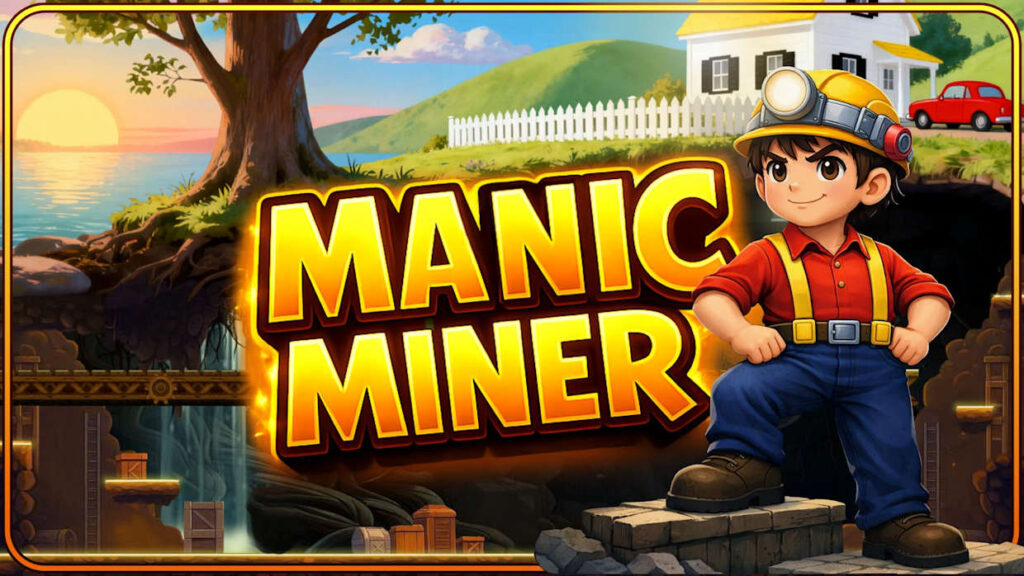
Miner Willy has not waited for his own launch date. BBG Entertainment’s reboot of Manic Miner — Matthew Smith’s 1983 ZX Spectrum landmark, rebuilt with his involvement and endorsement — is already on sale on the Nintendo Switch eShop, where it landed on November 26 for $12.99. Everyone else gets it on December 3, 2026, when the Manic Miner reboot reaches PC and Mac via Steam, PlayStation 4 and PlayStation 5, and Xbox Series X|S. Forty-three years on, one of the founding documents of British gaming is back in the shops. And for once “reboot” is doing honest work. This is the original twenty caverns, twice over, in two very different coats of paint.
Manic Miner Is Back — and Switch Players Start Early
The facts first. The dates have wobbled in the telling, so here they are straight. BBG’s press release, issued November 26, announces a December 3 launch across consoles, PC and Mac. Nintendo’s own store page tells a slightly different story for its machine: the Switch version released on November 26, 2026, priced at $12.99, a 410 MB download playable in TV, tabletop and handheld modes. The vendor’s page outranks the press release, so Switch owners are a week early and everyone else is on the December 3 train. If you are reading this on a PlayStation, an Xbox or a PC, your caverns open next Thursday.
What you are buying is not a sequel. Not a loose tribute, either. BBG — the Munich publisher behind the modern editions of Boulder Dash, Astrosmash and Shark! Shark! — describes a faithful, pixel-perfect recreation of the 1983 game, all twenty caverns included in full, wrapped around an extensive interactive history of how the original was made. Smith’s name is not licensed decoration here: Nintendo’s listing states plainly that this version is officially endorsed by him, and BBG credits his involvement, endorsement and feedback in the release itself. Smith became one of British gaming’s great disappearing acts. His signature on this matters.
Two Ways Down the Mine
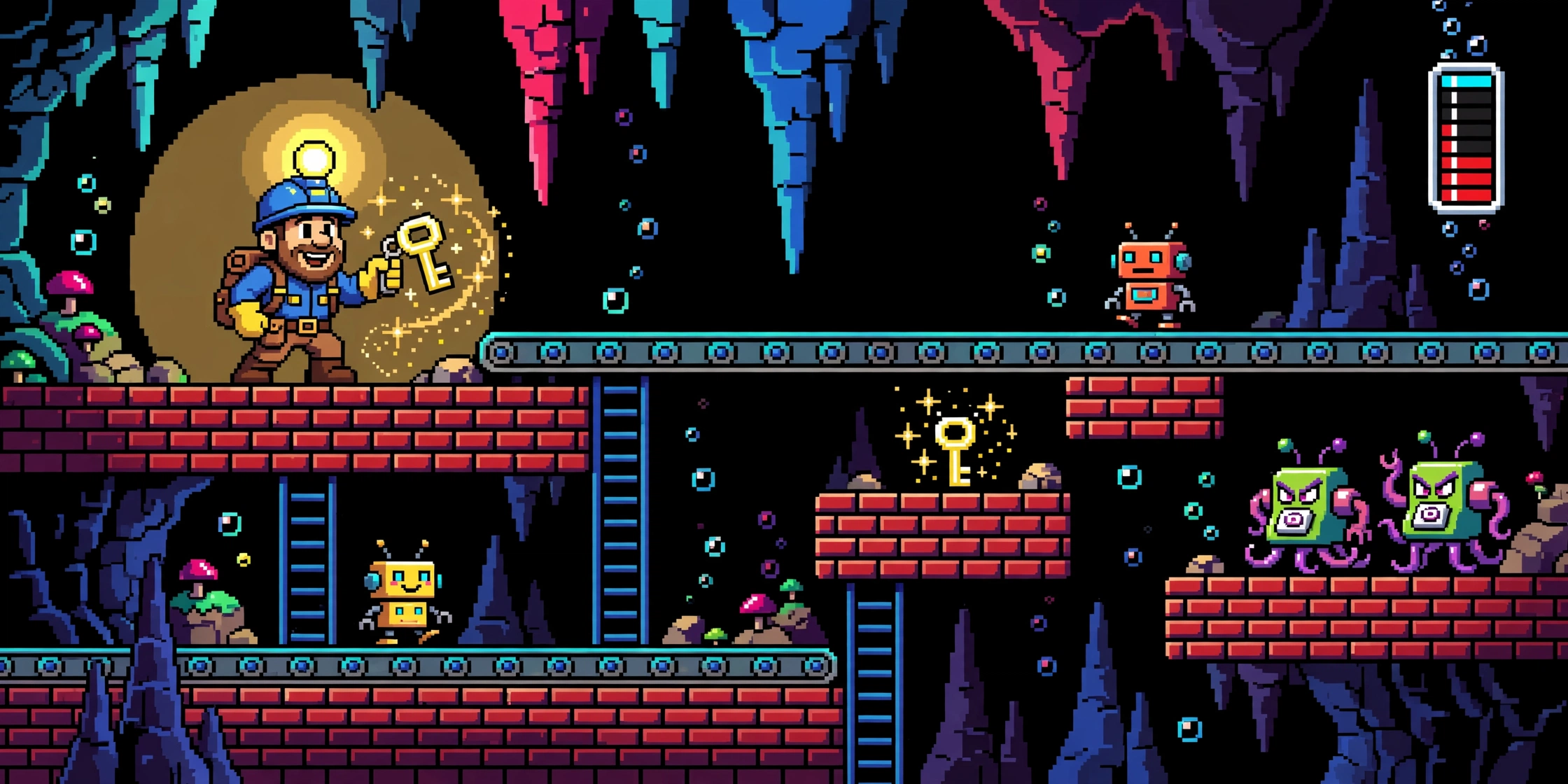
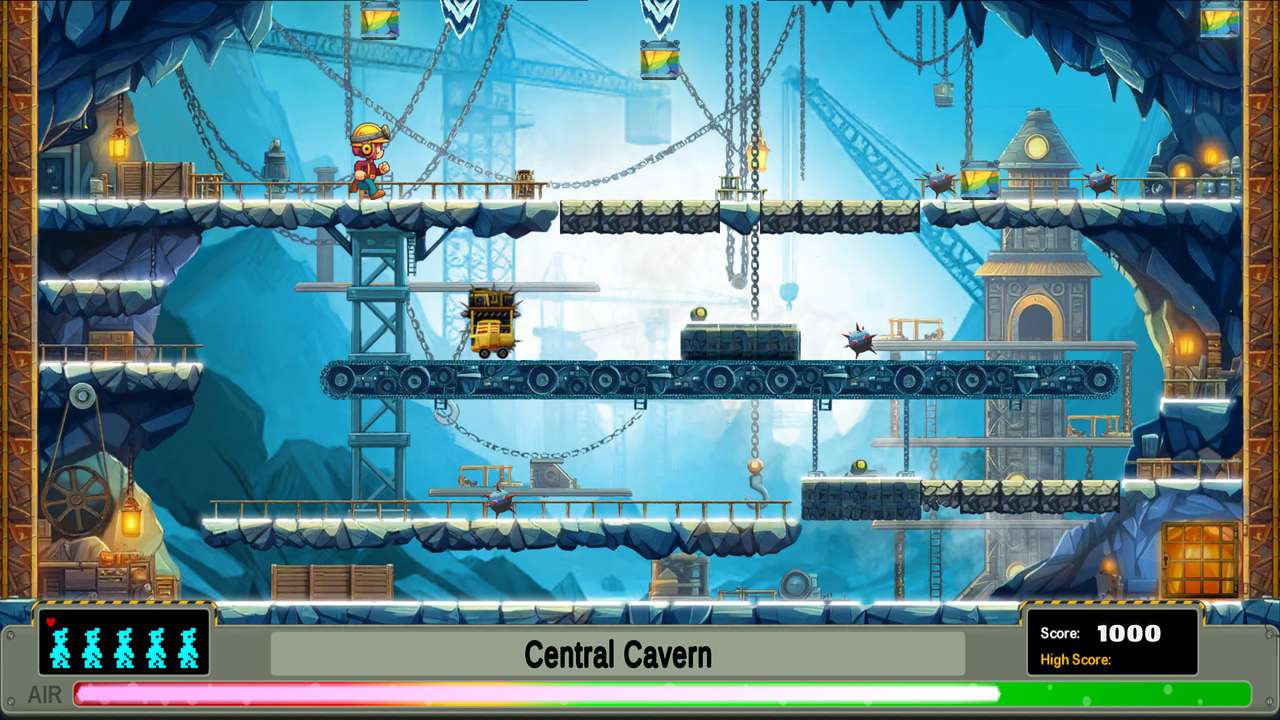
The package splits into two modes. The split is the whole pitch. Classic Mode is the game as the Spectrum drew it: authentic pixel art, the original sound effects, and an optional CRT television filter for anyone who wants the full 1983 living-room haze. Modern Mode redraws every cavern with detailed hand-painted backgrounds, parallax scrolling and dynamic lighting, while — and this is the part that decides whether any of it works — keeping the original’s timing and difficulty intact. The jumps are the jumps. Willy still has no weapon, the air meter still drains, and a fall of more than a few pixels is still the end of him.
Around that core sit the expected modern fittings, sensibly chosen: controls revamped for current pads, a global online leaderboard for the twenty caverns, and a rearranged soundtrack built on the same two pieces of classical music the original raided — Johann Strauss’s Blue Danube over the title, Edvard Grieg’s In the Hall of the Mountain King in the caverns themselves. In 1983, continuous in-game music on the Spectrum was close to a magic trick. In 2026 it is simply nice to hear the tunes played properly.
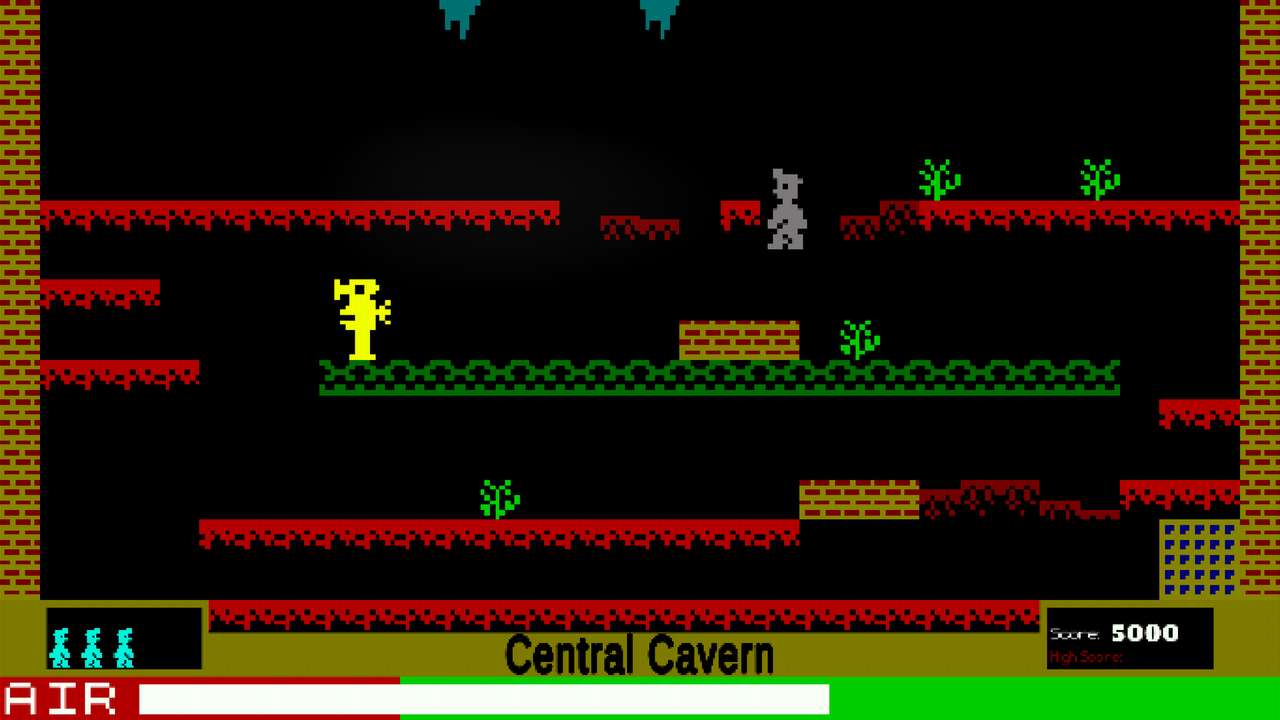
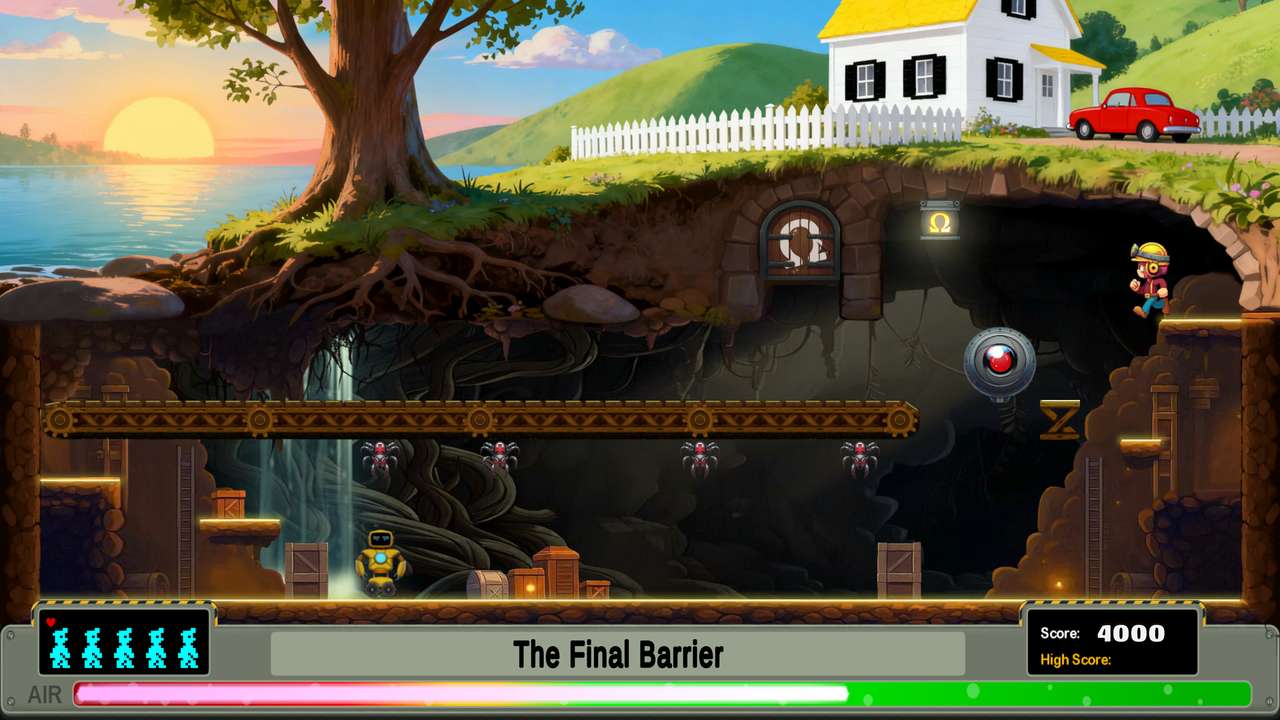
Why a 1983 Spectrum Game Still Gets a Launch Week
Context, for readers who came in after the home-computer wars. Manic Miner was written by Matthew Smith, a teenager in Wallasey working on a borrowed Spectrum, and published by Liverpool’s Bug-Byte in August 1983. The premise fits on a cassette inlay: prospecting near Surbiton, Miner Willy finds a lost civilisation’s mine, and works his way through twenty single-screen caverns — Central Cavern, The Cold Room, Eugene’s Lair, Attack of the Mutant Telephones — collecting the flashing objects in each before his air runs out, then escaping through the portal. Within weeks it had taken the number one spot in the UK charts from Jet Pac. It won Best Arcade-Style Game at the 1983 Golden Joystick Awards. A year later came Jet Set Willy — a whole other article.
There is a date resonance worth noting for this site’s calendar keepers: when Smith left Bug-Byte and co-founded Software Projects, that company released its own edition of the game on November 28, 1983 — forty-three years ago today. The two editions differ in small sprite details, and Spectrum collectors still argue about them the way other people argue about first pressings. Our own archive review, Manic Miner Review: The Twenty Caverns That Started It All, makes the case for the original at length; the short version is that every hazard in the game moves on a fixed pattern, nothing is random, and so every death is the player’s own fault — which is why people who last played it four decades ago can still recite the cavern order from memory.
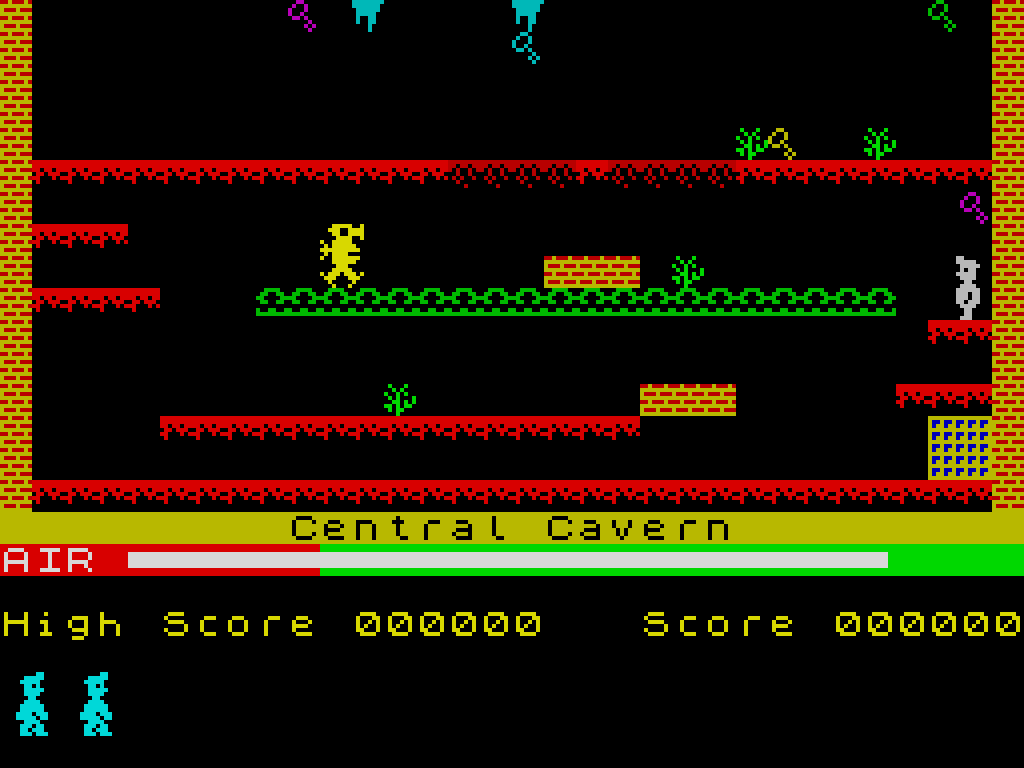
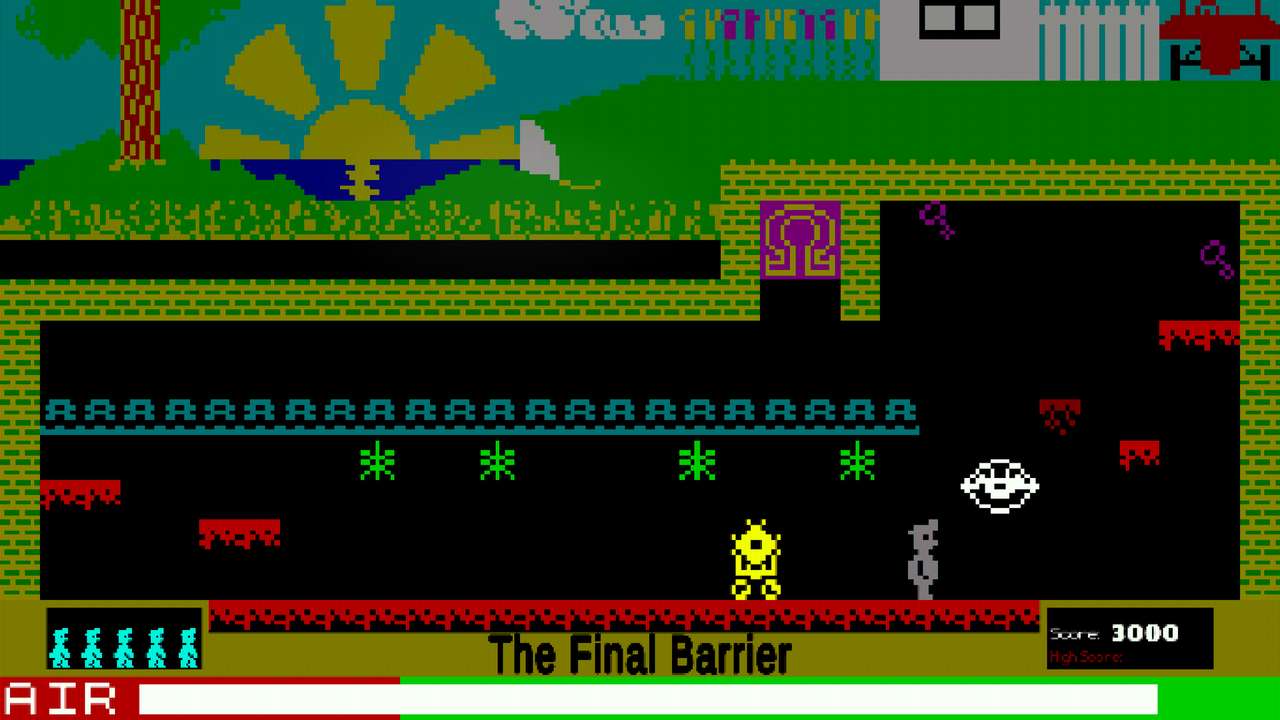
The afterlife was long, too. The Commodore 64 edition topped its chart in early 1984, on its way to becoming that machine’s best-selling game and the Spectrum’s third best-seller of the year. ACE magazine was still listing Manic Miner among the greatest platform games ever made in 1991, alongside its own sequel and a certain Italian plumber, and Retro Gamer later called it one of the most influential platform games of all time. Ports reached nearly every home computer that mattered, and a fair few that didn’t. Games do not get rebooted with their creator’s blessing four decades on by accident.
How to play it today
The easiest route is the new one. The reboot is live now on the Nintendo Switch eShop at $12.99 (checked November 27, 2026), and the same package reaches Steam for PC and Mac, PlayStation 4 and 5, and Xbox Series X|S on December 3, 2026 — one purchase gets you both the pixel-perfect Classic Mode and the redrawn Modern Mode, which is more than the original ever offered in a single box. If you want the 1983 game exactly as it shipped, the honest routes are the original media: Spectrum cassettes and the many period ports (Commodore 64, Amstrad CPC, BBC Micro and more) still change hands regularly, and the reboot’s Classic Mode is otherwise the closest legal stand-in — there is no separate official download of the raw Spectrum original on modern storefronts. One curiosity to close: the 1992 SAM Coupé version quietly added forty extra caverns of its own, which makes it the only edition that ever outnumbered Smith’s twenty. Nobody has announced a rescue for those. Yet.
— June
For more launches from this date, see This Day in Gaming History: November 28. More from this system: our ZX Spectrum hub.