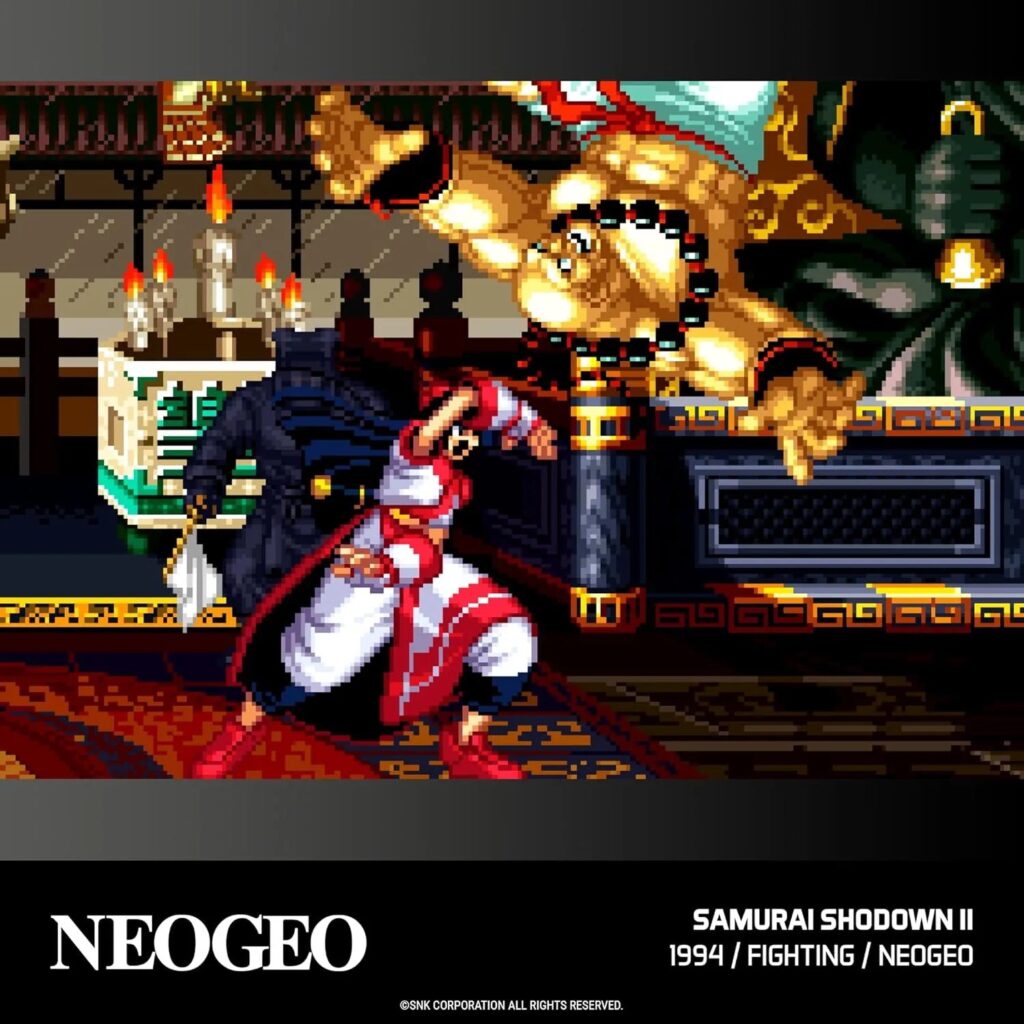
There is a moment in every great Samurai Shodown II match that no other fighting game has ever quite reproduced. Both players stop. Not because the timer has stalled or a connection has dropped, but because neither swordsman wants to be the one who moves first. One clean heavy slash can take a third of a life bar. A single mistake at the wrong range is not a lost exchange — it is a lost round. That tension, held in the space between two drawn blades, is why SNK’s 1994 masterpiece is still, more than thirty years later, the first name out of most people’s mouths when you ask them to name the finest fighter on the Neo Geo.
The original Samurai Shodown, released in 1993, had already been a sensation. It took the weapon-based duelling that most developers were too nervous to attempt and built an entire game around patience, spacing and catastrophic damage. Samurai Shodown II, arriving the following year, is the rare sequel that understands exactly what made its predecessor special and then refines almost every edge of it. It is bigger, stranger, funnier and more dangerous — and it plays, today, with a purity that modern fighters full of meters, comeback systems and cinematic supers still struggle to match.
A Duel, Not a Combo Contest
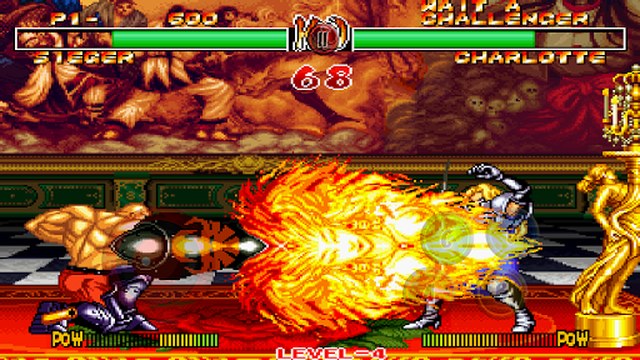
Strip Samurai Shodown II down to its fundamentals and you find a game of remarkable restraint. You have light, medium and heavy slashes, a kick button, and movement built around walking, dashing and the occasional desperate roll. There are special moves, of course — Haohmaru’s whirling Crescent Moon Slash and his sake-jug fireball are genre classics — but this is not a game about memorising twenty-hit strings. The basic heavy slash is the most frightening move in the game, and it is available to you from the first frame with a single button press.
That design choice inverts the usual fighting-game learning curve. A beginner can pick up Samurai Shodown II and immediately threaten real damage, which makes those first sessions wildly entertaining. But the longer you play, the more the game reveals itself as a contest of nerve. Heavy slashes are slow and punishable. Whiff one in front of a patient opponent and you will eat exactly the kind of punishment you were hoping to dish out. The result is a footsies game played at sword length, where feints, sudden dashes and the humble crouching kick carry as much weight as any special move.
Underpinning it all is the POW meter, which fills as you take damage and, when full, supercharges your attacks for a short window. It is a comeback mechanic, but a beautifully double-edged one: a raging opponent is lethal, yet the meter also unlocks the game’s signature party trick — the weapon-breaking special. Land it, and your opponent’s blade shatters, leaving them to fight bare-handed until a replacement is delivered to the stage. Few sights in arcade history are funnier or more humiliating than watching a proud swordsman reduced to slapping and kicking while the crowd — and the ever-present referee Kuroko, flag in hand — looks on.
Haohmaru, Mizuki and a Roster Full of Character
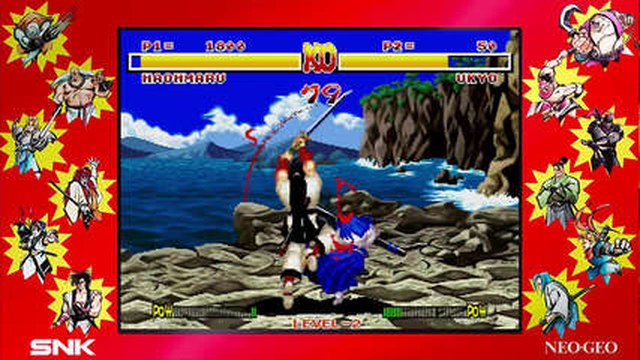
The cast is where Samurai Shodown II pours on the charm. Fifteen fighters take the stage, and almost every one of them could headline a game of their own. Haohmaru, the wandering ronin with the wild hair and the sake habit, remains the ideal poster swordsman — honest, powerful, easy to grasp and endlessly satisfying. His rival Ukyo Tachibana, the frail, coughing master of the iaido draw, fights in elegant bursts and turns every match into a tragedy in miniature. Galford the American ninja fights alongside his dog Poppy, Charlotte brings a fencer’s precision from France, and Genjuro Kibagami — introduced here — gives Haohmaru a scarred, sneering nemesis whose card-slash attacks and brutal temperament made him an instant fan favourite.
The newcomers are superb across the board. Cham Cham, Paku Paku in hand, brings a feral energy and a boomerang game nobody else in the cast can replicate. Neinhalt Sieger, the Prussian knight with a lion-headed gauntlet cannon, is a glorious piece of SNK excess. Wan-Fu swings a stone pillar the size of a telegraph pole. And waiting at the end of the arcade ladder is Mizuki Rashojin, the series’ first true final boss — a possessed shrine maiden serving a dark god, whose floating movement, projectile traps and screen-filling attacks made her infamous among arcade players who had cruised through the earlier rounds. She is unfair in the grand SNK boss tradition, but she is unfair with style.
Sprite Work That Still Draws Blood
Visually, this is the Neo Geo showing off. The sprites are enormous, the animation is fluid without ever becoming weightless, and the stages are miniature paintings: a moonlit bamboo grove, a snowy battlefield, a duelling ground at sunset where the light itself seems to be holding its breath. SNK’s artists understood that a sword game lives or dies on the readability of a blade’s arc, and every slash in Samurai Shodown II traces a clean, bright line through the air. You always know exactly how close you came to dying — and the game wants you to know, because near misses are its favourite form of drama.
The presentation wraps those duels in ritual. A referee raises his flags to award the round. Victory poses linger. The music blends traditional Japanese instrumentation with the driving rhythms an arcade cabinet needed to cut through a noisy room. Even the little details — a split melon here, a sliced projectile there, a fighter’s weapon clattering to the ground — serve the same purpose: making you feel that these are duels with consequences, staged for an audience.
Why It Endures
Later Samurai Shodown games experimented in fascinating ways, and the 2019 reboot proved the formula still had an audience. But Samurai Shodown II remains the entry that players return to, emulate, compete in and argue about. Part of that is balance — for a 1994 arcade game, the cast is remarkably viable from top to bottom. Part of it is accessibility: anyone can understand “do not get hit by the big sword swing” in about four seconds. And part of it is simply feel. The pause before an exchange, the thunderclap of a connected heavy slash, the sudden silence when a weapon breaks — these are sensations no sequel has managed to dilute.
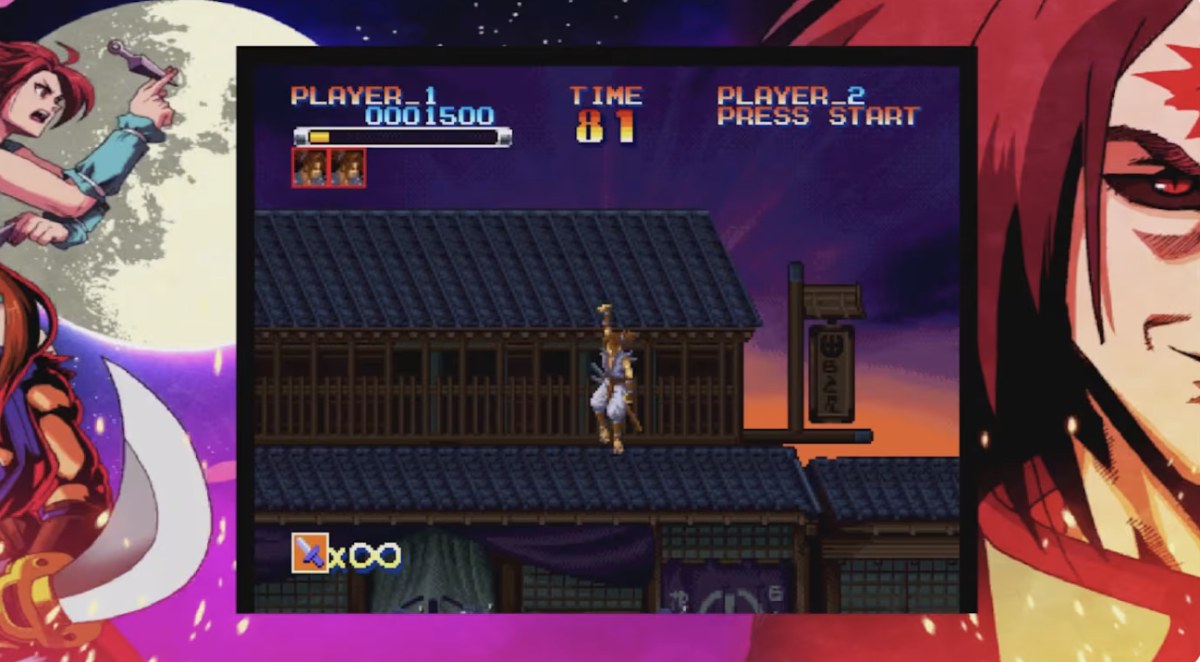
If you own a Neo Geo, a compilation, or any of the many modern re-releases, this is essential play — not as a museum piece, but as a living fighting game that still rewards a free evening and a worthy rival. Samurai Shodown II is the sword saint of the Neo Geo: disciplined, deadly, and still waiting patiently for you to make the first move.
Playing It Today
Modern players are spoiled for ways in. Samurai Shodown II anchors SNK’s Neo Geo collections, appears in the Samurai Shodown Neo Geo Collection with its museum material and online play, and turns up regularly in ACA Neo Geo form on current consoles. Whichever route you take, two pieces of advice will serve you well. First, slow down: the game’s great lesson is that walking, waiting and watching are actions too, and the player who masters the stand-still wins far more often than the player who masters the combo list. Second, play it with another human being if you possibly can. Against the computer this is a fine, atmospheric duelling game; against a friend, with pride and a shattered weapon on the line, it becomes the game that defined a system.
Score: 9.5/10