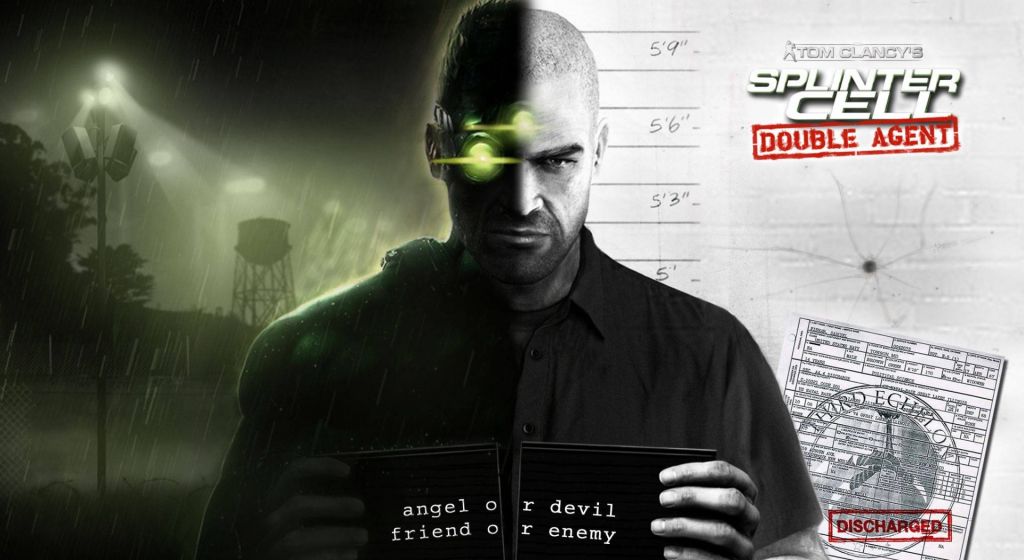
At a glance — Game: Tom Clancy’s Splinter Cell: Double Agent · Developer: Ubisoft Shanghai / Ubisoft Montreal · Publisher: Ubisoft · Original release: October 19, 2006 (Xbox 360, North America; Wii version November 28, 2006) · Original platforms: Xbox 360, Xbox, PlayStation 2, GameCube, Windows, Wii · Genre: Stealth
There was no single Double Agent. That is the oddity hiding inside that autumn’s most ordinary-looking rollout: two games, built by two different Ubisoft studios, telling the same story two ways under one title and one box. By the time the Wii version reached North American shelves on November 28, 2006 — twenty years ago this week — Sam Fisher’s strangest mission was already a month old. The Xbox 360 version had launched on October 19, the Xbox, PlayStation 2 and GameCube versions on October 24, and Windows on November 7. Almost nobody shopping that autumn understood what they were actually choosing between.
A grief-stricken Sam Fisher goes to prison
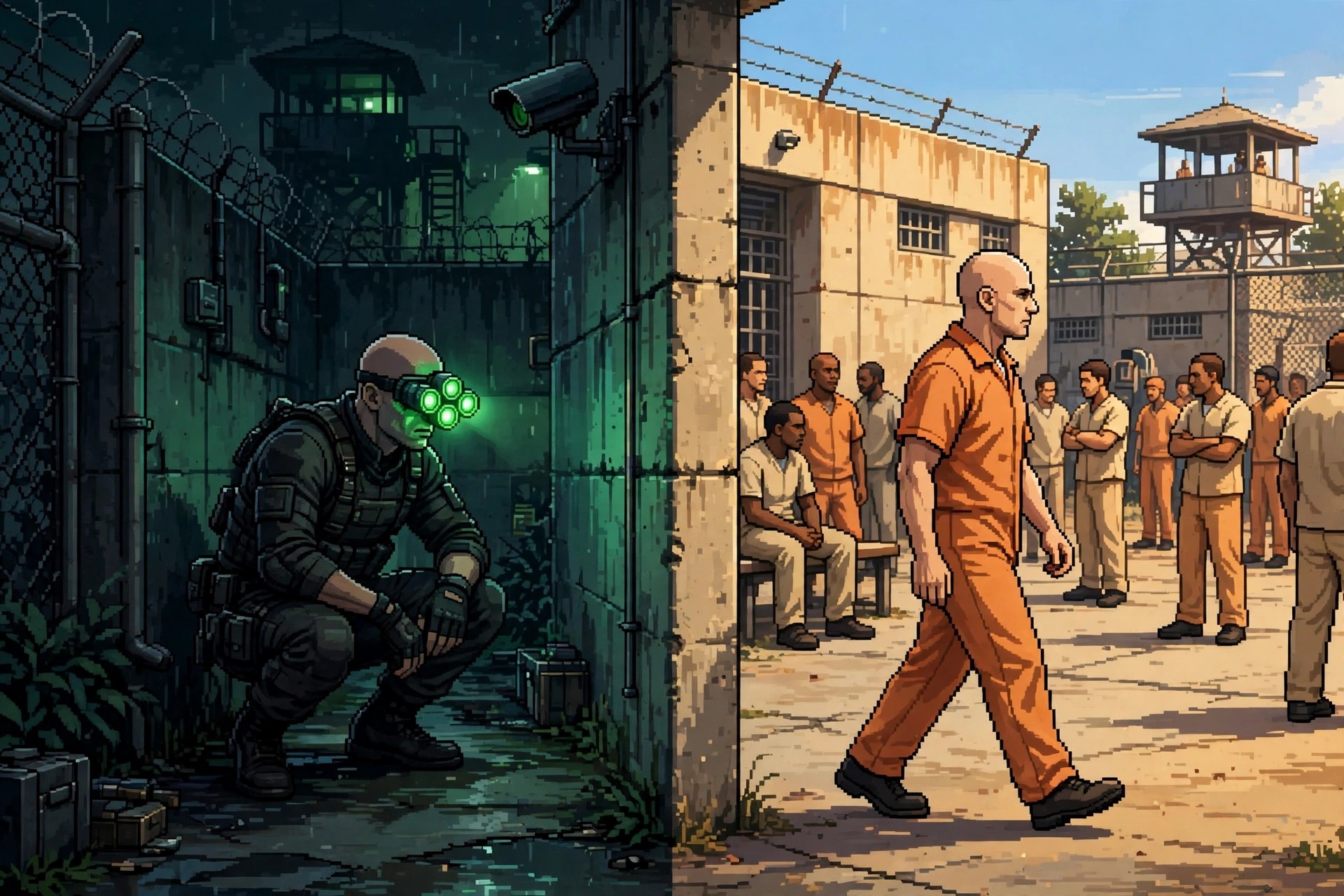
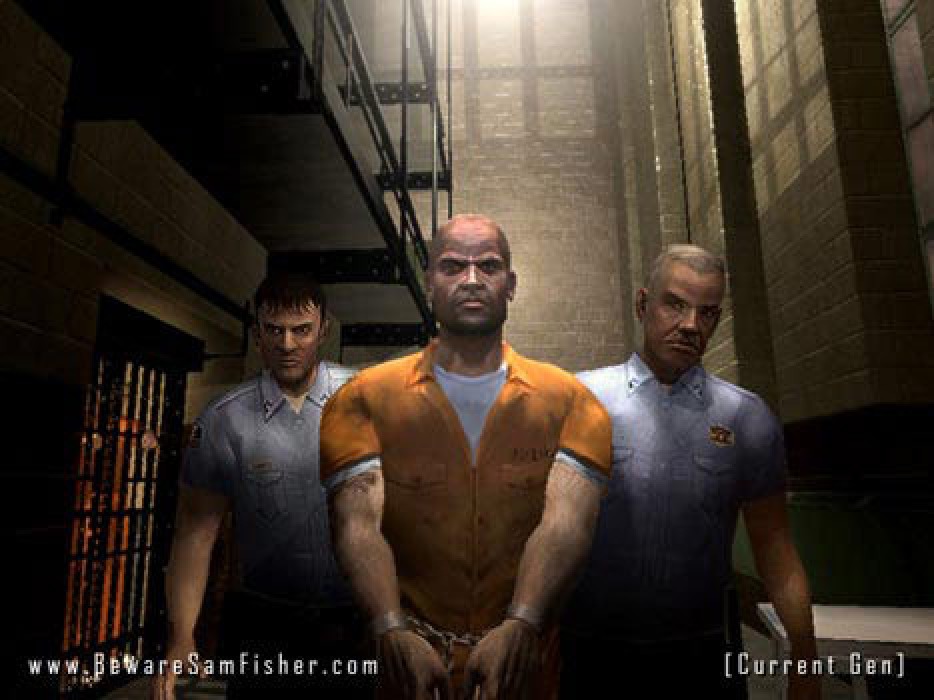
Every earlier Splinter Cell sent Fisher somewhere foreign to creep around in the dark. Double Agent starts by breaking him. After an opening mission in Iceland, Lambert delivers the news that Fisher’s daughter Sarah has been killed by a drunk driver. Fisher is pulled from active service, and Lambert offers him the one job that might give him a reason to focus: go undercover as a nonofficial cover operative, get himself convicted, and infiltrate John Brown’s Army, a domestic terror group operating inside the United States.
So the NSA stages crimes to build Fisher a record, and he lands in Ellsworth Prison in Kansas, in the same cell block as JBA member Jamie Washington. Fisher helps Washington escape, and the JBA takes him in. From there the game belongs to Emile Dufraisne, the group’s leader, and to the double life Fisher has to sustain — running missions for the terrorists who trust him while feeding the NSA the intelligence that could destroy them. It is the darkest premise the series had attempted, and it drives everything the game does mechanically.
Two studios, two Double Agents
The split was a product of a console generation changing hands mid-development. Ubisoft Shanghai, the studio behind Pandora Tomorrow, built the version for Xbox 360, Windows and — in March 2007 — PlayStation 3, with Ubisoft Milan also credited on it. It ran on a completely custom engine, the series’ next-generation step. Ubisoft Montreal, which had made the original Splinter Cell and Chaos Theory, built the other version for Xbox, PlayStation 2, GameCube and Wii, on technology descended from the earlier games.
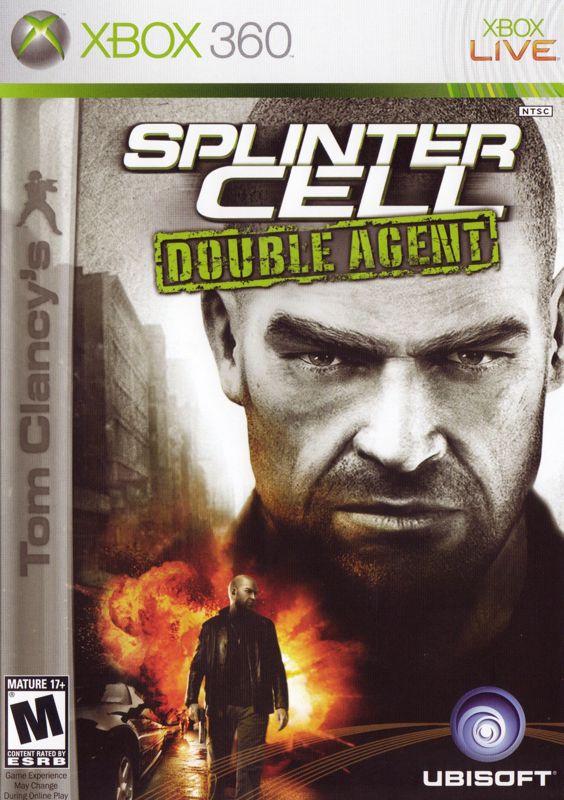
These are not ports of each other. The two versions share a premise, several locations, the voice cast, some cutscenes and Michael McCann’s score, but the levels are designed differently, missions arrive in a different order, and the plot twists land in different places. The Shanghai version opens in Iceland in September 2007 and tells its story straight; the Montreal version tells its story as a recollection, and adds a cooperative campaign, tied into the solo plot, that the 360 game doesn’t have. Even the JBA’s headquarters moves: New York in Shanghai’s version, New Orleans in Montreal’s. The Shanghai version is the one Ubisoft later treated as canon, and its storyline is the one Conviction followed in 2010 — but in 2006, a player with both an Xbox and a 360 effectively got two games for the shelf space of one name.
Double Agent’s trust system: serving two masters
The idea holding both versions together is trust. Fisher works for the NSA and the JBA at once, and both sides keep score. Missions hand him objectives from each camp — bug this meeting for Lambert, steal those notes for Emile — and the objectives regularly conflict, so something has to give. The implementations differ, though, and the difference says a lot about each studio. In the Shanghai version, the NSA and the JBA each have their own trust meter, filled or drained independently, and completing objectives also unlocks equipment for later missions. In the Montreal version, trust is a single sliding scale: gaining ground with one side costs you ground with the other, a seesaw that keeps every favour feeling like a small betrayal.
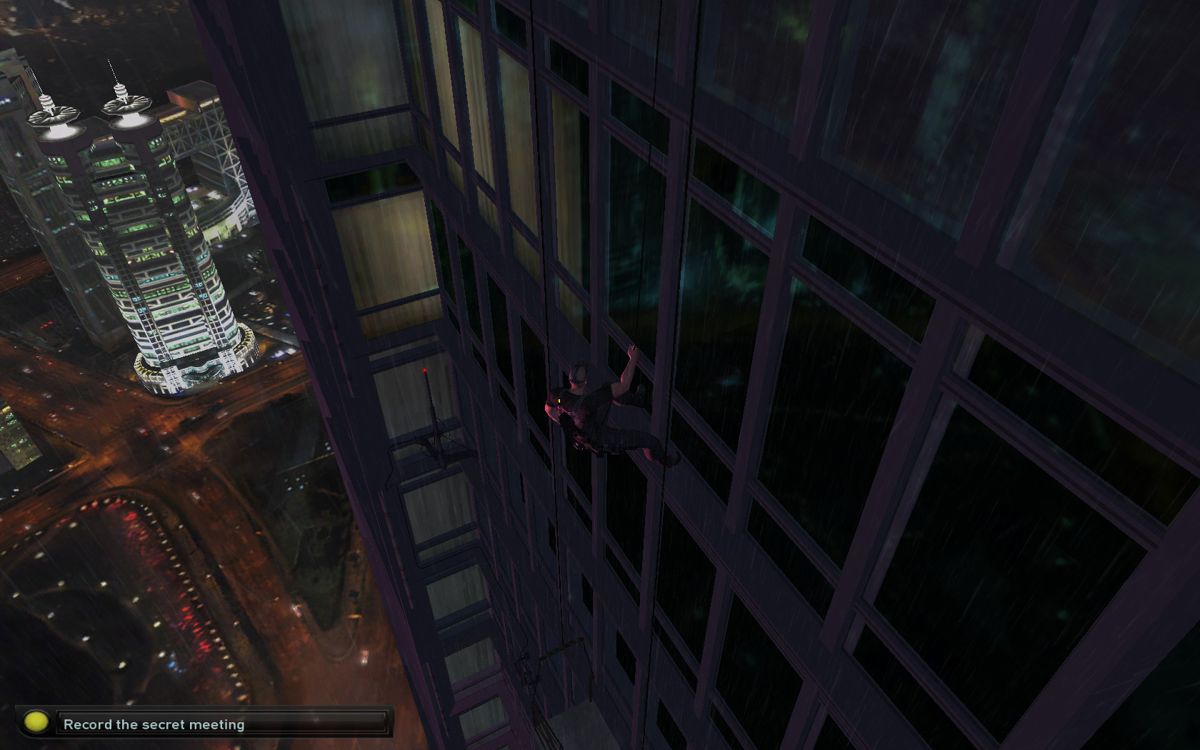
At intervals the meters stop being abstract, because the game asks Fisher to do something awful and makes you choose. At the JBA compound, Emile orders him to shoot Cole Yeager, the pilot who flew the prison escape — obey, and the JBA trusts him more while the NSA trusts him less. In Cozumel, he can let a cruise ship bomb detonate to protect his cover, jam the signal and blow that cover, or, if he has stolen weapons expert Enrica Villablanca’s disarm code, frame her and keep both sides happy. Later he is ordered to kill fellow agent Hisham Hamza, and later still to execute a captured Lambert. In the Shanghai version, how those three calls go — the ship, Hisham, Lambert — decides which ending Fisher gets. Stealth games had offered moral choices before, but rarely ones wired this directly into whether the hero ends the story free, imprisoned or on the run.
Home turf of the enemy: the JBA headquarters missions
The boldest levels in the Shanghai version aren’t missions at all, in the usual sense. Between operations, Fisher returns to the JBA headquarters, and the game turns him loose inside it for a limited block of time. He has standing orders from both sides — assemble mines for the JBA, say, while quietly scanning fingerprints, photographing documents or planting a trojan on the group’s server for the NSA — and nearly all of it is optional. Restricted areas are off limits to a new recruit, so getting caught somewhere he shouldn’t be costs trust, and the clock is always running down toward the moment he has to be back where he was left.
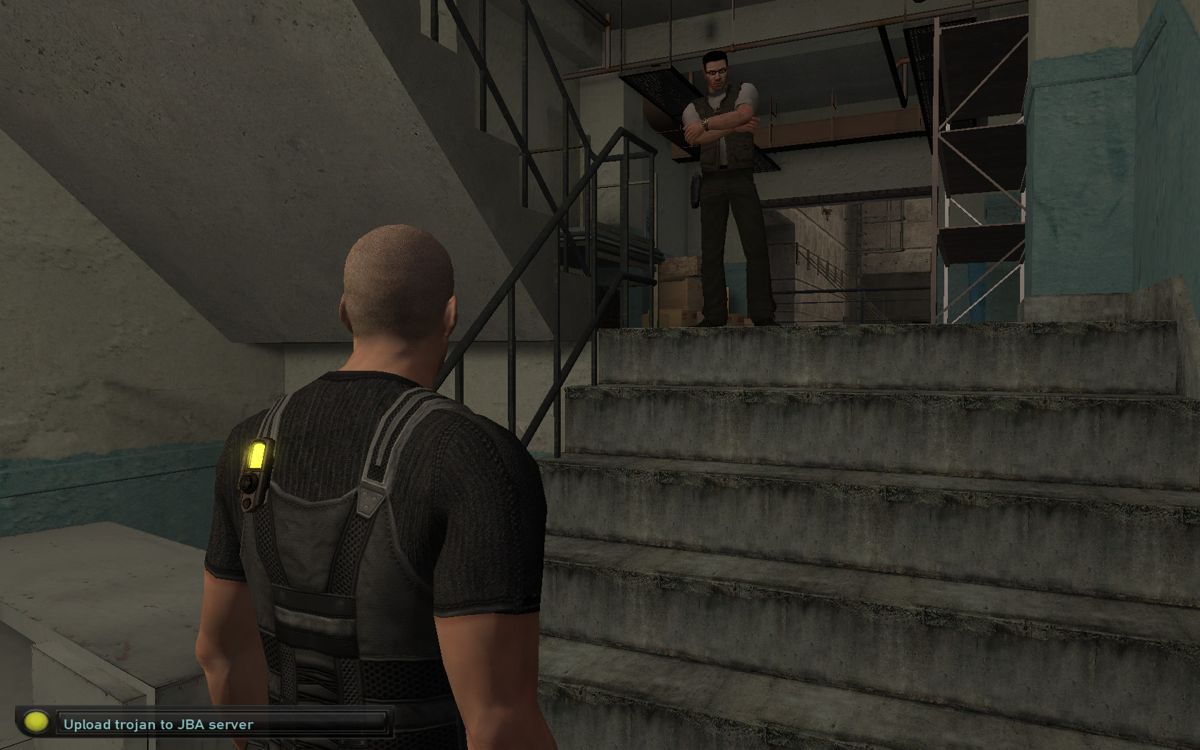
It was a real departure: a stealth level where the disguise is your own face, the guards are your colleagues, and the tension comes from errands rather than patrol routes. The Montreal version visits its New Orleans headquarters too, but as more conventional, linear levels — good ones, built on the Chaos Theory formula, yet noticeably less strange.
The verdict in 2006: the old consoles edged it
Reviews at the time were strong for both games — and, awkwardly for the shiny new hardware, slightly stronger for the old one. On Metacritic, the Montreal-built Xbox version scored 89, the highest of any version, with PlayStation 2 at 84. The Shanghai version scored 85 on Xbox 360 and 80 on PC, with the later PlayStation 3 port at 78. The Nintendo versions trailed: 64 on GameCube and 61 on Wii, where the motion controls did the game no favours. The Xbox version collected a shelf of year-end honours, including IGN’s Best Xbox Action Game of 2006 and GameSpy’s and TeamXbox’s top platform awards, while the 360 version took IGN’s Best Original Score. GameSpot’s reviewers, covering both, concluded that fans owed it to themselves to play the 360 game and one of the older-console versions — sound advice, and the clearest sign of how complete the split was.
Twenty years on
Double Agent sits in an odd place in the series’ history. It sold a generation on a more human Sam Fisher — Michael Ironside’s weary performance does a lot of the work — and its choices-and-trust structure pointed at where stealth games were heading. But it is also the entry people describe with a follow-up question: which one did you play? The multiplayer has long since gone dark — Ubisoft’s current store listings state plainly that the online and co-op modes are no longer functional — yet both single-player games survive, the 360 version playable on modern Xbox hardware through backward compatibility.
Twenty years after that staggered autumn — 360 in October, the older consoles a week later, PC in November, the Wii version completing the set on November 28 — the two-games-in-one-box trick still looks less like a production accident and more like a snapshot of an industry mid-transition, when “next generation” was a promise two studios could keep in completely different ways. Fisher served two masters in the story. Behind the scenes, so did his game.
— Chip
For more launches from this date, see This Day in Gaming History: November 28. More from this system: our Xbox 360 hub.