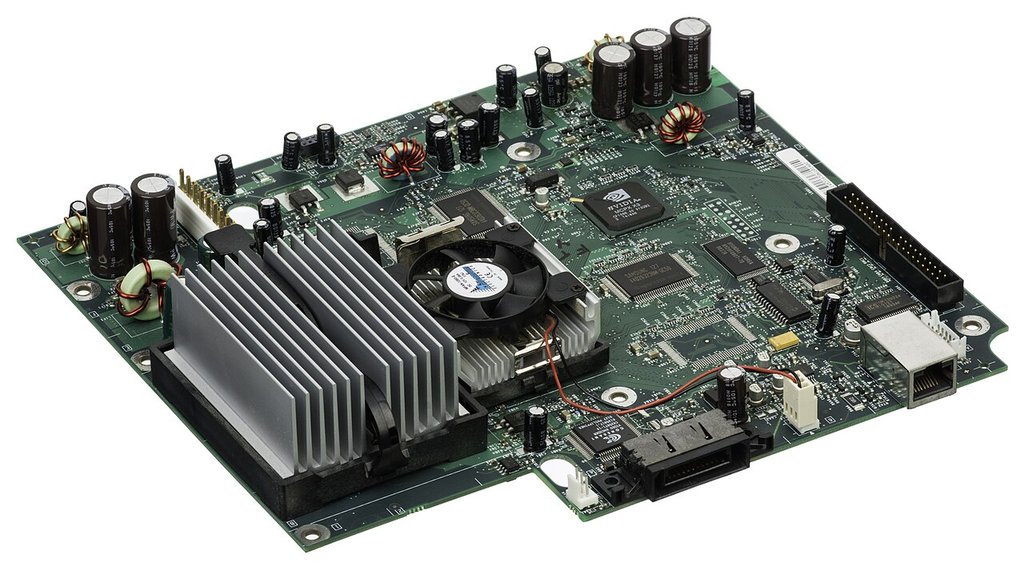
Microsoft designed the Xbox as a walled garden and accidentally shipped the best open computer of 2002. Inside the big black box sat a 733MHz Pentium III, an NVIDIA graphics chip, 64MB of RAM, a standard IDE hard drive and a DVD drive — a PC in all but name, sold below cost, in millions of living rooms. Within months of launch, hackers had mapped its boot process; within a couple of years, a modded Xbox running Xbox Media Center was the finest media player money could buy at any price, and the console had become the first great homebrew computer of the broadband age. This is the history of the modchip years: how the Xbox escaped its maker, and what the escape built.
The technical story begins with the security. Microsoft protected the boot chain with encryption and a secret ROM, and the effort to break it became a landmark of hardware hacking: Andrew “bunnie” Huang’s MIT-press book Hacking the Xbox documented extracting the secrets with a tapped bus and homemade tools, work Microsoft ultimately chose not to litigate into legend. Once the boot process was understood, modchips arrived — small boards with names like Enigmah, Xecuter and Xenium that patched the BIOS at startup and freed the machine from its signature checks. Solderless adapters, BIOS banks and, later, softmods that needed no chip at all (exploiting save-game vulnerabilities in titles like MechAssault, Splinter Cell and 007: Agent Under Fire) put modification within reach of any owner with a memory card and a borrowed afternoon. Microsoft fought back across Xbox Live — consoles with modified firmware detected online were banned from the service, a policy every platform since has inherited — and the scene settled into its famous dual life: stock for Live, modified for everything else.

What the scene built, once the door was open, is the astonishing part. Evolution-X and Avalaunch dashboards replaced the green void with real file managers and FTP servers. Emulators arrived in waves — the coin-op and console history of the twentieth century, playable from a sofa, a decade before retro mini-consoles made the idea commercial. Ports of open-source software flourished. Linux ran on the machine seriously enough for clusters and classrooms. And above all of it stood Xbox Media Center: XBMC, the open-source media player that played every video and audio format the era could produce, streamed from home networks, upscaled DVDs, scraped film art and metadata, and presented it all through a remote-friendly interface so superior to commercial offerings that it made dedicated media hardware look foolish. For years, the correct answer to “what should I connect to my television?” was a second-hand Xbox and a softmod. Media executives were paying thousands for less.
The long shadow of an open box
The afterlife of that culture is written across modern technology. XBMC became Kodi, still maintained, still running on millions of devices, its lineage traceable line by line to the Xbox years. The dashboard and homebrew scene normalised ideas the industry later adopted officially: digital game libraries on hard drives (the scene’s game-loading dashboards anticipated the feature by half a decade), custom soundtracks ripped from your own CDs (an official Xbox feature the modders extended), region-free play, fan translations, and an entire preservation ethic — the belief that owners should be able to keep their software alive after its servers and shops close. The Insignia project’s revival of Xbox Live itself descends directly from this culture: the same community, the same skills, now aimed at restoration. Even Microsoft’s posture changed; the company that banned modded consoles in 2004 later hired from, collaborated with, and eventually celebrated parts of the hacker community that had reverse-engineered its machine, and bunnie’s book is now assigned reading in hardware-security courses.
The Xbox was supposed to be a games console. Its owners looked at the spec sheet, saw a subsidised PC, and held Microsoft to the arithmetic.
Honesty requires the shadow side in the record: the same tools that enabled XBMC enabled piracy at scale, and the modchip trade lived in legal grey zones that cost retailers prosecutions in several countries and developers real revenue. The scene’s own culture policed a line — homebrew yes, warez no — that held imperfectly at best. Microsoft’s losses on each console (the hardware was sold below cost, expecting software royalties) turned every pirate copy into a double wound, and the Xbox 360’s far more aggressive security was the direct consequence. The modchip years, in other words, taught every platform holder the same lesson at the same time: openness would be answered with lockdown, and the lockdown era of consoles — signed everything, sealed everything — is the world we still live in. The Xbox was the glorious exception because it was, essentially, a PC whose makers initially underestimated what that meant.

Today the culture has matured into preservation. Softmodding a tired Xbox is now standard restoration practice — it rescues machines whose DVD drives have died, lets owners replace failing hard drives before the inevitable happens, and keeps the library playable as discs degrade. The modchip years’ hardware survives in collections exactly as the games do, chips and dashboards curated as artefacts. That feels right. The big black box’s second career — media centre, emulator station, hacker’s textbook, preservation platform — is not a footnote to its first. It is half the reason the machine matters, and the whole reason it still sits, in so many homes, plugged in.
The people who kept the scene honest
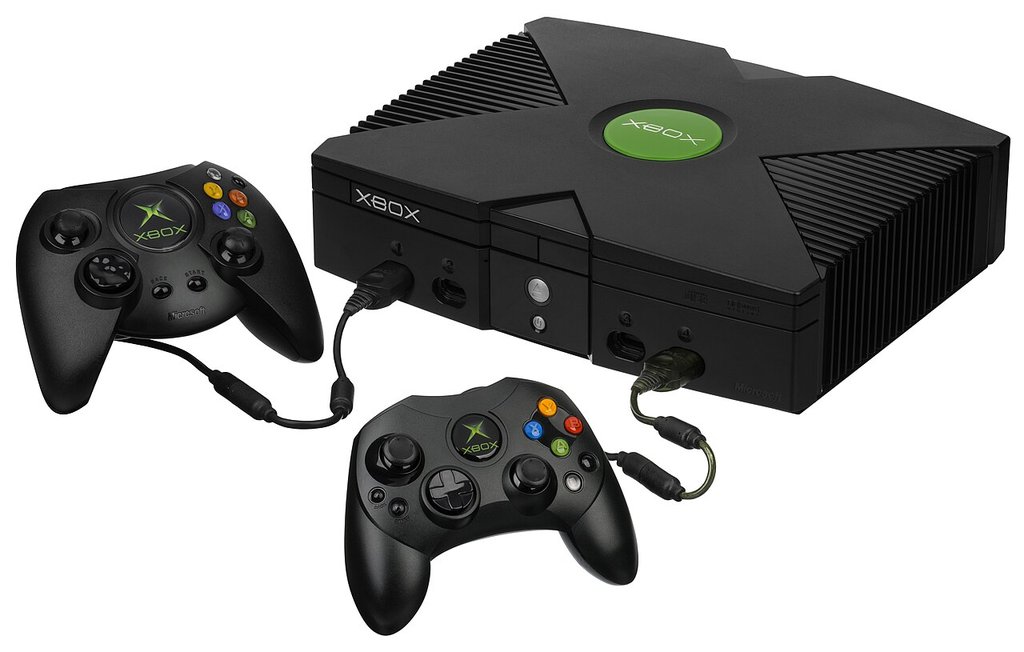
A history of the modchip years should name the culture’s better angels. The Xbox-Scene forums and their successors ran on a code the regulars enforced themselves: homebrew releases credited their authors, tutorials taught soldering and safety rather than shortcuts, and the flagship projects — XBMC above all — were open source, built in public by volunteers across dozens of countries. Team Xecuter and its rivals competed on engineering. The Linux project’s legal, clean-room discipline gave the scene a respectable face when it needed one. Were there pirates in the same rooms? Of course; the tools were shared. But the durable legacy — the software still running, the preservation work still continuing, the hardware knowledge still documented down to the last capacitor — was built by the people who treated the Xbox as a computer to be understood rather than a lock to be picked for free games. Their work is why a twenty-year-old console still has a living technical literature, and why so many of its machines survive in working order at all.
Coda: the box that would not stay closed
Every console since has been designed against the Xbox’s example: encrypted boots, fused keys, bannable accounts. And every console since has also quietly adopted the modders’ feature list — media apps, digital libraries, cross-region accounts, indie homebrew programmes with official blessing. The modchip years were the messy, brilliant negotiation between an industry learning control and an audience learning ownership, staged on a machine powerful enough to be worth fighting over. Open yours up today — carefully, capacitors first, as our buying guide insists — and you are looking at the battlefield. It is also, not coincidentally, still an excellent place to watch a film.