The original Xbox will always be introduced by one word — Halo — and the shadow of the Master Chief is long enough to hide an entire second library. Between 2001 and 2006 the machine hosted a run of strange, ambitious exclusives and oddities that reviewed well, sold modestly and were buried under the shooters’ marketing budgets. This list rescues ten of them. None appears among this collection’s sixteen full reviews; every one is playable, affordable or at least findable today, and together they argue that the big black box had the most interesting B-sides of its entire generation. Clear some hard-drive space. These are the games the Halo shadow hid.
1. Breakdown

Namco’s first-person brawler is the most audacious experiment on this list: a shooter in which your fists matter more than your gun, played entirely through the body of Derrick Cole, a test subject who eats, drinks, vomits, catches thrown objects and learns martial arts in real time. The no-cutscene rule is absolute — every story beat happens to your face, from inside it — and the hand-to-hand system, all blocking, dodging and escalating combos, feels years ahead of the first-person melee games that followed. It is flawed, occasionally brutally hard, and utterly singular. Nothing before or since plays like Breakdown, which is the definition of a hidden gem.
2. Phantom Dust

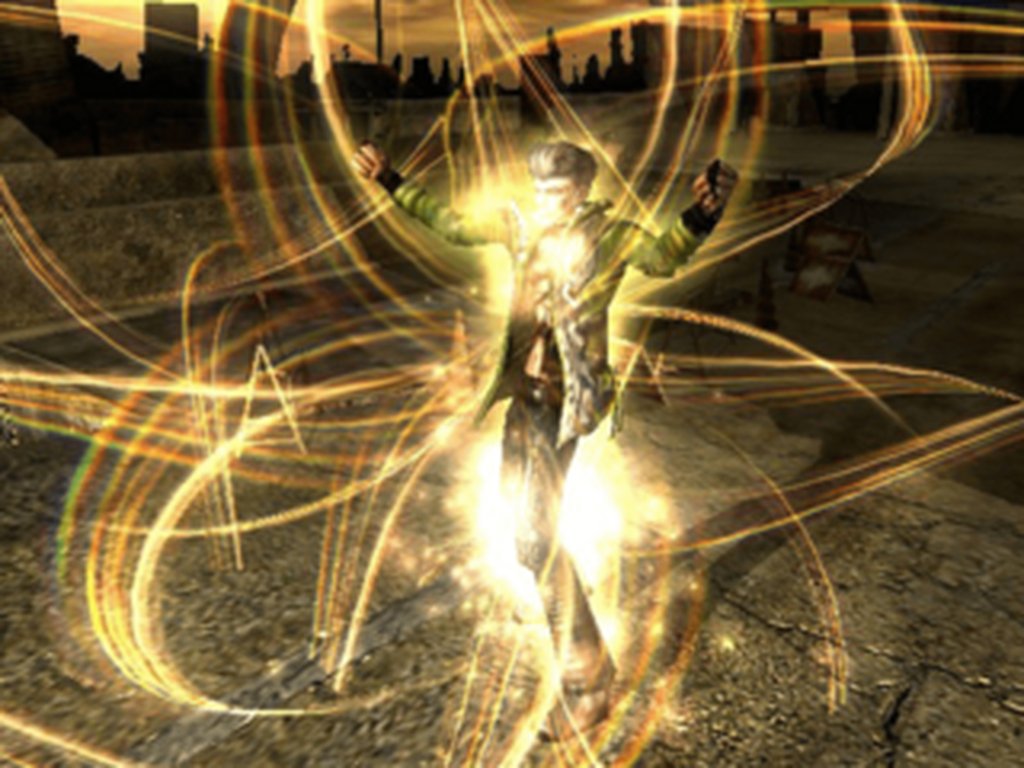
A post-apocalyptic arena battler built around collectible-card mechanics, from a team led by Yukio Futatsugi of Panzer Dragoon fame — and Microsoft published it in Japan, then nearly declined to release it in the West at all, which is how classics get buried. You build an arsenal of psychic skills like a card deck, then fight real-time duels in destructible ruins where terrain, timing and deck construction matter equally. Its multiplayer was an Xbox Live cult, its soundtrack is extraordinary, and its ruined-Earth melancholy gives the mechanics a soul. The West got it at a budget price in 2005. It deserved a parade.
3. Otogi: Myth of Demons

FromSoftware before the world learned their name: a Heian-period action game of unearthly beauty, in which the undead swordsman Raikoh purifies a demon-infested Kyoto with weapons that are themselves haunted. Everything breaks — bamboo groves, stone lanterns, whole buildings — and the destruction is the aesthetic: Otogi paints combat as calligraphy, all drifting petals, moonlight and debris, scored like a Noh performance heard through water. Underneath the beauty sits a deep weapon-and-magic system across dozens of stages. Its sequel is equally fine. Together they are the Xbox’s most beautiful obscurities, and the clearest early evidence of what FromSoftware would become.
4. Metal Wolf Chaos

Also FromSoftware, and also legendary for the opposite reason: in Metal Wolf Chaos you play the President of the United States, piloting a giant mech to liberate America from a coup led by his own Vice President, shouting defiance in gloriously unhinged English throughout. It was a Japanese Xbox exclusive in 2004 — the machine’s rarest famous game in its home market, where the console barely sold — and became a cult import grail for fifteen years. Strip the comedy away and a superb mech-action game remains: fast, destructive, generous with spectacle. The Xbox original is the collector’s text, and the legend is earned.
5. Stubbs the Zombie in Rebel Without a Pulse
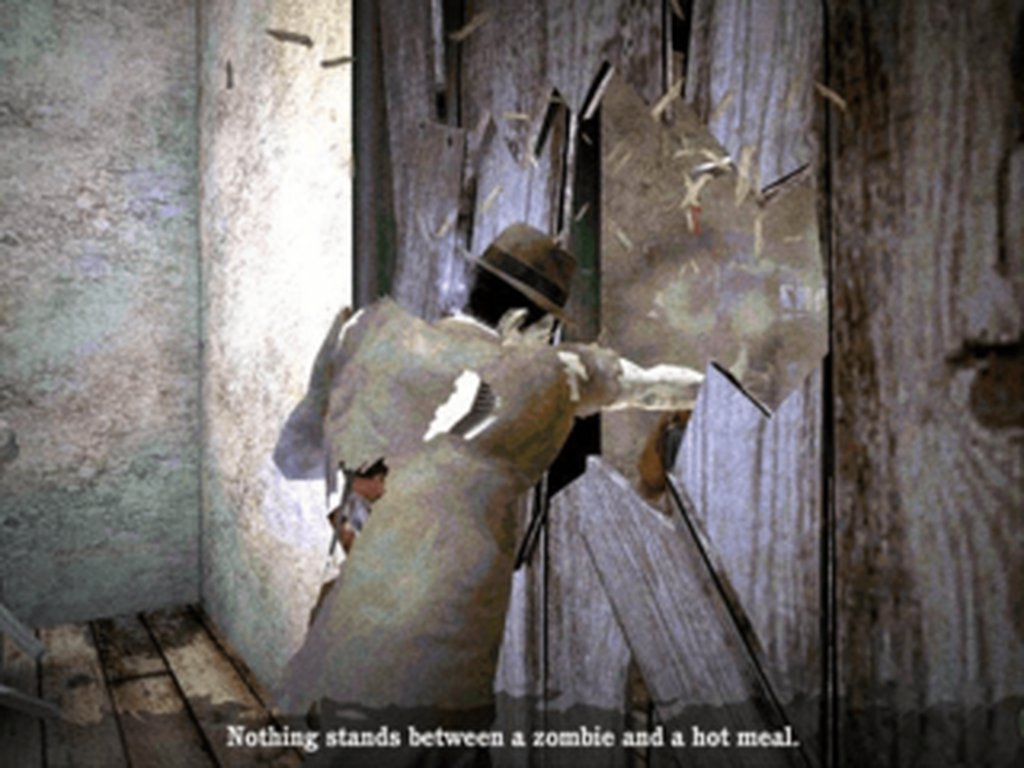
A comedy-horror action game from Wideload, a studio founded by Bungie co-founder Alexander Seropian and built, fittingly, on the Halo engine — you can feel the pedigree in the physics and the enemy chatter. You are Stubbs, a travelling salesman murdered in 1933 and risen in 1959 to eat the brains of a model city’s citizens, converting them into a zombie horde that fights beside you. Possess humans via your detachable hand, drive period vehicles, weaponise your own organs: the gag rate is relentless and the affection for its 1950s sci-fi sources is real. Short, sweet and almost entirely jokes — all of them landing.
6. Gunvalkyrie

Smilebit’s jetpack shooter is the connoisseur’s Xbox action game: a steampunk alternate 1900s, a colonised planet, and a control scheme — clicking both sticks, managing boost like a musical rhythm — that filters out the impatient in the first hour and rewards the persistent with one of the most fluid movement systems of its era. Kelly’s jetpack turns levels into vertical puzzles of momentum, and the insectoid enemies arrive in balletic swarms. Gunvalkyrie reviewed politely and vanished beneath JSRF’s shadow at its own studio. Learn its language and it becomes a personal favourite; this list exists for exactly that transaction.
7. Arx Fatalis

Arkane’s first game — yes, that Arkane — is an immersive-sim dungeon crawler set in a world where the sun died and civilisation moved underground. The Xbox port of the PC cult classic keeps nearly everything: the gesture-based spellcasting (drawing runes in the air with the stick, an idea the port makes work), cooking raw food on open fires, blacksmithing, faction politics among trolls, goblins and snake-women, and a plot involving a god trying to be born. It is dense, janky in the lovable European way, and quietly historic — Dishonored’s family tree starts in this cave. RPG players who missed it own a debt to themselves.
8. Gladius
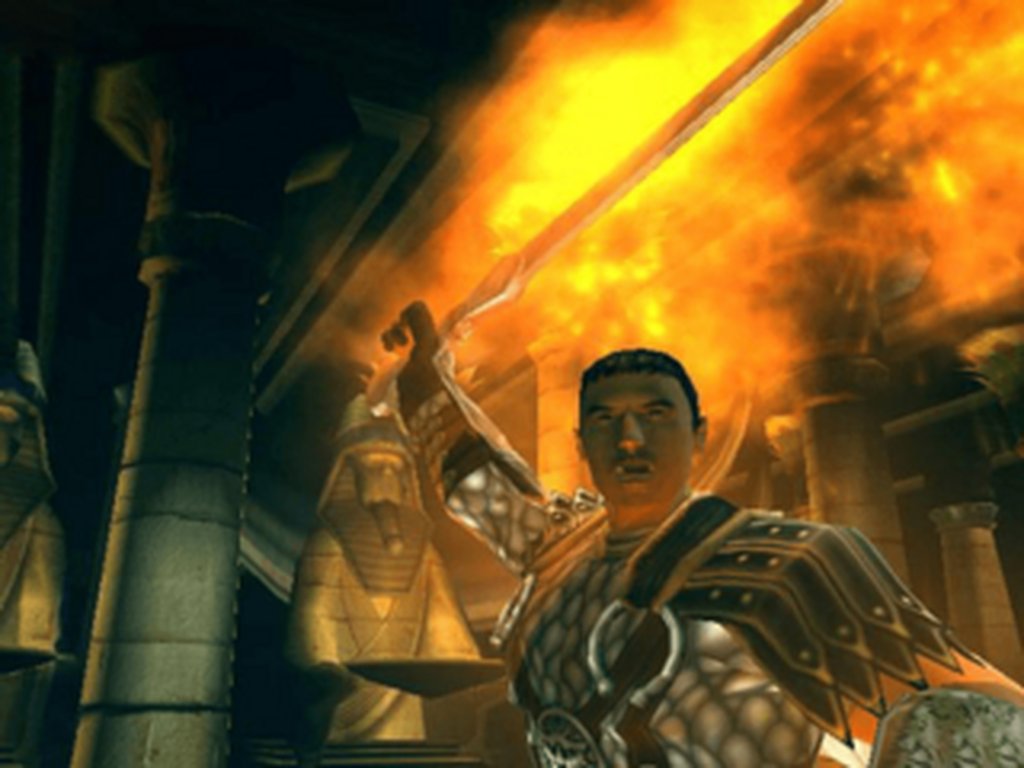
LucasArts made a turn-based gladiator tactics RPG, and it is one of the deepest games on the console. Build a school of fighters — human legionaries, beast handlers, spellcasters, minotaurs — and tour an ancient world’s arenas in a proper tactics campaign: positioning, facing, elevation, crowd favour and a timing-meter system for critical hits that keeps every exchange active. Two full campaigns (Valens’ and Ursula’s) run dozens of hours each, and a four-player versus mode lets schools collide. In an era of LucasArts Star Wars saturation, Gladius was the original-IP gamble, and it remains the Xbox’s finest tactical RPG. En garde, indeed.
9. Kung Fu Chaos

Just Add Monsters — later Ninja Theory — debuted with this four-player brawler staged as a 1970s kung fu film shoot: every level a set, every fight a take, the director shouting encouragement from off-camera. Up to four fighters (plus taunts that leave you gloriously vulnerable) smash through collapsing scenery — sinking ships, dinosaur sets, ninja-infested pagodas — in the party-brawler lineage the GameCube’s Smash Bros had made famous, here played for slapstick cinema rather than Nintendo nostalgia. It is the original Xbox’s best same-sofa multiplayer game that does not involve guns, and its absence from every revival conversation is a genuine injustice.
10. Voodoo Vince
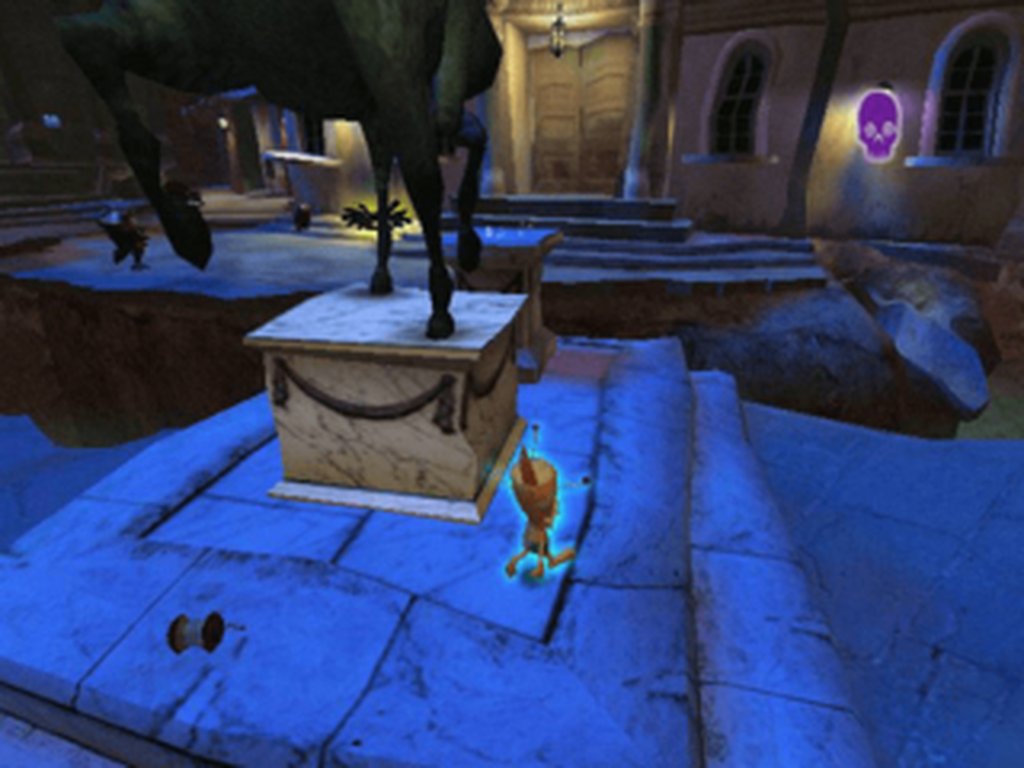
A 3D platformer with the best premise on this list: you are Vince, a voodoo doll, and your attacks consist of hurting yourself — setting yourself on fire, falling into machinery, being eaten — because the damage transfers to your enemies. Beep Industries wrapped the joke in a bayou-gothic New Orleans of jazz funerals, crypts and bayou gas stations, scored with genuine zydeco and jazz, and the result is the Xbox’s most characterful platformer outside Psychonauts. Vince’s powers escalate from pins to hurricanes of self-harm, the writing is dry as a bone, and the whole adventure runs a tight, collectible-stuffed eight hours. A doll of few words and impeccable comic timing.
How this list was chosen
Three tests governed selection. First, obscurity with quality: every game here reviewed respectably in its day and is remembered by its players out of all proportion to its sales. Second, Xbox identity: these are games that belong to this machine — exclusives, best-on-Xbox versions, or titles whose character is inseparable from the platform’s hardware and era — rather than ports you could meet anywhere. Third, playability today: each is complete on its disc, free of dead online dependencies for its core pleasures (Phantom Dust’s campaign and local play stand alone; its Live cult is a bonus the revival community still honours), and priced within a normal collector’s reach, with the honest exception of Metal Wolf Chaos, included because no Xbox gems list is credible without the President’s mech. The sixteen games reviewed elsewhere in this collection — the Halos, KOTORs and Ninja Gaidens — were excluded by design. A shadow library should not simply repeat the lit one.
One more pattern is worth naming, because it says something about the platform itself. Count the Japanese studios on this list: Namco, FromSoftware twice, Smilebit, plus LucasArts and Arkane flying Western flags with distinctly un-Hollywood designs. The original Xbox, for all its American bulk and shooter reputation, quietly became the era’s best home for eccentric Japanese development outside Japan’s own market — Microsoft’s courtship of Sega and its peers filled the catalogue with games no focus group would have commissioned. The gems are not accidents in the library. They are the library’s second founding principle, hiding in plain sight behind the first one.
A note on playing them now
Practicalities, briefly, because gems should be played and not just catalogued. Most of this list remains inexpensive: Kung Fu Chaos, Stubbs, Breakdown, Gladius, Arx Fatalis and Voodoo Vince are all routinely found in the budget bins of the platform, while Otogi, Phantom Dust and Gunvalkyrie sit a tier above and Metal Wolf Chaos prices by legend. All ten are complete on disc; none needs a server, a patch or a prayer. Several shine on the Xbox’s component output — Otogi and Gunvalkyrie especially — and all ten benefit from the hard drive’s save convenience. Hunt them in the order your curiosity ranks them, not this list’s: a hidden gem is only hidden until it is yours, and the whole point of a shadow library is that it becomes, shelf by shelf, a personal canon. The Halo discs will not mind sharing the row. They never really had it to themselves anyway.
And a closing word for the sceptic who has scrolled this far unconvinced: pick the cheapest game on this list that touches a genre you love, and give it one honest evening. Hidden gems are not a critical theory; they are a stack of specific, dated, slightly eccentric discs, each waiting to be someone’s favourite game of the month. The Xbox’s first library, underneath the marketing, was built by studios taking swings — Namco reinventing the brawler, Arkane inventing itself, LucasArts gambling on gladiators, FromSoftware painting with destruction. Swings miss the charts all the time. They do not miss the players who find them, and finding them is now, officially, your job too.
Beyond the ten
The bench is deep: Rallisport Challenge 2’s rally perfection, MechAssault’s Live pioneering, The Warriors’ brawling, Advent Rising’s ambition, Armed and Dangerous’s comedy, Sudeki’s colour. A library is judged by its headline acts, but it is loved for evenings like the ones on this list. The Halo shadow is real, and it is long — but everything above grew in it quite happily, waiting for exactly this kind of rescue.