
By late 1995 SNK knew precisely what the world thought of its CD console: the games were the real thing, the prices were right, and the waiting was a joke told at the machine’s expense in every magazine that covered it. The Neo Geo CDZ, released in Japan on 29 December 1995 at ¥49,800, was the company’s answer — not a successor (the games, controllers and discs were identical) but a revision aimed at the single number that defined the format: loading. A faster drive mechanism and, crucially, a much larger data cache let the CDZ pre-fetch and hold more of a game’s data, cutting typical loading times roughly in half. The King of Fighters’ team loads that had been a minute’s monkey-juggling became a half-minute’s. In the format’s own terms, this was a revolution delivered as a facelift.
The facelift was literal. The CDZ abandoned the original top-loader’s broad, confident slab for a smaller, sleeker, almost PlayStation-proportioned box, with a revised internal layout and a noticeably lighter footprint on the shelf. It was Japan-focused — Western releases were limited, the machine never got the push the original had — and production volumes were a fraction of the CD’s. Roughly 25,000 units is the figure commonly cited against the original CD family’s several hundred thousand; whatever the exact count, the CDZ was scarce when new and has been scarce ever since.
What faster actually bought
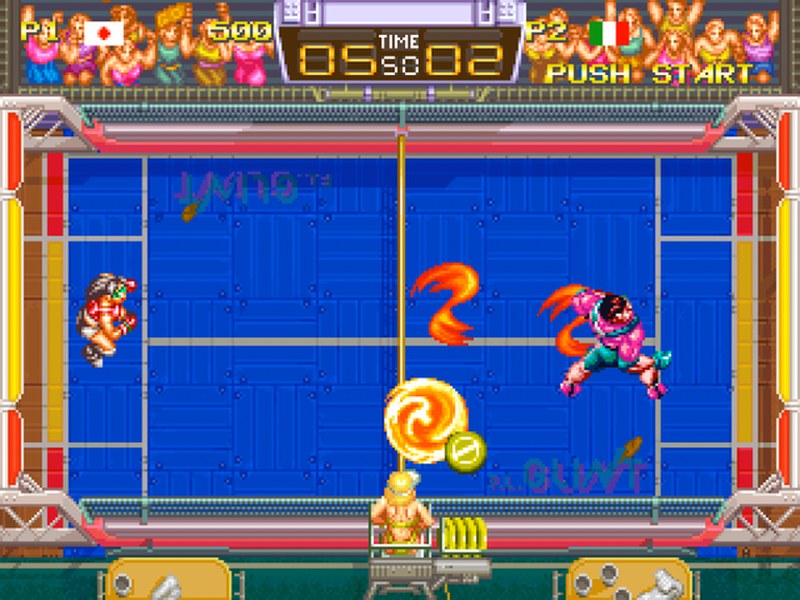
The honest measurement of the CDZ is not its peak but its effect on the library’s pain map. Small games — Windjammers, Magical Drop II, the early catalogue — were already comfortable and merely became instant. The mid-size fighters, Real Bout and The Last Blade, moved from ‘patient’ to ‘fine’. The team fighters improved most in absolute seconds and remained, in ’98 and ’99 form, the slowest software on the machine: halving a long wait yields a medium wait, and players should set expectations accordingly. The Samurai Shodown RPG is perhaps the single best CDZ argument: an encounter-driven game whose friction is load frequency itself halves its tax and becomes the leisurely epic it was designed as.
Under the hood the speed came from the cache as much as the raw drive: streamed data could be buffered more deeply, repeated loads — the RPG’s battle transitions, a fighter’s returning cast — shortened further than the one-off loads did. It is an elegant, engineering-led fix, and it quietly proves the counterfactual owners love: with this hardware in 1994, the format’s story reads very differently. SNK, characteristically, shipped the right answer one product cycle late and priced it as a premium object rather than a replacement.

The flaw: a machine that cooks itself
And then there is the heat. The CDZ’s compact redesign packed its power supply inside the smaller case, and the machine runs hot — famously, consequentially hot. The failure mode is documented across decades of owner reports: prolonged play raises internal temperatures until the system protects itself, misbehaves, or damages components; the shielding and airflow around the internal supply are the usual suspects, and the community’s standard advice — play in sessions, ventilate the unit, do not leave it baking in an AV cabinet, consider the known recapping and thermal maintenance before serious use — reads less like enthusiast fussiness than like care instructions for a classic car. A machine bought today should be treated as a restoration candidate: opened, inspected, cleaned and serviced before it is trusted with long sessions, however clean it looks in the listing photos.
The heat compounds the scarcity problem. CDZ units were few, were played hard by exactly the enthusiasts who valued them, and carry a thermal history you cannot see in photographs. Prices have followed the story arc — the CDZ is the most expensive of the three CD models by a wide margin, and ‘tested working’ examples that have also been serviced are the ones that hold value. Buyers are not being precious when they ask about heat and service history; they are pricing a known failure mode.

The verdict on the revision
The Neo Geo CDZ is simultaneously the best way to play this library on original hardware and the riskiest object in it. It fixes the format’s defining flaw as far as 1996 engineering allowed, it is the rarest and most handsome of the three machines, and it asks in return to be maintained like the ageing, heat-stressed precision instrument it is. Collectors who want the shelf piece buy the CDZ. Players who want thirty years of evenings buy the top-loader and a modern loader. The lucky own both, and know exactly which one the long RPG winter is for — with the case vents clear and a fan on the room, if not the machine.
Buying a CDZ in 2026
The practical market, for buyers persuaded by the argument above: CDZs surface most often from Japan, where the machine actually sold, and the listings divide sharply into two species — untested or lightly tested units at the family’s usual premium, and serviced examples (recapped power supply, cleaned and inspected drive, thermal condition verified across a long demonstration) at a premium on the premium. The second species is the buy. The work a CDZ needs is precisely the work a good seller can document, and the price difference between the species is smaller than the price of the work bought separately, to say nothing of the shipping roulette of returning a cooking machine across an ocean.
Ownership thereafter is a discipline of small kindnesses: ventilate it, session it, keep it out of the stacked-AV-cabinet sauna, and treat any new smell, glitch or shutdown as a service appointment rather than a personality trait. Owners who do this report machines that run for decades; the CDZ’s reputation for fragility is, in large part, a reputation for being run hot in boxes by people who were never told. You have now been told. The fastest official way into this library deserves an owner who reads the care instructions — and rewards one, every loading screen, at roughly half the monkey.
A closing measurement for the undecided: put the same three discs — a small game, a mid-size fighter, a team fighter — through a top-loader and a CDZ back to back, and the revision’s character resolves into a sentence. The small game stops loading in any sense that matters; the mid-size fighter becomes a normal home conversion of its era; the team fighter improves from an ordeal to a wait. That sentence is the CDZ entire: not a new format, not a rescue, but the same library with its tax halved — which, on a console whose whole story is a tax, amounts to a different console. The heat is real, the rarity is real, and so is the relief, every single time the monkey’s act is cut short.
Service history, finally, is the CDZ’s collectable grade: a unit with documented recapping, a verified drive and a demonstrated hour of cool-headed running is not merely a safer purchase than a sealed-looking unknown — in this model’s market it has become the standard the unknowns are discounted against. Collectors of other systems chase boxes; CDZ collectors chase paperwork and temperatures. It is the most grown-up corner of retro hardware, for the most grown-up reason: the machine is wonderful, the machine is fragile, and the difference between the two experiences is maintenance.